
This item is no longer available.
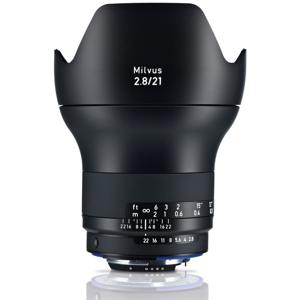
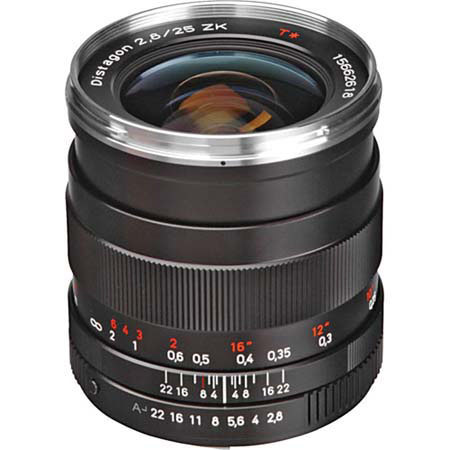
Zeiss Ikon 25 mm Distagon T* f/2.8 lens with an angular field of 80° is a lens of well-known and time-honoured design enjoying a good reputation with the users of 35 mm cameras. Even at full aperture, the 25 mm Distagon lens provides excellent image quality over the entire format although its initial aperture can be regarded as considerable for such a fairly powerful wide-angle lens.
The treatment of the glass-to-air surfaces with the T* multilayer coating - its anti-reflection effect is particularly conspicuous with multi-element wide-angle lenses - guarantees a brilliant image even with high object contrast and provides extensive protection against unwanted reflections when backlighting is used.
Within the varied applications of wide-angle photography, the use of the 25 mm Distagon T* f/2.8 lens is also of advantage for architectural and landscape photography where, on the one hand, a relatively large object field has to be covered and where, on the other, the details on the periphery of the image have to be rendered as true to the original as possible - i.e. without too pronounced perspective distortion.
Join VIP PRO
Earn 2X Points + Exclusive Perks!
Request a Callback
Chat one-on-one with an expert
Sell or Trade your Gear
Get started in 3 easy steps