Let us help you choose the perfect digital SLR for serious photography. If you’ve outgrown starter DSLRs, or want a capable back-up for the pro rig, here’s what you need to know.
Mid-range DSLRs cover a wide range, from cameras that offer something more than an entry-level model to cameras that borrow heavily from advanced siblings that are designed for professional use. They range in price from the high-hundreds to $1,000 for the body only.
Canon, Nikon, Pentax and Sony all offer DSLRs for enthusiasts, but which is right for you? Read on!
Mid-Range DSLRs Comparison:
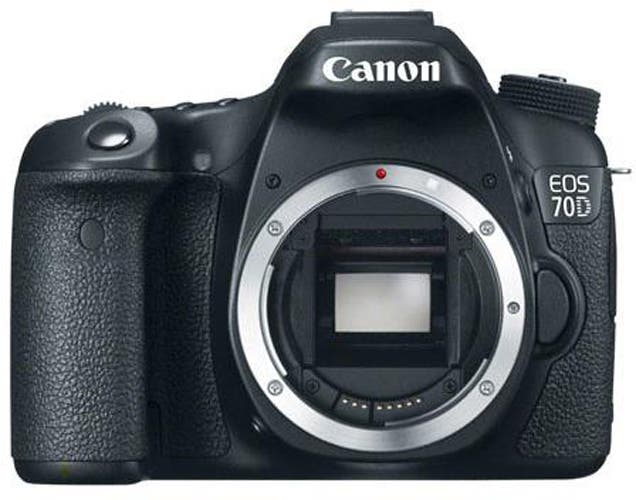 Canon 70D |
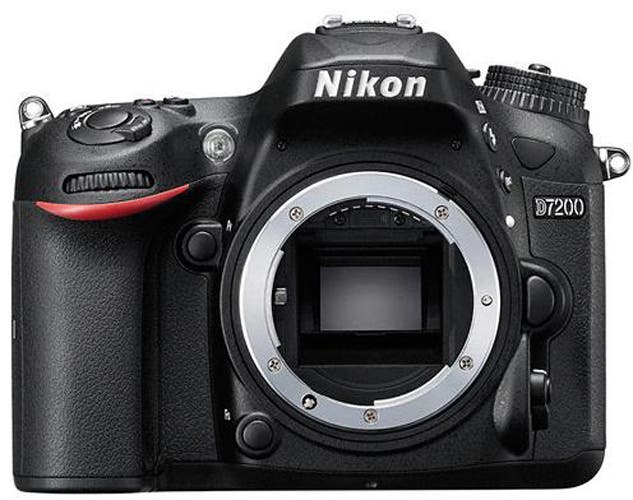 Nikon D7200 |
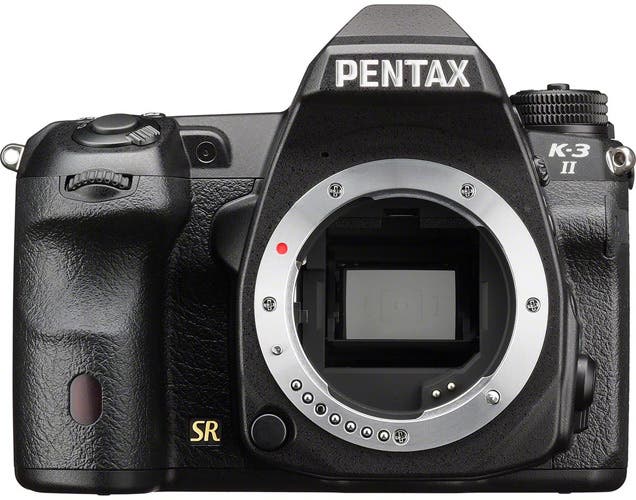 Pentax K-3 II Pentax K-3 II |
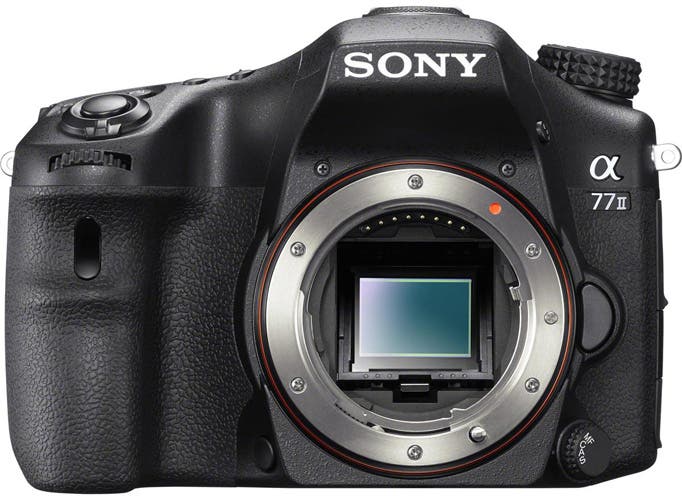 Sony A77 II |
|
| Sensor Size/Resolution | 20MP APS-C | 24.1MP APS | 24MP APS-C | 24MP APS |
| DxOMark Image Quality Score | 68 | 87 | 80 | 80 |
| ISO Range | 100-25,600 | 100-25,6000 102,600 |
80-51,200 | 100-51,200 |
| Monitor Size/Resolution | 3 in/1.04k | 3.2 in/1.229k | 3.2 in/1.04k | 3 in/2.4k |
| Burst Rate | 7fps | 7fps | 8.3fps | 12fps |
| Top Video Resolution/ Frame Rate |
1080/30fps | 1080/60i | 1080/60fps | 1080/60p |
| External Mic Jack | Yes | Yes | Yes | No |
| Autofocus Sensors | 19 cross-type | 51 (15 cross-type) | 27 (25 cross-type) | 73 (15 cross-type) |
| What’s Special? | Wi-Fi, fast AF | Wi-Fi, Image quality | Ruggedized | SLT Finder, Burst Rate |
| Adorama Price (body) | $999 |
Canon 70D
Adorama price: $999
Lab test results (Provided by DxOMark):
- Maximum ISO for acceptable image quality (digital noise): ISO 1000
- Maximum ISO for acceptable dynamic range: ISO 1600
- Color depth: Excellent (22.5 on a scale of 1-25)
- Overall image quality: Very Good (68 on a scale of 1-100)
- Dynamic range: Up to 11.6 stops
The Canon 70D gives about a 1/3-stop improvement over its predecessor, the 60D, regarding low-light performance and leads the Canon APS-sensor camera line in overall image quality.
Overview: With the introduction of the 70D, Canon has taken a big step towards faster focus acquisition thanks to the first-ever Dual Pixel CMOS Autofocus system. By reworking the design of the sensor, the camera simultaneously captures light and performs phase-detection AF, resulting in what we found to be noticeably faster autofocus; if you already own Canon lenses, you’ll immediately notice a difference between the 70D and your older camera. Also new: a higher-resolution 20MP CMOS sensor, built-in wireless communication with smartphones and tablets, improved video quality, and a wide range of special effects and modes. Some pros, especially sports shooters, may want this for its speedy AF. Read my full review of this camera.
The System: Compatible with all Canon EF and EF-S lenses with full AF capability, Canon Speedlite 430 EXII and other flash units. Comes with several software utilities.
The Next Step Up: The new Canon 7D Mark II ( body only at Adorama) has the same sensor as the 70D but in a sturdier body, 1080/60p video, 10fps burst rate, and 65 cross-type AF points. Or, go full-frame, via the recently discounted $1,499 Canon EOS 6D.
Nikon D7200
Adorama price (body only):
Lab test results (Provided by DxOMark):
- Maximum ISO for acceptable image quality (digital noise): 1600
- Maximum ISO for acceptable dynamic range: 3200
- Color depth: Excellent (24.5 on a scale of 1-25)
- Overall image quality: Excellent (80 on a scale of 1-100)
- Dynamic range: Up to 14.6 stops
On all measurements, the Nikon D7200 scored higher than any other APS sensor Nikon camera, regardless of price. With a nearly 14-stop dynamic range, nearly flawless 24.5-bit color depth and low light performance that easily outpaces its competition, the D7200 has the most advanced APS sensor on the market today and even ranks a statistical tie with the pro-level, full-frame Nikon D3X!
Overview: The reigning image quality champ for APS DSLRs, the Nikon D7200 is also weather-resistant, and has improved autofocus and image buffer capacity so it can shoot up to 100 consecutive JPEG images. Like its predecessor, the D7100, the D7200 has no low-pass filter, so more light will hit the sensor, improving image quality in a way you’ll notice especially in low light while shooting at higher ISO settings—and its highest boosted ISO is—hold onto your hat—102,400! Nikon has added Wi-Fi, added a faster image processing engine for greater responsiveness, a clarity control feature which adds definition to the image, and a Flat Picture Control, which Nikon says is designed especially for video capture.
The System: Dozens of current Nikon lenses include some of the finest glass on the planet, hundreds of used lenses with a history of excellence. Powerful flash system includes sophisticated wireless control. Geotagging available via optional GP-1 GPS unit. Extend shooting life via Multi-Power Battery Pack MB-D80.
The Next Step Up: Full frame, baby! The recently announced Nikon D610, at is the best deal and has a killer sensor. Bargain alert: The older (and still outstanding) Nikon D7100 is still available, with a reduced price of $896.95.
Pentax K-3 II
Adorama price (body only):
Lab test results (Provided by DxOMark):
- Maximum ISO for acceptable image quality (digital noise): 1200
- Maximum ISO for acceptable dynamic range: 1600
- Color depth: Excellent (23.6 on a scale of 1-25)
- Overall image quality: Excellent (80 on a scale of 1-100)
- Dynamic range: Up to 13.6 stops
The Pentax K3 gets high points for dynamic range and color depth at native resolution through ISO 1600; image quality at higher ISOs is average.
Overview: The second generation of Pentax’s flagship APS camera is rugged and waterproof, has a sensor that produces images that match almost evenly with two of its biggest rivals. The latest innovation is Pixel Shift Resolution, which quickly captures 4 images and computationally combines them into a finer, higher-quality image. There’s also an upgraded, in-camera Shake Reduction system that Pentax says give 4.5 stops of stabilization, a sensor-shift Anti-Aliasing filter simulator instead of an actual AA filter to minimize Moire patterns, and Astro Tracer, a valuable tool for astrophotography. There’s an oversized 3.2-inch LCD monitor, an optical viewfinder with an almost 100% field of view, built-in GPS, HDR, full 1080p HD video, and support for smart phones.
The System: High-quality lineup of lenses including extremely small “pancake” prime lenses distinguish the K3—as does its rugged, weatherproof body. A trio of flashes light up the night.
The Next Step Up: The Pentax 645D, $3,711.11 at Adorama, is a medium-format camera with a 40MP, 44x33mm CCD sensor that delivers up to 7264×5440 pixel images. But… Pentax is teasing a 35mm DSLR for Spring 2016.
Bargain Alert: The original Pentax K-3, an excellent camera, is now also an outstanding bargain. It is still available from Adorama at a substantial price reduction.
Sony A77 II
Adorama price (body only):
Lab test results (Provided by DxOMark):
- Maximum ISO for acceptable image quality (digital noise): 1000
- Maximum ISO for acceptable dynamic range: 1600
- Color depth: Excellent (24.4 bits)
- Overall image quality: Excellent (82 out of 100)
- Dynamic range: Excellent (13.4 stops)
The Sony Alpha DSLR SLT A77 II offered an excellent performance. Signal to noise ratio remains stays within acceptable limits through ISO 1000 but could be stretched to 3200 in a pinch. The dynamic range is a key strength, allowing a range of 13.4 stops at ISO 100, and stays well within tolerances through ISO 800. Measured ISO consistently remained about 1/3 stop below the indicated speed.
Overview: Boasting the world’s fast continuous shooting speed (up to 12fps at full resolution), the Sony A77 II takes full advantage of its fixed-position translucent mirror that projects the image onto a separate sensor which, in turn, displays the image onto a 2.359 million pixel EVF, the highest resolution EVF currently available. The 79-point phase detection AF system (which includes 15 cross-type points) can reliably track moving objects and is considered one of the fastest-focusing systems on the market. All this and more in a ruggedized magnesium alloy body.
The system: Over 30 lenses (many produced for Sony under the Carl Zeiss moniker) an impressive wireless flash system, and all those great legacy Minolta optics.
The Next Step Up: The full-frame Sony SLT-A99V, at the recently discounted Adorama price of $1,998, uses the same kind of fixed, translucent mirror system as the A77; the live image is displayed on a 2 million-plus dots resolution electronic viewfinder that lives in the former penta prism housing. This allows Sony to do all sorts of neat tricks, mostly due to the fastest burst rate and uncompromised video files in this camera class. A dual AF system is said to be incredibly fast and accurate, and the 24.3MP 35mm sensor, with its native ISO range of 100-32,000, is one of the best.
Background information: Mid-Range DSLRs
Initially, the things that separated mid-range from entry-level DSLRs were a PC outlet to accommodate studio flash, a faster burst rate (usually more than 3fps), a higher-resolution LCD monitor, and a pentaprism viewfinder instead of a pentamirror finder. Metering is usually more sophisticated, as are the choices for the user. Now HD Video is a standard feature (although the ability to add an off-camera mic and monitor via headphones varies from model to model) while the latest models offer features and image quality that even high-end cameras couldn’t match a few short years ago.
Features that pro DSLRs may have that most mid-range models don’t include extra durability and build, a longer-lasting shutter, and in some cases, more accurate color rendering. Pro DSLRs are almost all full-frame, while mid-range DSLRs sport smaller APS sensors.
While you don’t have to understand exposure to use a mid-range DSLR—all models offer an auto version so you can just point and shoot—it would be a waste of the camera’s many talents to not understand its inner workings and put that knowledge to use. That requires basic exposure knowledge.