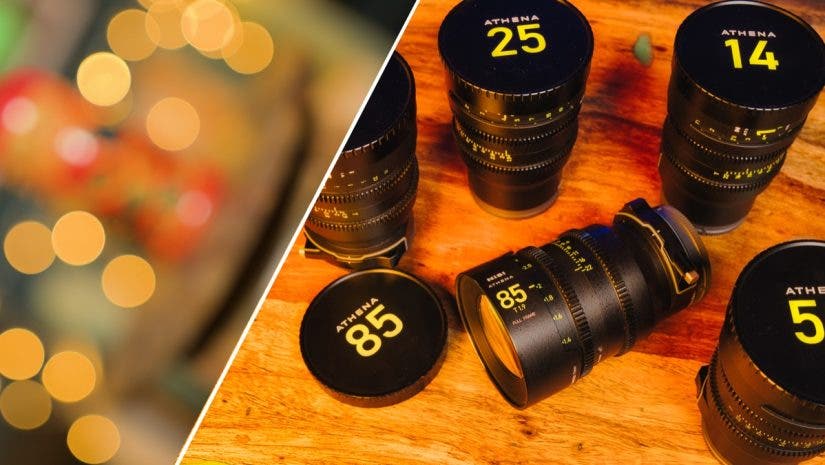
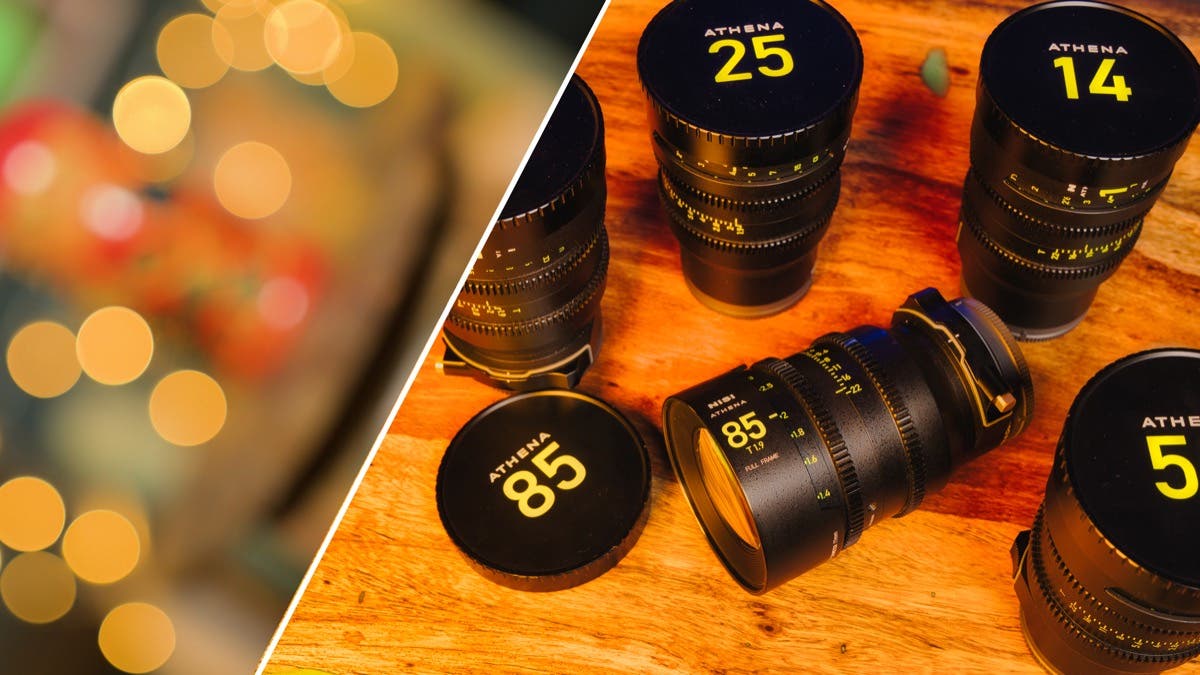
In my previous blog on NiSi ATHENA PRIME cine lenses, we discussed the lenses’ optical performance in depth, plus center-to-corner sharpness and color matching. My conclusion was that the ATHENA PRIME lenses deliver exceptional results, and their budget price makes them an excellent choice for cinematographers and filmmakers in 2026. This is because their value lies in the timeless demands of cinematography: image sharpness and consistency across focal lengths, and lens control. We also focused on charts and vector scopes to verify their performance.
Our exploration will now move beyond that to analyze the artistic qualities of NiSi’s cine lenses that help filmmakers elevate their narrative storytelling through light, texture, and depth. In this article, we will dive into the bokeh world, explain why it’s essential to consider bokeh for cine lenses, and show how ATHENA PRIME performs.
This review is based on my experience with the NiSi ATHENA PRIME cine lenses and two short films I shot and edited. Tests were also conducted in my studio for technical purposes. I used 14mm, 25mm, 35mm, 50mm, and 85mm prime lenses for the short films and testing.

NiSi ATHENA PRIME Lenses Review: Optical Performance and Bokeh
The visual artistry, or “soul,” of a motion picture, is often defined by the aesthetic quality of its out-of-focus regions – a characteristic known as bokeh in cinematography. While the technical excellence of a cine lens rests on sharpness and resolution, it is the handling of the frame’s blurred areas that profoundly influences the image. Bokeh specifically refers to how a lens renders diffused light, notably the shape and smoothness of highlights (the bright areas) in out-of-focus zones. This quality is crucial for establishing the overall mood and visual composition of a shot. By directing the viewer’s attention to the main subject and crafting a pleasing background, high-quality bokeh significantly enhances the perception of depth and focus, thereby strengthening the storytelling.
10-Blade Aperture Artistry: The Geometry of Blur
A key feature that sets the ATHENA series apart is its aperture design. Unlike many budget lenses, which typically use 6 or 9 blades, the ATHENA PRIME lenses feature a 10-blade diaphragm. This design choice ensures that the aperture remains almost perfectly circular throughout the full range of T-stops. Why does that matter? It’s because the blades shape the light entering your light; this determines the look and feel of your motion picture. To assess consistency, a bokeh ball analysis is performed to demonstrate the blur characteristics.
Bokeh Ball Analysis: From Center to Edge
There is the assumption that a scatter of bokeh balls should look consistent in shape and texture to allow for uniformity in your image, with clear, velvety spheres being the ideal. Given this, I found different characteristics to occur in the various ATHENA cine lenses.
Center
In the center of the frame, except for the 14mm, I found that the ATHENA PRIMEs produce clean, “soap-bubble” bokeh balls, i.e., perfectly circular with a smooth, even distribution of light that avoids the undesired “onion-ring” textures.
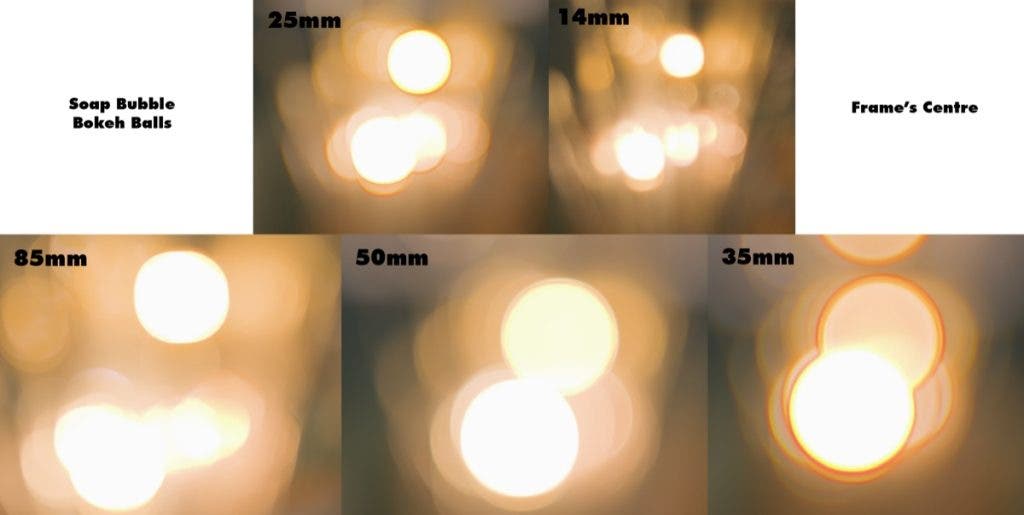
For comparison, the image below shows how a typical onion-ring bokeh ball looks with some budget lenses.

The Edges
In general, cat-eye-shaped bokeh balls are most common toward the edges of the frame because light rays entering the lens at an oblique angle are physically clipped or blocked by internal lens elements, the lens barrel, or the aperture blades.
In ATHENA PRIME lenses, the effect seemed acceptable across all lenses except the 35mm. The 50mm and 85mm, which are likely to be used for close-up, tight shots, and where bokeh characteristics may be more visible, produce clean, creamy results across most of the field. Because the bokeh colors are so clean, the subtle cat-eyeing on the edges becomes hardly noticeable. I found the 35mm lens to exhibit significant chromatic aberration and to perform least effectively in this regard.
ATHENA PRIME Lenses: The bokeh balls in the frame across the focal lengths

As seen in the video, the colors and overall blur across all the lenses are consistent, and if it weren’t for the multitude of small LED lights in the background, you wouldn’t be able to tell them apart. Having said that, if and where the background light characteristics and bokeh of your film matter, the 35mm lens should be used with proper consideration due to this cat-eye effect and visible chromatic aberration.
Visual Aesthetics of the Blur
My experience shooting and editing two film projects with the ATHENA PRIME, with largely controlled lighting, shows the following:
- Skintones: The lenses render skin tones with a natural look and preserve details. This makes them suitable for a variety of styles, from bright commercials to dark, moody scenes. The edited film with the blacksmith featured more black and dark tones, while the ceramics video was edited to be bright and warm, as discussed with the artists. I had no problem with color casts or rendition during the editing process with my footage shot with ATHENA PRIME cine lenses. They performed well with color.
- Focus transition: The lenses maintain sharp focus while smoothly blending out-of-focus areas, resulting in images that feel realistic and three-dimensional. I felt no difference in the background blurs with various lenses, and they are consistent and on par with one another.
- Flare: While the tests I conducted in the studio were under very harsh light, when planned and exposed to direct light at certain angles to create a cinematic effect, the lenses produce a pleasing flare that adds character to the footage, making it more engaging without causing distracting blurriness.
Examples of the above-mentioned characteristics can be seen in the video clips below, which use various focal lengths of the ATHENA PRIME.
Focal Length Personality Profiles
Each lens in the ATHENA kit offers a distinct ‘voice,’ making the selection of the right focal length a matter of both framing and emotional resonance. The key takeaway from working with these cine lenses was the importance of being intentional with every shot, matching the lens to the specific emotional and visual demands of the scenario. Although changing lenses might initially seem inconvenient, their uniform size makes frequent swaps easier, ensuring that the overall quality of the production is never compromised.
14mm & 25mm: The Environmental Storyteller
I hadn’t planned any shots with the wide-angled 14mm or 25mm lenses for the blacksmith, just to avoid distortion in the facial and body features. However, I ended up using 25mm at his request to showcase his artwork in the larger context of his studio. This brought me back to an essential rule of cinematography and storytelling: always have a wide environmental shot to set the context.

35mm: The Middle Man
Often described as the human focal length, the 35mm sits perfectly between wide-angle context and intimate portraiture. It’s wide enough to tell a story about the space but tight enough to feel personal during dialogue, making it perhaps the most versatile lens in the set.

50mm: The Portrait Master
The 50mm is a staple for a reason. In the ATHENA set, 50mm provides a natural perspective that doesn’t distort facial features, making it the go-to when the human face is prominent. Where I wanted to show the artists’ faces and also their instruments or hands from an angle, I used the 50mm lens for all my tight shots, knowing I would get negligible distortion even if the subject’s face were at the edges of the frame. This lens works beautifully in restricted spaces where you need a shallow depth of field but don’t have the room to back up with a longer telephoto.

85mm: Creamy Isolator
This is the master of compressed perspectives. The 85mm lens pulls the background closer to the subject, creating a tunnel-vision effect. For that reason, I chose the 85mm lens mainly to focus on the artists’ hands and instruments. With its T1.9 aperture, the background melt is significant, providing a creamy, smooth blur while maintaining focus isolation on the subject – a hallmark of high-end cinema.
Having said that, I suggest avoiding using T1.9 as a solo filmmaker on an 85mm lens without a dedicated assistant to pull focus. I utilized a DJI Focus grip to do the work alone, and because of the compression and tunnel-vision effect, any misfocuses became significantly pronounced. On set, I recognized the problem and needed to employ a work-around solution: I increased the T-stops to achieve a greater depth of field.

Conclusion
The NiSi ATHENA PRIMEs have reshaped the industry standard by proving that affordability and quality can co-exist in cinematography. Their appeal lies not only in their technical precision but also in their ability to support the narrative without distraction. Their optical performance and bokeh ensure the footage is more than just sharp and possesses true cinematic character, while bringing the art of filmmaking more accessible to the general public.
Read on for the final article in this three-part series: NiSi ATHENA PRIME Lenses: Compact Cinema and On-Set Efficiency