
Industrial Lenses
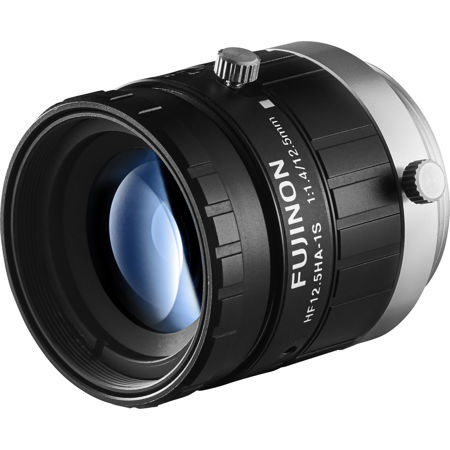
Industrial lenses are engineered for precision, reliability, and performance in environments where standard photographic lenses simply cannot compete. These specialized optics are the backbone of machine vision systems, automated inspection stations, robotics, and scientific imaging setups. Whether you’re configuring a new production line, upgrading an existing quality control process, or developing a custom imaging solution for research, choosing the best industrial camera lens is a critical step. Industrial camera lenses are designed to deliver consistent image quality, even under challenging conditions such as variable lighting, vibration, or exposure to dust and moisture. They often feature robust housings, secure mounts, and advanced coatings to minimize flare and maximize contrast, ensuring that every detail is captured with clarity. For those working in electronics manufacturing, food processing, pharmaceuticals, or automotive assembly, lenses for industrial inspection help identify defects, measure components, and monitor processes with a level of accuracy that keeps operations running smoothly. As the weather warms and many industries ramp up production or maintenance schedules, the demand for dependable, high-resolution imaging tools becomes even more pronounced.
Beyond the factory floor, advanced industrial lenses find their place in a variety of innovative applications. Research laboratories rely on them for microscopy, spectroscopy, and high-speed imaging, where the slightest optical imperfection can compromise results. Security and surveillance professionals use industrial lenses for monitoring large facilities or critical infrastructure, taking advantage of features such as remote focus, variable aperture, and ruggedized construction. Even creative professionals and educators sometimes integrate these lenses into custom rigs for film, art installations, or interactive exhibits, leveraging their unique optical properties to achieve effects not possible with consumer-grade glass. For those looking to surprise a colleague or loved one in engineering, science, or technical photography, an industrial lens can be a thoughtful and practical gift—especially for someone embarking on a new project or advancing their professional toolkit. When selecting a lens, consider factors such as focal length, aperture range, sensor compatibility, and mounting options. Matching the lens to your specific camera system and application requirements is essential for achieving the best results, whether you’re capturing microscopic circuit traces, inspecting packaging seals, or automating barcode reading. If you’re interested in exploring the heritage and evolution of lens design, don’t miss our curated collection of Classic Lenses, which offers inspiration for both modern and vintage imaging projects.
Investing in industrial lenses is not just about technical specifications—it’s about ensuring peace of mind and operational efficiency. These lenses are built to last, often with features like lockable focus and iris rings, anti-vibration mounts, and easy integration with machine vision software. As industries continue to innovate and adapt throughout the changing seasons, the right imaging equipment can mean the difference between catching a critical defect early or missing it entirely. Whether you’re outfitting a sprawling manufacturing plant, upgrading a laboratory, or experimenting with new ways to visualize the world, industrial camera lenses provide the foundation for reliable, repeatable, and high-quality imaging. Their versatility and durability make them a smart investment for anyone who depends on precision visuals, from seasoned engineers to forward-thinking creators.
Beyond the factory floor, advanced industrial lenses find their place in a variety of innovative applications. Research laboratories rely on them for microscopy, spectroscopy, and high-speed imaging, where the slightest optical imperfection can compromise results. Security and surveillance professionals use industrial lenses for monitoring large facilities or critical infrastructure, taking advantage of features such as remote focus, variable aperture, and ruggedized construction. Even creative professionals and educators sometimes integrate these lenses into custom rigs for film, art installations, or interactive exhibits, leveraging their unique optical properties to achieve effects not possible with consumer-grade glass. For those looking to surprise a colleague or loved one in engineering, science, or technical photography, an industrial lens can be a thoughtful and practical gift—especially for someone embarking on a new project or advancing their professional toolkit. When selecting a lens, consider factors such as focal length, aperture range, sensor compatibility, and mounting options. Matching the lens to your specific camera system and application requirements is essential for achieving the best results, whether you’re capturing microscopic circuit traces, inspecting packaging seals, or automating barcode reading. If you’re interested in exploring the heritage and evolution of lens design, don’t miss our curated collection of Classic Lenses, which offers inspiration for both modern and vintage imaging projects.
Investing in industrial lenses is not just about technical specifications—it’s about ensuring peace of mind and operational efficiency. These lenses are built to last, often with features like lockable focus and iris rings, anti-vibration mounts, and easy integration with machine vision software. As industries continue to innovate and adapt throughout the changing seasons, the right imaging equipment can mean the difference between catching a critical defect early or missing it entirely. Whether you’re outfitting a sprawling manufacturing plant, upgrading a laboratory, or experimenting with new ways to visualize the world, industrial camera lenses provide the foundation for reliable, repeatable, and high-quality imaging. Their versatility and durability make them a smart investment for anyone who depends on precision visuals, from seasoned engineers to forward-thinking creators.