
This item is no longer available.
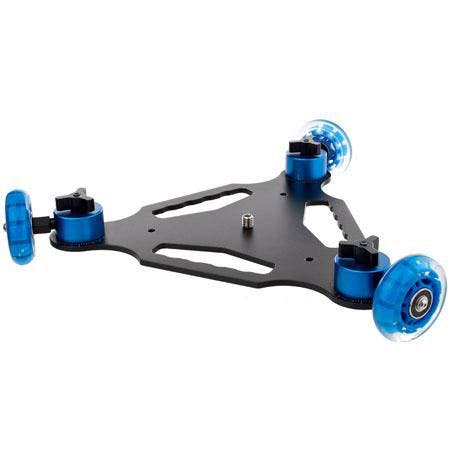
The Flashpoint video ShootSkate dolly is designed to create silky smooth camera movements for film and video production from dynamic low angles to table top. A camera is mounted to the dolly and the operator or cameraman executes moves with slick and graceful glide. The 3 super subtle polyurethane wheels absorb and dampen vibration to the camera. Independently locking turrets provide for avariety of styles of dolly rolls, according to your preference or surface conditions. The base plate has a ¼-20 tripod head mounting screw for a variety of camera level solutions for use without a tripod; fluid heads, articulating arms, ball and socket heads and direct to the camera. Convenient grip handles on each side of the ShootSkate give direct hands-on mobility.
Dolly moves may also be executed with or without a track, depending on the necessity to repeat the move or the nature of the track surface. When all the wheels rotate freely without guidance, a "dance-floor" move, either on the existing surface or on a smooth overlay designed for dolly movement. The overlay usually consists of 3 ply plywood as a bottom layer and smoother masonite on top.
Hints on good dolly use: Camera dollies steering modes vary with use. Rear-wheel steering, where the front wheels remain fixed, while the wheels closest to the operating handle, are used to turn. A second mode, round steering, causes the front wheels to turn in the opposite direction from the rear wheels. This mode allows the dolly to move in smooth circles and is frequently used when the dolly is on curved track. A third mode, called crab steering, is when the front wheels steer in the same direction as the rear wheels. This allows the dolly to move in a direction diagonal to the front end of the dolly.