
This item is no longer available.
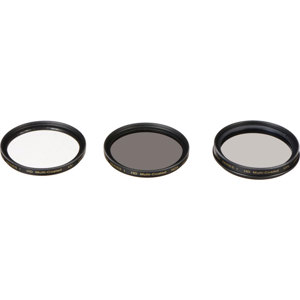
The Vivitar 3-Piece 82mm UV/CPL/ND Filter Kit is manufactured from high-quality solid optical materials. Each individual filter is heat-treated and multi-coated to avoid any rare movement or distortion. The Ultra Violet filters minimize the bluish cast sometimes found under daylight conditions. These filters will render your photos clearer, sharper and with more contrast. They are also the best available protection against accidental damage to the front element of your lens. If you accidentally drop your lens, you will be protected against nicks and scratches. As a lens protector, it should be left on at all times.
The CPL filter is often used to increase the contrast and saturation in blue skies and white clouds. Vivitar's circular polarizing filters do not affect the overall color balance of a shot and they will provide protection for your lens while shooting. Vivitar filters are perfect for digital SLR cameras or traditional 35mm SLR applications.
The Neutral Density filter reduces intensity of all wavelengths or colors of light equally, giving no changes in hue or color rendition. The purpose of standard photographic neutral density filters is to allow the photographer greater flexibility to change the aperture, exposure time and/or blur of subject in different situations and atmospheric conditions. Instead of reducing the aperture to limit light, the photographer can add a ND filter and can then set the shutter speed according to the particular motion desired and the aperture set as needed.