
Digital photography took a digital step forward in reducing digital noise and improving image quality in 2009 with the first Back Side-Illuminated, or BSI, Sensor. What is it and how is it different from other sensors?
A reader recently wrote: “I’ve been hearing the term ”back side-illuminated sensor” when referring to the imaging sensors in some digital cameras. What is it, and what’s the advantage of a camera with a back side-illuminated sensor?”

A back-illuminated sensor or backside illuminated sensor (BSI) is an imaging sensor for digital cameras with a different layout from other sensors that allows more light to be collected at the pixel level. The resulting images have less digital noise, and low-light performance can be improved by as much as a stop or more.
What Is a BSI Sensor?
Each sensor is made up of individual picture elements, or pixels, which are laid out in a matrix design. For each pixel, there’s a lens in front, sensors in the back, and wires somewhere in the middle. In a traditional sensor, a matrix with transistors is placed in front of the lenses. So, the light has to travel through a maze of wires and transistors before it hits the lens, and some of that light is blocked. In a back side-illuminated sensor, the transistor matrix is moved behind the lenses. This allows more light to hit each pixel. In terms of signal-to-noise ratio, they are claimed to offer an 8dB improvement, which is significant.

Sounds like a no-brainer, right? Shouldn’t all cameras have these things? Until recently, manufacturing back side-illuminated sensors was prohibitively expensive, and these sensors were more likely to be found in security cameras, microscope and astronomy cameras and other specialized applications where low light was common. However, Sony saw the widespread commercial potential of the sensors and developed a process that let them mass-produce the chips. The first backside-illuminated CMOS Exmor R sensor was announced in 2009, and numerous compact cameras and camera phones are now using that sensor, or similar designs made by other camera makers.
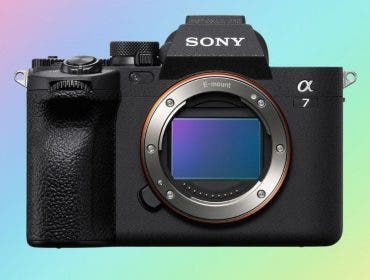
As new compact cameras are announced, backside-illuminated sensors are much more widespread. Canon, Samsung and others have developed their own backside-illuminated CMOS sensors, many of which can be found in recently-introduced cameras such as the Sony Alpha a7R IV.

How Does a BSI Sensor Work?
BSI sensors and frontside illuminated (FSI) sensors feature much of the same technology, just in a different order.
All CMOS camera sensors found in contemporary DSLRs, mirrorless cameras, and even smartphones feature a collection of semiconductor light sensors. These sensors gather the light that travels through the lens and turn it into electrical signals, which are eventually recorded as an image file on your camera’s memory card.
BSI vs FSI Sensors
In an FSI sensor, light passes through multiple layers—on-chip microlenses, color filters, gaps in metal wiring circuitry, the light-receiving surface—and then the photodiode substrate. Because light has to pass through so many layers before it’s captured, there is significant light loss. Some light actually bounces off the metal wiring, leading to a reduction in image quality.
In a BSI sensor, the light passes through on-chip microlenses, through color filters, through a light-receiving surface, and directly onto the photodiode substrate that captures the light. All the metal wiring circuitry associated with capturing light and converting it into electrical signals is contained on the back side of the camera sensor.
Stacked CMOS sensors elevate BSI sensor technology even more by adding another layer of image processing circuitry on the back of the sensor.
What are the Advantages of BSI Sensors?
BSI sensors are more efficient in a multitude of ways that benefit photographers and videographers.
More Light Captured
BSI sensors increase the amount of light captured to as much as 100%, while FSI sensors often capture between 30% and 80% of light. BSI sensors can easily capture and record light no matter what angle it comes from when entering the lens.
Noise Reduction
Noise reduction is another major benefit of BSI sensors. A camera with a backside illuminated sensor can use higher ISOs while creating less noise than FSI sensor cameras.
Faster Signals and Recording
Signal speeds and image recording are also much faster with a BSI sensor. Cameras that use this updated sensor technology often have faster autofocus systems and better burst-shooting speeds.
Better Low-Light Photography
Cameras with BSI sensors that have been tested by DxOMark labs and others are showing a dramatic improvement in digital noise levels. In some high-end compact cameras, when combined with improved JPEG noise reduction, it is now possible to get images with decent image quality at ISO 400 or higher.
A Positive Step Forward
BSI CMOS sensors are becoming more affordable to make and are found on a growing number of cameras. If you are concerned about image quality, they make a real difference especially when shooting in low light at higher ISO settings. If you are in the market for a new compact camera, backside-illuminated sensor is a feature to look for!
What are the Disadvantages of BSI Sensors?
In their infancy, BSI sensors had more issues than they do today. Now that they’re so heavily favored by manufacturers and photographers, most BSI sensor disadvantages have been overcome. That said, there were some initial weaknesses and problems with integrating BSI sensor technology during its early years.
Complexity of Production
Creating BSI sensors required manufacturers to redesign their entire assembly line workflows. FSI sensor production featured a thicker layer of silicone substrate at the bottom of the sensor. This silicone layer was the foundation of the rest of the sensor, so other layers of circuitry, microlenses, and filters were easily added layer-by-layer on top.
BSI production is far more elaborate and can’t be performed in a single bottom-to-top assembly process. The new production process involves two layers of silicone substrate. Manufacturers need to thin the first layer for effective light sensitivity after assembling all of the components.
Increased Cost and Fragility
The process of thinning one of the silicone layers in a BSI sensor resulted in more accidentally damaged sensors during manufacturing. The thinner the silicone, the more fragile the sensor. To improve the success rate of creating these more fragile sensors, manufacturers needed to slow down the production process.
Because manufacturing processes had to be completely redesigned to incorporate new sensor technology, the cost of producing the sensors was significantly higher at first. In the early stages, camera manufacturers were concerned about the cost and complexity, and whether or not photographers would be willing to absorb the increased cost into their camera’s price tags.
Alternatives to the BSI Sensor
While BSI sensors are now extremely common, other sensor types still exist. The other major type of sensor is a charge-coupled device (CCD) sensor. CCD technology actually predates CMOS technology, and some photographers and manufacturers still prefer it.
Hasselblad and Leica still offer digital camera bodies that use CCD sensors.
CCD Sensor Basics
CCDs sensors capture light by converting photons into electrons. The more intense the light that reaches each pixel, the stronger the electron charge. Next, the electron charges are converted into voltage and recorded as an image file.
Benefits of CCD Sensors
CCD sensors offered better image quality than many early generations of FSI CMOS sensors. Not only did they support high dynamic range, but they produced images with lower noise. Many scientific and medical imaging devices, like the Hubble Telescope, opted for CCD sensors because of their impressive image quality.
Disadvantages of CCD Sensors
Even with their fantastic image quality, CCD sensors have their downsides. They’re more expensive to manufacture than most CMOS sensors, they consume more energy, and they produce more heat.
Conclusion
As each successive generation of digital cameras emerges, manufacturers develop and refine new technology, eventually making it more affordable. BSI sensors are a great example of this pattern, with early versions posing many complications.
Now, BSI sensors are so common and popular that they’ve become more functional and affordable. Camera sensors will likely continue to refine and improve on the BSI model in the coming years.