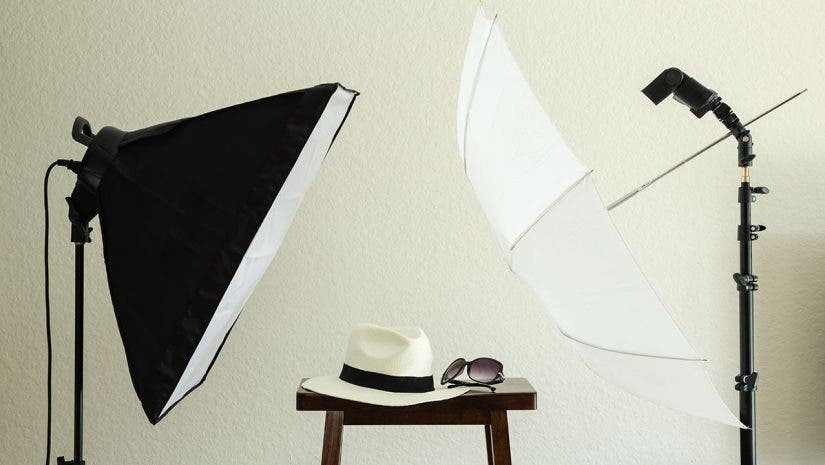
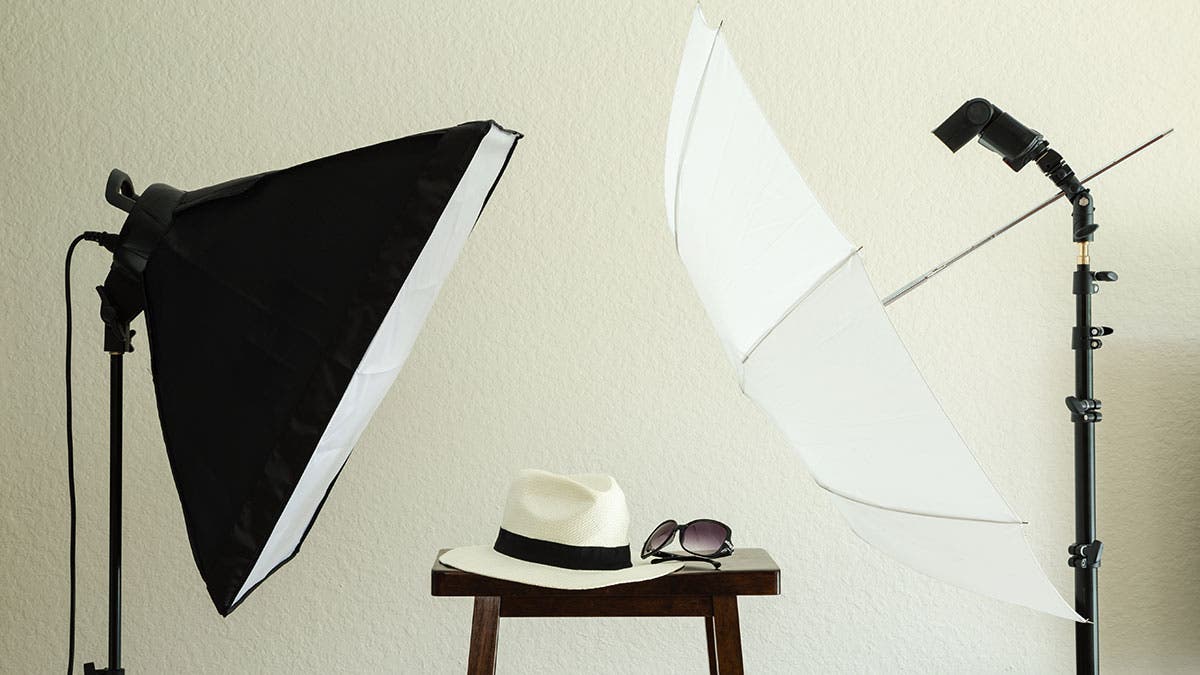
What kind of light modifier should you use? Umbrellas are great to start with for photographers who are new to using artificial lighting, but softboxes give you more directionality and control. The difference between a softbox vs umbrella all depends on your ultimate creative goal.
Portrait lighting has four major characteristics: color, direction, quantity, and quality. When working with light sources—from strobes and speedlights to monolights and LED lights—the best way to improve the light’s quality is with a modification device such as an umbrella or a softbox as a diffuser. Each light modifier has its own unique advantages and disadvantages. But no matter which one you choose, both devices are governed by the same important rule: the proximity of the light source to the subject determines how hard or soft the light will be. The closer a light source is to the subject, the softer the light will be; the further away the light source is, the harder it becomes.
What is softbox lighting?
What is umbrella lighting?
The photography umbrella is probably the most popular light modifier as it is highly portable, incredibly cheap, and best of all, easy to use. If you’ve ever used a simple rain umbrella, then you’re halfway to knowing how to use one for creating artificial lighting in your photography.
Umbrellas provide photographers with a broad and soft light source that closely emulates outdoor lighting. Unlike softboxes, which give you directional control, umbrellas produce a more unrestricted type of lighting that will pretty much go everywhere.
Types of Photography Umbrella lighting
There are two types of umbrellas: shoot-through and reflective. While innately similar, there are a few differences between the two in terms of what they look like and how they are used.
Reflective umbrellas are opaque on the outside and made of a metallic, reflective material on the inside. To diffuse light with this type of umbrella, you simply need to set it up so that the inner reflective part faces the subject, then you shoot the flash into the reflective material so that the “hard” light bounces and reflects a softer, broader, and more even light onto the subject.
Shoot-through umbrellas are made with a plain, white, and semi-translucent material. To diffuse light with these white umbrellas, you need to point the outside part of the umbrella at your subject. Then, shoot the flash into the opening so that the light passes through the translucent material, making it much softer. Unlike the reflective umbrella, the light produced with the shoot-through is slightly easier to control.
When used in the traditional position, umbrellas produce indirect, bounced light. It may require more flash output from the light source you’re using. Because umbrellas produce a broader type of diffused lighting, they are easier for beginners to use. Point an umbrella at a subject and voilà, you’ve got soft lighting! Use two of them together and you’ll think you’re a lighting genius.
What are the key differences between a softbox and an umbrella?
The key differences between softboxes and umbrellas are important to know, especially if you’re looking to buy only one. Now that we’ve discussed both individually, let’s compare them side by side.
| Feature | Umbrella | Softbox |
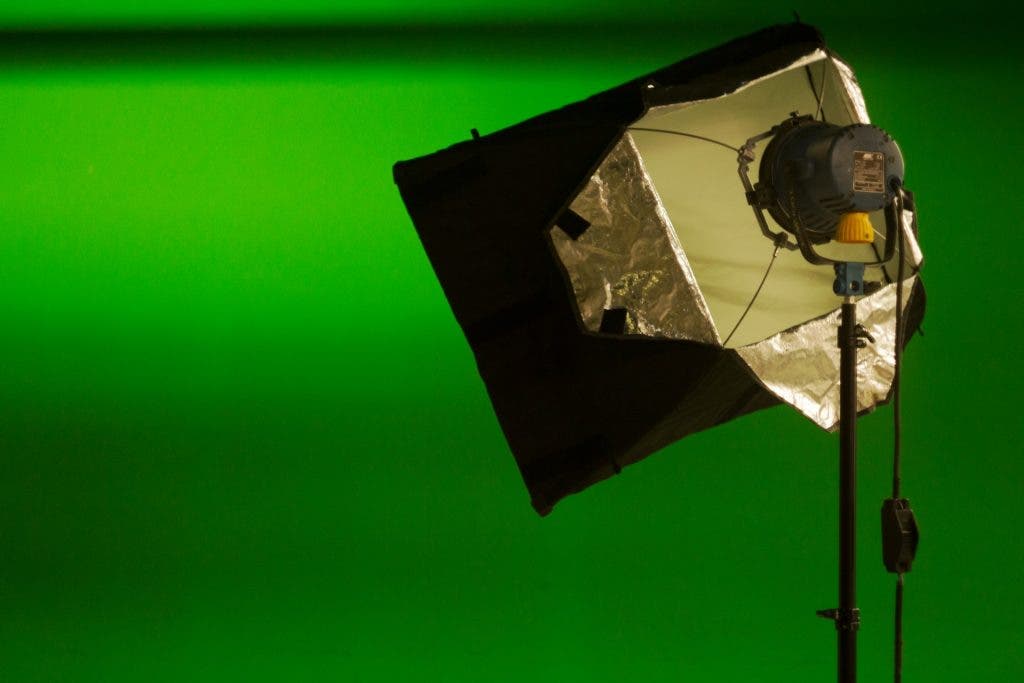
| Design and setup | Simpler, resembling a regular rain umbrella. It can be either reflective or shoot-through It’s quicker to set up and more portable due to its collapsible design. | Enclosed lighting modifier with reflective interior surfaces and a front diffusion panel. Setting up a softbox can take a bit more time due to it being more complex. |
| Control and Precision | Offers less control over light direction and spread. Reflective umbrellas can bounce light broadly, while shoot-through umbrellas diffuse light over a wide area. | Provides excellent control over the light’s direction and spread. The enclosed design ensures that light is directed where you need it. |
| Portability | Extremely portable and easy to carry. Its lightweight and collapsible design make it ideal for on-location shoots. | Generally bulkier and less portable compared to umbrellas. It requires more time to assemble and disassemble, making it better suited for studio work or planned shoots. |
Softbox vs. Umbrella in action
To show you the visible differences between an umbrella and a softbox, I shot a comparison test using two large light sources. In this corner was a white parabolic umbrella. In the opposite corner was a 36×48-inch softbox. For my test shots, I didn’t use any fill light or reflector. I wanted you to see the total effect of the light modifier that was used.
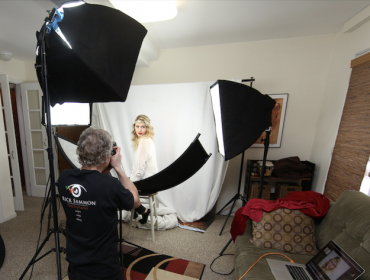
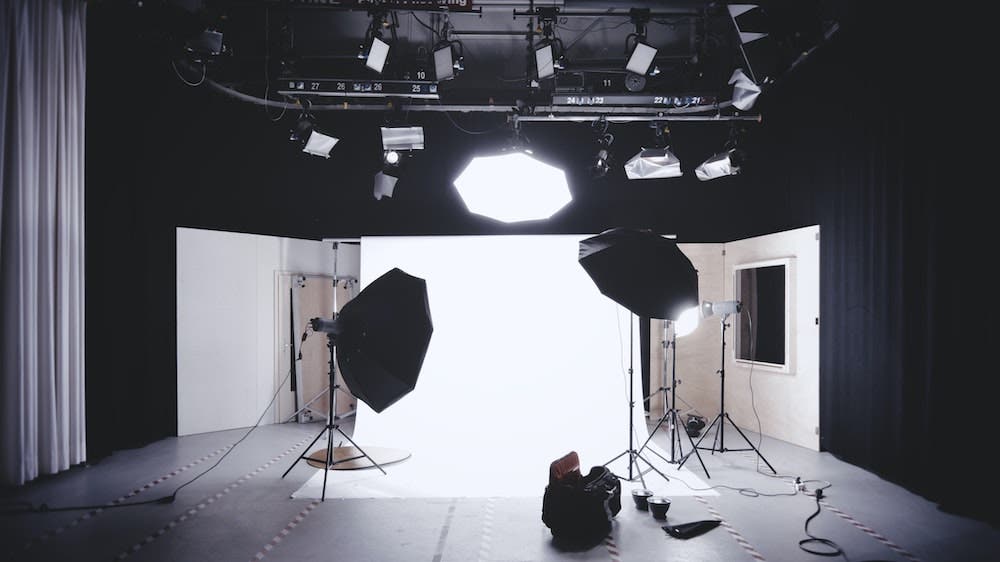
Softbox lighting setup example

This is the lighting set-up that I used for my test in my 11×15-foot in-home studio. A Flashpoint monolight was placed at camera’s right, just outside the frame. My first shot was with the 36×48-inch Softbox and then later I used an umbrella while the monolight was in the same location.
Umbrella lighting setup example

To give me an f/8 aperture and achieve the kind of depth-of-field I like when making a three-quarter length portrait, I set the power on the monolight between one-eight and one-half power using the monolight’s continuously variable output knob. No reflector was used, only the light from the 36×48-inch softbox, and the exposure was 1/125 sec at f/8 and ISO 100.

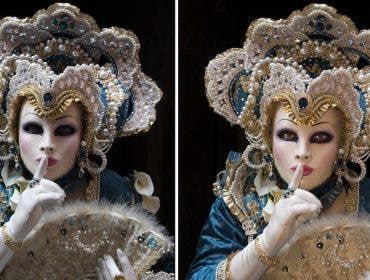
To make sure nothing moved when I switched to an umbrella, I placed gaffer’s tape on the floor to position the monolight, now with the parabolic umbrella mounted. Two things happened: One that’s obvious and one that’s not. The obvious thing is that the lighting is much broader and softer with less modeling on the subject’s face. There’s also more light spilling onto on background. Because the light bounces, the quantity is less. Therefore, my exposure setting changed to 1/125 sec at f/6.3 and ISO 160.
Unlike photography umbrellas that are forgiving, lightbanks require some basic knowledge of balancing the main versus fill light (that fill could even be an umbrella or just a reflector) so it won’t produce overly contrasty lighting (unless, of course, that’s what you want). Softboxes are also slightly more complicated to set up. However, the Glow series of Softboxes are the easiest to assemble. But choices are what this whole discussion is about. You select the light modifier that matches the kind of portrait you’re trying to make. Sometimes that will require an umbrella, and sometimes it’ll be a lightbank.
There is no “one size fits all” solution to lighting. Just as you will select the right lens and ISO for natural light photography, when it comes to working with artificial light you need to select the right tool for the job.
Should I use softbox vs. umbrella lighting?

Deciding whether to use a softbox vs an umbrella comes down to personal preference. How do you want the light to look? How much physical space do you have in your studio? Do you need to break down your studio setup in between shoots, or can you leave your gear assembled?
Softboxes are among the most popular diffusers, creating more even lighting than reflected umbrellas or even shoot-through umbrellas. They produce a wall of light with minimal hotspots. That’s why they’re very popular in photography and video.
If you need a more portable setup that you can assemble and break down quickly and easily, nothing beats umbrellas. They’re compact, quick to unpack and set up, and are relatively foolproof. If you buy a convertible umbrella, you can use it to reflect the light. You can also use it to soften the light by shooting through.
If you have a dedicated studio space, softboxes are usually the way to go. If you need something you can disassemble and move, an umbrella light may be the best option for you.
Should I use a ring light vs. umbrella lighting?

Deciding to use a ring light vs an umbrella light comes down to determining where you need the light in relation to the camera. Many photographers love ring lights because they can place the lens in the center of the light. This method creates even, shadowless lighting similar to using a beauty dish. Umbrellas make camera placement a bit trickier.
When deciding which light to use, it helps to know what kind of images you are creating. Plus, keep in mind how many subjects you’ll photograph at once. If you’re shooting a portrait of a single subject, ring lights are often the most attractive option. But if you have more than one subject, you’ll lose the ring light effect.
If you don’t plan to photograph your subject directly in front, or you want to play with shadows and lighting ratios, umbrella lighting is your best option. By using multiple lights, you can still create attractive and interesting compositions.
Situational FAQs
Umbrella or softbox for outdoor portraits?
For outdoor portraits, a softbox is generally preferred over an umbrella because it provides more controlled directional light causing less spill. It can even produce a softer and more flattering effect on the subject. While umbrellas are easier to set up and offer broader light coverage, they can be harder to manage in windy conditions and may create more scattered light.
Umbrella or softbox for group photo?
When it comes to group photos in events or gatherings, an umbrella is preferred since it provides even light coverage, helping illuminate people evenly. Umbrellas are also easier and quicker to set up, making them convenient for larger setups. While softboxes offer more controlled light, their narrower beam can make it challenging to cover a large group effectively.
Umbrella or softbox for content creators?
For content creators who need good lighting, a softbox is generally the better choice due to its ability to produce soft and controlled light that minimizes shadows which makes it ideal for videos and professional-looking photos. While umbrellas are quicker to set up in your room or content creation studio and offer broader light, softboxes provide a more polished and consistent look.