
Overview
Compare
Specs
Protection

Reviews about this item

Review Summary

Netgear M7100 Specifications

  • RJ-45 100/1000/10GBase-T

    24 (auto-sensing)

  • SFP+ Ports 1000/10GBase-X

    4 (auto-sensing)

  • Interfaces/Ports

    1x USB

  • Console Ports

    Serial RS232 DB9
    Mini-USB (selectable)

  • Modular PSUs

    2

  • Modular Fan Trays

    2

  • Processor (CPU)

    Freescale P1011 800MHz (45nm technology)

  • System Memory

    256MB

  • Code Storage

    128MB (dual firmware image, dual configuration file)

  • Packet Buffer Memory

    16Mb (dynamically shared across only used ports)

  • Switching Fabric

    480Gb/s (Line-rate (non blocking fabric))

  • Throughput

    357.1Mp/s

  • Energy Efficient Ethernet (EEE)

    IEEE 802.3az Energy Efficient Ethernet Task Force compliance (deactivated by default)

  • Auto-EEE Mode

    Yes (deactivated by default)

  • Power Back-Up Operation

    Drops power consumption by 15 to 20% when short copper cables are detected(10GBase-T standard)

  • Forwarding Mode

    Store-and-forward

  • Latency

    64-Byte Frames, 100Mb/s, and Copper: <8.5 s
    64-Byte Frames, 1Gb/s, Copper: <2.8 s
    64-Byte Frames, 1Gb/s, Fiber SFP: <2.5 s
    64-Byte Frames, 10Gb/s, Copper 10GBase-T: <3.7 s
    64-Byte Frames, 10Gb/s, Fiber SFP+: <1.8 s

  • Addressing

    48-Bit MAC address

  • Address Database Size

    32,000 MAC addresses

  • Number of VLANs

    1,024 VLANs (802.1Q) simultaneously

  • Number of Multicast Groups Filtered

    2K (IGMP)

  • Number of Link Aggregation Groups

    12x LAGs with up to 8x ports per group (LAGs - 802.3ad)

  • Number of Hardware Queues for QoS

    8x Queues

  • Number of Routes IPv4

    128

  • Number of IP Interfaces (Port or VLAN)

    128

  • Jumbo Frame Support

    Up to 12K packet size

  • Acoustic Noise (ANSI-S10.12)

    <60bB at 77deg. F (25deg. C) ambient (fan speed control)

  • Heat Dissipation

    587 Btu/hr

  • Mean Time Between Failures (MTBF)

    172,955 hours (up to 19.7 years) at 77deg. F (25deg. C) ambient
    35,725 hours (up to 4.1 years) at 131deg. F (55deg. C) ambient

  • L2 Services - VLANS 1

    IEEE 802.1Q VLAN tagging (up to 1,024 VLANs - 802.1Q tagging)
    Protocol based VLANs (IP subnet, ARP, IPX)
    Subnet based VLANs
    MAC based VLANs
    Voice VLAN
    Private edge VLAN
    Private VLAN
    IEEE 802.1x (guest VLAN, RADIUS based VLAN assignment via .1x, RADIUS based Filter ID
    assignment via .1x, MAC-based .1x, unauthenticated VLAN)

  • L2 Services - VLANS 2

    Double VLAN Tagging (QoQ) (enabling dvlan-tunnel makes interface, global ethertype (TPID), interface ethertype (TPID), customer ID using PVID)
    GARP with GVRP/GMRP (automatic registration for membership in VLANs or in multicast groups)
    MVR (multicast VLAN registration)

  • L2 Services - Availability

    IEEE 802.3ad " LAGs (LACP, static LAGs) (up to 24 x LAGs and up to 8 x physical ports per LAG)
    LAG hashing
    Storm control
    IEEE 802.3x (full duplex and flow control) (per port flow control) UDLD Support (unidirectional link detection) (normal-mode, aggressive-mode)
    IEEE 802.1D spanning tree protocol
    IEEE 802.1w rapid spanning tree
    IEEE 802.1s multiple spanning tree
    STP loop guard
    STP root guard
    BPDU guard

  • L2 Services - Multicast Filtering

    IGMPv2 snooping support
    IGMPv3 snooping support
    MLDv1 snooping support
    MLDv2 snooping support
    Expedited leave function
    Static L2 multicast filtering
    IGMP snooping (enable IGMP snooping per VLAN, snooping querier)
    Multicast VLAN registration (MVR)

  • L3 Services - DHCP

    DHCP IPv4/DHCP IPv6 client
    DHCP IPv4 server
    DHCP snooping IPv4
    DHCP relay IPv4
    DHCP BootP IPv4
    Auto install (DHCP options 66, 67, 150)

  • L3 Services - IPv4 Routing

    Static routing
    Port based routing
    VLAN routing (802.3ad (LAG) for router ports)
    IP helper (Maximum IP helper entries)
    IP source guard
    ECMP
    Proxy ARP
    Multinetting
    ICMP redirect detection in hardware
    DNSv4
    ICMP throttling

  • Network Monitoring & Discovery Services

    ISDP (Industry Standard Discovery Protocol) (inter-operates with devices running CDP)
    802.1ab LLDP
    802.1ab LLDP " MED
    SNMP
    RMON 1,2,3,9
    sFlow

  • DoS prevention

    Broadcast, unicast, multicast DoS protection
    Denial of service protection (control plane)
    Denial of service protection (data plane)

  • DoS Attacks

    SIPDIP, UDPPORT, L4PORT
    SMACDMAC, TCPFLAGSEQ, ICMPV4
    FIRSTFRAG, TCPOFFSET, ICMPV6
    TCPFRAG, TCPSYN, ICMPFRAG
    TCPFLAG, TCPSYNFIN, I
    TCPPORT, TCPFINURGPSH

  • ICMP Throttling

    Yes (restrict ICMP, PING traffic for ICMP-based DoS attacks)

  • Management

    Management ACL (MACAL) (Maximum Rules: 64) (protects management CPU access through the LAN)
    Radius accounting (RFC 2565 and RFC 2866) ,TACACS+

  • Network Traffic 1

    Access Control Lists (ACLs) (L2 / L3 / L4) (MAC, IPv4, IPv6, TCP, UDP)
    Protocol-based ACLs
    ACL over VLANs
    Dynamic ACLs
    IEEE 802.1x radius port access authentication (Up to 48 x clients (802.1x) per port are supported, including the authentication of the users domain)
    802.1x MAC Address Authentication Bypass (MAB) (supplemental authentication mechanism for non-802.1x devices, based on their MAC address only)

  • Network Traffic 2

    Port security
    IP source guard DHCP snooping Dynamic ARP inspection MAC filtering Port MAC locking Private edge VLAN

  • Access Lists

    L2 MAC, L3 IP and L4 Port ACLs
    Ingress
    Egress
    802.3ad (LAG) for ACL assignment
    Binding ACLs to VLANs
    ACL logging
    Support for IPv6 fields

  • DiffServ QoS

    Edge Node applicability
    Interior Node applicability
    802.3ad (LAG) for service interface
    Support for IPv6 fields
    Ingress/Egress

  • IEEE 802.1p COS

    802.3ad (LAG) for COS configuration
    WRED (Weighted Deficit Round Robin)
    Strict Priority Queue technology

  • Auto-VoIP

    Yes (based on protocols (SIP, H323 and SCCP) or on OUI bytes (default database and user-based OUIs) in the phone source MAC address)

  • iSCSI Flow Acceleration (QoS)

    Dot1p marking
    IP DSCP marking

  • IP Rule Match Fields

    Dest IP: Inbound/Outbound
    Dest IPv6 IP: Inbound/Outbound
    Dest L4 Port: Inbound/Outbound
    Every Packet: Inbound/Outbound
    IP DSCP: Inbound/Outbound
    IP Precedence: Inbound/Outbound
    IP TOS: Inbound/Outbound
    Protocol: Inbound/Outbound
    Source IP: Inbound/Outbound
    Source IPv6 IP: Inbound/Outbound
    L3 IPv6 Flow Label: Inbound
    Source L4 Port: Inbound/Outbound
    Supports Masking: Inbound/Outbound

  • MAC Rule Match Fields

    COS: Inbound/Outbound
    Dest MAC: Inbound/Outbound
    Dest MAC Mask: Inbound/Outbound
    Ethertype: Inbound/Outbound
    Source MAC: Inbound/Outbound
    Source MAC Mask: Inbound/Outbound
    VLAN ID: Inbound/Outbound
    VLAN ID2 (Secondary VLAN)

  • Rules Attributes

    Assign Queue: Inbound
    Logging Deny Rules: Inbound/Outbound
    Mirror: Inbound (to supported interface types only)
    Redirect: Inbound (to supported interface types only) Interface Inbound direction
    Outbound direction
    Supports LAG interfaces
    Multiple ACLs per interface, dir
    Mixed-type ACLs per interface, dir
    Mixed L2/IPv4 ACLs per interface, inbound
    Mixed IPv4/IPv6 ACLs per interface, inbound
    Mixed IPv4/IPv6 ACLs per interface, outbound

  • Interface

    Inbound direction ,Outbound direction ,Supports LAG interfaces ,Multiple ACLs per interface, dir ,Mixed-type ACLs per interface, dir ,Mixed L2/IPv4 ACLs per interface, inbound ,Mixed IPv4/IPv6 ACLs per interface, inbound ,Mixed IPv4/IPv6 ACLs per interface, outbound

  • Class

    All

  • Class Match Criteria 1

    COS: Inbound/Outbound
    COS2 (Secondary COS): Inbound
    Dest IP: Inbound/Outbound
    Dest IPv6 IP: Inbound/Outbound
    Dest L4 Port: Inbound/Outbound
    Dest MAC: Inbound/Outbound
    Ethertype: Inbound/Outbound
    Every Packet: Inbound/Outbound
    IP DSCP: Inbound/Outbound
    IP Precedence: Inbound/Outbound
    IP TOS: Inbound/Outbound
    Protocol: Inbound/Outbound
    Reference Class: Inbound/Outbound
    Source IP: Inbound/Outbound

  • Class Match Criteria 2

    Source IPv6 IP: Inbound/Outbound
    L3 IPv6 Flow Label: Inbound
    Source L4 Port: Inbound/Outbound
    Source MAC: Inbound/Outbound
    VLAN ID (Source VID): Inbound/Outbound
    VLAN ID2 (Secondary VLAN) (Source VID): Inbound/Outbound
    Supports Masking: Inbound/Outbound

  • Policy Based Routing

    Out class unrestricted

  • Policy Attributes

    Assign Queue: Inbound
    Drop
    Mark COS
    Mark IP DSCP
    Mark IP precedence
    Mirror: Inbound (to supported interface types only)
    Police simple
    Police color aware mode
    Drop
    Mark COS
    Mark IP DSCP
    Mark IP precedence
    Police simple
    Police color aware mode
    Redirect: Inbound (to supported interface types only)

  • Service Interface

    Inbound Slot.Port configurable
    Inbound 'All' Ports configurable
    Outbound Slot.Port configurable
    Outbound 'All' Ports configurable
    Supports LAG interfaces
    Mixed L2/IPv4 match criteria, inbound
    Mixed IPv4/IPv6 match criteria, inbound
    Mixed IPv4/IPv6 match criteria, outbound

  • PHB Support

    EF
    AF4x
    AF3x
    AF2x
    AF1x
    CS

  • COS Support

    Supports LAG interfaces
    COS Mapping Config

  • Configurable Per-Interface

    IP DSCP mapping

  • COS Queue Config

    Queue Parms configurable per-interface
    Drop Parms configurable per-interface
    Interface traffic shaping (for whole egress interface)
    Minimum bandwidth
    Weighted Deficit Round Robin (WDRR) support
    Maximum Queue Weight: 127
    WRED support

  • Platform Constants: Telnet Server

    5 (maximum)

  • Platform Constants: SSH

    5 (maximum)

  • Supported MAC Addresses

    32K (maximum)

  • Platform Constants: Number of VLANs

    1K

  • Platform Constants: VLAN IDs

    1 f" 4093

  • 802.1p Traffic Classes

    8x classes

  • Platform Constants: IEEE 802.1X

    Number of .1x Clients per Port: 48

  • Platform: No.of Link Aggregation Groups

    12x LAGs with up to 8x ports per group (LAGs - 802.3ad)

  • Platform Constants: Spanning Tree

    32 (maximum)

  • Platform Constants: MAC Based VLANs

    Number Supported: 256

  • Number of Log Messages Buffered

    200

  • Platform Constants: Log Entries

    Unicast MAC and Source Port: 20
    Multicast MAC and Source Port: 20
    Multicast MAC and Destination Port (Only): 256

  • Platform Constants: VLANs

    Number Supported: 128

  • Platform Constants: IP Based VLANs

    Number of Groups: 128 (maximum)
    Protocols: 16 (maximum)

  • Platform Constants: MAC Address

    2K (maximum)

  • Platform Constants: Jumbo Frame Support

    Size Supported: 12K (maximum)

  • Platform Constants: DHCP Snooping

    32K

  • DHCP Snooping Static Entries

    1024

  • 802.1ab LLDP & LLDP-MED

    48

  • Platform Constants: MAC ACL

    Dynamic Addresses Per Port: 4096 Static Addresses Per Port: 48

  • Platform Constants: sFlow Sampling

    Number of Samplers: 32 ,Number of Pollers: 52 ,Number of Receivers: 8

  • Platform Constants: Radius

    Authentication Servers: 5 (maximum)
    Accounting Servers: 1 (maximum)

  • Platform Constants: Interfaces

    128 (including port/vlan)

  • Number of Static Routes

    128

  • Platform Constants: DHCP Server

    Number of Pools: 16 (maximum)
    Leases: 1024 (maximum)

  • Platform Constants: DNS Support

    Concurrent Requests: 16
    Name Server Entries: 8
    Seach List Entries: 6
    Static Host Entries: 64
    Cache Entries: 128
    Domain Search List Entries: 32

  • Platform Constants: Host

    IPv4 Build: 6K
    Static v4 ARP Entries: 128

  • Platform Constants: ACLs

    Number of ACLs (Any Type): 100 (maximum)
    Number Configurable Rules per List: 1023 ingress/512 egress (maximum)
    ACL Rules per Interface and Direction (IPv4/L2): 1023 ingress/511 egress (maximum)
    ACL Rules per Interface and Direction (IPv6): 509 ingress/255 egress (maximum)
    ACL Rules (System-Wide): 16384 (maximum)
    ACL Logging Rules (System-Wide): 128 (maximum)

  • Platform Constants: 802.1p CoS

    Configurable Queues per Port: 8 x queues
    Configurable Drop Precedence Levels: 3

  • Platform Constants: Device

    Number of Queues: 8x queues
    Requires TLV to Contain all Policy Instances Combined: Yes
    Rules per Class: 13 (maximum)
    Instances per Policy: 28 (maximum)
    Attributes per Instance: 3 (maximum)
    Service Interfaces: 58 (maximum)
    Maximum Table Entries:
    Class Table: 32
    Class Rule Table: 192
    Policy Table: 64
    Policy Instance Table: 640
    Policy Attribute Table: 1920
    Google Nested Class Chain Rule Count: 26 (maximum)

  • Platform Constants: Auto-VoIP

    16

  • iSCSI Flow Acceleration

    Monitored TCP Ports/IP Addresses: 16 (maximum)
    Sessions: 192 (maximum)
    Connections: 192 (maximum)

  • LED

    Per Port: Speed, link, activity
    Per Device: 1 x power supply, 2 x Power supply, Fan trays status

  • Operating Temperature

    32 to 122deg. F / 0 to 50deg. C

  • Storage Temperature

    -4 to 158deg. F / -20 to 70deg. C

  • Operating Relative Humidity

    90% (maximum) (non-condensing)

  • Storage Relative Humidity

    95% (maximum) (non-condensing)

  • Altitude

    10,000.0' (3,048.0 m) (maximum)

  • Certifications

    Electromagnetic Emissions and Immunity: CE mark, commercial
    FCC Part 15 Class A, VCCI Class A
    Class A EN 55022 (CISPR 22) Class A
    Class A C-Tick
    EN 50082-1
    EN 55024

    Safety: CE mark, commercial
    CSA certified (CSA 22.2 #950)
    UL listed (UL 1950)/cUL IEC 950/EN 60950

  • Power Consumption

    Maximum: 200W (90 VAC @ 47 Hz) (worst case, all ports used, line-rate traffic)

  • Dimensions

    17.32 x 16.93 x 1.73" / 43.99 x 43.00 x 4.39cm

  • Weight

    15.4lbs / 6.99kg

  • UPC Code

    606449088281

About Netgear M7100

M7100: The Latest Advances in Hardware and Software Engineering for Higher Availability, Lower Latency and Stronger Security, at a High-value Price Point
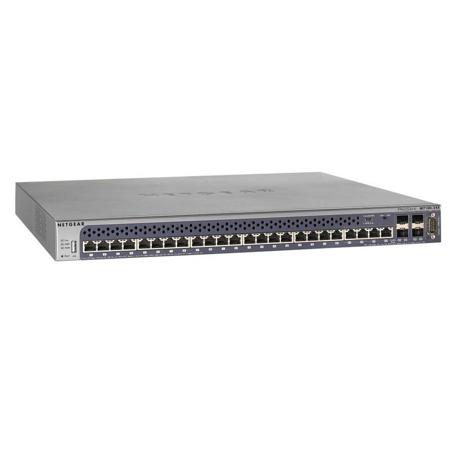
The 10 Gigabit M7100 series consists of a fully managed, low-latency, line-rate 10G Copper "Base-T" switch solution-with 24 ports 10GBase-T (RJ45) that support Fast Ethernet, Gigabit Ethernet and 10 Gigabit speeds for server, storage and network progressive upgrade. It includes 4 ports SFP+ that broaden 10 Gigabit connectivity for 1G/10G fiber uplinks and other DAC connections.

M7100 series is ideal for all organizations considering reliable, affordable and simple 10 Gigabit Ethernet Top-of-Rack server access layer; and high-density, high-performance 10GbE backbone architectures.
• Layer 2+ with static routing
• 10 Gigabit transition with Base-T
• Top-of-the-line performance and IPv6 ready
• Top-of-rack availability
• Industry standard management
• Industry leading warranty

• 24 ports copper 10GBase-T / 4 ports SFP+
• Backward compatible Gigabit and Fast Ethernet
• Line-rate for virtualization and convergence
• Innovative multi-vendor Auto-iSCSI optimization
• Dual redundant PSUs / Fan trays
• Designed for top-of-rack and distribution

Performance
• Layer 3 hardware with L2+ software affordability
• Built upon L3 hardware platform while Layer 2+ software package allows for better budget optimization
• Uses latest generation silicon low-power 40-nanometer technology
• L2 and L3 switching features (access control list, classification, filtering, IPv4 routing) are performed in hardware at interface line rate for voice, video and data convergence
• Layer 2+ software package provides straight forward IP static routing capabilities for physical interfaces, VLANs and subnets
• 16K MAC address table, 1K concurrent VLANs and 64 static routes for SMB and small enterprise access layers
• Increased packet buffering with up to 12 Mb dynamically shared across all interfaces for most intensive applications
• Low latency at all network speeds
• Jumbo frames support of up to 9Kb accelerating storage performance for backup and cloud applications
• Broad portfolio of access layer solutions, ranging from 8 ports Fast Ethernet to 50 ports Gigabit Ethernet

Connectivity
• Large 10 Gigabit choice for access with 10GBase-T ports for legacy Cat6 RJ45 short connections (up to 300m) and Cat6A / Cat 7 connections up to 100m; and SFP+ ports for fiber optic uplinks or short, low-latency copper DAC cables
• Automatic MDIX and Auto-negotiation on all ports select the right transmission modes (half or full duplex) as well as data transmission for crossover or straight-through cables dynamically
• 100Mbps and 1000Mbps backward compatibility on all 10GBase-T RJ45 ports
• 1000Mbps backward compatibility on all SFP+ fiber port
• IPv6 support with multicasting (MLD for IPv6 filtering), ACLs and QoS

Ease of Use
• Fully functional Web console (GUI) for IT admins who prefer an easy to use graphical interface
• Placement outside the wiring closet (conference rooms, offices, class rooms, sales floor in retail stores, etc.
• For secure deployment in open areas, desktop versions come with a Wall Mount Kit with four bracket
• Select desktop versions also come with a set of strong magnets for mounting on any metal surface
• Automatic configuration with DHCP and BootP Auto Install
• Both the Switch Serial Number and Switch primary MAC address are reported by a simple "show" command in the CLI
• Automatic Voice over IP prioritization with Auto-VoIP
• An associated Voice VLAN can be easily configured with Auto-VoIP for further traffic isolation
• When deployed IP phones are LLDP-MED compliant, the Voice VLAN will use LLDP-MED to pass on the VLAN ID, 802.1P priority and DSCP values to the IP phones, accelerating convergent deployments
• DHCP/BootP innovative auto-installation including firmware and configuration file upload automation
• Dual firmware image and configuration file for updates with minimum service interruption

Security
• Traffic control MAC Filter and Port Security
• DHCP Snooping monitors DHCP traffic between DHCP clients and DHCP servers to filter harmful DHCP message and prevent DHCP spoofing attacks
• IP source guard and Dynamic ARP Inspection for malicious users traffic elimination
• Layer 2 / Layer 3-v4 / Layer 3-v6 / Layer 4 Access Control Lists (ACLs) can be binded to ports, Layer 2 interfaces, VLANs and LAGs (Link Aggregation Groups or Port channel) for fast unauthorized data prevention and right granularity
• Bridge protocol data unit (BPDU) Guard allows the network administrator to enforce the Spanning Tree (STP) domain borders and keep the active topology consistent and predictable - unauthorized devices or switches behind the edge ports that have BPDU enabled will not be able to influence the overall STP topology by creating loops
• Spanning Tree Root Guard (STRG) enforces the Layer 2 network topology by preventing rogue root bridges potential issues when for instance, unauthorized or unexpected new equipment in the network may accidentally become a root bridge for a given VLAN
• Dynamic 802.1x VLAN assignment mode, including Dynamic VLAN creation mode and Guest VLAN / Unauthenticated VLAN are supported for rigorous user and equipment RADIUS policy server enforcement
• 802.1x MAC Address Authentication Bypass (MAB)
• Double VLANs (DVLAN - QoQ) pass traffic from one customer domain to another through the "metro core" in a multi-tenancy environment
• Private VLANs (with Primary VLAN, Isolated VLAN, Community VLAN, Promiscuous port, Host port, Trunks) provide Layer 2 isolation between ports that share the same broadcast domain
• Secure Shell (SSH) and SNMPv3 (with or without MD5 or SHA authentication) ensure SNMP and Telnet sessions are secured
• TACACS+ and RADIUS enhanced administrator management provides strict "Login" and "Enable" authentication enforcement for the switch configuration and authentication based on user domain in addition to user ID and password

Netgear Warranty
• This product is backed by a Netgear ProSAFE Lifetime Hardware Warranty.
• Lifetime Next Business Day Hardware Replacement.
• ProSUPPORT 24x7 Advanced Technical Support via phone for 90 days (Remote diagnostics performed by their technical experts for prompt resolution of technical issues). ProSUPPORT coverage can be extended by purchasing one, three or five year contracts.
• ProSUPPORT Lifetime 24x7 Advanced Technical Support via chat. (Remote diagnostics performed by their technical experts for prompt resolution of technical issues).
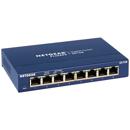
What's in the box:

  • Netgear M7100 Series 24-Port ProSafe 10 Gigabit Copper L2+ Managed Switch
  • PSU
  • 2x Fan Trays
  • Power Cord
  • Rubber Footpads for Tabletop Installation
  • Rubber Caps for SFP+ Sockets
  • Rack-mounting Kit
  • Mini-USB to USB Cable for Console
  • Resource CD with Links to Online Documentation
  • Netgear Lifetime Limited Warranty