Adorama Camera
Adorama Learning Center
Techniques and How-Tos
Action Sports Photography
30 Football Photography Tips, For The Win!

30 Football Photography Tips, For The Win!

Back to Action Sports Photography page
Average: 5.0 stars
 

Capture peak gridiron action

Each autumn, the air becomes crisp and the sound of marching bands and cookouts fills the air, and it means football. Time to tackle the task of getting great photos of the action.


Fall is in the air, which means it's time to hone your football photography skills. What follows in this exclusive Adorama Learning Center article are 30+ tips based on years of practical experience. I'm talking, of course, about the North American breed of football played in 50 states, 10 provinces, and 3 territories: Oblong ball, first and tens, touchdowns, and halftime shows.

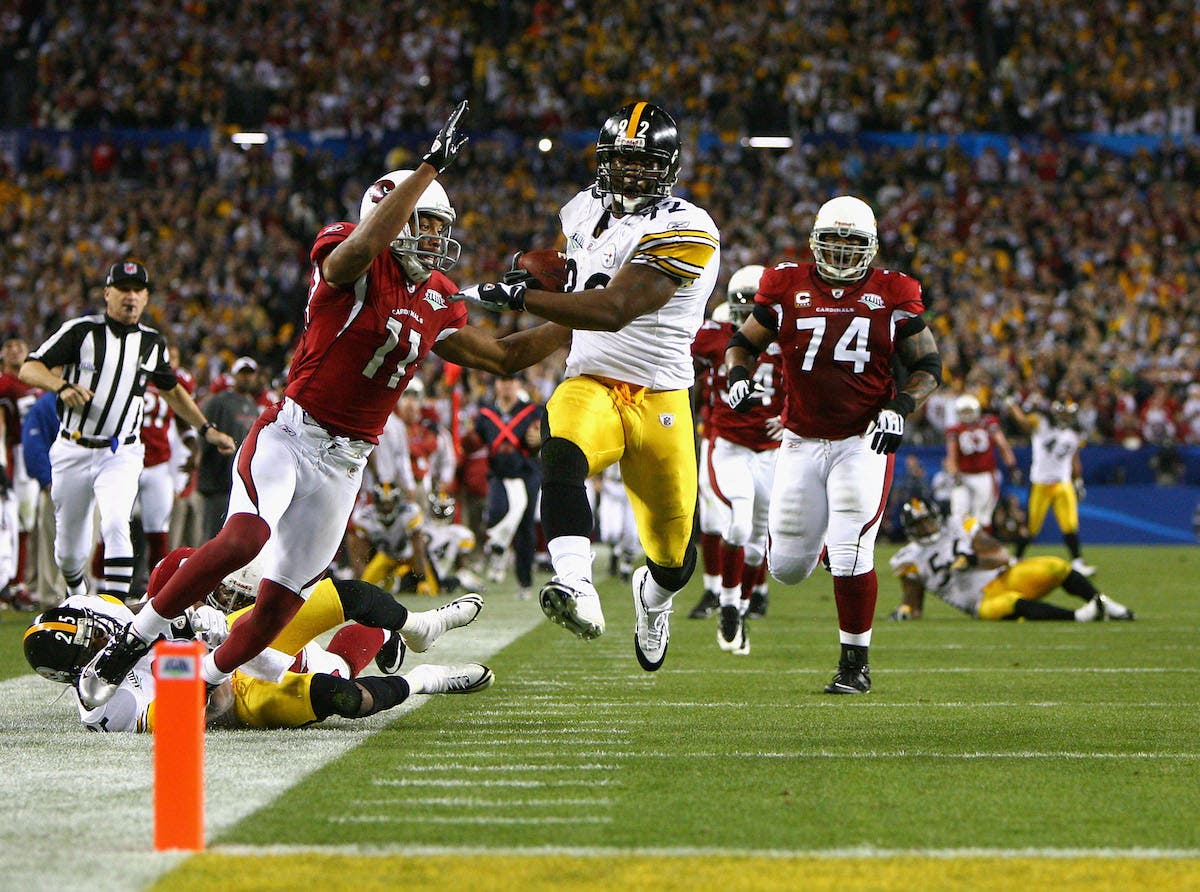
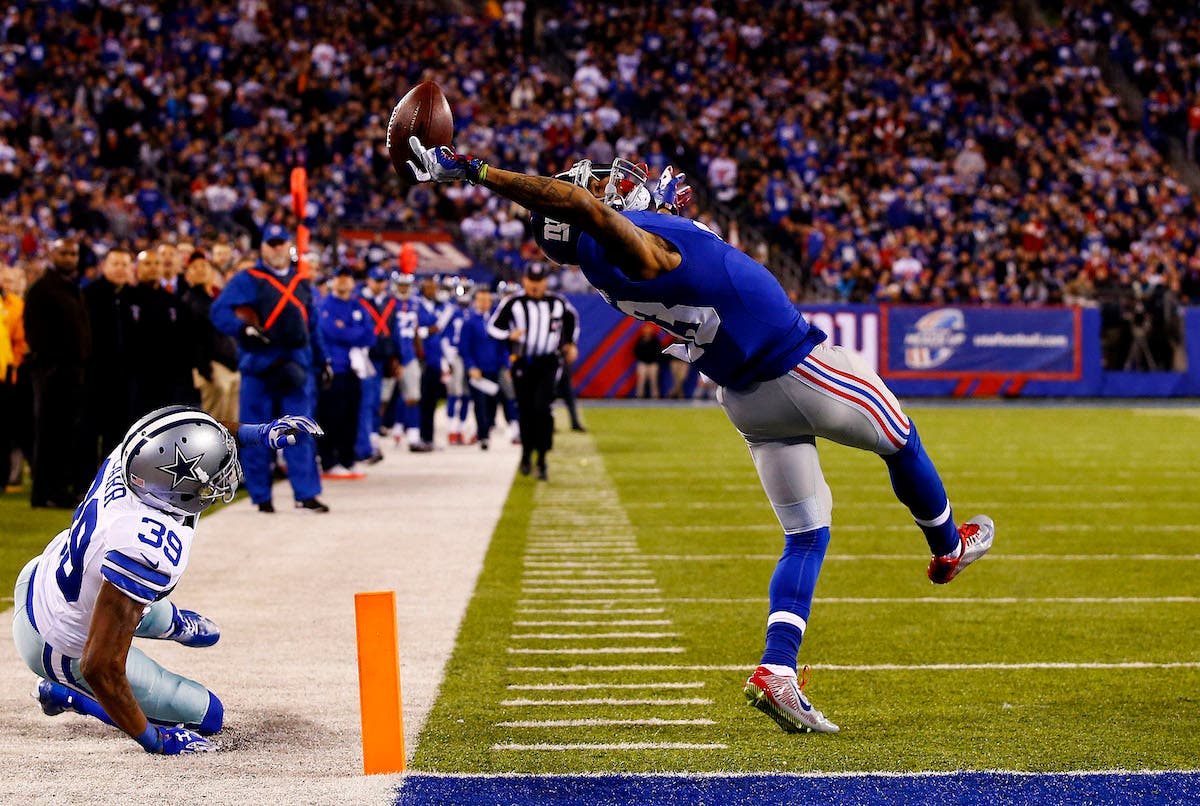
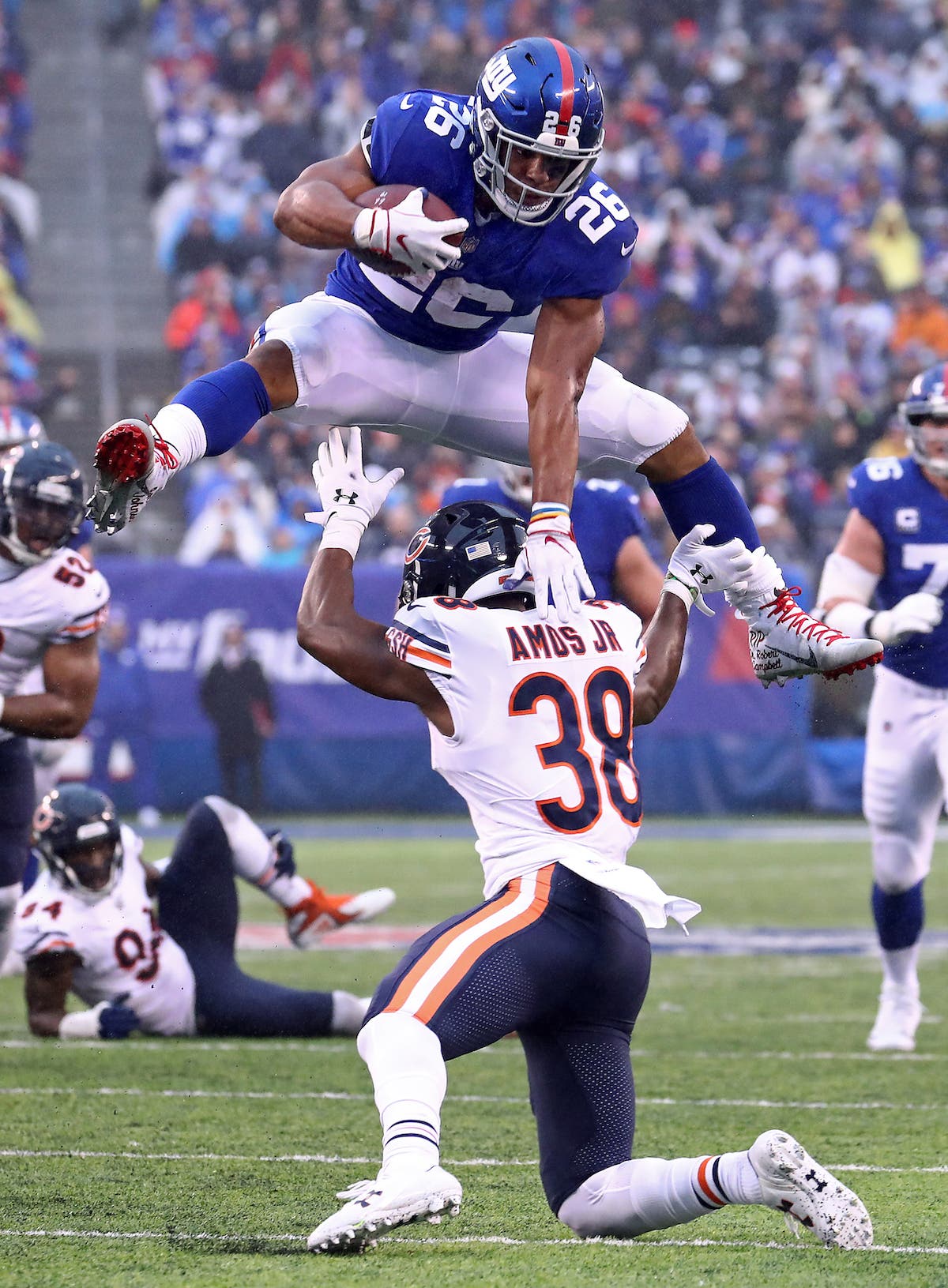
But first, a portfolio of recent images of the New York Giants in action: 


Intensity: Photographer Evan Pinkus captured the gridiron intensity of New York Giants Defensive Lineman Jason Pierre-Paul at a recent game.


Shoot Between Plays: During a huddle, New York Gants Eli Manning, #10, is strategizing with Wide Receiver Victor Cruz. The body language of athletes between the action can tell a compelling story. Photo © Evan Pinkus


Capturing the Intensity of Football


As a photographer, one of the most challenging events to shoot is the high-intensity action of a football game. Whether it’s the seven year-old flag football league or the New York Giants, shooting football can be an exciting experience that will yield many high quality images—if you approach it with a game plan and a little bit of knowledge. 


30 Football Photography Tips

Simplicity: This shot shows the peak of action, the ball, and the players clearly. 1/500 second at f/2.8, ISO 400. Lens: Nikkor 300mm f/2.8 ED-IF II, available at the Lens Store at Adorama.


Let’s huddle up and go over the basics of shooting great football images—and how to make your plan work to give you the very best images you can make with the equipment you have.


30 Football Photography Tips

Sideline, not sidetracked: Tell the whole story of the game—some of which takes place off the field. In this image, note that she’s been cropped and the background is muted to add emphasis to her. 1/640 second at f/4.5 with an ISO of 400. Lens: Nikkor 300mm f/2.8 ED-IF II available at the Lens Store at Adorama.


Pre-game scouting 


Tip 1: Research. A good first step is to research the game and the teams that you’re planning to shoot. If it’s a kid’s league like Pop Warner, go to a few practices and watch the plays. Teams at this level of play tend to run the same handful plays again and again, so recognize the pattern and know who the key players are and how they like to run the ball.

You can also do this same type of research with college or pro teams. The local paper’s website, YouTube, fan sites like Rivals.com, etc. will often have game highlights posted for high school, college and even pro teams (some of the pro teams, in fact, post the highlights themselves). Check your local newspaper for play-by-play details, which can assist you in finalizing your strategy.


30 Football Photography Tips

Always include the ball! 1/400 second at f/2.8, ISO of 400. Lens: Nikkor 300mm f/2.8 ED-IF II available at the Lens Store at Adorama.


Tip 2: Really Learn The Game. Once you have your team information, learn a little bit more about the game of football. Know who the referee, umpire, judge, linesman and timekeeper are and where they are positioned during the lineup for the play. Also know where the sideline officiating crew will be and what their functions are. Having just this information will give you an excellent understanding of where you need to position yourself on the field and not get blocked by the officials while you’re making your images.


But, (and this is a big “butt”) no matter how hard you try to avoid it, you will always wind up with some shots that are completely blocked by an errant official. It is their job to make sure the game is played fairly and safely, and all you can do is hope that more often than not, you can make your shots around them.


Tip 3: Study Team Coverage: Many newspapers cover local high school football with a ferocious zeal, and often you can get those added details that will assist you in shooting the game correctly. If the newspaper publishes photos with the game, study the crop, composition, and other details and use them as a guide in your shooting.


30 Football Photography Tips


Isolation treatment: University of Alabama runningback sprints down the field to a touchdown.  Isolating one player can enhance their story and illustrate grace, form and style. 1/500 second at f/4, ISO 600. Lens:
Nikkor 300mm f/2.8 ED-IF II available at the Lens Store at Adorama.


Tip 4: Learn Player Positions: Lastly, learn the positions of the players on the field and have an understanding of what each one does. Know the difference between a center and a running back and what each person’s job will entail. A center, for example, is generally a lot less mobile than a running back and will require less lens tracking to make an interesting image.


Tip 5: Position Yourself Properly: Another consideration when thinking about position is where you are in relation to the line of scrimmage.  In kid’s leagues and high school football, 10 yards ahead of the ball or 5 yards behind the ball is a good starting point. In college and pro, a good basic position is 15 yards ahead of the play and 10 yards behind, if you’re shooting from the sideline.

Tip 6: Got a long tele? Find the End Zone. For photographers with longer telephoto lens, consider shooting from the back of the end zone. The advantages of doing this are that it’s much easier to track a running play; you generally don’t get blocked by an official; and it’s also much easier to keep a consistent focus on the player of your choice. The bonus here is that you’ll also get head-on images that show the face and have a more dramatic feel to them. Also, be sure to respect the boundaries of the team’s sideline area (usually between the 30 yard markers). This is a no-shoot zone, at almost all levels of play, in all leagues. 


30 Football Photography Tips

Composition counts, too: Note that the ball falls on the upper right intersecting point using a “rule of thirds” grid. 1/640th at f/4, ISO 1600. Lens: Nikkor 300mm f/2.8 ED-IF II available at the Lens Store at Adorama.


The Right Gear

Tip 7: Visit the Site in Advance: Having the right equipment is important as well. Be smart about the equipment you carry and don’t overload yourself with needless gear that you will never use during the day–leave the macro prime at home! If possible, go to the site of the game in advance of your shooting date. Generally, lenses between 200 and 600mm work best for football, and depending on the focal length, will dictate where you stand to shoot. 

Tip 8: Pack as Lightly as Possible: Take a few of the lenses that you think you’ll use and bring a friend along to give you an idea about how big the people will be on the field and which lens will be correct from the distances you’ll be shooting from. Remember, you will be in almost constant motion, so pack lightly and smartly. If you have a fast zoom that covers the focal lengths of two prime lenses, consider taking the zoom. 


Tip 8: Bring a Monopod: Since the game will almost always last at least an hour, a monopod is also a good idea because it gives your muscles some relief and steadies the shot for longer, heavier, telephoto lenses  that, when hand-held, will magnify motion blur. The longer the focal length, the more apparent this will be. If you’re shooting with a DSLR, a camera with a good VR lens, such as Sigma’s 150-500 F/5.0-6.3 may do the trick. Remember though, creative photography breaks the rules and some very fine football photos have been made with wide angle lenses over the years. Don’t be afraid to experiment!


Also read at the Adorama Learning Center: Open wide: Set your lens to maximum aperture to highlight action


30 Football Photography Tips

Reaction shots: Look for emotion on and off the field. Here, Alabama head coach Nick Saban reacts to a call on the field. 1/400 second at f/2.8, ISO 600.

Practice makes stronger photos   


Tip 9: Practice! Practice is also a key consideration when preparing for a football game. Try taking your kids to a playground and work on focus, tracking and timing while they play. You’ll be much more accustomed to the fast action of a football game, and you’ll get some great shots of your kids in the process! 


Practice is perhaps one of the most important points in shooting football well. It takes time and patience to be able to consistently and predictably shoot football, so practice, practice, practice! And think of it this way too–those photographers who shoot for Sports Illustrated didn’t get that job right out of photo-j school. Many of them have years of experience prior to reaching that level. By practicing, you hone those skills that allow you to predict the action and shoot proactively. Once you learn to do this, the “keep” shot count will go up significantly.


30 Football Photography Tips

Tip 10: Shoot the fans: Good fan images can enhance a complete football package, so look for these kinds of shots on the sideline. I used a touch of fill-flash to sharpen the young ladies’ appearance and lower the contrast and shadows in their eyes. 1/160 second at f/2.8, ISO 1600. Nikkor 300mm f/2.8 ED-IF II available at the Lens Store at Adorama.

30 Football Photography Tips

The eyes have it: Watch the quarterback’s eyes for clues that determine who he intends to hand off or pass to. 1/800 second at f/8, ISO 400. Sigma 150-500mm f/5-6.3 lens, available at the Lens Store at Adorama, set at 150mm.

Tip 11: Be Patient. Along with practice comes patience. It takes time and effort to make shooting football look effortless. Think about the content of the image while you’re shooting. If you’re making more than 300-400 images per game, you’re overshooting. Many photographers have a spray-and-pray mentality that “more is better” and shoot thousands of images for a single game. In the end though, you will generally have a significant amount of post-game editing with little to show for it. Be particular about the content of your shots and know that not every play is going to be worthy of an image.


Tip 12: Keep At It. Persistence is also an important consideration for the beginning football photographer too. Expect your first few games to yield few usable images, but with practice, patience and tenacity, you’ll begin to reap the benefits of your efforts. The important point to remember is don’t give up after one or two games.

At night, it’s a whole different ballgame


So, you’ve done your research, have a plan and are ready to shoot the big game. Then it hits you—this is a night game! What should you do? In many instances, do exactly what you do during a day game.

Tip 13: Plan differently for Night Games. Get your plan in order, and consider the differences in lighting for a night game. You will generally have to shoot with a “shorter” telephoto with a faster aperture. Ideally, a lens with an f/2.8 maximum aperture is ideal for nighttime football. Again, if you only have a wide-angle lens with these specs, you can still shoot the game, but will need to have some creative angles. Nighttime football is also shot at high ISO settings—typically around 1600. Higher ISO settings produce more noise and should be post-processed carefully.

Tip 14: Use a flash properly...if you are allowed: If you’re allowed, a flash set to 1/16th power will kick enough light into the face of the player to lower the contrast levels and add some additional sharpness to the image. If you’re using a flash at night, ensure that the camera has a synch speed of at least 1/250th of a second, and that the flash is set to rear curtain synch to minimize ghosting in the image. So, an exposure of 1/250th of a second at f/2.8 with a flash set to manual 1/16th power and an ISO of 1600 will get you into the ballpark for night football games.  


If your flash doesn’t allow manual exposure modes, simply adjust your flash compensation setting 3-4 stops below normal TTL. You may need to make adjustments to this, depending on the amount of light available to you on the field and how much fill-flash you want on the faces of the players. If you’re shooting with a telephoto lens over 300mm, a Better Beamer, available at Adorama, will also extend the range of your flash and give you more area to shoot, flash-coverage-wise.


Tip 15: Pump up the ISO: The current generation of DSLRs allows for excellent image quality at high ISOs. Go ahead, boost your camera's speed to ISO 2500 and beyond! (Run image quality tests in advance to see how much noise you can tolerate). Time to upgrade your DSLR? Go here for an exclusive Adorama Learning Center round-up of the best-performing low-light ISO cameras available today. If you’re still shooting with film, Fuji has two excellent high-speed films—a color and a black-and-white rated at 1600 ISO out of the box. The grain is there, but the image quality is excellent. Shooting for film is identical to the digital settings.


Knowing and predicting plays


Understanding and predicting plays, with or without any scouting research, can help put you in the right spot for many likely situations. For example, no one is ever going to punt on First and 10.  


30 Football Photography Tips

Key in on personal battles: Linemen go one-on-one and illustrate the struggle that takes place on the field. 1/800 second at f/8, ISO 400. Sigma 150-500mm f/5-6.3 lens, available at the Lens Store at Adorama, set at 300mm.


Tip 16: Follow The offense: Following the offense isn’t as hard as it might first appear. Always start the play with your camera trained on the quarterback. If he doesn’t give the ball away almost immediately, look for a pass or quarterback running play or scramble in the backfield to dodge defenders. If he passes, follow the ball through the air and keep focus on it. You will learn to anticipate when to start shooting and will catch the action as it happens- completion, incompletion or interception.


Tip 17: Study the game's first and ten. Pay attention to what’s been done on the past few first and ten attempts. Odds are it’ll be the same as last time, or some slight variation on it. 


Tip 18: Anticipate 2nd and short. It will most likely be a running play. Short yardage runs up the middle are very common in football and in these situations, you should expect the run. If it’s 2nd and “inches”, you will often see the “quarterback sneak”, where he rushes the line immediately to gain the first down.


30 Football Photography Tips

Tip 19: Track the ball: By tracking the ball through the air, I was able to capture this incomplete pass. Follow the ball closely—it will always in the action! 1/640 second at f/8, ISO 800. Sigma 150-500mm f/5-6.3 lens, available at the Lens Store at Adorama, set on 150mm.


Tip 20: What to expect at Third and long. At Third and long, the team has one more play to gain a total of ten yards. “long” is generally anything over five yards. Odds are it’ll be a sweep run to the wide side of the field or some sort of passing play. You’ll often hear D players and coaches shout “Pass” if they read the play as a pass play. Use this to your shooting advantage.  Two or three wideouts means what? In many instances, if there are several running backs or receivers positioned to one side of the field, there will be a pass play. Shooting from the endzone in these situations has it advantages because you can see the quarterback and where he’s looking more easily than from the side. Train your camera on the ball or receiver and shoot the action.


Tip 21: Understand Twin Tailback formation. There will be a short yardage play- generally a run to the far side of the field or a short “screen” pass. This is often used in 2nd and 3rd down situations where there’s short yardage required for the first down.


Tip 22: Watch for “Hail Mary” plays:  Often hard to cover, but if the situation merits (typically, the last play of the game with a tie-score or the ability to get the come-from-behind win), train your lens on the end zone and keep an eye on all of the receivers. Quick reactions will be your best tool in catching this often elusive shot. Depending on what lens you’re using, the back of the endzone, along the sideline at the beginning of the endzone, or from about the 20 yard line looking back (the least desirable of the three though, because you will have, because you will have 20 yards-worth of photographers next to you, and in that situation, if they go to the corner nearest you, you WILL be blocked from getting the shot).


30 Football Photography Tips

Personal favorite: I like this shot from an Arkansas-Alabama game because it has all the key elements that I look for in good photojournalism—Action, simplicity, technically correct and most of all, the emotion that’s on the player’s face. 1/400 second at f/8, ISO 800. Sigma 150-500mm f/5-6.3 lens, available at the Lens Store at Adorama, at 250mm.


Kick situations


Tip 23: Use a Medium Tele for Punts: By using a medium telephoto lens- 200 to 300mm, you can pre-focus on the holder and wait for the action. Include some dead space for a blocker to fill. If an opposing team player attempts to make a block, it can be a highly dramatic image that you’ll be proud to show. If the kick goes off successfully, there’s usually enough air time to switch your focus to the punt returner, and then it’s like a basic kickoff which we describe below.


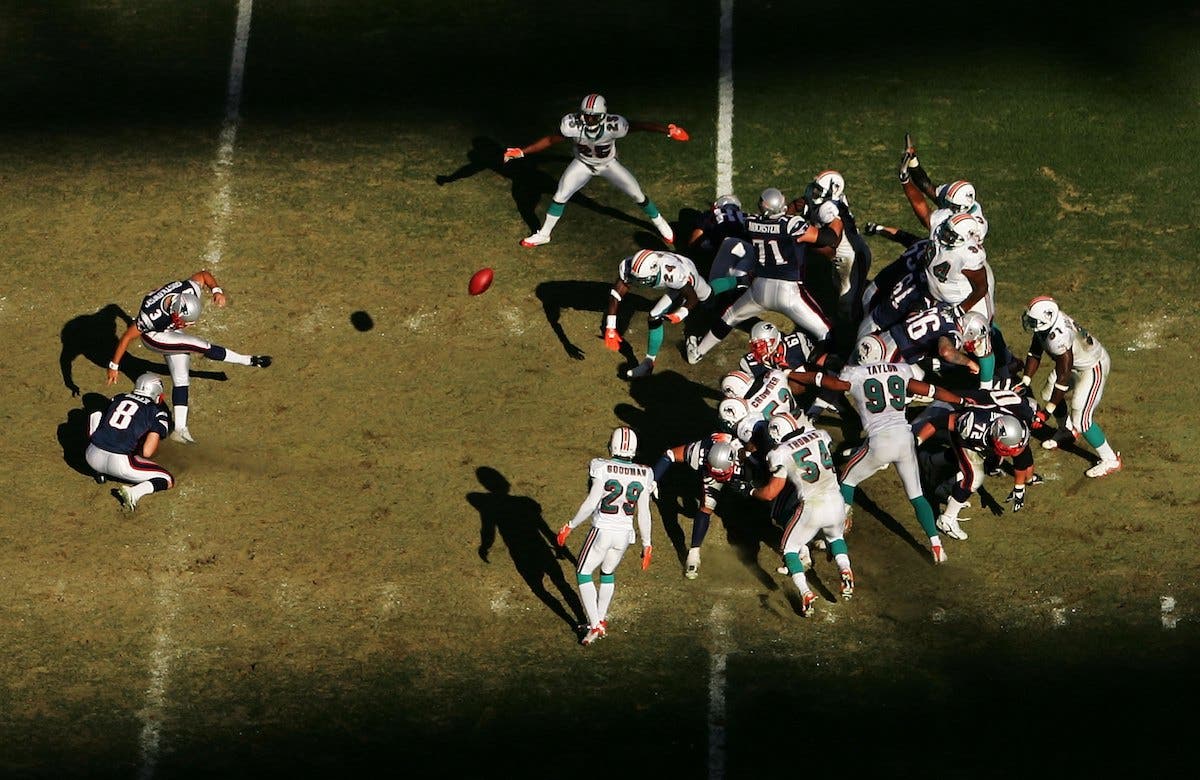
Tip 24: Pre-focus on holder for PAT/Field Goal: Just like the punt situation, except pre-focus on the holder. Be sure to leave room in the framing for a flying blocker. 


Tip 25: Look for PAT/Field Goal and Punt Fakes/Flubs: Wing it and roll with it! Follow the action as it happens.


Tip 26: What to do for Kickoffs: Always focus on the receiver(s), who will be on the 20 yard line of the field, opposite of the kickoff. If you see a receiver wave a hand in the air, this indicates a “fair catch” and will stop the action as soon as the ball is caught. Otherwise, expect the receiver to run the ball. If the ball is kicked into the endzone, the offense will start on the 20 yard line for their first snap.


Tip 27: What to do for onside kickoffs: The good news about onside kicks is that you almost always know in advance when they’re going to happen. The bad news is that it’s anybody’s guess as to where the ball will go. The onside kick is intentionally grounded and designed to make it difficult for the receiving team to recover the ball because it’s bouncing on the field. A shorter telephoto will often work better, and what you lack in millimeters you can often make up in cropping. By using a shorter range telephoto, you can literally cover more area and will increase your chances of tracking the balls’ bounce.


Use a narrative approach


Tip 28: It's a story: It’s important to think in a narrative sense when you’re shooting a football game, and there are many good photo opportunities off the field too. Shoot the action, but also remember to shoot all of those other interesting events that surround the game itself.

Tip 29: Get the Game Day atmosphere: Opportunities abound in the pregame tailgate party, where you can photograph family and friends in a casual, yet “game day” atmosphere. Think about the cheerleaders, halftime band show, fans in the stands and mascots doing crazy antics during the game. All of these smaller details enhance the game-action that you’re shooting. Also consider shooting the defensive and offensive line in emotional moments either while lined up or as a reaction to a well made, or crushing play. 

Tip 30: Remember there are 22 people on the field. Some of the best images you can make will also be those other players who are on the field, but may not be the quarterback or ball-carrier—don’t forget about them! Remember, there are 22 people on the field, so you have at least 22 opportunities to make a compelling image each and every play. Another part of story-telling with visuals is to shoot the smaller details that are often overlooked. The taped finger; a tight shot of eyes in a helmet; or even a tightly cropped official blowing his whistle. All of these little “sideline” details can only improve your story-telling visuals.

By making your plan, knowing the game and keeping an open-mind for all of the photo opportunities around you, you can shoot images that you’ll be proud to display.


Shop at Adorama


30 Football Photography TipsPostscript: Lent Scores!


Just as we were preparing this article to go online, we learned from author Mark Lent that one of the photos he shot while producing this article has been selected for the cover of Touchdown Alabama, a local sports magazine that covers the Alabama Crimson Tide football team. The image was taken with a Sigma 150-500mm f/5.6-6.3 and a Nikon DSLR. Congratulations, Mark!


Editor's Note: The above article was originally published in the Adorama Learning Center in October 2009; it was updated in October 2012.

Related Products

Browse products:

moreRelated Workshops

Was this article helpful?

Rate this article

Your rating:

Post a comment

*required fields

SHARE THIS ARTICLE

Forward this article to a friend
To use this functionality you should have JS enabled
Bookmark this page

Reader Rating and Comments

18 readers rated this article. Average rating: 5.0 stars
 
  • View
  • 18 comments
2 of 3 people found this comment helpful
 
Great article.....Thanks Mark!!!

I shoot high school sports, so I mostly shoot in low, bad lighting. Mark's advise is spot on in every regard. I am currently shooting the basketball playoffs, and will start shooting baseball very soon. As of yet, I don't get paid for my work, but I do get published, and a small bit of notoriety. Also, they got me Photo Passes to all the state playoff games, and the state championship. They also got me a Photo Pass to the Iron Bowl this year. What a hoot! First time ever to cover a college game. My only regret is I wish I had a bigger lens. My biggest is the 70-200 f/2.8 and I sometime add a 1.7 Tele to it. Drops my f-stop to 4.8, but I shoot with a Nikon D3s, so I just bump up the ISO. At one field this year, it was so dark I was the only photog who could shoot, and I shot at 12,800 ISO.....But.....I got the shots when no one else could. Thanks again for the great article, Mark. I learned some new wrinkles that will come in handy next year. Kudos!!!!! Richard

by in Hartselle, AL on

5 of 5 people found this comment helpful
 
Another thought

When I shoot, if the situation allows, I shoot the game from the opposing team's side shooting one team, then the background will have the fans of that same team. Hope this helps.

by in Bethlehem PA on

0 of 0 people found this comment helpful
 
Tracking

Trying to shoot HS Football, have mostly shot Baseball, which is easier because of more predictability. I usually focus on a base, pitcher, or catcher, press my shutter half way to fine focus, then take my shot as it comes. Have had trouble tracking the ball, when I do that, my shots are always blurry. I usually shoot on A mode with 2.8f and adjust my ISO as the sun goes down for evening games. Do not know the game of football well, so appreciate all your in depth information, though I don't understand some content, I know I will and appreciate the reference I will have. So, any tips on tracking a ball or player without blurring your shot? Also appreciated all the settings given for each shot. I have a canon t2i with a canon ISii 2.8f 75-200mm and feel I have a good lens, I am just inexperienced and frustrated. I am constantly changing settings. I have to shoot about 200-250 shots to get a handful of great ones. Any other literature recommended?

by in Groesbeck,Tx on

0 of 0 people found this comment helpful
 
To Confused and Brenda...

Confused, all of the images are shot in manual mode. Exposure information comes from the EXIF data on each image. Brenda, any time you're in Tuscaloosa, you're welcome to contact me. Would love to see some of your work. pixeldawg@gmail.com

by in Tuscaloosa, Alabama on

0 of 0 people found this comment helpful
 
Response to Jeremy...

Hello Jeremy, I am shooting the DUKE game in a week or two- will you be there? If you are, I'd be happy to sit down and discuss this with you. Also, Although Adorama is a "commercial site" the ALC is a portion of the site that is strictly and purely journalistic. It becomes very easy to cast stones and disrespect others publicly while you hide behind the cloak of anonymity of the internet. Hope to see you at Duke, and you are welcome to contact me at any time at pixeldawg@gmail.com to show me how a true professional shoots football. Take care and thanks for the comments and reading the article!

by in Tuscaloosa, Alabama on

0 of 0 people found this comment helpful
 
ROOOOOOOOOLLLLLLLLLLLL T-I-D-E!!!

I found this article to be very helpful since I am about to invest in an L-glass Zoom Lens....with the kind of money it takes to invest in something like that, it is nice to have some confirmation as to what types of photos it is best suited for as well as some general settings that will accompany this type of photography. Perhaps the BEST thing about this article are the pictures of the Alabama Crimson Tide in action.....They are beloved here in Birmingham and all around our great state of Alabama! Thanks for sharing some great shots....Hopefully I will have some of my own great shots to share by the end of this season!! GO BAMA!!

by in Birmingham, Alabama on

1 of 1 people found this comment helpful
 
Great Article, and Solid Endorsement of the Sigma

Thank you for all the great how-to on creating excellent football images. My experience to date has been baseball, and anticipating the right play at the right time is the real key - all the great light and camera technology in the world can't turn a dud image into a mag cover. Also, thanks for the GREAT endorsement of the Sigma 150-500 f5-6.3. I figured the article would be telling me to use some 400mm f/4.0 that costs more than I make in a month (and a lot more than I have ever made as a photographer), but this gives me some confidence to use the "big gun" more often than I do today. Thanks!!!

by in So Cal on

1 of 1 people found this comment helpful
 
HOW TO PHOTOGRAPH FOOTBALL GAMES

Thank you. Relatively simple and to the point with example. What could be better? I'm a grandpop following the grandson. I've had an entry level camera for just two years. I even printed Reader Rating and Comments.

by in Williamsport, PA on

1 of 1 people found this comment helpful
 
Sports Photography

As I rarely shoot sports, I did try it at the Giants Taining camp at SUNYA Albany last summer. My lens 210mm just did not have the range, and I could not get to the access of closeness, as I expected. I appreciate seasoned shooters, sharing information.

by in Upstate NY on

4 of 4 people found this comment helpful
 
To "Confused"...

We'll see what he responds with, but most of the sports shooters I have worked with shoot in Aperature priority mode, opening up as big as the lense (and the situation) will allow. A few prefer Shutter priority, but my preference is "A" as well so I can control depth-of-field. Of course, some photos look better with a big DOF and if you're in "A" mode, it's easy to adjust it as necessary. The auto ISO feature can be handy to help keep the shutter speed up as it gets darker, because a slightly grainy shot is (usually) better than a blurry shot. You never know what shot the editor may choose to lead with. Happy shooting.

by in San Diego, CA on

Items per page
Showing 10 of 18 results
Page:

Was this article helpful?

Rate this article

Your rating:

Post a comment

*required fields
Bookmark this page