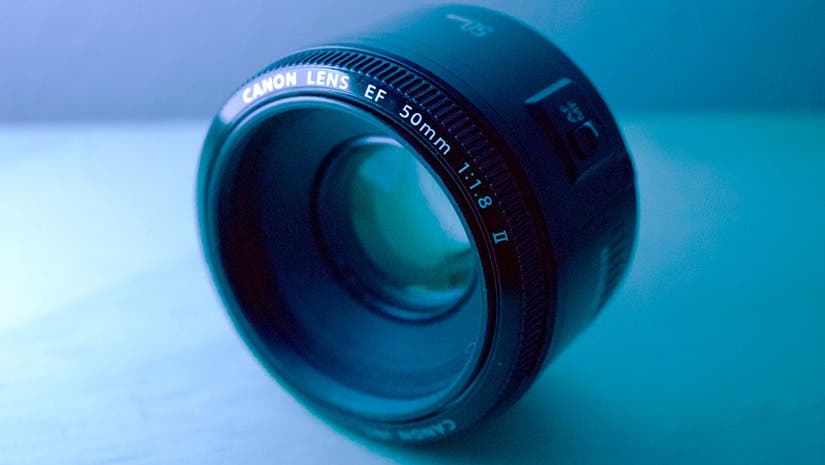
A Canon 50mm lens is one of the most useful and versatile photography tools that every shutterbug should have in their arsenal. Whether you’re a beginner or a seasoned pro, the “nifty fifty” can definitely help you capture some of the most outstanding images you’ve ever shot — and hopefully, help you improve your craft and ultimately become successful in your field.
What’s so special about this quintessential prime lens? Well, the fixed focal length allows it to be fast, lightweight, and incredibly sharp. It also offers a “normal” view of the world just as the human eye sees it, making this focal length ideal for nearly all types of photography.
If you’re shooting with a Canon DSLR or mirrorless camera, we’ve listed down several 50mm lens options (including non-Canon lenses) that you can equip yourself with in order to capture spectacular images and get your money’s worth.
What is the Best Canon 50mm Lens?
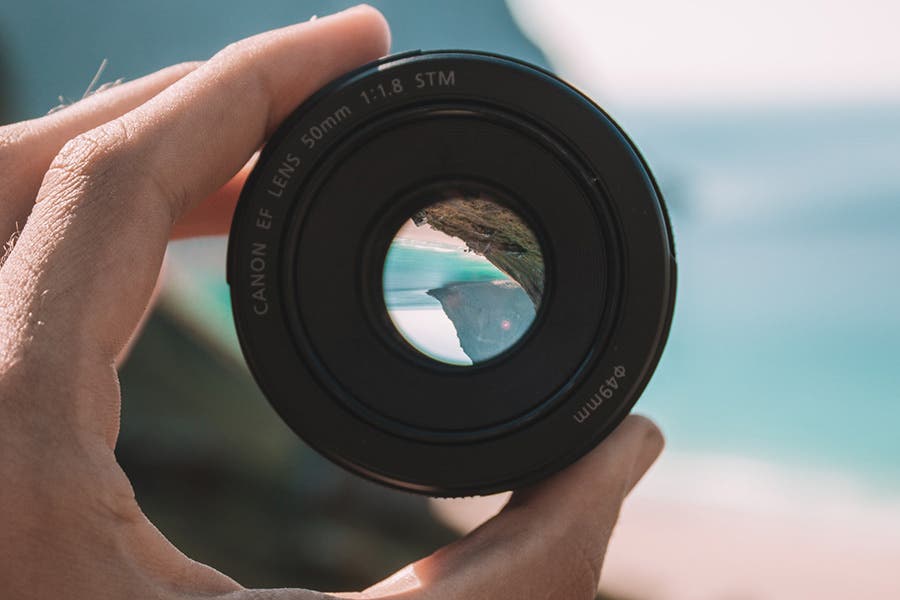
You can never go wrong with any 50mm lens, but there are simply a few specific kinds that stand out from the rest in terms of performance and build quality. Check out our list for this year’s top picks of the best 50mm prime for your Canon camera below.
Sigma 50mm f/1.4 DG HSM ART Lens
Sigma is known to be the best brand of third-party lenses. They are always constructed with high-quality materials, well-designed, and are incredible cost efficient. And when it comes down to a competition between 50mm EF-mount lenses, their premium offering is widely considered the big winner.
The 50mm f/1.4 DG HSM Art Lens has long been popular among its primary market of professional photographers, despite being bigger and slightly heavier compared to traditional 50mm prime lenses. Unconventional build aside, it helps deliver stunning images thanks to its specialized optical glass elements, large diameter, and floating lens design. For accurate focusing, it features a fast and quiet AF system — comprised of Sigma’s Hypersonic Motor (HSM) and an optimized AF algorithm — with full-time manual override.
As with most prime lenses, this premium Sigma glass offers impressive low-light capabilities and attractive bokeh thanks to the nine-blade aperture of f/1.4. Thus, if you’re looking to produce the cleanest, crispest, high-quality images, this best 50mm prime lens for Canon is sure to be worth the investment.
Key Specifications:
- Aperture Range of f/1.4 – f/16
- 13 Lens Elements in 8 Groups
- Hypersonic Motor (HSM) with Full-Time Manual Override
- 9-Blade Aperture Opening
- Designed for Full-Frame Canon DSLRS
Canon EF 50mm f/1.4 USM
Everybody who shoots with a Canon camera knows this lens all too well. The EF f/1.4 USM has long been the top 50mm lens since it came out 25 years ago, mainly because it’s the most affordable Canon lens that lets you enjoy a wide maximum aperture of f/1.4. It’s super handy, compact, and utilizes a micro Ultrasonic AF system with full-time manual override.
Featuring Gaussian optics, two high-refraction elements, and Super Spectra coatings, this wide aperture prime lens delivers crisp, distortion-free images with buttery smooth bokeh. It’s a great lens for portraiture and an ideal choice for shooting indoors and in other conditions where you need a boost of exposure.
While it’s no longer the most durable or stylish lens on the market, its versatility and great price point make it a classic staple for many of today’s Canon shooters.
Key Specifications:
- Aperture Range of f/1.4 – f/22
- Two High-Refraction Lens Elements
- Super Spectra Lens Coatings
- Micro Ultrasonic AF Motor
- Rounded 8-Blade Aperture Opening
- Designed for Full-Frame Canon DSLRs
Canon EF 50mm f/1.8 STM
The EF 50mm f/1.8 STM has been considered the new Canon “nifty fifty” and best Canon lens for portraits since it was released in 2015 — almost replacing the classic EF f/1.4 USM. Major upgrades include its more advanced AF system and Canon’s gear-type STM stepping motor for even quieter autofocusing during videography.
Surprisingly, this compact piece of glass is able to offer the same sharpness at its widest aperture of f/1.8 with a noticeably improved center compared to a wide open 50mm f/1.4 USM. If you’re not that particular about the minor light stop difference between the f/1.4 and f/1.8 or the fact that the EF f/1.8 STM has seven circular aperture blades (one less than the EF f/1.4 USM), you find this one to be good budget-friendly alternative.
Key Specifications:
- Aperture Range of f/1.8 – f/22
- Gear-Type STM Stepping AF Motor
- Movie Servo AF
- Rounded 7-Blade Aperture Opening
- Designed for Full-Frame Canon DSLRs
Canon EF 50mm f/1.2L USM
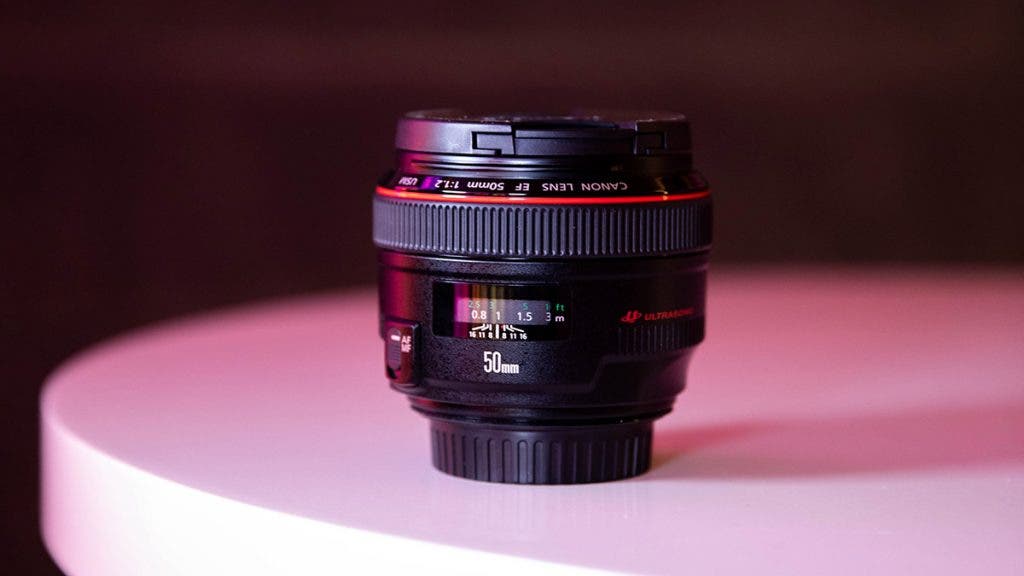
If you have the budget for it, the Canon EF 50mm f/1.2L USM should be a no-brainer choice. This premium 50mm lens produces the highest quality images that consumers have come to expect from Canon’s exclusive L-series lenses. Its sophisticated optical setup, which features one aspherical element and Super Spectra coating, ensures that you get vivid and accurate colors, enhanced contrast, and the sharpest details with every click of the shutter.
Of course, the best feature of this lens is Canon’s second widest aperture offering of f/1.2, which allows you to create the creamiest background blur while keeping your main subject tack sharp. It’s equipped with the ring-type Ultrasonic AF motor to ensure fast and silent autofocus, but you can also use the ring on the lens for full-time manual focus override) and a weather-sealed body so it can last many years of use.
Key Specifications:
- Aperture Range of f/1.2 – f/16
- High Refraction Glass-Molded Aspherical Lens Element
- Super Spectra Lens Coating
- Ring-Type Ultrasonic AF Motor
- Rounded 8-Blade Aperture Opening
- Designed for Full-Frame Canon DSLRs
Yongnuo 50mm f/1.8
If you’re a beginner determined to have a decent 50mm f/1.8 lens or a seasoned photographer looking for a budget-friendly alternative, consider Yongnuo. It offers spectacular results, is super lightweight, plus it has a pretty nice price tag!
Despite the super low price point, it doesn’t skimp on the image quality. It offers both auto and manual focus, has non-corrosive gold-plated mount contacts to ensure its efficiency, and produces impressive photos that can rival those taken with higher-end 50mm lenses. Go and see the results for yourself!
Key Specifications:
- Aperture Range of f/1.8 – f/22
- Manual/Auto Focus Switch
- Multi-Coated Glass Elements
- Gold-Plated Metal Contacts
- 7-Blade Aperture Opening
- Designed for Full-Frame Canon DSLRs
Canon TS-E 50mm f/2.8L Tilt-Shift Macro Lens
For more creative images, you may want to try using a tilt-shift lens. Canon offers one with a 50mm focal length, so you can enjoy the benefits of both types of lenses. Due to its specialized optics, this top-rated tilt-shift lens is much bulkier compared to every other 50mm lens on this list, but there’s no question about its features and unique imaging qualities.
Given that tilt-shift photography involves a more complicated style of shooting, this lens is not for everybody. But if you want to have a long-lasting, high-quality lens with tilt-shift capabilities and the “normal” 50mm perspective, then the Canon TS-E 50mm f/2.8L offers the best of both worlds—as well as that desirable L-lens image quality.
Key Specifications:
- Aperture Range of f/2.8 – f/32
- Tilt & Shift Knobs with Locks
- One Aspherical and Two Ultra-Low Dispersion Elements
- Air Sphere and Subwavelength Lens Coatings
- 9-Blade Aperture Opening
- Designed for Full-Frame Canon DSLRs
Zeiss 50mm f/1.4 Milvus ZE
This specialized Zeiss lens is a premium piece of glass with a hefty price tag—and for good reason. Just as its best-selling 50mm version for Nikon is designed to improve the results of Nikon full-frame cameras, this Canon variant promises to take your photography to the next level.
It features the same wide maximum aperture of f/1.4, Zeiss’ Distagon optical lens design and exclusive T* Anti-Reflective Lens Coating, and floating lens construction, all working seamlessly to produce vibrant, sharp, and accurate images. The manual focus ring on the lens body also allows you to achieve precise focus on your desired subjects and create sharp images each and every time.
If you plan on using it for outdoor photography, this 50mm lens has an all-metal barrel that’s resistant to dust and weather.
Key Specifications:
- Aperture Range of f/1.4 – f/16
- Manual Focus Ring
- ZEISS Distagon Optical Design
- ZEISS T* Anti-Reflective Coating
- Floating Elements System
- 9-Blade Aperture Opening
- Designed for Full-Frame Canon DSLRs
Canon RF 50mm f/1.8 STM Lens
The RF 50mm f/1.8 STM lens features a large maximum aperture for soft backgrounds and improved performance in low lighting conditions. It has smooth and quiet autofocus that will come in handy for candid photographs and street snapshots. The RF 50mm f/1.8 STM lens allows you to focus as close as 30cm (11.8’’) and provides a 0.25x magnification. The ultimate 50mm lens for Canon has optimized lens placement and coatings for capturing accurate colors and minimizing distortions and flares.
Check out our first look of the lens with wedding photographer Vanessa Joy.
Key Specifications:
- Wide Maximum Aperture f/1.8
- 6 Lens Elements in 5 Groups
- Stepping Motor (gear-type STM) Focusing System
- Circular 7-Blade Aperture Opening
- Designed for Canon EOS R Mirrorless Cameras
Canon RF 50mm f/1.2L USM Lens
Arguably the best 50mm lens for Canon, the RF 50mm f/1.2L USM lens delivers exquisite contrast and colors. Its large maximum aperture produces sharp images even in low lighting conditions, and the optical image stabilization reduces camera-shake blur. An Air Sphere Coating (ASC) minimizes lens flare and ghosting, and the 40cm (15’’) minimum focusing distance allows you to get close to the subject.
Key Specifications:
- Wide Maximum Aperture f/1.2
- 15 Lens Elements in 9 Groups
- Optical Image Stabilization
- Ring-type USM AF System
- Designed for Canon EOS R Full-frame Mirrorless Cameras
Mitakon Zhongyi Speedmaster 50mm f/0.95 III Lens
If you want a third-party 50mm lens for Canon mirrorless cameras, the Mitakon Speedmaster 50mm f/0.95 lens may be the answer, as it is one of the best 50mm lenses for Canon cameras. Featuring an ultra-wide maximum aperture, the lens works very well in low light conditions and offers high control over the depth of field. The optics design minimizes chromatic aberrations and aims to deliver high-quality images. The minimum focusing distance is 50cm (19.68’’).
Key Specifications:
- Wide Maximum Aperture f/0.95
- 10 Lens Elements in 7 Groups with Four Extra-Low Dispersion Elements and One Ultra High Refraction Element
- 11-Blade Aperture Opening
- Manual Focus
- High Depth of Field Control
Is a 50mm Lens Good for Beginners?
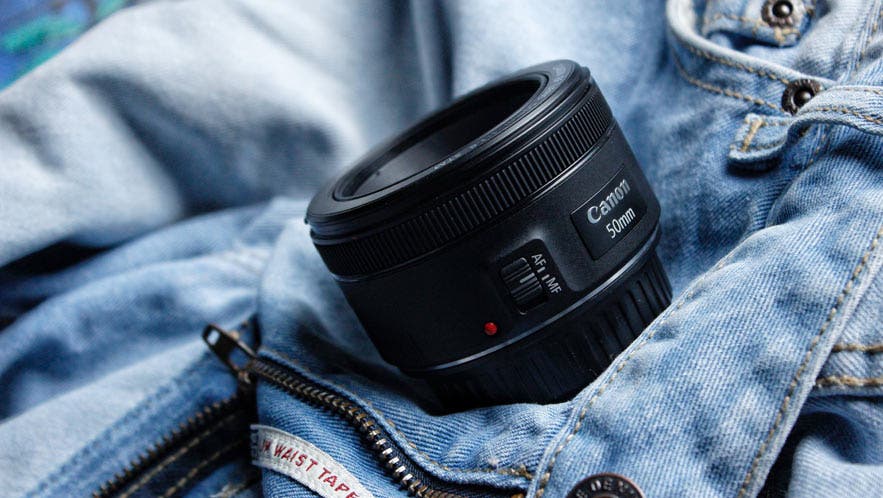
The 50mm prime lens is probably the best lens for a beginner. It is versatile and fits all photographic genres. A 50mm lens is also easy to work with and helps you improve your composition skills. It has a view angle close to the human eye (for example, 7Artisans Photoelectric 50mm lens for Canon cameras has a 46-degree view angle) and all of the 50mm lenses have a minimum focusing distance that allows close-ups.
Furthermore, high-end 50mm lenses such as Canon 50mm lenses provide exquisite contrast and color accuracy. If you are going to have a single lens, it should be 50mm.
How Far Should a 50mm Lens Be from a Subject?
A 50mm lens has to be at approximately 45cm (17.71’’) to be able to focus. But the minimum camera-subject distance is also based on the maximum aperture. 50mm lenses with large maximum apertures (e.g., f/1.8) may have a shorter minimum focusing distance. For example, Canon 50mm lenses have a maximum aperture of f/1.2 or f/1.8 and feature a 30-40cm minimum focusing distance. When you are closer to the subject, you achieve a shallower depth of field, which may improve your compositions.
What is a 50mm Lens Good For?
50mm camera lenses are extremely versatile and you can use them for a variety of photographic subjects. Whether you choose to invest in a Canon 50mm lens or a high-quality third-party 50mm lens, adding a camera lens to your gear kit with this useful focal length will help you expand your photographic capabilities.
Portrait Photography
If you’re interested in portrait photography, a 50mm camera lens will work beautifully for both formal portraits like headshots and senior portraits and more casual, candid portrait images. At the 50mm focal length, the proportions of the human face appear flattering and natural, and you won’t have to worry about distortion.
Street Photography
Street photographers often value the versatility of a 50mm lens as well. Not only are they generally compact and unobtrusive, but they’re typically low f-stop lenses compared to many other lenses on the market. That low f-stop feature lets you work with less available light.
Macro Photography
50mm is also a great focal length for a macro lens. This lets you use your lens for a variety of natural and manmade subjects. Most 50mm camera lenses have a relatively close focusing distance, letting you get up close and personal with your macro subjects like insects, flowers, and other small objects.
Travel Photography
If you’re looking for the perfect general lens for travel, a 50mm is a great option. No matter what subject you choose to photograph, your 50mm camera lens will perform admirably and create beautiful images.
What are the Advantages of a 50mm Lens?
Beyond their flexibility for a wide range of photographic subjects, Canon 50mm lenses have several specific advantages. From affordability and compact size, to shutter speed performance and image clarity, selecting a 50mm lens will set you up for photographic success both home and abroad.
Affordable
One of the primary advantages of selecting a 50mm focal length lens is the general affordability of many models on the market. Because 50mm is so commonly used among beginner photographers and more experienced photo enthusiasts alike, there are plenty of 50mm lens options available on the market.
Many 50mm camera lenses are made with primarily plastic components. While plastic is a less durable material than metal, with a bit of extra caution, you can enjoy the benefits at a much lower price.
Some new photographers choose to start with a less expensive 50mm lens, then upgrade when they’ve outgrown its capabilities.
Compact
Zoom lenses tend to be much heavier than prime lenses. The size and weight of zoom lenses and longer focal length lenses can be a turnoff for some photographers.
Regardless of the 50mm lens you select, it will be noticeably more compact and lightweight than other lenses in your kit. Whether you’re taking your lens on a trip, or just walking around with it all day, you’ll be pleasantly surprised at how small and unobtrusive it is.
When paired with a compact mirrorless camera or a smaller DSLR, a 50mm lens will reduce fatigue over the course of a day of shooting.
Image Clarity
50mm photography features impressive image clarity when compared to other focal lengths. Because these lenses are so compact and simple, lens manufacturers can use superior lens elements and high-quality glass components while maintaining a lower price point.
Whether you shoot wide open at f/1.4 and f/1.8 or you explore the other end of the aperture range, you’ll enjoy great detail and clarity with your 50mm lens.
One thing to note is that at the widest apertures, your focus fall off may be more extreme. For a more gradual fall off and an improved look, try stopping down to f/2 or f/2.8.
Versatile
A 50mm is an endlessly versatile focal length. Whether you’re photographing people, animals, flowers, macro details, food, street scenes, or a wide range of other photographic subjects, a Canon 50mm lens delivers plenty of flexibility.
In fact, a great exercise for new photographers is to practice using one lens for a whole day or longer to explore how to frame subjects and scenes with the limitations of a single focal length. At first it may feel challenging, but you’ll surprise yourself with the versatility you can achieve!
Great for Low Light Shooting
Low f-stop lenses, like most 50mm lenses, are fabulous for low light shooting. The flexibility of wider apertures introduces plenty of light, letting you shoot with faster shutter speeds and lower ISOs. Many photographers who want to add an extremely fast lens to their kits without spending a lot of money specifically choose a 50mm for this reason.
If you’re lucky enough to have a newer mirrorless or DSLR camera with in-body image stabilization, then you can really push the limits of low-light photography. Just open the aperture all the way and shoot at dusk, at night, or in darker indoor settings.
Fast Shutter Speeds
Photography is often about compromise. We have to compromise our apertures to get more light for faster shutter speeds, or slow the shutter down to achieve more depth of field with a narrower aperture.
While 50mm photography may still require some camera setting compromise, the availability of a wider aperture in a low f-stop lens gives you plenty of options when it comes to selecting a shutter speed.
You’ll capture images of birds in flight, catch split-second facial expressions, and freeze a variety of other fluid moments, all while knowing that your fast 50mm lens can handle it.
Nice Focal Length
Regardless of your camera’s sensor size, 50mm is an attractive focal length. Shoot with a crop-sensor camera for an equivalent magnified focal length of 75mm to 80mm, or use a full-frame camera for a true 50mm focal length, and you’ll enjoy a field of view that’s attractive, useful, and creates reliable results.
At 50mm, facial proportions in portraits feel natural and flattering, while wider scenes look realistic and attractive. When it comes to a versatile focal length that works well regardless of your subject matter, 50mm photography is hard to beat.
Great Learning Tool for New Photographers
Many online and in-person photography school curricula recommend that students begin exploring photography with a 50mm lens for several reasons.
- 50mm applies a sense of uniformity across student’s images so instructors can pay attention to use of aperture, shutter speed, and framing.
- It’s an affordable option, allowing students with a range of budgets to find a 50mm lens that works for them.
When you’re new to photography, it’s easy to become overwhelmed by trying to decide which lens to use for each subject or situation. Limiting yourself to using a 50mm lens will force you to make smart decisions with your settings and framing, and improve your vision as a photographer.