Adorama Camera
Adorama Learning Center
Techniques and How-Tos
Portrait & People Photography
Concert Photography: Tips from the Pit

Concert Photography: Tips from the Pit

Back to Portrait & People Photography page
Average: 4.6 stars
 

Rock your photography!

The most important aspect of a concert, besides the music, is photos of the band. Attendees seek photographs to relive the show, while those who couldn't go look forward to seeing what they missed. A great concert photographer captures the show from the pit, stage and backstage...if they’re lucky.


Also read: The Adorama Learning Center celebrates MTV's Video Music Awards


How do you start a career in concert photography? I caught up with fellow concert photographers Erik Voake and Jared Polin who shared some advice on how to get started. See you in the pit!


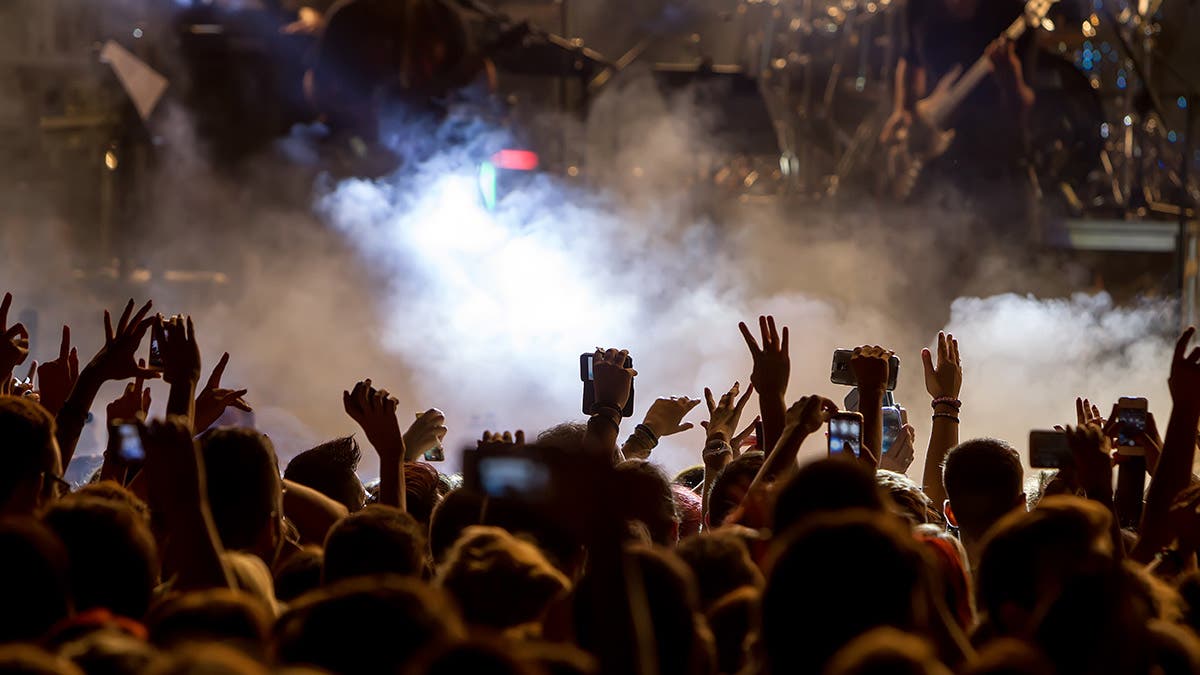
Sometimes the best moments occur in the pit. Be sure to keep an eye on the audience. Photo © Erik Voake.


#1 Purchase a DSLR. In order to be taken seriously and obtain credentials, you need professional equipment. If you want to start a career in concert or music photography, expect to invest. "I would say the most valuable piece of equipment would be my 24-70 lens. I use it for about 90 percent of what I do," says concert photographer Erik Voake. Zoom lenses can cost as much as the camera body, so renting is always an option. This also allows you to test-drive a lens before making a final purchase.


#2 Shoot manual exposure and know your equipment. This is the step that separates the hobbyists from the experienced photogs. "Many times if you are shooting wide and you're in a priority mode, the lights will give you a false reading and your image will end up not exposed properly," explains concert photographer Jared Polin. Manual exposure allows you to control both the aperture and the shutter speeds. When the concert begins, you have limited time to capture your shots, so you need to be quick on your feet and familiar with your equipment.
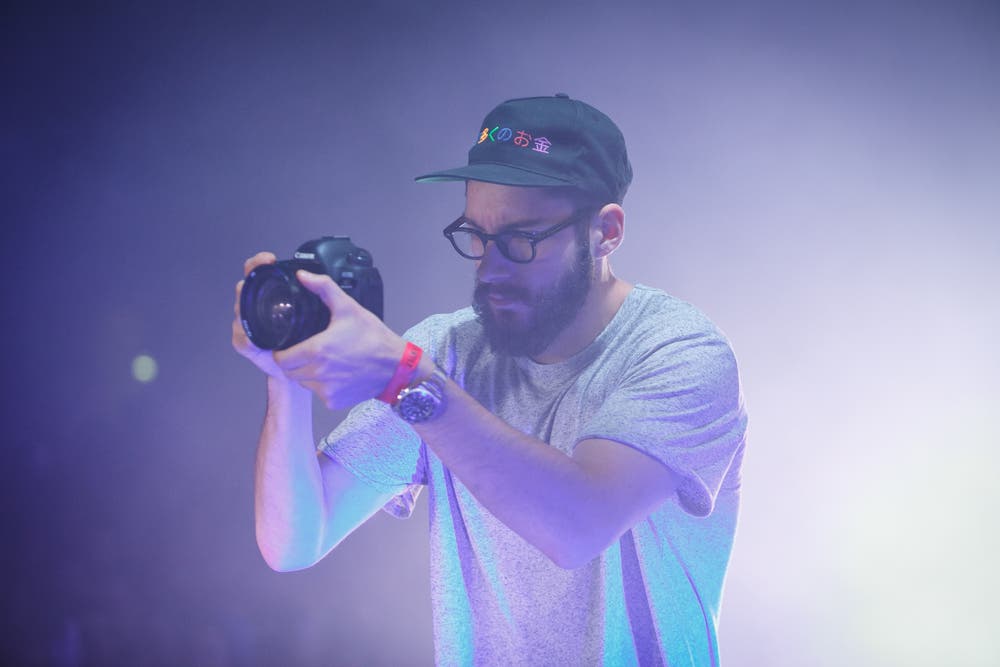

#3 Prepare for some of the best and worst lighting situations. "There are basically three different types of [concert] lighting: outdoor, indoor in a small venue, and indoor in a stadium," says Voake. "Outdoor [metering] is tricky when performers go from light to shadow. Small indoor is tough because they often use red lighting and usually don’t have the big bright white fill lights. Stadiums are great because they always hit the performers with bright white lights, but you usually can't get as close to them as in small venues, so that’s the tradeoff." Fast lenses with image stabilization, like the Canon 70-200mm IS, help alleviate some of the issues that may occur when trying to capture a moving musician in low-light settings.


Shooting a photo from the stage allows you to see the concert from the band's perspective, but will require special permission. Photo © Erik Voake.


Venue lighting cycles in various colors. It's best to wait until white light is on your subject. Photo © Jena Ardell.


Lively acts allow you to capture lively shots. Be sure to use a higher shutter speed to freeze the action. Photo © Jared Polin.


Capturing interaction between musicians and the audience always makes for a great shot. Photo © Jena Ardell.


Using a zoom lens allows you to quickly adjust in order frame a moving musician. Photo © Erik Voake.


#4 Have a reason to be there. "It's easy get into shows—you just need an affiliation," says Polin, who shoots for LiveNation. "If you don't have an affiliation, they won't let you in." Only a limited number of press and photographers are allowed at each show, so make sure you are on the list. The band's manager or publicist will be able to supply you with a photo pass.  "I have been shooting for SPIN magazine for two years now," explains Voake. "They are some of the most incredible people to work with. They give me a lot of room to grow as a photographer and obviously their name helps in getting me great access."

#5 Follow the rules: First three, no flash. Most artists only allow photographers to shoot during the first two or three songs and do not allow flash photography. The bigger the artist, the bigger the restrictions. Sometimes you will be asked to sign a release which limits the usage of the photos and grants the artist full rights to your images. Pop artists are notorious for having the most restrictions. Artists like Lady Gaga and Ke$ha only allow photographers to shoot from the soundboard, a situation which will require a really long lens and sometimes a small step ladder.


"The second you have a portfolio you believe in, stop shooting for free"


#6 Don't shoot for free. Access to a free concert is alluring, but you are providing a service and should be compensated for your time and talent. "I do understand that you may need to if your building your portfolio, but the second you have a portfolio you believe in, stop shooting for free," recommends Voake. This step applies to any person providing a photography service. Usually online and print publications have set rates for their freelance photographers, and unless you hit it big, your paycheck will not be enough to support yourself through concert photography alone--which is even more reason to stop or never start working for free.

Inside their camera bags:


Lens hoods, cleaning cloths, extra batteries and filters to protect your lenses in rough pit terrain (ie: sweat and beer) are also great investments.
About The Author

Jena Ardell is a retro photographer and freelance writer based in Los Angeles.

moreRelated Workshops

Was this article helpful?

Rate this article

Your rating:

Post a comment

*required fields

SHARE THIS ARTICLE

Forward this article to a friend
To use this functionality you should have JS enabled
Bookmark this page

Reader Rating and Comments

12 readers rated this article. Average rating: 4.6 stars
 
  • View
  • 12 comments
0 of 0 people found this comment helpful
 
Nice job Erik!

Congrats Erik on scoring an interview. One more thing to add to the advice is that you should choose wisely who you share a hotel room with for those away shows. It can get ugly... haha. Nice advice Erik I back it 100%. You too Jim, solid tip. I happy to have worked beside both of you guys this past year. Cheers!

by in Los Angeles, CA on

2 of 2 people found this comment helpful
 
ISO info

I usually keep my ISO at 1600 on my 5D and I have never really had a problem. I have also shot at 1/60 and 2.8 just to get the image when its dark. Sometimes you have to set your camera like that to get the shot, I also recommend shooting rapid fire in those cases and 9 times out of 10 you will get one nice crisp shot! Erik

by in Los Angeles on

0 of 0 people found this comment helpful
 
Tips from the Pit

I've been lucky enough to shoot alongside Erik Voake. Great to see him sharing his knowledge with the rest of the world!

by in West Hollywood, CA on

0 of 0 people found this comment helpful
 
Some of the Best advice

I can vouch for nearly everything they have to say. Many of these tips will help you avoid from having to learn from experience (not always fun with the limited time you have to shoot). Erik has helped provide many opportunities and great encouragement not only with my work but frame of mind while Im shooting as well. These guys know their stuff and have a lot of wisdom to share. If there is one thing I think should be added, its NETWORK. You never know who you might be talking to or the people that might help spring board you up to your next level. That said, thanks Erik.

by in Azusa/Los Angeles, Ca on

0 of 0 people found this comment helpful
 
thanks

thanks Joe, glad you like the article!

by in Los Angeles on

0 of 0 people found this comment helpful
 
Concert shooting.

Erik, always some good tips for those getting into that kind of photography, thank you.

by in Highland ,Ca on

0 of 0 people found this comment helpful
 
Concert Photography

Very Very Good. Priceless!!!

by in New Jersey on

0 of 1 people found this comment helpful
 
My outdoor concert gallery

My website has a large gallery of outdoor concert photography. www.BellusPhoto.com

by in Texas on

0 of 0 people found this comment helpful
 
Great article!

I love shooting concerts, and couldn't agree more about the lighting; sometimes it's awful! I mostly do local music festivals, though, and they tend to be sponsored by non-profits who are helping support part-time musicians and can't afford a pro. The non-profits and the musicians really appreciate getting good pictures for free. There's great music and great shows to be had in lots of places, and concert photography is always fun and always challenging! Great article!

by in Norfolk, VA on

0 of 0 people found this comment helpful
 
ISO?

How high you set the ISO in a dark venue on a modern DSLR?

by in Kearney, NE on

Items per page
Showing 10 of 12 results
Page:

Was this article helpful?

Rate this article

Your rating:

Post a comment

*required fields
Bookmark this page