Before you book your first wedding, before you build your website, before you post a single thing on Instagram, you need to look hard at what images you’ve got to start assembling your portfolio.
Not what you wish you had. Not what you’re planning to shoot next month. What exists right now, today, in your hard drives and camera rolls and folders from every job you’ve ever done with a camera in your hand.
That’s your starting point.
What do you actually have?
Most new photographers are sitting on more usable work than they realize, and less of it than they need. Go through everything. Personal projects, second shooting work if you have it (and are allowed to post the images), engagement sessions you did for friends, portraits, anything where you were in charge of the light and the moment and the final image.
Pull the strongest fifty images across all of it. Don’t edit for variety yet. Just find the fifty that are technically clean, emotionally alive, and ones you’d be proud to show a stranger.
Now look at what’s missing.
If you want to shoot weddings, your portfolio needs to show that you can work in low light, that you can photograph people in motion, that you understand how to find a moment and not manufacture one. It needs to show ceremony coverage, reception coverage, portraits, details. It doesn’t need to show twenty weddings. And finally, it needs to show that you understand how a wedding day moves and that you can move with it.
If you don’t have that yet, you’re not stuck. You’re just not done yet.
What do clients actually want to see?
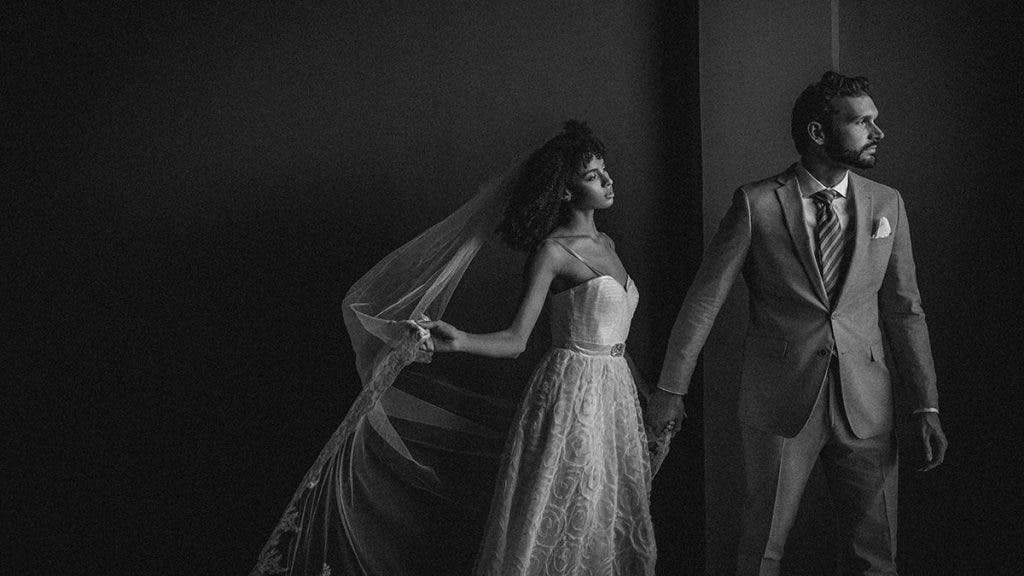
They want to see themselves. Not literally, but they want to look at your portfolio and think: that could be us.
This is why consistency matters more than volume. A portfolio of thirty images that feel cohesive, that share a point of view, that look like they came from the same photographer with a specific vision will book more weddings than a portfolio of two hundred images all over the place stylistically. Couples aren’t looking for evidence that you’ve worked a lot. They’re looking for evidence that you’ll know what to do with them.
They also want to see people who look like they’re actually having a good time. Not forced smiles. Not stiff poses. Real moments between real people who trusted their photographer enough to forget the camera was there. If your portfolio is full of technically perfect images where everyone looks vaguely uncomfortable, that’s a problem worth solving before you start marketing yourself.
How do you get work when you don’t have work?
This is the part nobody loves talking about because there’s no shortcut. You build it on purpose.
Second shoot. Find established photographers in your market and reach out professionally, with a real email and a link to what you have. Offer to assist or second shoot. This gets you on real wedding days, in real lighting conditions, watching how an experienced photographer moves through a day, manages timelines, handles problems, and communicates with clients and vendors. That education and those connections are invaluable and you cannot get it anywhere else.
A word on images: second shooting is often work for hire. The day belongs to the lead photographer and their client. Many photographers do not allow seconds to use images from their weddings at all, and that is entirely their right. Go in with zero assumptions about portfolio usage. If a lead photographer explicitly offers you usage rights, that’s a conversation to have clearly and in writing. But that is never why you’re there. You’re there to learn, to be useful, and to build a professional relationship with someone who may refer you work, recommend you to couples, or hire you again.
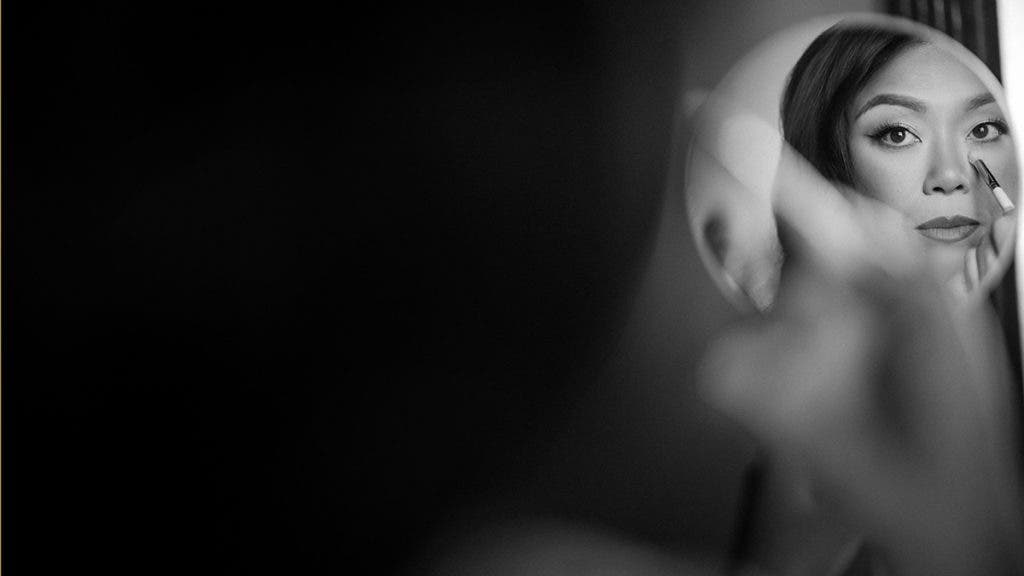
The portfolio will come from your own clients, on your own jobs. Second shooting builds the skill and the network that gets you there.
Another option when you’re just starting: offer to photograph people in your life who are getting married or engaged. Friends, family, coworkers, anyone who’s willing. This is sometimes framed as “shooting for free” but that’s not quite right. You’re not donating your time out of the goodness of your heart. You’re trading your services for the images that will go on your website, your Instagram, and your portfolio. That’s an exchange with real value on both sides, and you should think of it that way. Be clear with the people you’re photographing too — let them know you’ll be using the images for your business. Get it in writing if you can. Treat it like a real job, because it is one. The only difference is the compensation comes in the form of content instead of a check.
Reach out to photographers doing styled shoots and ask to be included. Styled shoots are collaborative editorial sessions where vendors create a wedding scene to photograph — no real clients, but real florals and real light and real opportunity to make images you’d want to show people.
None of this is fast. All of it works.
Building your website
Your website is your storefront and your first impression and your pitch all at once. It does not need to be complicated. It needs to be clean, fast to load, easy to navigate, and full of your strongest work.
Lead with images, not text. The gallery should be the first thing people see. Pull your absolute best ten to fifteen images for the homepage and resist the urge to show everything you’ve ever shot. More is not better here. More is just more.
Your about page matters more than you think. Couples are hiring a person to be with them on one of the most important days of their lives. They want to know who you are. Write it like a human being, not a press release. Tell them why you do this work, what draws you to it, what they can expect from you. Be specific. Be real.
Social media when you’re just starting
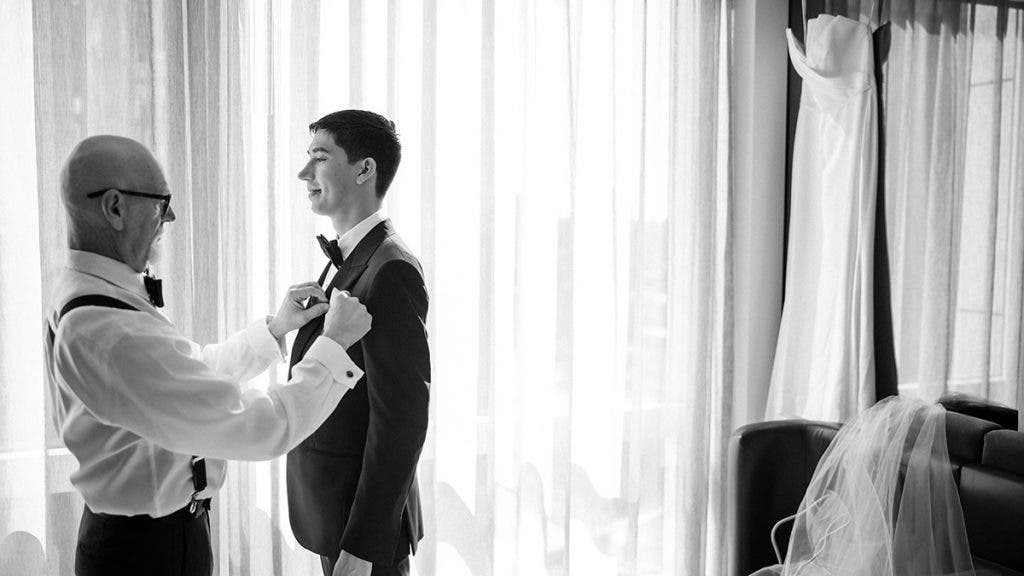
Instagram is still where wedding clients look. You need to be there, and you need to post consistently, but you do not need to post constantly.
Quality over quantity is especially true when your portfolio is still growing. Three strong images a week is better than seven mediocre ones. Every post should represent work you’re proud of and work that shows where you want to go, not just where you’ve been.
Show your process. Behind the scenes, the light you found, the moment just before and just after. Couples who follow you before they’re even engaged will think of you when they are. That’s the long game of social media and it works slowly and then all at once.
Don’t wait until your portfolio is perfect to start posting. You will wait forever. Start with what you have, shoot more, post that, and let the feed build over time into something that shows your growth and your point of view.
The Never-Ending Portfolio
Your portfolio is never finished. The best photographers are always adding to it, always editing it down, always asking whether the work they’re showing still represents the work they want to be doing. That discipline is what keeps a portfolio alive.
Start with what you have. Be honest about what you need. Go get it.