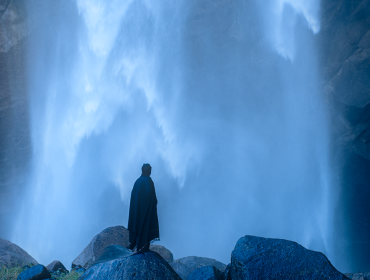
After nearly two hours of hiking through the picturesque Cederberg region, my friend and I arrived at Maltese Cross, an impressive rock formation that stands prominently in the valley. While I had been to this place before, it was Kamran’s first experience of this remarkable geographical landmark. His curiosity along the way, expressed through questions such as, “What is this cross, anyway?”, added to the enjoyment of the moment as he stood still for a few seconds in awe of this wonder.
The Power of Nature
We took a photo of him beneath the massive stone pillar, with a blurred foreground of plants, the monolith to one side, him standing on rocks at the base, and a dramatic winter sky behind. The image deeply moved me, suggesting how mighty nature is. It didn’t evoke a sense of loneliness but rather a profound sense of belonging and a message to respect nature. The blurry foreground creates a sense of secret observation as it sneaks a peek through the bush.

The image reminds me that good photography involves capturing what we see and creating feelings. It’s not just about getting the technical details like exposure and focus right, or sticking to standard rules of composition. There is something more profound and more powerful at play: emotional distance. This is not just about how far away the camera is from the subject; it is about the emotional space in the photo. It can choose to invite the viewer into a close connection, or to keep them at a thoughtful distance. It’s a subtle language communicated not through words, but through light, angles, foreground, how the shot is framed, and the expressions or movements within the image.
With the help of a few examples, let’s learn how emotional distance can be carefully incorporated in your photos as a stylistic choice. The selection of lenses, angles, composition, and light evokes the viewer’s gaze and feelings; a photographer must always be intentional about it.
Framing Emotion: How Distance Shapes Your Portrait’s Story
While it’s not always the case, sometimes the emotional distance from the subject is a result of the physical distance from the subject, as you will see in the first example below. Let’s analyse these two portraits and how they create different “emotional distances” for the viewer.

This image creates a sense of personal connection because of its tight framing, bringing the viewer into her personal space. There is minimal background distraction. This physical proximity and direct gaze invite us, creating a sense of direct personal encounter.

This image, in contrast, creates a sense of isolation. The wider framing places the subject smaller within the larger view of her environment, creating physical and emotional distance, allowing the viewer to take on the observer role. The greater depth of field reveals more background elements, railway tracks, buildings, etc., drawing the viewer into the scene for context rather than focusing solely on her. She is looking down and walking with a posture that suggests movement toward her path rather than engaging with the viewer. This highlights her isolation and invites one to wonder about her thoughts on her quiet journey.
Compared to the first portrait above, the focus in this one shifts from intimate emotion to a broader narrative of an individual within a specific, almost stark, landscape, evoking feelings of journey, contemplation, or quiet solitude, and maybe even sadness.
In her first image, the emotion conveyed is a personal connection; in the second, it is a feeling of isolation/sadness.
Capturing Emotion: The Impact of Angles on the Narrative of Your Portraits

The angle of the shot affects the emotional feel. A shot taken from a low angle can make a subject appear powerful, while a high angle lends a sense of vulnerability. Small changes in camera placement can significantly shift the relationship between the viewer and the subject.
The left image conveys cuteness, and the right one a feeling of authority.
Light & Mood: How Illumination Shapes Emotional Distance in Landscapes
The quality of light and shadow captured plays a crucial role. Soft, diffused light, often achieved during the golden hour, creates a gentle, inviting, and intimate atmosphere. In contrast, dramatic, high-contrast lighting, with deep shadows and sharp highlights, can create mystery, tension, or even isolation. The interplay of light and shadow can carve out a subject from its environment, or allow it to recede into it, fundamentally altering the emotional connection.

The photo above was captured with a wide-angle lens positioned lower to the ground and looking up towards the sun, making the trees look taller than they are. The sun is high in the sky, creating stark contrasts between the sunlit snow and the long, sharp shadows cast by the trees. The harshness of the sunlight leaves little room for intimacy; instead, it’s about appreciating the unadorned reality of a winter’s day in the Arctic. The bright, almost overwhelming light, combined with the lack of warmth, can evoke a feeling of a harsh, unforgiving, and vast environment.

In contrast, this image features soft, diffused light from a sunset in the Finnish skies, characterised by a stunning gradient of purple, pink, and orange hues. This lack of harshness invites the viewer to feel a quiet connection with the serene landscape. The pastel colours are inherently soothing. Despite being a snow scene, the tonal hues in the sky inject a subtle sense of warmth and romance, despite the wintry subject.
A Summary of Key Factors
Based on the examples above, here’s a quick summary of how these influence emotional distance:
- Framing & Proximity: A tighter frame draws the viewer in, fostering intimacy, while a wider frame creates distance, encouraging observation, both overt or secret.
- Depth of Field Control: Shallow depth of field isolates the subject for closeness; deep depth of field includes context for a more distant view.
- Subject Gaze & Body Language: Direct eye contact connects intimately, whereas an averted gaze creates distance, inviting the viewer to think.
- Perspective & Camera Angle: Shooting from above or below can alter the relational dynamic to the subject, increasing or reducing emotional distance, while eye-level maintains connection.
- Quality of Light: Soft, diffused light reduces distance, creating warmth, while hard, high-contrast light often increases it, enhancing drama.
- Colour Palette: Warm and harmonious colours can invite intimacy, while cool or highly contrasting colours might create a sense of detachment.
- Solitude vs. Connection: A solitary figure often emphasises isolation, increasing distance, whereas groups or interactions reduce it, fostering engagement.
Conclusion
Mastering emotional distance in photography is a continuous process of observation and experimentation. It compels one to look beyond the superficial elements of a scene and delve into the psychological underpinnings of visual communication. One constantly asks: What feeling is intended to be evoked? Is the viewer meant to feel with the subject or merely observe them? By consciously manipulating the factors highlighted above, the aim is to craft photographs that are visually compelling and deeply resonant.