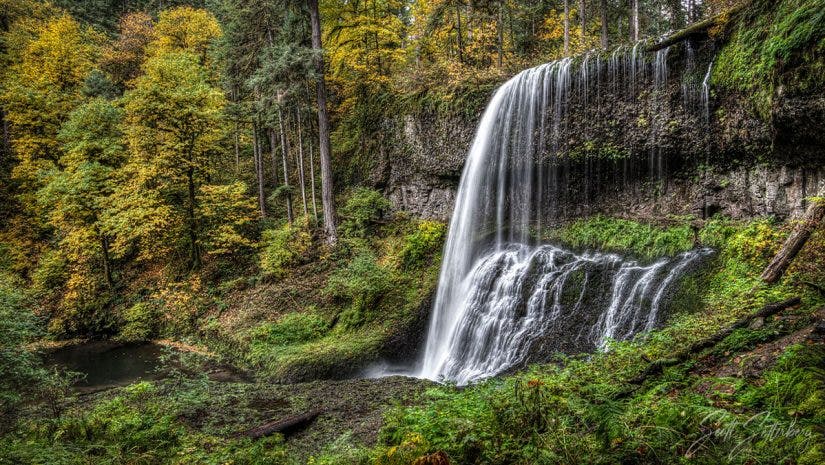
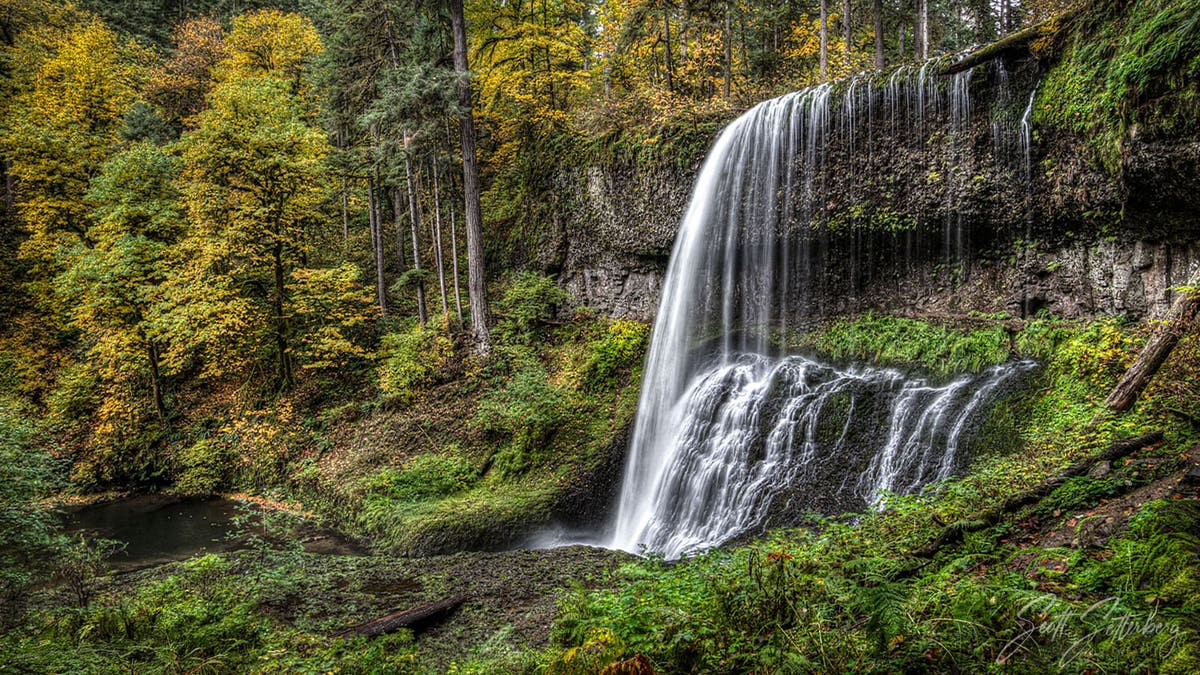
Waterfalls have always captivated me. They’re not just beautiful, they’re emotional anchors that connect us to nature. They embody movement, rhythm, patience, and persistence. Their sound, energy, and misty spray show they are alive in ways that demand attention. Scientifically, waterfalls lift our mood and energy levels. Artistically, they provide contrast – flowing water against stationary objects. Photographically, waterfalls offer endless possibilities to create natural masterpieces, and I never get tired of photographing them.
As a professional landscape photographer and photography workshop leader, I’ve returned to waterfalls again and again. They’re never the same twice. A cascade that is calm and smooth one day might roar with unstoppable force the next, depending on the season and recent rainfall. It’s those changes that make waterfall photography so rewarding.
In this article, I’ll share what decades of chasing waterfalls in Costa Rica and the Pacific Northwest has taught me – the gear I rely on, the settings and techniques that work, and the creative approaches that can turn a standard waterfall shot into something that resonates. Just as importantly, I’ll explore why waterfalls move us emotionally, and how to capture that feeling in your photographs.
Emotional Impact of Waterfalls
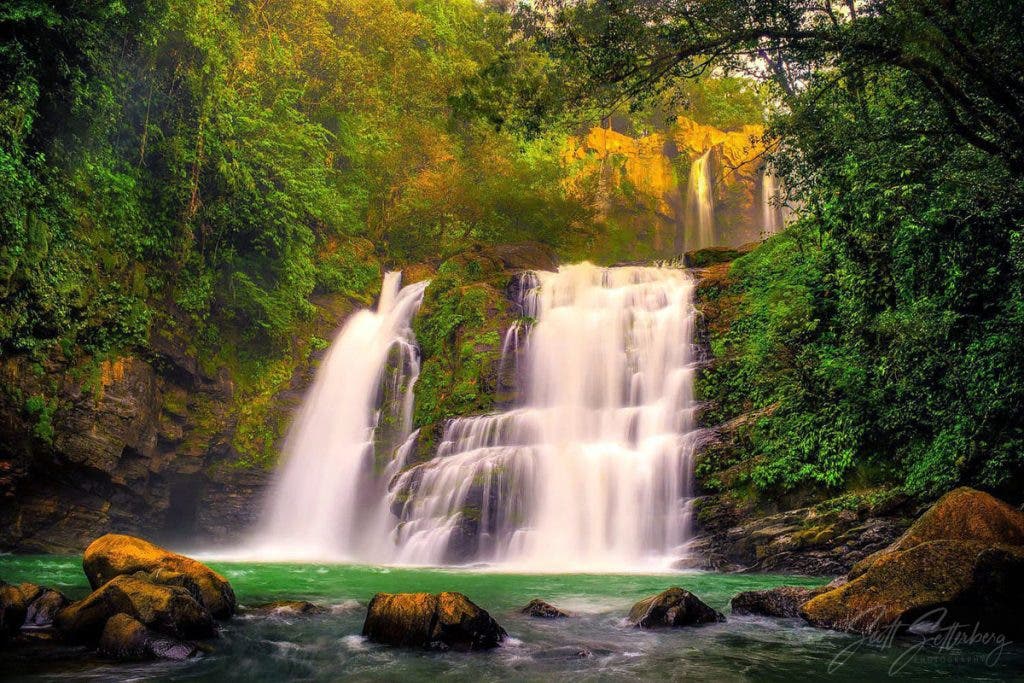
Waterfalls are one of nature’s most breathtaking features. They are inherently symbolic, representing renewal and persistence, sometimes chaos, and providing a sense of wonder. That magical, otherworldly energy we feel when in the presence of waterfalls has a scientific explanation. When fast-moving water crashes and collides, it releases negative ions – tiny molecules with a negative electrical charge. These ions occur naturally near oceans, rivers, streams, and waterfalls, generating them in especially high concentrations.
The constant motion and energy of falling water releases a fine mist into the air and creates a dense field of negative ions. This is why the air near waterfalls feels noticeably fresher and more energizing. Negative ions interact with our bodies and minds and have tremendous healing properties.
Some research suggests that negative ions may contribute to an improved mood, reduced stress, and increased serotonin, a neurotransmitter often referred to as the “happiness molecule.” Serotonin plays a crucial role in regulating mood, sleep, and digestion. Lower levels are tied to anxiety and depression, while higher levels support feelings of well-being. Negative ions are also associated with lower cortisol, the body’s primary stress hormone, which can amplify serotonin’s positive effects.
The experience of being near a waterfall is enhanced by the rhythmic sound of crashing water, which has a meditative effect that naturally calms the mind. It’s a form of white noise that drowns out mental chatter and promotes relaxation. The fine mist generated by waterfalls cools your skin, refreshes your body, and enhances the sensory experience.
Essential Gear for Waterfall Photography
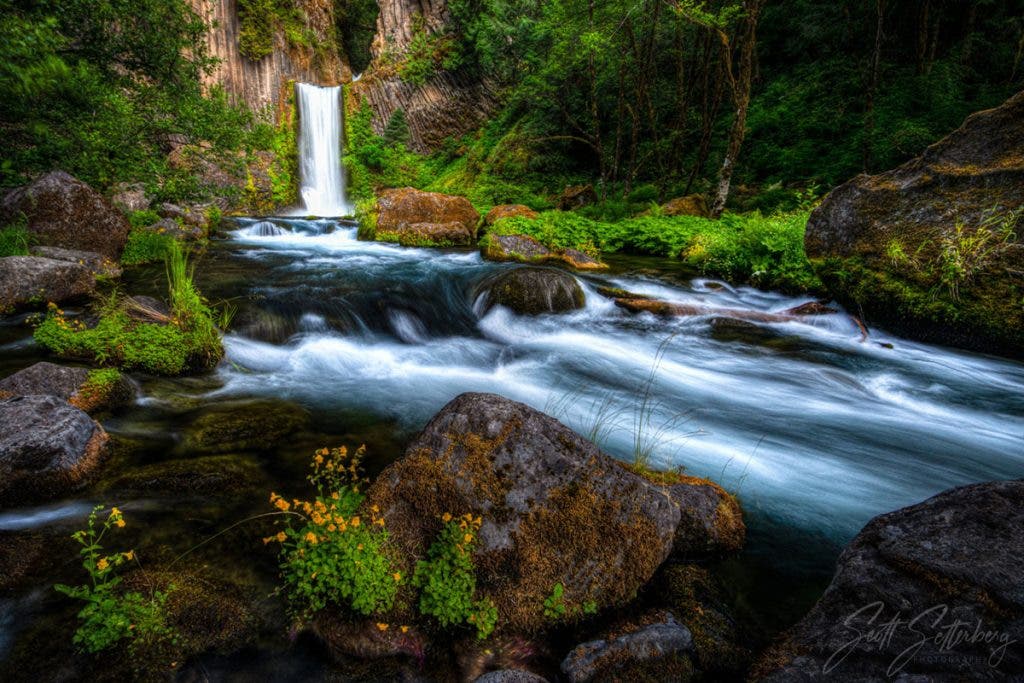
If you’ve tried shooting a waterfall handheld, you know how limiting it can be. In order to capture silky motion in water, long exposures are required, making a sturdy tripod mandatory. Tripods provide stability and expand exposure options, enabling different exposures for more flexibility during editing.
Another non-negotiable piece of gear is a circular polarizing filter (CPL). In locations with lush greens and reflective surfaces, a CPL cuts glare on foliage and rocks, deepens color, and shows details below water surfaces. The improvement to photographs from using a CPL is massive, and if I could only have one filter, it would be a CPL. For longer exposures in bright light, I also use neutral density (ND) filters, which allow dragging shutter speeds to create more motion.
As for lenses, I always carry a 14–24mm wide-angle zoom lens to capture full scenes. When that lens is too wide, I switch to a 24–70mm midrange zoom, and those two lenses produce the vast majority of my waterfall photographs. For isolating details, a 70–200mm telephoto zoom is my preferred choice. This trifecta is referred to as “the holy trinity of lenses” due to their outstanding performance, versatility, and reliability, and are the three most important lenses to have in your bag.
Other essentials include a shutter release cable for increased stability, microfiber cloths to wipe away spray from lenses, and water shoes for accessing prime positions in streams. Sometimes, the best perspective requires getting wet.
Exposure Techniques for Controlling Motion
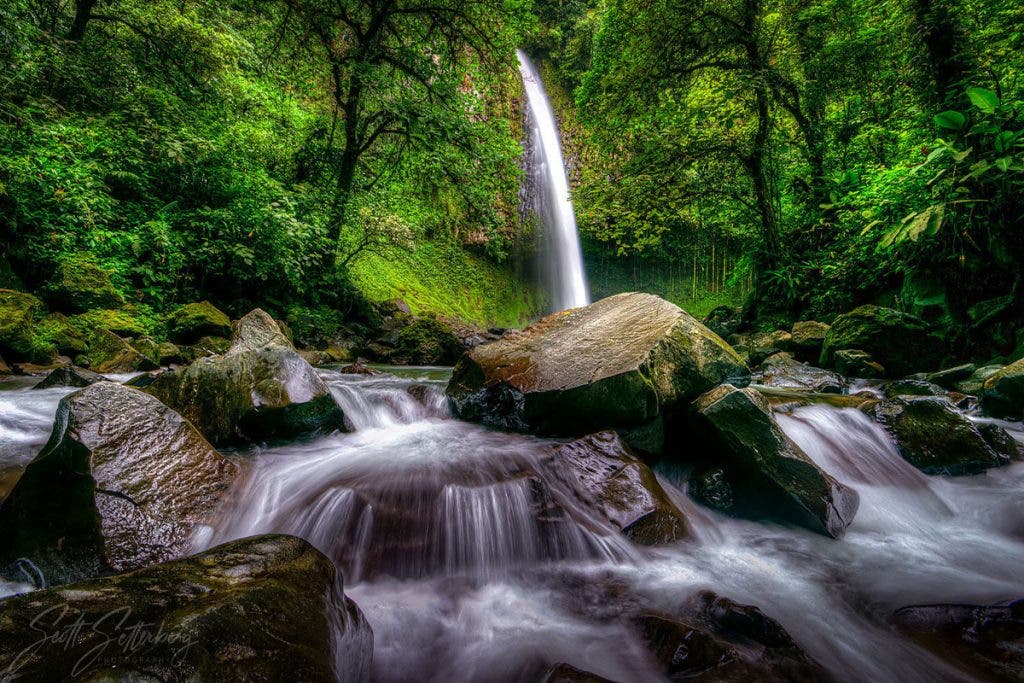
Shutter speed is the creative tool that affects the mood of waterfall photographs. Generally, shutter speeds around 1/4 to 1/2 second create that classic silky effect in water, while speeds of one second or more can transform water into a dreamy blur. To capture the waterfall’s power and freeze droplets midair, 1/500 or faster gets the job done. I search for a combination of motion and detail, and to achieve that, shutter speed greatly depends on the volume and velocity of the water.
Aperture controls what’s in focus throughout the frame. For expansive vistas that incorporate the stream and natural details below the waterfall, I shoot between f/11 and f/22 for maximum depth of field. ISO should be kept as low as possible, except in low-light situations or when capturing more detail by freezing the motion of the water. Software from Topaz Labs does an excellent job of removing noise, so don’t be afraid to raise your ISO when necessary.
One of my favorite techniques to teach during photography workshops is exposure bracketing. Waterfalls often create tricky contrast – bright whites in the cascade and deep shadows in the surrounding forest. Exposure bracketing allows you to merge different exposures in post-processing. This expands the dynamic range, maintaining detail in both highlights and shadows. Bracketing is also effective for stopping motion in wind-blown trees, leaves, and grasses. One exposure is captured to freeze that motion, and another to capture movement in water. Merging those exposures together helps ensure detail sharpness throughout the entire image.
Creative Composition to Evoke Emotion
Technical skill will get you a sharp, well-exposed waterfall shot, but what makes people stop scrolling and feel something is emotion. On photography tours, I encourage participants to take a moment to sit and observe before shooting. Observe the conditions… wind moving the foliage, sun angle and shadows, and the speed and volume of the water. Connecting with the scene before shooting allows you to feel the emotion of the location and determine what natural details to incorporate to create the strongest image.
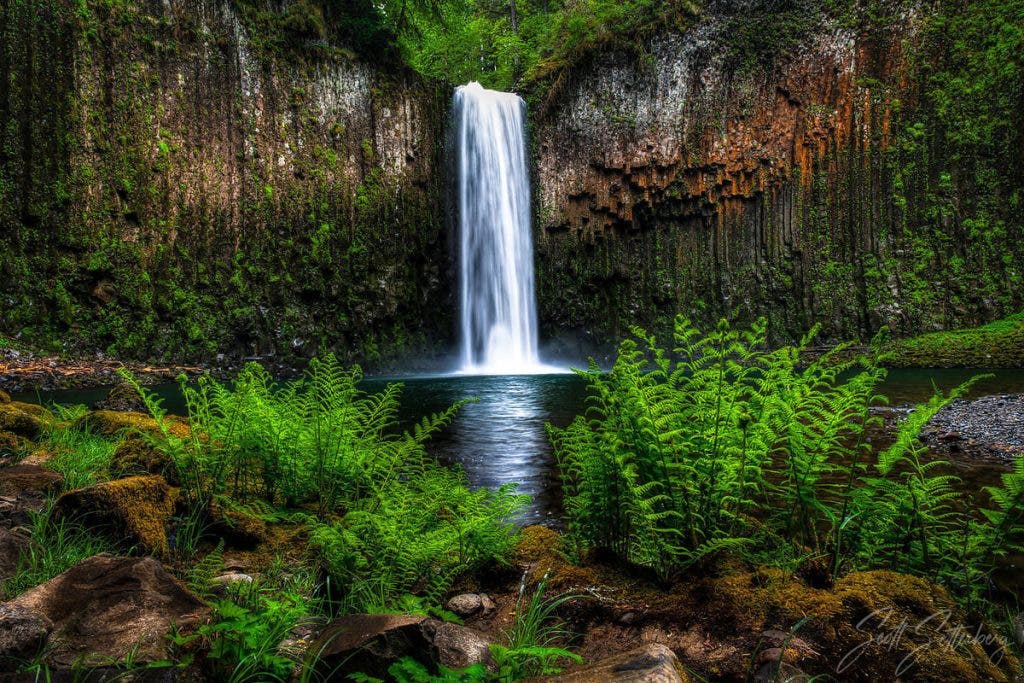
Composition makes or breaks waterfall photography. Early on, I framed waterfalls dead center, creating shots that were technically fine but emotionally flat. Over time, I learned to offset waterfalls to one side of the frame. I do this unless the scene is truly symmetrical or there’s dramatic framing. For example, arching tree branches that create a natural vignette. I use the rule of thirds to divide the frame, and search for a strong foreground, middle area, and background.
Leading Lines and Perspective
Leading lines are powerful. Streams below waterfalls and fallen logs can lead the eye toward the falls. Foreground elements like rocks, grasses, leaves, and submerged objects add texture, depth, and intimacy. Check all sides of the viewfinder for bright distractions, as small shifts can fix edge problems and strengthen balance.
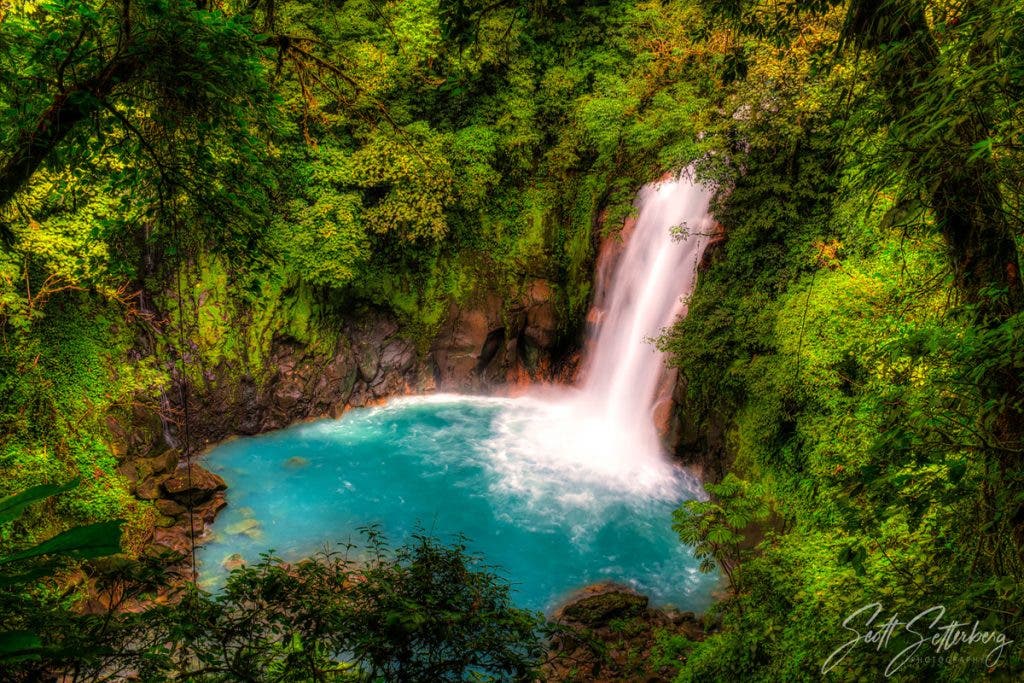
Perspective matters too. Shooting from a low angle can emphasize water flow, while higher viewpoints can reveal patterns and context. During Costa Rica photography workshops, I often use hanging bridges and staircases as vantage points, capturing the interplay and scale of the rainforest canopy and cascade.
Overall, don’t just document the waterfall – interpret it. Think about mood. Is this waterfall tranquil or thunderous? Do you want the viewer to feel peace, awe, or power? Every compositional choice should enhance the emotion you wish to convey. Composition is about transforming details into an emotional statement, and when you connect intimately with a scene, viewers will feel it. Incorporate these elements into your photographs and watch as they burst to life with raw emotion.
Conclusion
Waterfalls are sanctuaries that recharge your body and mind and produce a natural form of therapy. Mastering waterfall photography is about much more than gear and technique. It’s about patience, creativity, and capturing emotion. Tripods, filters, and lenses are important, but so is composition and exposure techniques, and the willingness to experiment until you discover your vision.
I’ve spent decades photographing waterfalls and return to the same spots over and over. Each visit reveals something new – a change in water flow, a shift in light, a different emotion. That’s what makes waterfall photography endlessly rewarding. If you’re passionate about landscape photography, I encourage you to chase waterfalls with both technical precision and creative openness. If you’d like to accelerate your growth, join a photography workshop, where you can explore spectacular locations, learn from a professional photographer, experiment, and capture the emotional power of waterfalls.