About eight years ago, I picked up a Nikon FM.
That’s where it all started, my journey into street photography.
And honestly, I took a lot of bad shots.
I’m talking underexposed shots, “not sure what I’m shooting but I’m shooting it anyway” shots, total chaos shots, you know the ones. The kind that live on your hard drive like a reminder that you had no idea what you were doing.
It’s only in the last few years that I’ve felt like I’ve finally figured out how to consistently get solid street photos, the kind that make you stop for a second when you look back at them.
And the funny thing is, it’s not about having the fanciest camera or going full Bruce Gilden on the streets. Sure, if one of my scratchcards ever pays off, maybe I’ll be out there with a Leica M6, but that’s not what makes the difference.
These are real changes you can make right now, the kind that’ll help you take better street photos immediately. Some of these points could be entire articles on their own, but let’s start simple.
How You Carry Your Camera
Now, I’m not here to sell you anything, but being ready is half the battle in street photography. If you’re walking around with your camera tucked away in a backpack, you might as well not have it at all.
I usually walk with my camera in my hand, lens cap off, settings dialled in. That way, I’m ready the moment something interesting happens.
It’s not just about being physically ready — it’s about staying in that photography mindset. If your camera isn’t accessible, it’s harder to see photographically. The world starts to blur back into normal life instead of frames and compositions.
So, keep your camera with you. Whether it’s on a strap, in your hand, or however you feel most comfortable — just make sure it’s ready.
Warm Up Before You Shoot
This is a big one. And no, I’m not talking about doing ten squats in the middle of the high street.
I mean getting yourself into the right headspace.
Street photography can be intimidating. Some days you don’t feel confident. Other days, you walk around for hours and find nothing. That’s completely normal.
The trick is to warm up — both mentally and visually. Spend a few minutes just walking around, holding your camera up, looking through the viewfinder without even taking photos yet. Search for compositions, interesting light, or moments that might happen.
It sounds simple, but it helps break that awkward barrier between you and the street. You start to feel more comfortable, more present, and more observant.
Just those first two things — carrying your camera and warming up — can completely change how your next photo walk feels.
Reactive vs. Proactive Shooting
This one made a massive difference for me.
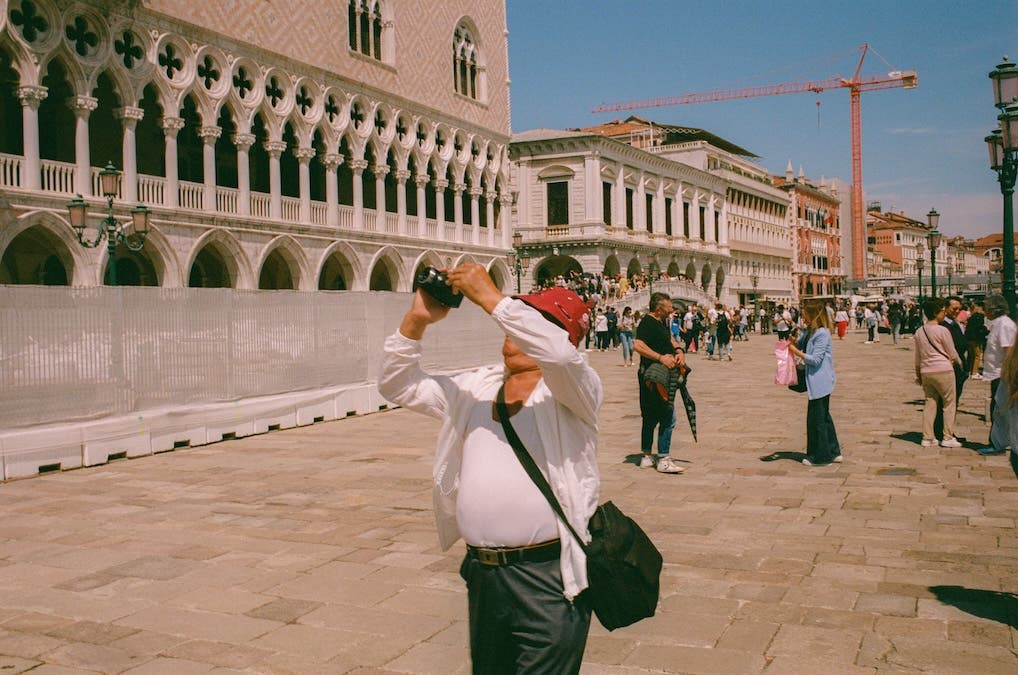
Most of the time, street photographers shoot reactively. Something happens — a person with a great hat crosses the street, a reflection catches your eye, a dog does something weird — and you react.
That’s the classic rhythm of street photography: see, raise, shoot.
But there’s another layer to it — what I call proactive shooting.
Proactive shooting is about predicting what might happen next. Someone’s fumbling with something in the back of a van, maybe they’re about to step out into the light. A cyclist heading toward an interesting backdrop, maybe they’ll pop a wheelie right in the frame.
By staying alert to what could happen, you start seeing moments before they unfold. It’s a different kind of awareness, one that opens up way more creative possibilities.
So when you’re out shooting, switch between the two mindsets. Be reactive when something happens fast, but practice being proactive too. If one approach isn’t working that day, switch gears.
Aperture and Flexibility
Let’s get a little technical for a second.
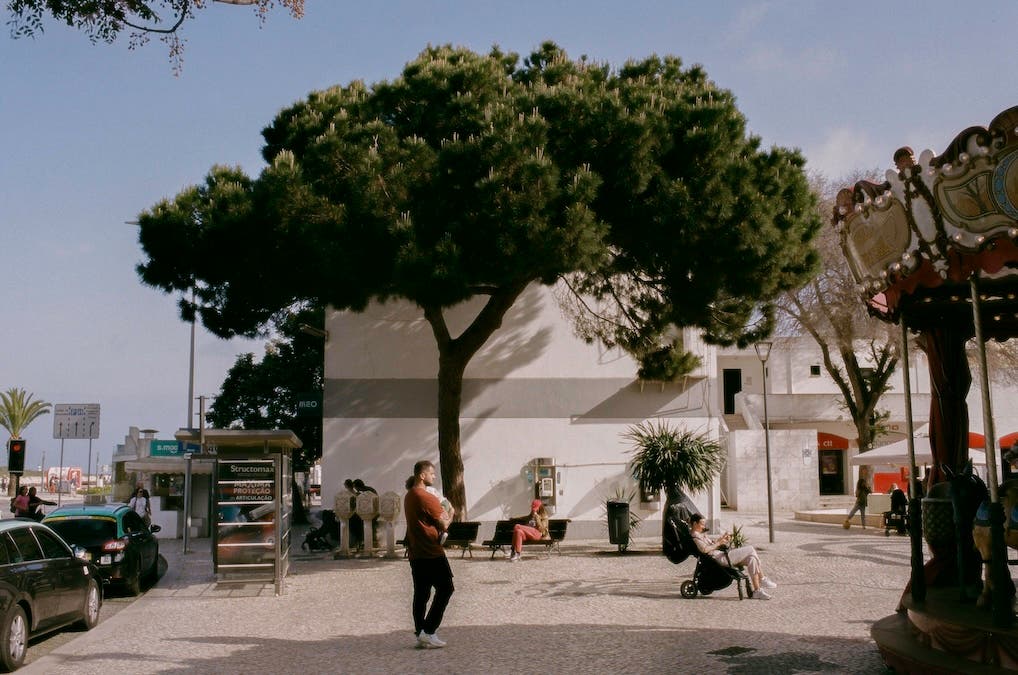
If you’re the kind of photographer who likes quick, candid street moments, don’t shoot wide open all the time.
At f/1.8, your focus margin is razor thin; one small movement and your subject’s out of focus. If you shoot around f/5.6 or f/8, you get more forgiveness and a higher chance that your subject is tack sharp.
You’ll still get a nice separation from the background, but with way more reliability.
Think of it as giving yourself a safety net — because on the street, things happen fast.
Shooting in Harsh Light
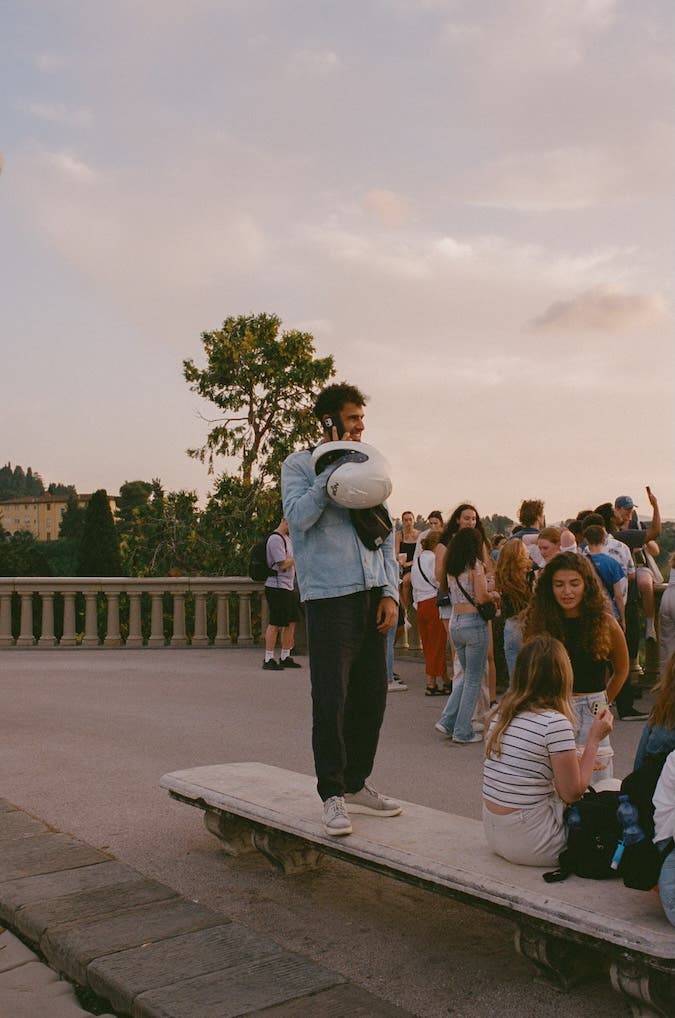
Now let’s talk about a big one: harsh sunlight.
For some reason, hardly anyone teaches how to shoot in it. But if you’re out all day, you’ll definitely face harsh light at some point.
The trick is to lean into it. Use bold colours, simplify your compositions, or work with strong contrasts.
Sometimes, it means embracing the flatness of midday light by using big shapes and negative space. Other times, it’s about finding deep shadows and letting your subjects fall into or emerge from them.
Subjects and Meaning
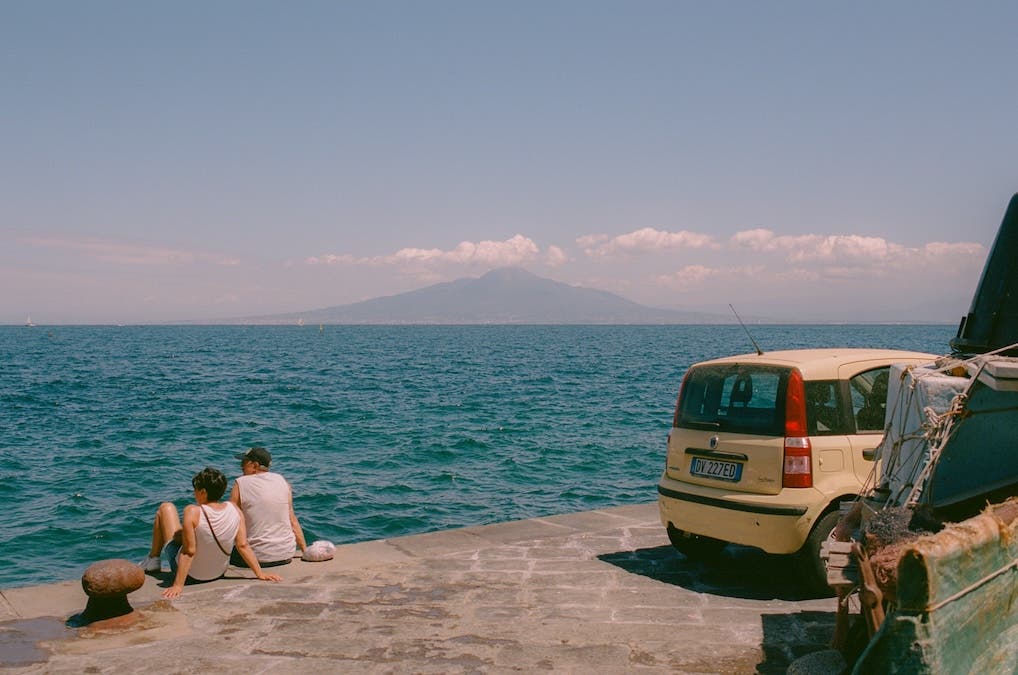
When you’re just starting out in street photography, it can feel like a victory to take any photo of a stranger. It’s nerve-wracking, you raise the camera, click, and think, Yes! That’s a street photo.
But often, it’s just a photo of a person. Nothing more.
There’s no connection, no story, no curiosity.
If you’re consistently unhappy with your shots, ask yourself:
Is there a clear subject?
Does this photo make the viewer ask a question?
So many street photos end up being just a crowd of people, visually interesting, maybe, but emotionally flat. Try to find that spark, the small detail or expression that turns an ordinary frame into a story.
The Process
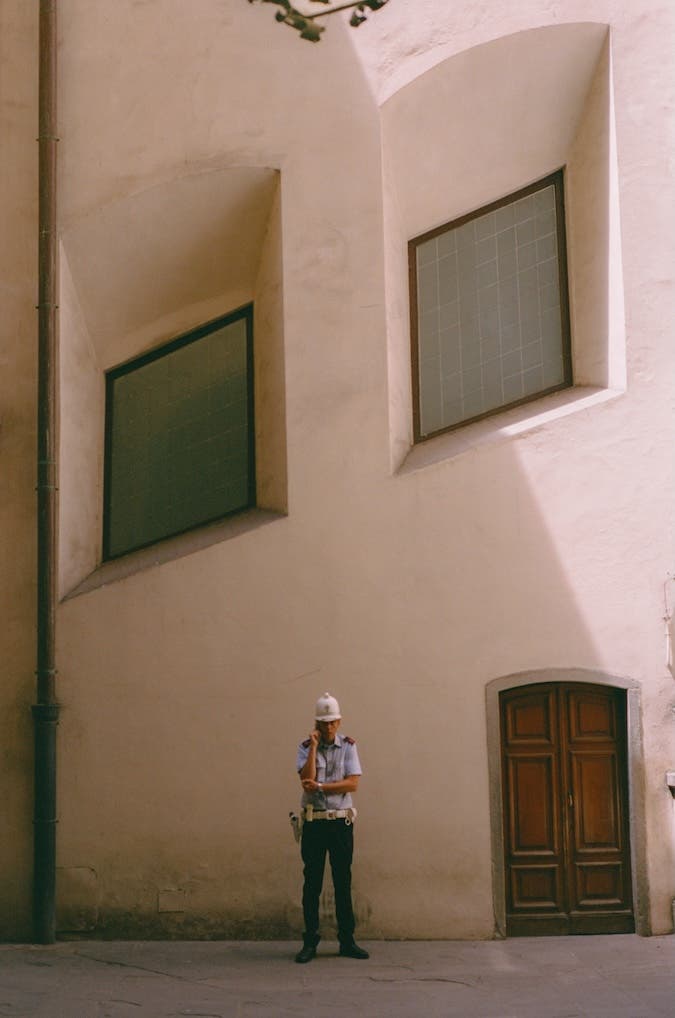
And finally, don’t forget this: you only ever see people’s best work.
Every great photographer takes hundreds, even thousands, of misses to get that one special image. Don’t be discouraged by that.
Enjoy the process. Go out, explore, meet other photographers, visit exhibitions, talk about the art. The more you live inside the craft, the more naturally your style develops.
Street photography is really about curiosity, curiosity about people, about life, about the little moments that usually pass unnoticed.
So have fun with it. Go out and shoot, even when you don’t feel like it.