If you have technically perfect wildlife shots that say nothing to you or others, what you are missing is not skill or gear, but storytelling. A good photograph has more than sharp edges and accurate colors. It even has more than an interesting subject and a well-balanced composition. Good wildlife photography has something to say, conveys an emotion, and invites the viewer to connect with the subject at a deeper level. It also packs a bit of you, maybe your love for animals, a bit of nostalgia, empathy, or the courage to be vulnerable. In my experience, light is the perfect ally in this endeavor. So, read along to find out what my years as a wildlife photographer taught me about storytelling and how I use light to create meaningful nature pictures.
Move On from the Documenting Mindset
The common approach to wildlife photography is ‘catch the shot.’ The photographer’s main purpose is to look for action and capture beautiful shots of animals engaging in something of interest (e.g., fighting, hunting, courting, etc.). Of course, these action shots are sporadic and depend on a myriad of factors, so I call them ‘lucky shots.’ The event must happen where you are, at the right time, and in the right setting. Nothing has to obscure your view. As you see, luck is around every corner. Don’t get me wrong, you still need great skills and if you come prepared, you can capture many of these beyond just being lucky.
In the very likely event that the action shot doesn’t happen, the ‘catch the shot’ approach dictates taking at least a portrait shot. Without giving it a second thought, the wildlife photographer decides to get a shot, any shot, to justify a day of work. Thus, they settle for any technically good image that attests the fact that they were there and saw an animal. Just so you know, the camera senses your frustration, and so will the viewer.
This documenting mindset makes your wildlife photos more about you than about wildlife. Your portfolio is a long list of pictures taken just because you were there, or didn’t have any photos of red deer in your portfolio, or had photographing bears on your bucket list, and so on. In the end, you have many stunning images that are boring, lifeless, and flat. Therefore, my advice for anyone looking to tell a story in wildlife photography is to change their mindset and be more intentional and open to whatever comes their way. Trust me, nature provides if you are willing to receive.
What Story in Wildlife Photography Actually Means
When I started photography, I had a really hard time trying to decipher this question: What does telling a story in wildlife photography actually mean? If it’s not the subject or its actions, what else remains?
What I found out is that story equals emotion. For a photograph to tell a story, it has to create an emphatic response in the viewer, to activate their mirror neurons, which allows them to experience what the subject was feeling when the photograph was taken.
To apply this in wildlife photography, you must wait for the animal to make a gesture that human beings can relate to. This means you have to focus on the animal’s attitude and experience rather than on your thoughts, wishes, and camera settings. Of course, gestures depend on the species, and each photographer may have their own interpretations, but I found the following gestures to be pretty straightforward in getting me the emotion I want to capture in my wildlife photos.
Examples of Wildlife Gestures That Trigger Emotions
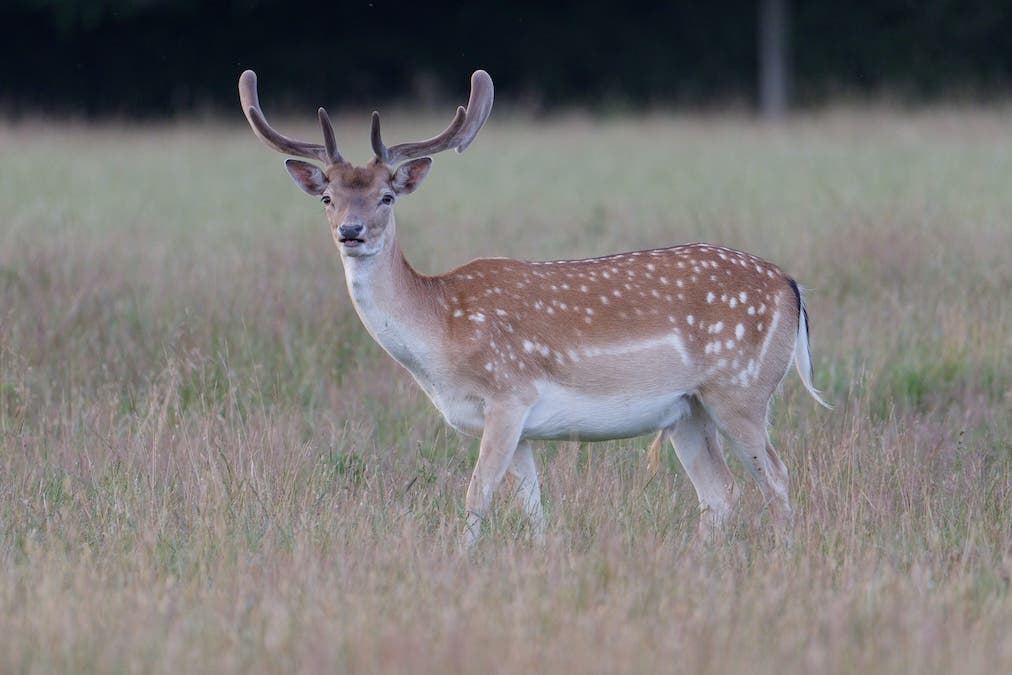
Movements of the head are the most telling. For example, humans usually interpret lowering the head as sorrow or shame and looking up as hope, anticipation, or enjoying the moment. Although animals don’t feel shame or hope like we do, they are capable of a diverse range of emotions that translate into body language as well. They can enjoy the warmth of the afternoon sun and stretch their faces into the sun, anticipate a tasty meal or indulge in it with their eyes closed, be curious, and so on. They also feel anger, fear, and distress, and tend to get smaller or bigger based on these tense feelings.
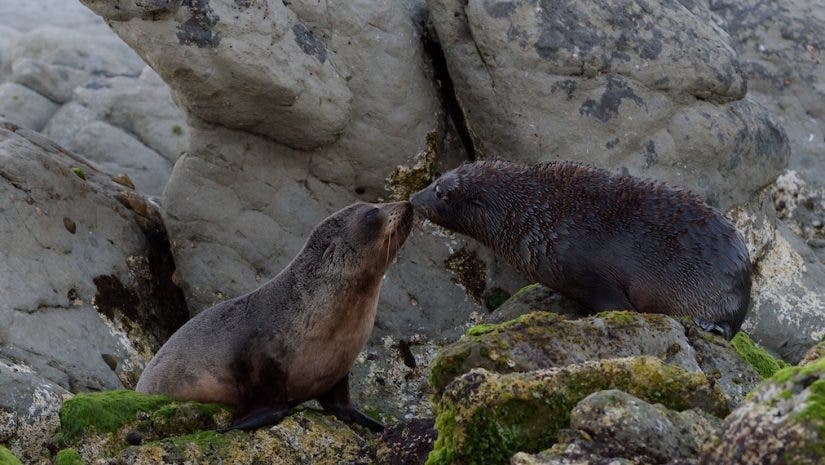
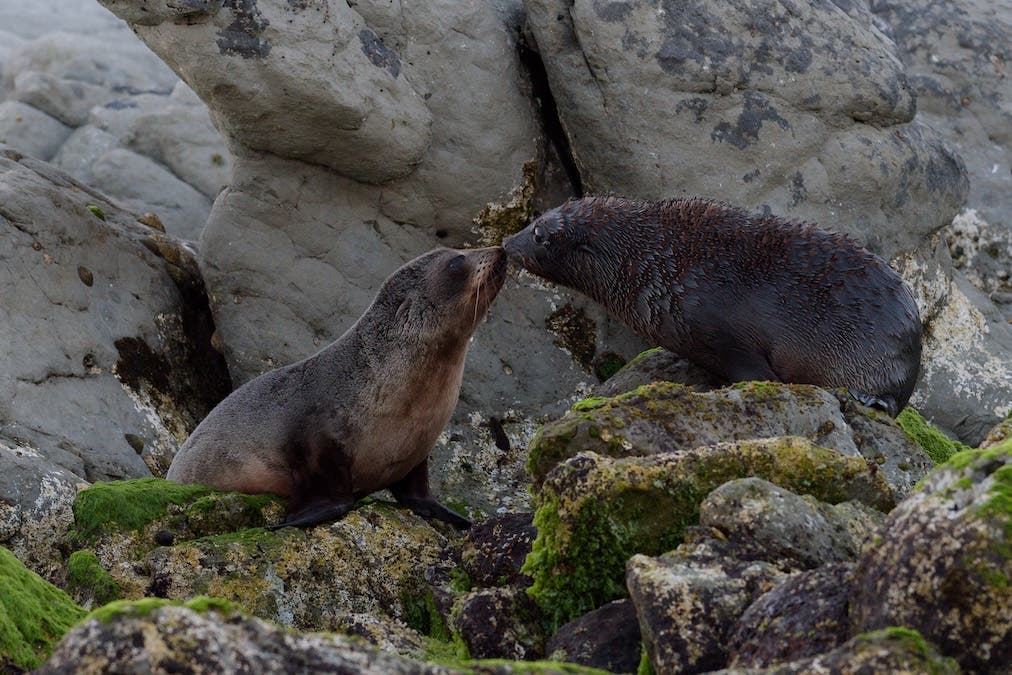
Many wildlife gestures that trigger emotions happen within interactions. For instance, you can clearly see love and tenderness between a mother and her babies, care and protection between members of the same family, belonging between the members of a pack, and aggression between rivals. These translate into seals rubbing noses with their siblings, deer eating back-to-back to protect each other, foxes playing with their cubs, and many more stories that await you to capture them.
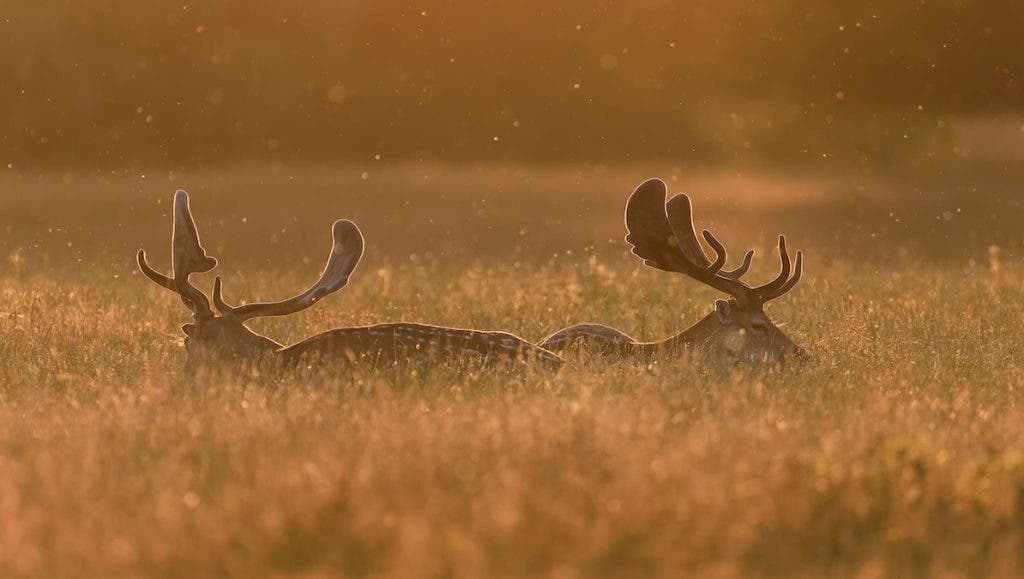
Take this image, for example. For me, seeing two deer with their backs against each other means ‘I’ve got you, I’m here for you’, and that’s a touching feeling to have and to share.
How to Use Light to Emphasize Storytelling in Wildlife Photography
Imagine a sad or romantic moment in which the actors are fully lit by studio lights. The emotion is lost. What you want in order to convey feelings is a soft light with lots of shadows and highlights that naturally create tension and drama and intensify the emotion of the moment. For wildlife photography, this means planning the photo session based on light characteristics (e.g., time of day, sun direction, sun intensity, weather, etc.).
In terms of light direction, I usually use backlighting, the kind of soft backlight you see in the movies. It creates a mesmerizing rim light and emphasizes the subject and the narrative. Side lighting also works because it creates a three-dimensional effect that adds depth to your photos and makes the subject stand out. I’m not a huge fan of front lighting because it may blow out shadows and create a rather flat appearance, so if I can move to avoid it, I do it.
As you have probably noticed from my photos, I prefer the warm light of the golden hours, that amazing autumn light that’s soft and glamorous, or slightly overcast days.
But, regardless of how good the light is, I prefer to wait for an animal’s gesture and combine it with backlight or side light for a more cinematic effect. One without the other may work, but together they are a clear hit. Let’s take an example and compare two wildlife photographs for a better understanding.
Case Study: The Rabbit vs The Deer
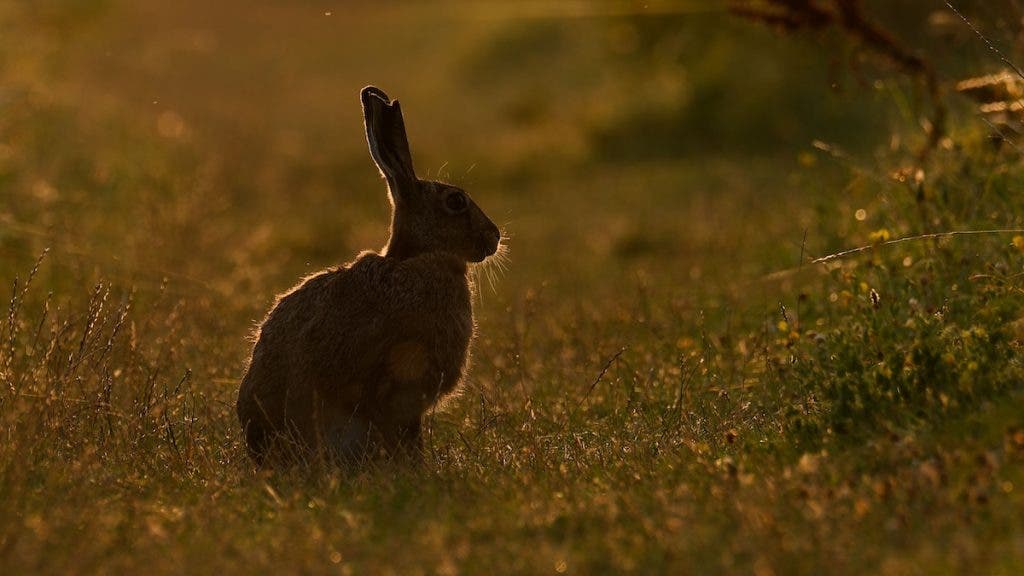
On one hand, we have the photograph of a brown hare. It is a beautiful shot, with soft backlight that creates a magical rim of light and illuminates its whiskers, but it does not tell a story. The reason for this is the lack of a gesture to connect the viewer at a deeper level. The rabbit just sits there. Aesthetically, it is a good portrait shot. However, it’s not a meaningful, memorable image you would tell your friends about.
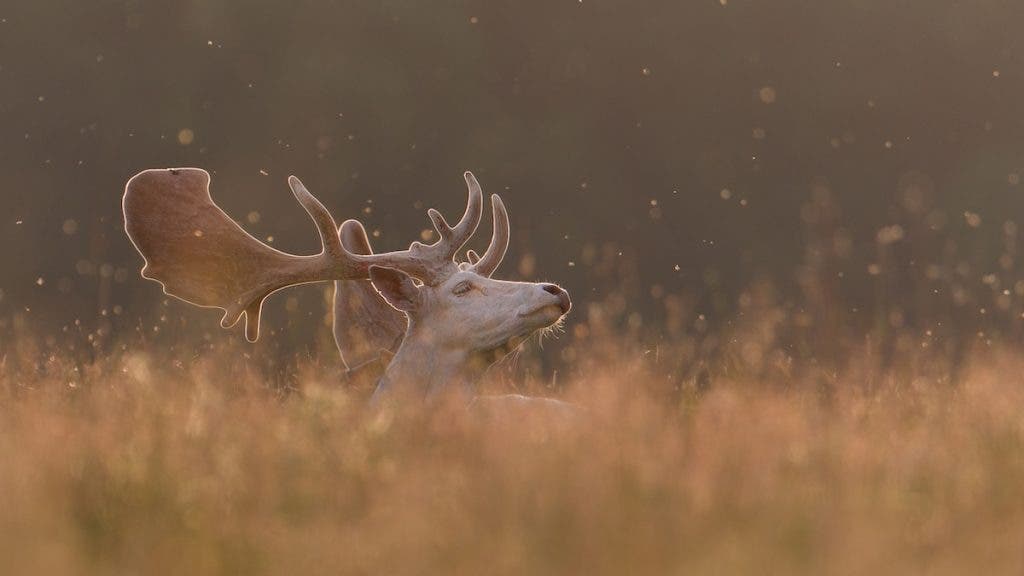
On the other hand, we have the photograph of a fallow deer. Like the photograph of the hare, this one is also backlit. Due to the light, the image seems warm and cozy. But it is the deer’s attitude that makes the shot impressive and memorable. It has its head tilted up, enjoying the sun and conveying a strong feeling of pleasure and good life, really. This image encompasses both a gesture that creates an emphatic response and the kind of lighting that enhances the story and creates atmosphere. From the two images, this is the one you’ll remember and talk about.
Patience
It is also worth mentioning that I didn’t have to wait for hours to take this suggestive deer shot. I didn’t have to be lucky enough to come across an action shot, such as a fight or a predator attack. Actually, fallow deer don’t really fight that much and don’t have many predators either, so if I had intended to capture an action nature shot, I could have waited for days and still have nothing to show you. All I did was spot a deer that was by itself, approach it slowly and mindfully, and wait for it to reveal something of its experience. It took about 5-10 minutes.
You have to spend time with the animal, respect its environment and lifestyle, and let it be itself. Wildlife photography requires patience. You can photograph whatever comes your way and move on with generic shots like the rabbit one. Or take your time, sense the moment a bit, gratefully accept whatever mood the animal is in, and capture the entire story and experience of that encounter.
Final Thoughts
To summarize, you can enhance the story in wildlife photography by using light. But you won’t have a story to begin with if you don’t wait for a gesture from your subject that speaks to your human audience. If your photos don’t bring up an emotion that makes the viewer connect with the subject, they will fail to deliver, regardless of how technically good they are or how you frame the scene. So, the first step is to look for and wait for that gesture and then rely on backlighting or side lighting to enhance the narrative and help you convey the message.