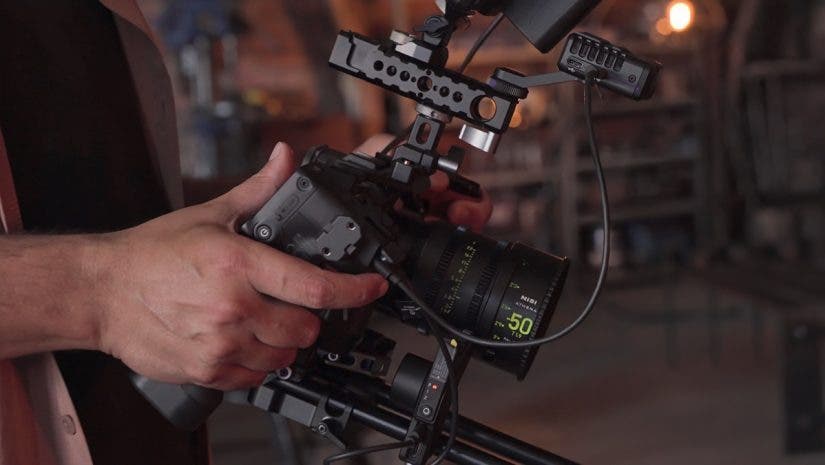
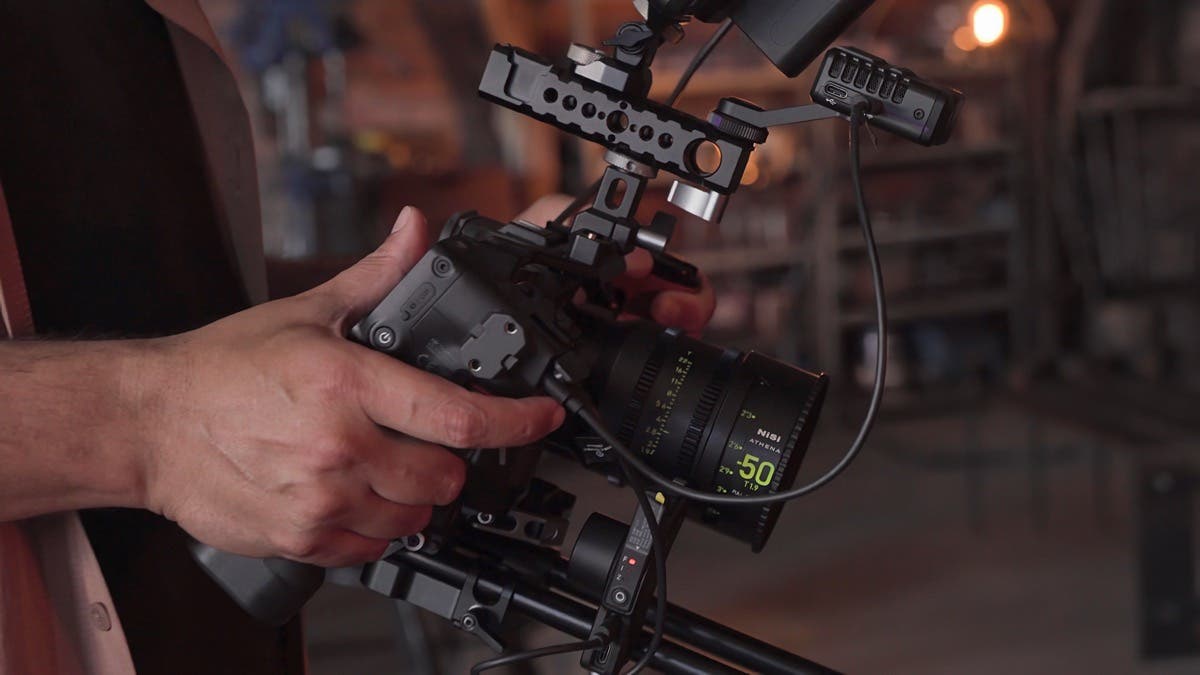
The NiSi ATHENA PRIME cine lenses are designed to boost production efficiency and streamline the filmmaking workflow, while maintaining an accessible budget price. This article will examine the innovative design of these lenses, which helps simplify on-set operations. For the independent filmmaker or solo operator, the greatest challenge isn’t just capturing a beautiful image; it’s managing the physical and technical friction of the gear itself. The NiSi Athena Prime series is engineered to eliminate these bottlenecks, offering a high-performance cinema kit suitable for a multitude of scenarios.
My previous two blog posts analyzed the optical performance of the NiSi ATHENA PRIME cine lenses, covering center-to-corner sharpness, color consistency, texture, depth-of-field control, and bokeh quality. Through testing, using focus charts, vector scopes, intense light sources, and various background LED setups to assess color matching, sharpness, and bokeh balls, I concluded that the Athena Prime lenses overall offer outstanding optical performance, with subtle strengths and limitations discussed variously with different focal lengths. Given their affordable price point, these lenses are an excellent option for cinematographers and filmmakers in 2026.
The ATHENA PRIME: Uniform Physical Profile
The core of the ATHENA PRIME series’ efficiency lies in its physical uniformity. Whether you are operating a handheld rig, using a gimbal, drone, or a slider, the near-identical weight and dimensions across focal lengths mean you spend less time rebalancing and more time shooting.
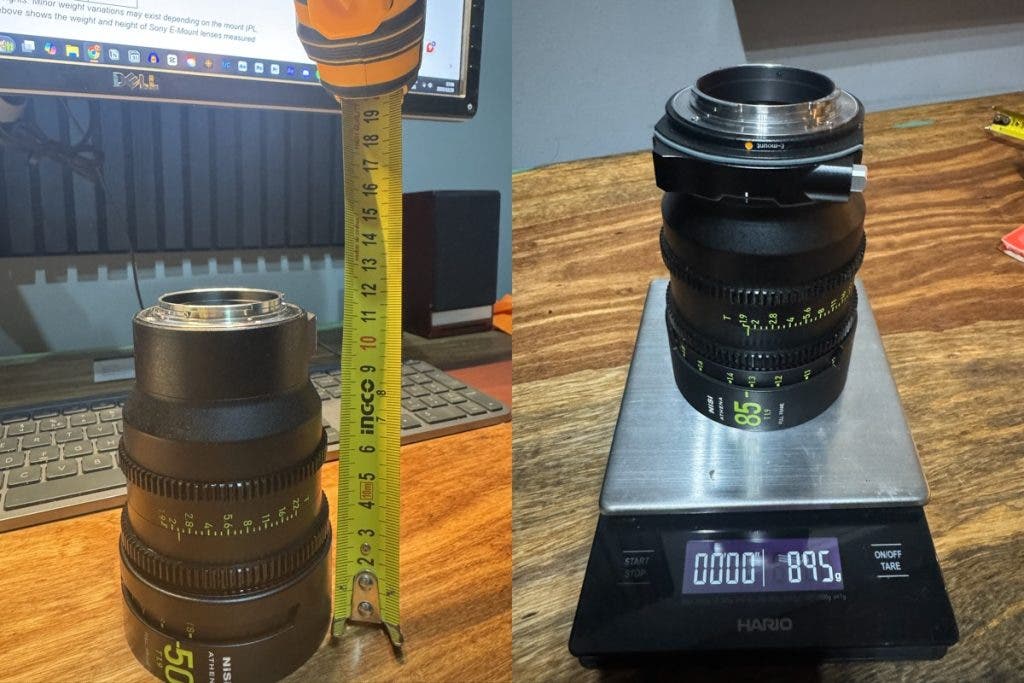
| Focal Length | Weight (approx.) | Height (approx.) |
| 14mm | 895g | 12cm (4,72 inches) |
| 25mm | 895g | 11.5cm (4.52 inches) |
| 35mm | 895g | 11.5cm (4.52 inches) |
| 50mm | 895g | 11.5cm (4.52 inches) |
| 85mm | 895g | 11.5cm (4.52 inches) |
Seamless Production Workflow
Traditional cinema glass often requires an entire camera assistant team to swap lenses and recalibrate motors due to the substantial variation in size, attachments, and weight. The ATHENA PRIMEs facilitated this high-end workflow, making it accessible to the solo operator through two specific design choices:
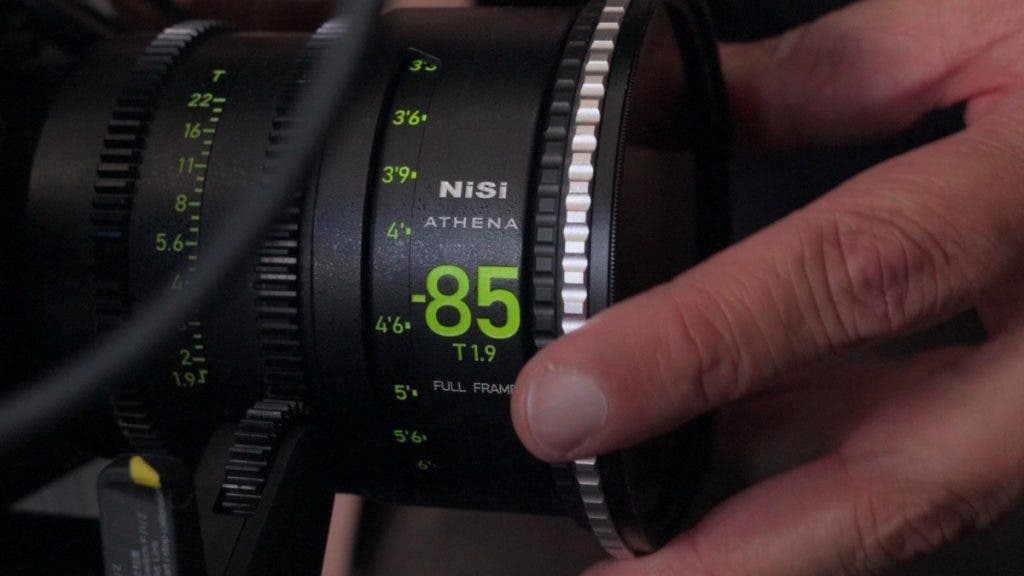
Unified Gear Positioning: Every lens in the set features focus and iris gears in the same position relative to the mount. If you are using a follow focus system, such as the DJI LiDAR Range Finder and Focus Motor, you can swap from a 35mm to an 85mm without moving the motor or the LiDAR sensor. This “drop-in” compatibility is a game-changer for fast-paced sets.
Consistent 300° Focus Throw: Precision is paramount in cinema. The 300° rotation allows for incredibly fine focus pulls, providing the same tactile response at any focal length. This muscle memory helps solo operators maintain focus and accuracy even when monitoring the shot themselves.
Real-World Production Scenarios
The ATHENA PRIMEs excel when resources are scarce for solo filmmakers like me.
Low-Light Interiors: With a fast T1.9 aperture across the core set, these lenses are built for “available light” filmmaking. In dim light settings, the T1.9 speed lets you maintain a low ISO, preserving dynamic range and minimizing noise without a heavy lighting kit. It eases your lighting requirements, such as in the scene below, where I was stuck in a corner with not much room for fancy lighting equipment:

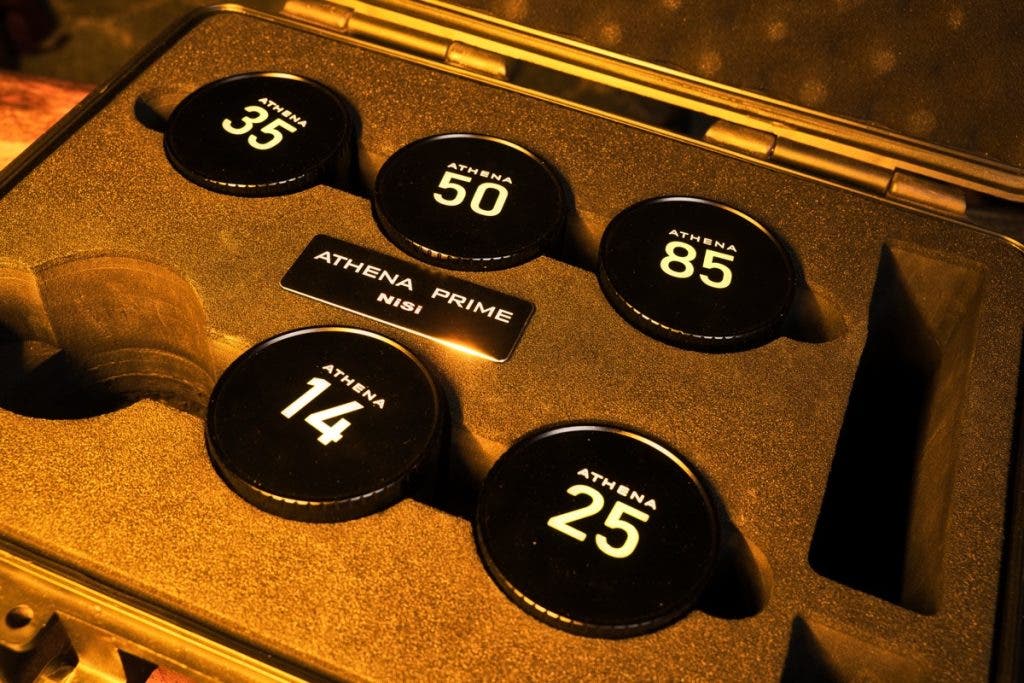
The Travel-Friendly Kit: For the filmmaker on the move, the ability to carry a full cinema set in a single carry-on case is an advantage.
Drop-in ND Filters: The Sony e-Mount lenses I used had a built-in slot for drop-in ND filters. If used, it eliminates the need for installing rings and boxes in front of the lens for filters. However, I used a NiSi True Color Variable Swift ND filter set, which blocks light from 1 to 9 stops, placed in front of the lens.
Gimbal and Drone Operations
A lightweight 850g profile keeps the payload manageable for platforms like the DJI Inspire or heavy-lift FPV drone rigs. Due to their weight and height, the primes are suitable for use on a gimbal. For instance, the DJI RS5. This is especially true when they are mounted on a mirrorless camera like a Sony a7s III. Once calibrated, there’s no need to recalibrate every time a lens is swapped. This is because the physical characteristics are uniform across the range. Note that the 135mm lens is an exception, as it differs in height and weight.
As shown in the video below, I used these lenses handheld without a rig, on a Zeapon slider, and with a small camera rig made from components from the SmallRig and Leofoto brands.

My Experience on Set With ATHENA PRIME Lenses
Following is my experience using these cine lenses, which may help filmmakers wanting to try them out:
- Smooth Operation: The uniformity in physical characteristics, such as the height and weight of budget lenses like the ATHENA PRIMEs, significantly streamlines camera operation. With consistent handling across different focal lengths, aside from the distinct field of view each offers, one’s energies can remain on the creative storytelling process.
- Assistance: When shooting videos like short films and documentaries with prime lenses, you can work as a solo filmmaker, especially if budget is a concern. However, hiring an assistant can lighten your workload by swapping lenses, controlling the lighting setup, and handling administrative duties.
- Manual Focus: Cine lenses generally do not autofocus, ATHENA PRIME included. If you use a system like the DJI Focus Grip with LiDAR autofocus, be aware that the auto function might jump from one object to another if there’s movement in the scene. I overrode autofocus and used manual mode myself, still using the DJI Focus Grip to manually control the focus motor rather than letting the LiDAR handle it, to maintain my creative choices while filming each scene.
Conclusion: Professional Quality, Independent Scale
The NiSi ATHENA PRIME lenses offer filmmakers an exceptional, cost-effective solution without sacrificing quality. These thoughtfully designed lenses significantly enhance production efficiency, enabling solo operators and cinematographers to focus on their creative work rather than being distracted by complex equipment. Looking ahead to 2026, their outstanding optical performance delivers sharp, vibrant, and professional images, keeping them a top choice in the budget cine lens market.