Photography, like any other skill, requires practice. Practicing a skill is typically done in one of two ways. The first is repetition, or doing the same actions and thought processes over and over again. This makes the skill become second nature and something you can do almost without thinking about it. The second type of practice is to push outside that comfort zone and do things that you normally don’t do. This is how we grow a skill to encompass a broader range of abilities. To accomplish this second type of practice, we can do a photography exercise.
Think of them as a personal challenge, to push yourself to think differently. With this exercise, we are not necessarily trying to take a better photo, but it could help you approach your photography a little bit differently. This exercise is really all about learning to remove feelings of commonplaceness in your familiar environment. I have heard many times: “There’s nothing interesting to photograph near me.”. But interesting is subjective, and what you may find as run of the mill, others have never seen before. We need to train ourselves to look at everything like it’s the first time.
This photography exercise is really quite simple and has only three steps.
- Find an object that you see every day, and take a photo of it
- Make a change to highlight something unique about that object, and take another photo
- Deconstruct what you like more about the second photo (if you do, in fact, like the second photo more)
Aim to make a different kind of change you each time you do the exercise. Don’t just reposition yourself and reframe your shot every time. Think about the tools you have (and I don’t only mean gear) at your disposal. Think a photo of a shoe you found might be more interesting with one of your own placed next to it? Do that. Do you have someone who will do these exercises with you? Maybe involve them as a model or assistant.
Changing Your Point of View
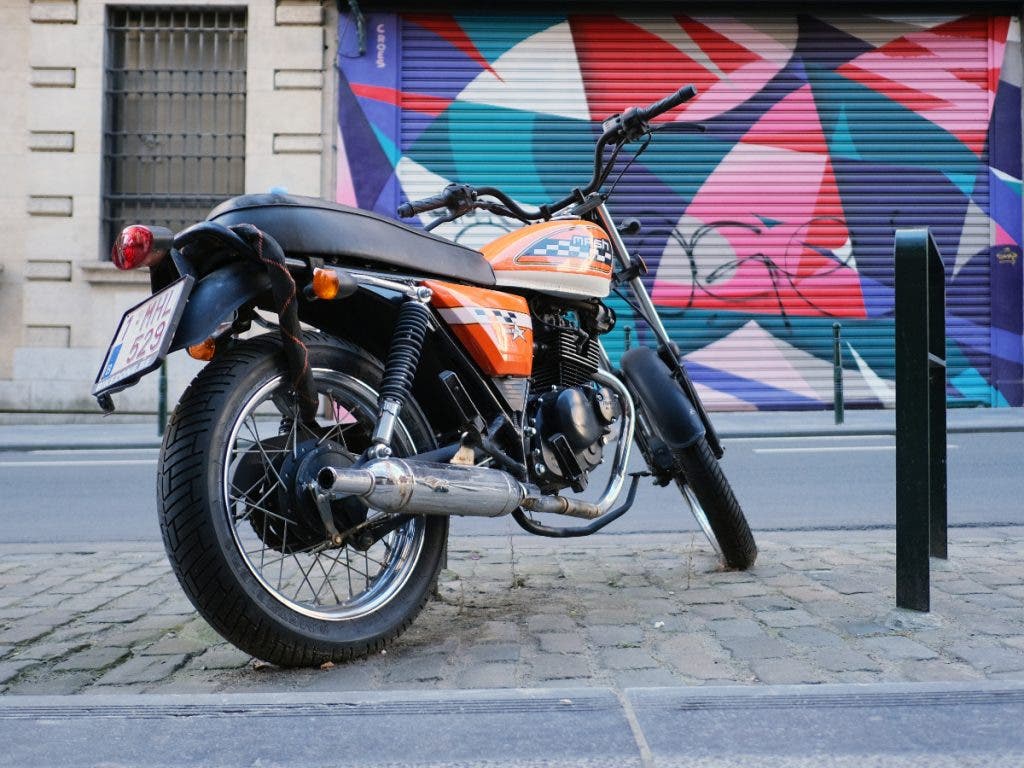
Let’s take a look at the most obvious change: changing composition by repositioning yourself. I was walking down the street and saw this motorcycle, and thought it would be a good subject for this exercise. It’s there anytime I walk by, like it’s a permanent fixture in the bike rack.

I took a simple snapshot of it with my camera. Then, I repositioned myself lower and behind the motorcycle to accentuate its size and shape. In the process, I made the colorful garage door the background of the photo. If I simply thought “I’m gonna take a photo of this bike”, I’m not certain that I would have done it like the second shot. I like that the second shot is cleaner overall, and I prefer how it shows more of the reflectiveness of the motorcycle’s orange paint.
Waiting for the Right Moment
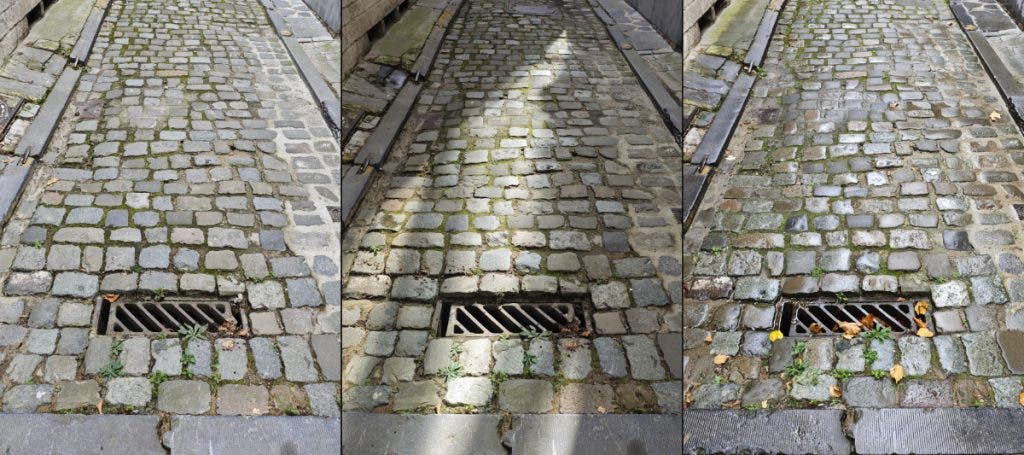
Next up is a common sewer drain. This is just what all the sewer drains look like here in Brussels. The only time you would see someone staring at one is if they dropped their keys or phone into it. This specific drain is slightly unusual in one way. Normally, drains are on the sides of the roads, and not crossing them. The bricks change to stone paver tiles here halfway down this short street, and I guess the planners decided that this would be the best place for the drain. You can tell that I’m trying to find the unique in the mundane here. The first photo I took is pretty normal. Cloudy skies meant flat and soft lighting everywhere.
I thought about how I could change the image, and noticed something. I could see just a bit of the sun behind the clouds, reflected in one of the windows of the building on the right. Photographers can control natural lighting in many ways. You can use reflectors, flags, or scrims to bounce or block the light. Additionally, you can change the orientation of the camera and the subject to switch between front lighting and back lighting. You can also change the time that you take the photo. And so, I waited for the clouds to break, which was about 15 minutes. The sunlight bounced off the window and onto the street, and I took the second shot. The light streaking across the ground and the higher contrast of more direct sunlight bring a different feeling to the photo.
Above and Beyond, a Third Way!
Now, I had another idea. I would return here and take a third photo in the rain (I know, I’m complicating the exercise a bit, but it doesn’t have to be only two photos). I’m just a few minutes walk away from here, and it seems to rain every couple of days in Belgium, so I knew I wouldn’t have to wait too long. Sure enough, I was able to capture the last shot without too much trouble. I still like the second shot the most, but I also feel like making all three into a triptych can be fun.
Recreating a Moment
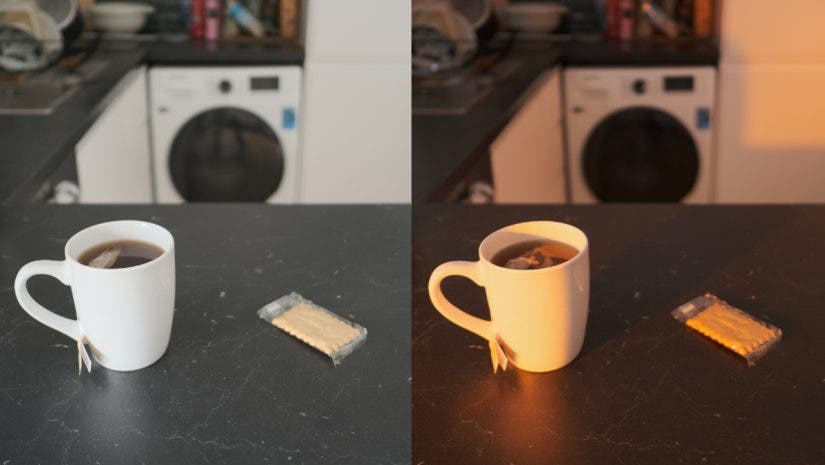
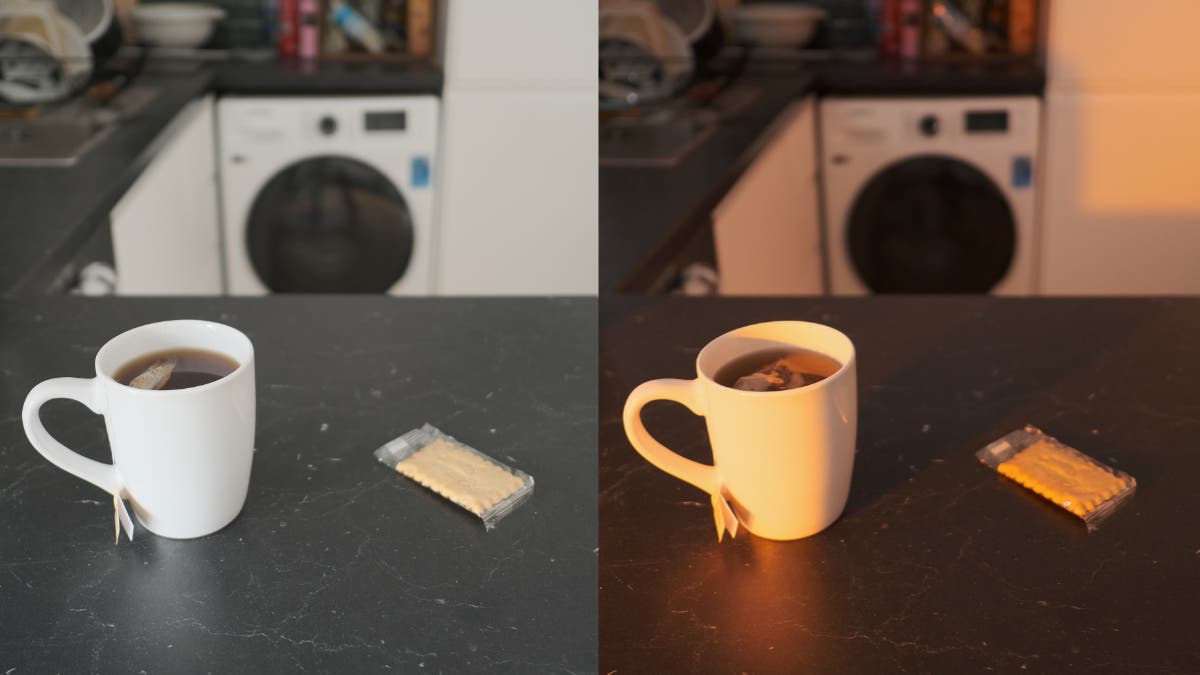
For the third object, I decided to photograph something at home. I thought about a fresh-brewed tea, like I have every morning. I often get a golden hour sunrise shining into my apartment in the morning, depending on the time of year.
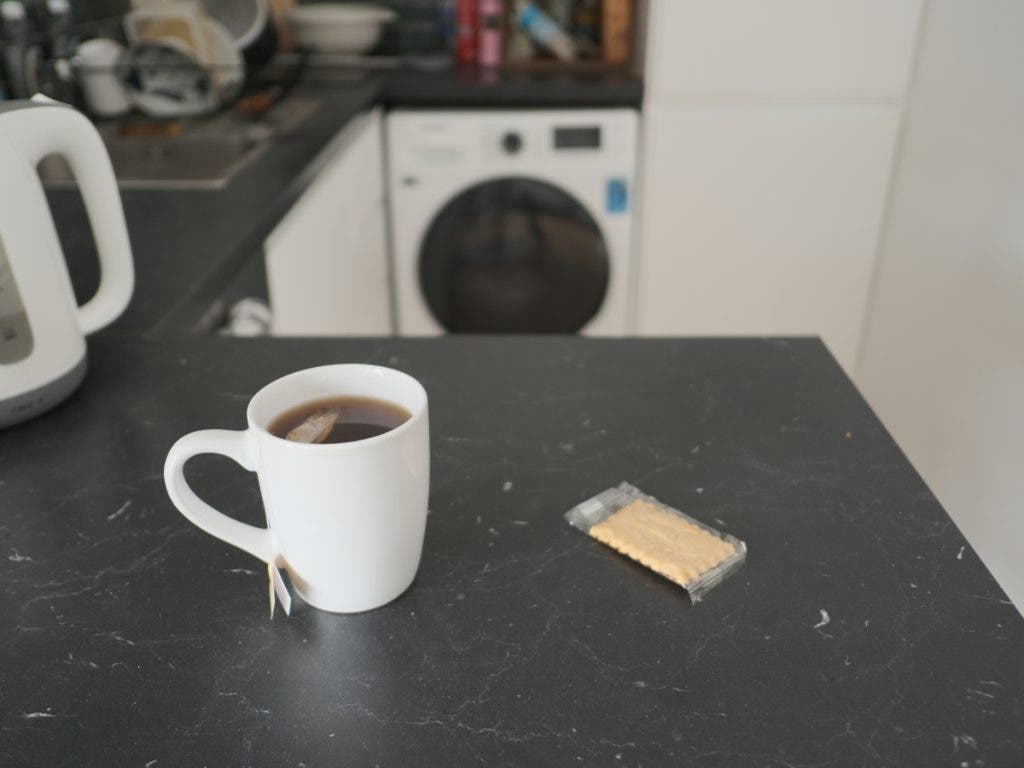
However, I ended up taking my first photo of a lunchtime tea instead, because I can always change the lighting. I was not going to wait until the next morning to have the sunrise lighting, so I would light the scene myself. To do this, I placed an RGB LED light near my window and set the color temperature to 2000K to make the light nice and warm, and pointed it in the direction of my mug. I set my camera exposure and the power of the light to allow a bit of the daylight to be there as it naturally would be in the morning, and took a photo.
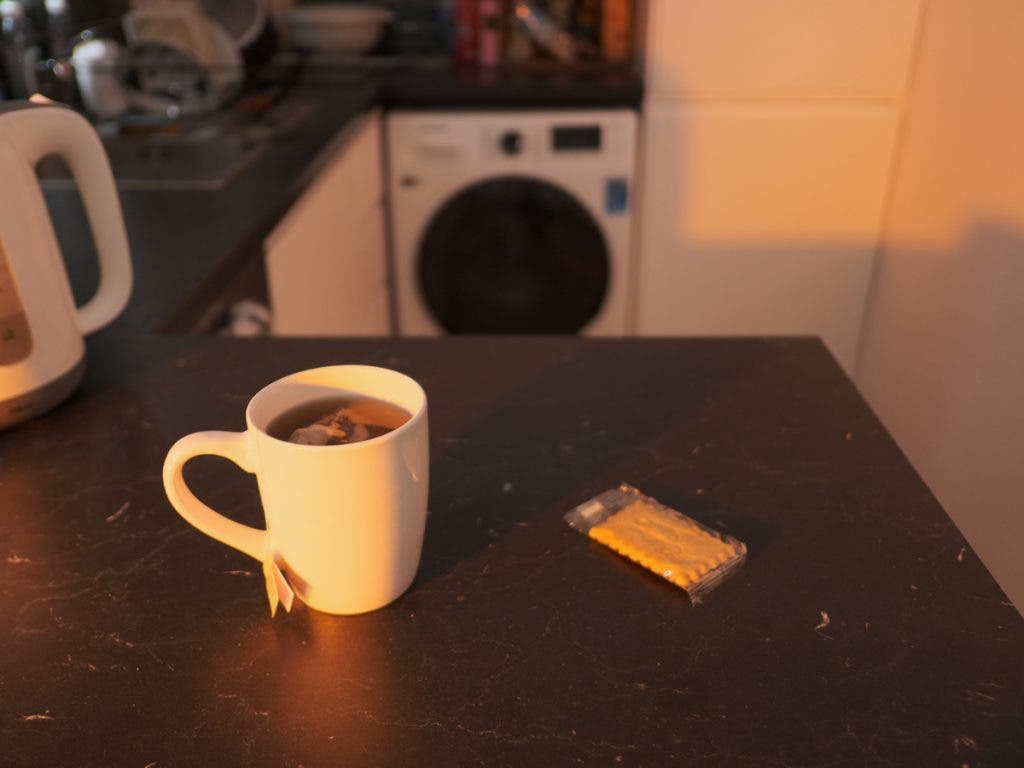
It’s not exactly how it looks when the morning sun is shining in, but it’s pretty close, and the goal wasn’t to match it, but to feel right. In the edit, I added contrast by bringing the shadows down to further add to the feeling. As you can see with this example, sometimes the change you make in this exercise is adding a light.
Practice Makes Perfect
When practicing with this exercise, it’s a good idea to do it multiple times and to ask yourself what you can do for the second shot each time. Try not to plan in advance what objects you will photograph or how you will photograph them. Just feel it in the moment. Sometimes it works, sometimes it doesn’t. If we only take photos when we know it will turn out well, we can’t try new things and grow as photographers.
Let alone that behind every good photo are a bunch of bad photos. Experiment with the multitude of ways you can change how you shoot. I touched briefly on three changes that you can make, but there are so many more options. Perhaps changing camera settings is all it takes, or maybe you have an idea that needs to be completed with editing, or using a different camera altogether, or using lens filters, or involving reflections. Play around, and have fun with it.