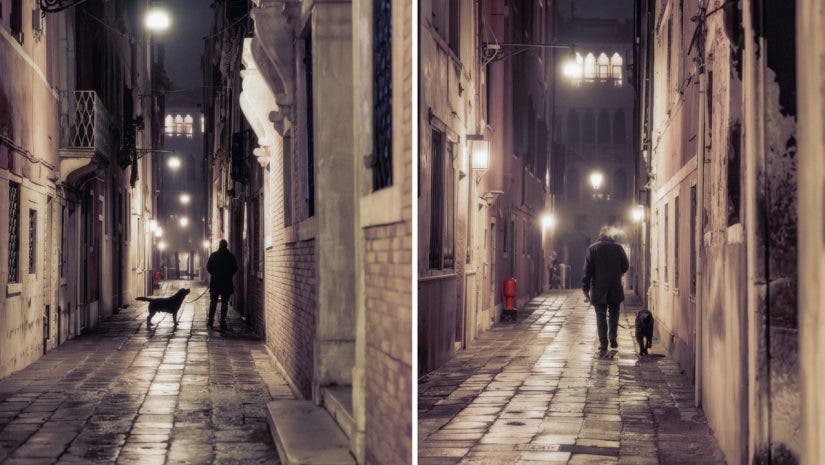
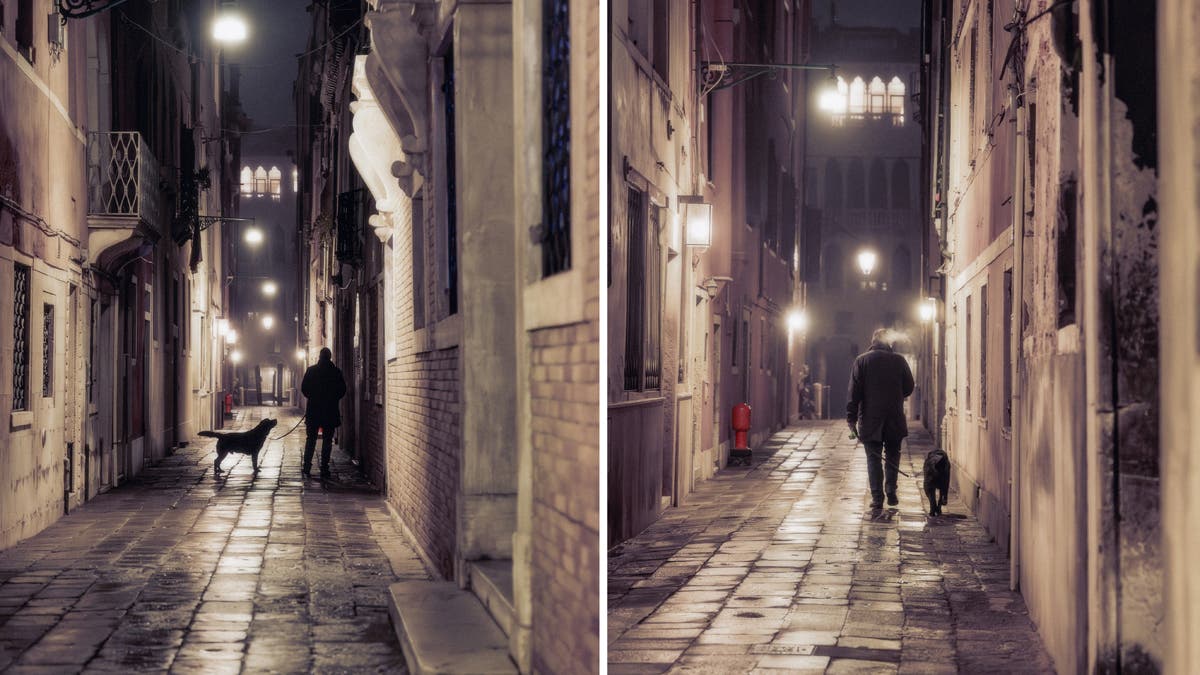
The dog looked eager to start their walk as its master lit a cigarette and locked the wooden door. The silence of the cold Venetian night was broken by the loyal paws tapping on the cobblestones alongside its owner, who was lost in thought. A cloud of smoke orbited him, enveloping his head and perhaps his contemplative mind. The dog knew the route as the leash was relaxed. They remained silent, giving each other space while enjoying companionship. My quiet observation ended as they turned into a shadowed, misty alley.
Street photography necessitates swift decision-making to capture fleeting moments. But every story in street photography has two parallel versions: the more obvious literal one and that crafted by the photographer’s lens.
Who was that individual? What thoughts occupied him? What was he doing? The allure of these images lies in the unanswered questions. The mystery is far more compelling than the truth itself. How to convert the banal into the sublime is where the most crucial aspect of street photography comes into play: composition.
Composition in photography is a subjective creative choice. No matter how much you cherish your image, you will still receive suggestions for improvement. I have previously discussed what makes a good image, and the short answer is: “a photo you cannot forget”, even if all the rules and suggestions are ignored.
With all this in mind, let us explore the choices one can make in street photography when composing images and what to avoid.
Separation from the background
There are techniques that can be employed to help focus the eye on your subject.
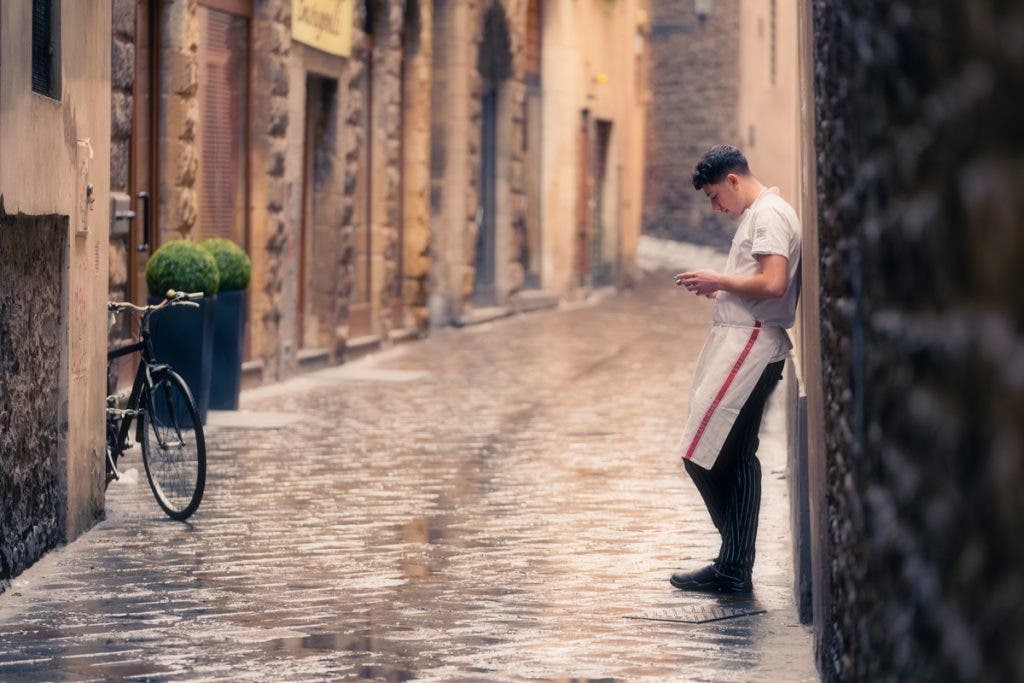
Isolating the subject from the surroundings enhances visual appeal. This scene features an undistracting background that simultaneously gives context, a bicycle, wet cobblestones, and soft lighting, so it needs little to isolate him as the focus. I opted to photograph in landscape orientation, utilising the wall as a leading line.
A wide aperture also helps blur out the background where it is too busy. The background in the picture below competes with the main subject, which is the man cooking. To bring the eye to him, I muted the colours behind him in Adobe Photoshop and enhanced the highlights in the foreground. The distractions are thus subdued in two ways: both with f-stop and with post-processing.
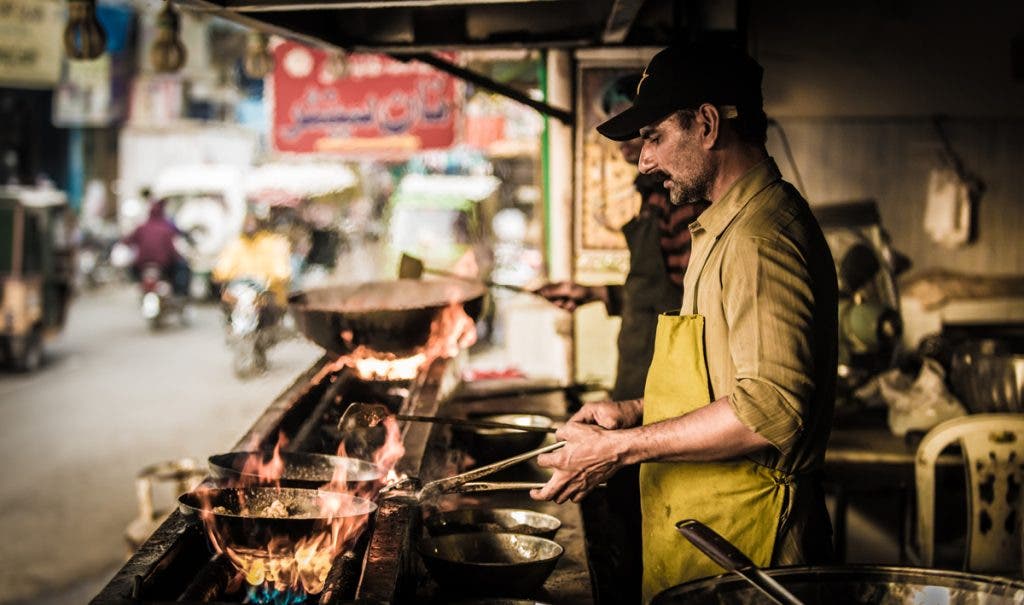
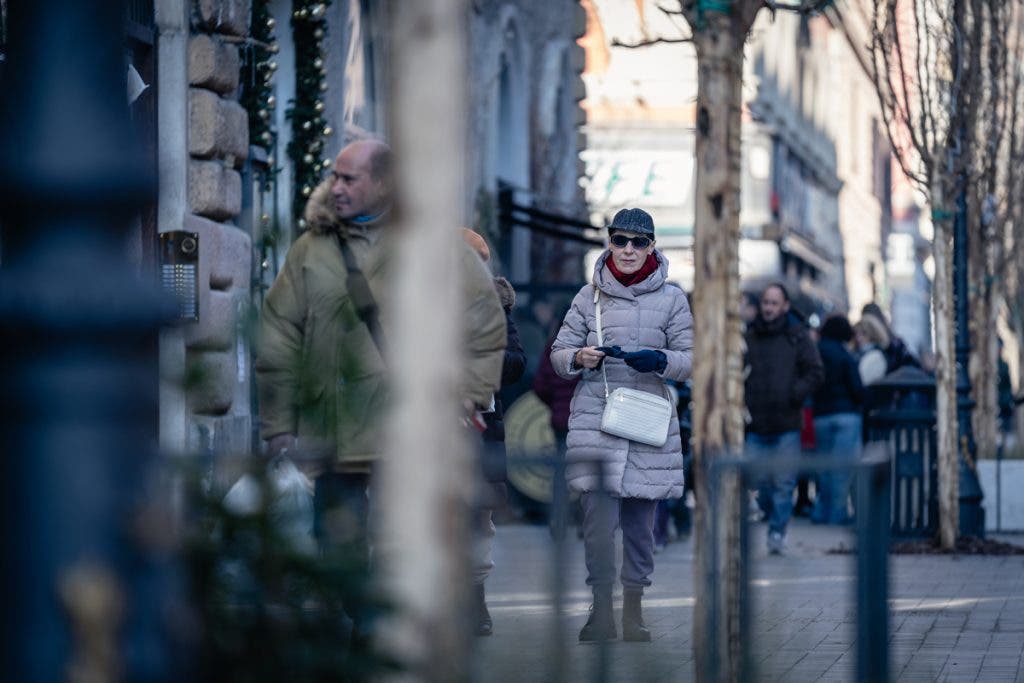
Compare these to the compositional features of the following image: while it seizes the moment, one can’t help but notice the interfering objects in the background of both men, and the eye does not know what to settle upon.
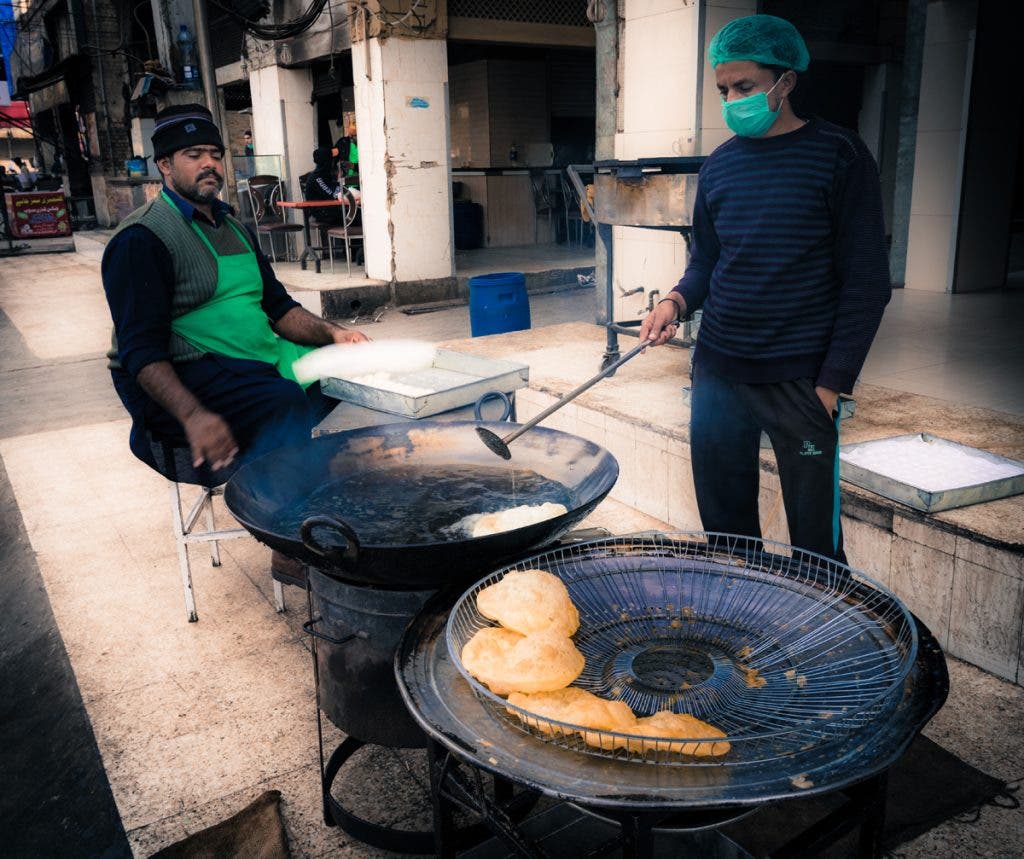
Had I not had a telephoto range, the image of the waiter would not have been possible. Your compositional choice also dictates the lens you choose and vice versa. Using a telephoto range, I didn’t interfere with the young lad on his break, who was unaware of my presence, preserving the privacy and candidness of the moment.
The discussion of gear for street photography can wait for another day, but to capture a variety of images, my setup includes a Sony A7III paired with a Sony 70-200 f2.8 OSS GM lens and a Sony A7sIII equipped with a Sigma Art 24-70mm f2.8 lens, both secured with Peak Design Capture Camera Clips for easy access. Additionally, I use a DJI Osmo Action, clipped to a chest belt, for behind-the-scenes videos.
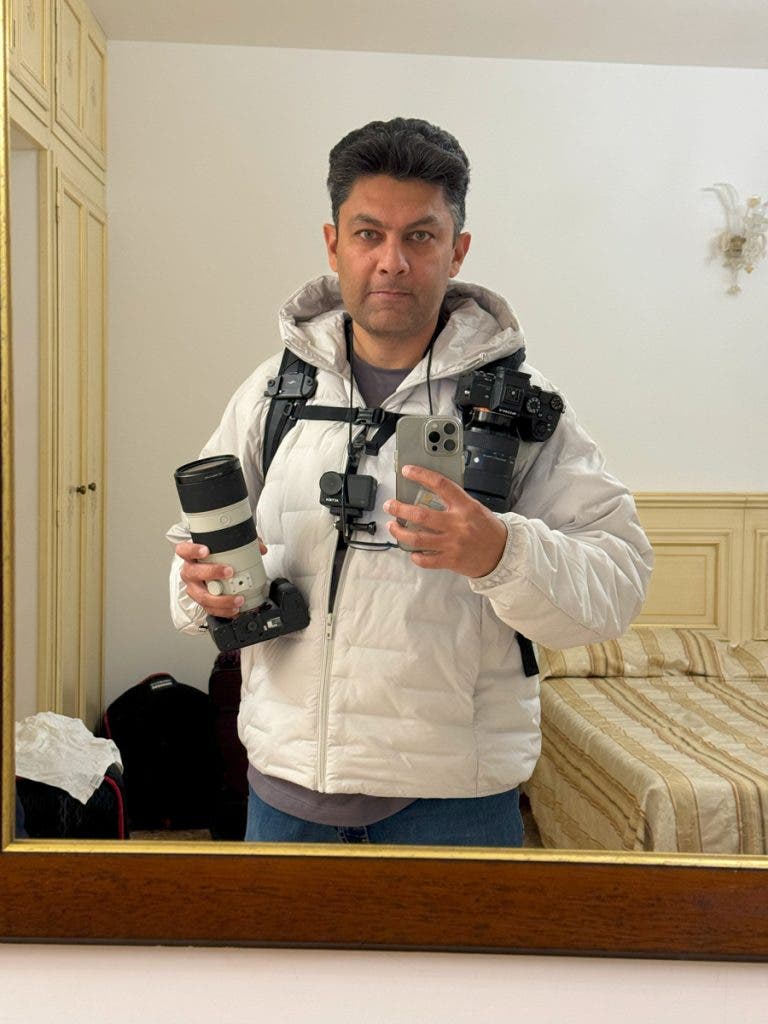
Using Blurred Foreground Elements
Although unintentional, people’s blurry presence adds energy to the scene as they stroll into the frame. The foreground draws the viewer to the true focal point: a dry-fruit seller fully immersed in his bustling trade. The surrounding activity and even the out-of-focus background, created by a wide aperture, enhance the authenticity of the moment.
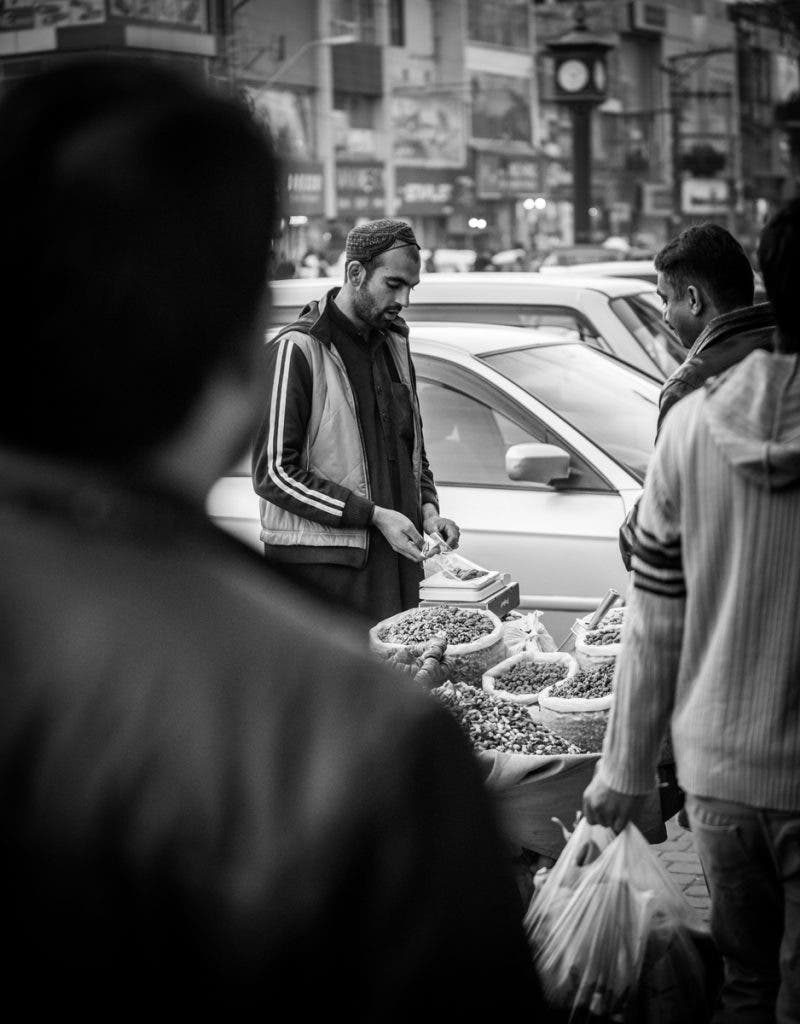
Sift through your environment and use its elements to draw focus to your subject. The true spirit of street photography lies in capturing the world around us, but not every detail requires the viewer’s gaze. Allow your audience the space to interpret and find beauty in a scene at their own pace.
Compose with Intention
Capturing the essence of street photography goes beyond the conventional expectation of featuring individuals prominently in the frame. It is important to challenge that assumption. When a human subject is included, the emphasis does not always have to rest on their face or eyes. Steering away from this focus can often lead to more compelling images.
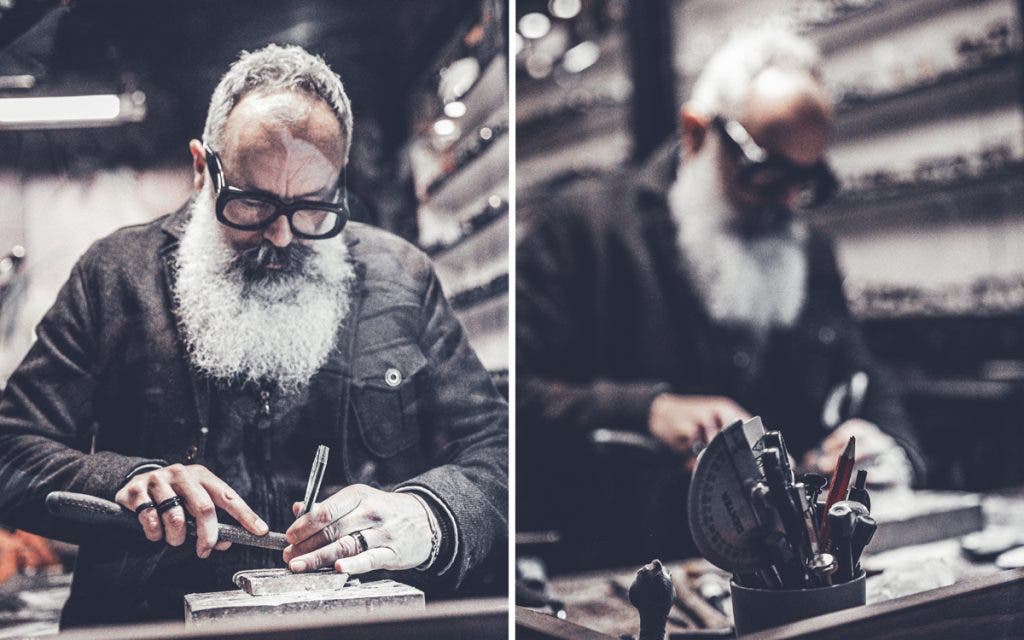
I encountered an artisan whose stylish beard and attire initially drew my gaze in Italy. Though his face fascinated me, I realised that photographing him immersed in his work told a much deeper story than simply highlighting his striking appearance. While I possess a series of images of this gentle giant, those that emphasise his hands and instruments highlight the artistry while still acknowledging the man behind the work. Think of him as a client who has hired you to promote his business; the composition should not centre solely on him but rather showcase what he has to offer. I regret not taking close-up photos of his working hands.
Don’t Shoot the Obvious
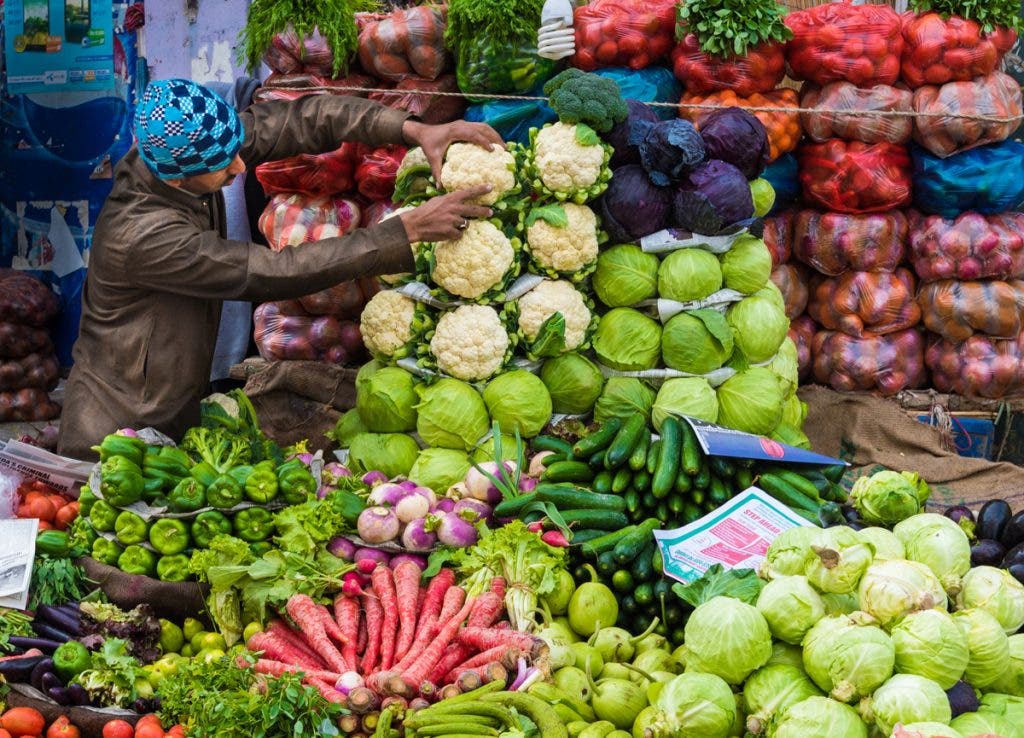
The image below showcases a vibrant array of textures and colours, with the vegetables arranged to highlight their freshness. However, the perspective chosen diminishes the piece’s three-dimensional quality, making it feel somewhat flat. I have to acknowledge that this is a lazy composition. Despite my aim to spotlight the unique arrangement of the vegetable stock, a different angle or viewpoint could have truly enhanced its visual appeal and depth.
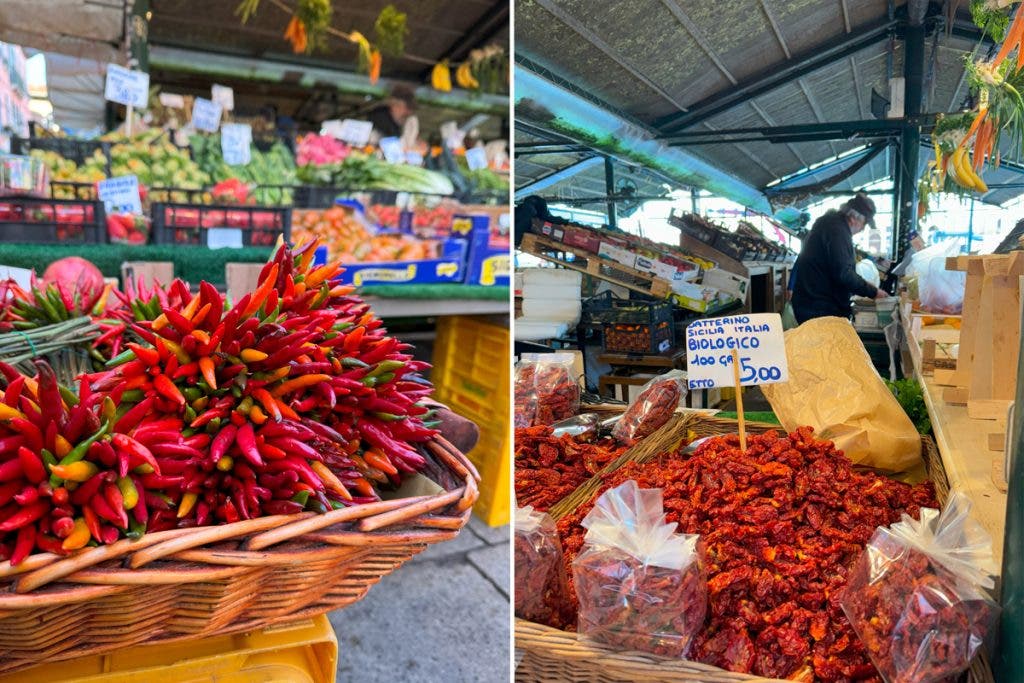
In contrast, the images of the vegetable stall featured below possess a sense of depth. Despite the background’s soft blur, the scene’s essence and vibrancy are effectively communicated. The colours and textures of the vegetables stand out, inviting viewers to appreciate the richness of the display.
Shoot From the Shadow Side
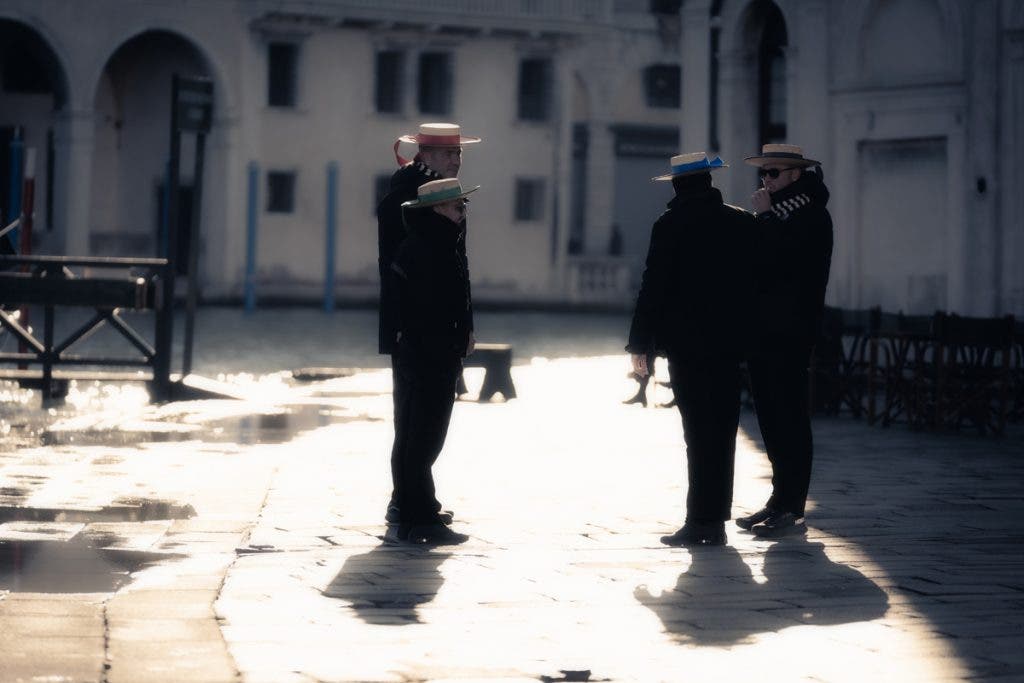
As a landscape photographer, I find it challenging to ignore the glaring blown highlights and noticeable lack of detail in certain parts of my street images. However, I’ve consciously adapted my approach to street photography, allowing myself to convey a different emotional resonance. Take, for example, the photograph I took of the gondoliers. I had the luxury of time and could have easily shot from a position 180 degrees opposite. Yet, I decided to embrace a high-contrast composition by positioning myself on the shadowy side, shooting into the light. In post-processing, I further reduced the texture and clarity, enhancing the image’s ethereal glow and transforming an ordinary moment into a cinematic one.
Conclusion
Fundamental concepts such as leading lines, the rule of thirds, and the practice of centring your subjects are essential principles taught to novice photographers. They provide a foundation that can significantly enhance your photographs. However, finding your unique style and developing a personal approach to composition takes time, dedication, and hands-on experience.
Moreover, the camera gear you choose for street photography influences your compositional choices. However, your equipment will be overlooked by the average viewer. Ultimately, composition is one of the most critical elements in photography; it has the power to elevate your images and evoke emotions. Therefore, prioritising composition is paramount for any photographer striving to create compelling and impactful visual narratives.
All Photos by Muji