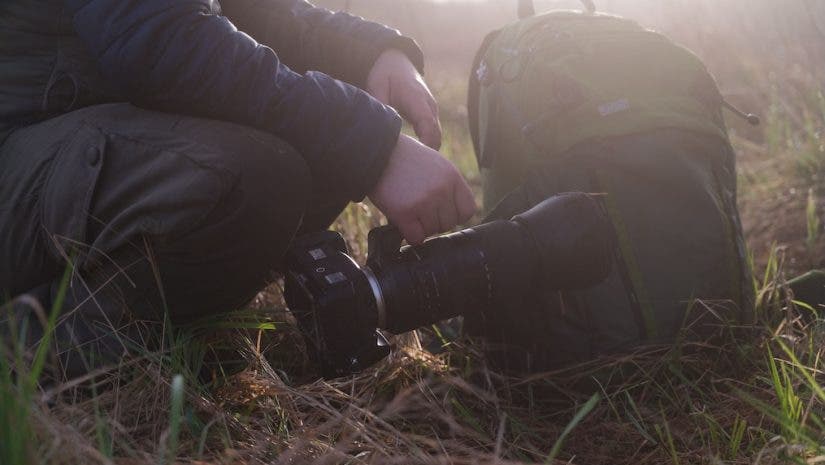
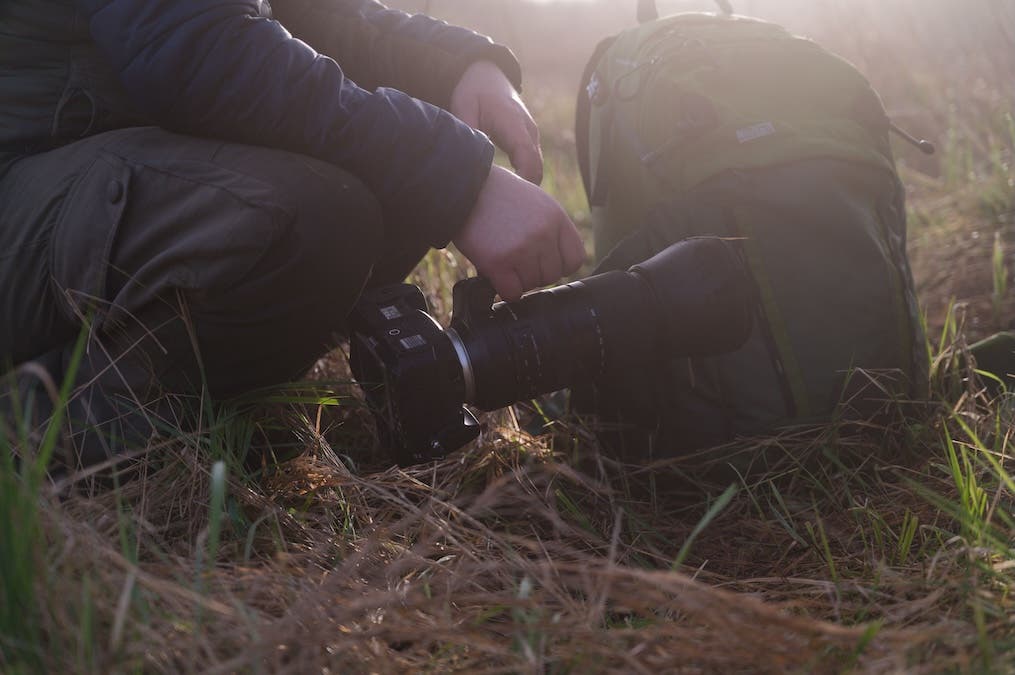
I’m sure we all agree that whether you are an avid hiker, air-traveler, or the average weekender, there is a bag out there for everyone. I’m also sure we all are aware of the benefits of using a dedicated camera bag. However, finding the perfect camera bag for travel is not always easy. So, here is how I choose a travel camera bag, and I must warn you, it’s not the usual method.
Why Choose a Camera Bag Based on Travel Type
The common approach is to use a camera bag that fits your camera(s), lenses, and accessories, and provides the best gear protection and organization. Think of individual, cushioned slots for lenses and accessories, a waterproof fabric, or a hard case. Regardless of the many benefits of this ultimate camera bag, I prefer to choose mine based on the travel type. Here is why.
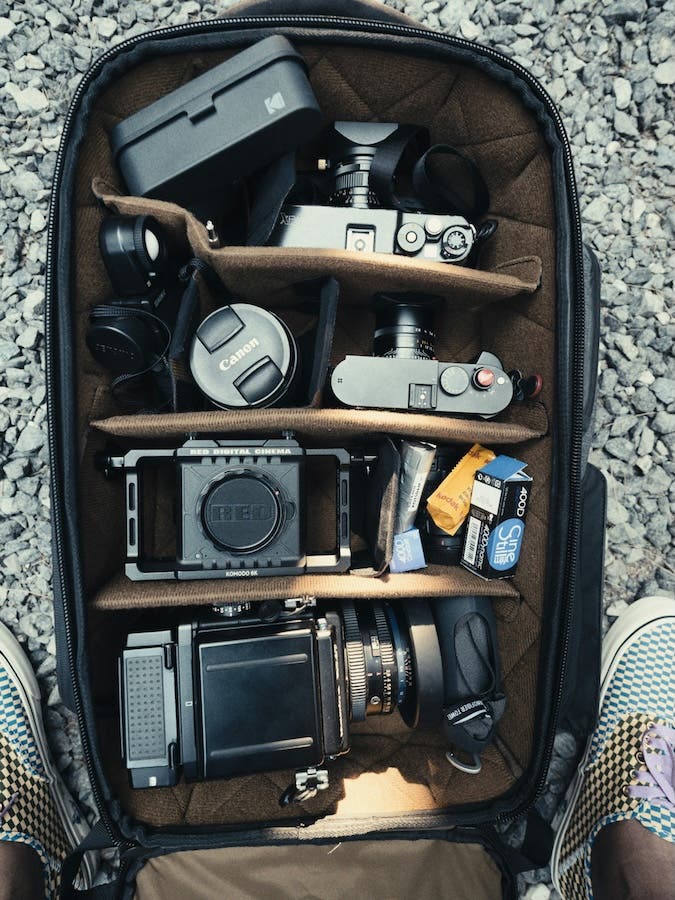
First, the type of travel that awaits me dictates how much stuff I can carry with me and the way in which I will carry it. For instance, if I go on a hike, the amount of weight I can carry is extremely limited. So is the carrying style, since I would probably need to pack everything in a comfortable backpack. As a result, I first choose the bag and then select the gear that goes with it. If I were to choose the common approach of first selecting the gear and then a bag that fits it, I would end up carrying a heavy, uncomfortable bag that slows me down and affects my workflow.
Slinger offers a variety of backpacks, like the Slinger Alpine 200 Lightweight Compact Camera Backpack. Hold multiple bodies and a laptop while you trek to your location.
You’ll find that the travel type dictates the bag’s other features besides size and weight. If I travel by plane, for instance, I need a camera bag I can take as a carry-on. Therefore, it must respect the cabin luggage regulations of the company I’m flying with. If I travel by boat, I need a camera bag with some sort of waterproof or water resistant qualities. And so on. It’s much easier to organize your trips this way than packing all your gear in the most protective and well-organized camera bag and then struggling to make it work. And, of course, one can find camera bags that check more than one box and fit more than one type of travel.
Camera Bag Features to Consider When Travelling
When it comes to choosing a travel camera bag, function over form is the goal. Additionally, the features below must be considered, no matter what. However, I believe the style matters, too. Not because you need to match the camera bag with your outfit, but because you need to know your bag like your own hand. If a sleek design works for you better than one with huge pockets and straps all over, go for it. If an over-the-shoulder model feels more comfortable than a backpack, go for it. That being said, here are the features to be mindful of:
Size and Weight
When you consider size, evaluate the exterior dimensions (e.g., length, width, and height) but also the interior dimensions that make up the bag’s capacity. Camera bags can range from 2L (e.g., a camera sling) to 80L (e.g., a rolling camera case) and even more. Some of them are expandable, such as the rolltop options, which will better adapt to each trip.
Furthermore, your go-to travel camera bag should allow you to carry the gear without adding too much weight by itself. Think about choosing lightweight materials that protect your gear without adding too much weight, and about weight distribution. For instance, a backpack distributes the weight better than a shoulder bag.
Organization
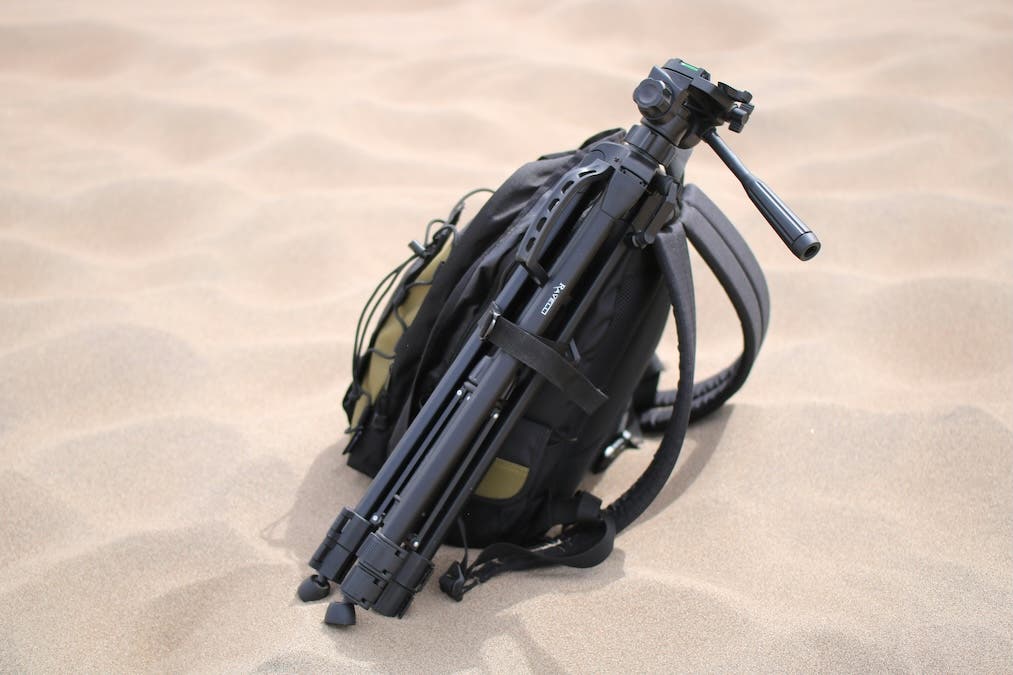
Most of the time, you may want a travel camera bag with as many pouches, pockets, and accessories to organize your gear efficiently. When it comes to the bigger bags you want the main compartment to be as flexibility as possible in terms of dividing it into smaller spaces that fits your gear. However, if you use a simple camera-lens setup or a compact camera, you may only need a comfortable, lightweight, easily accessible bag. Most street photographers use a discrete bag or simply a camera case attached to a strap. Keep in mind that pouches, internal dividers, and pockets add to the overall weight and size of the bag.
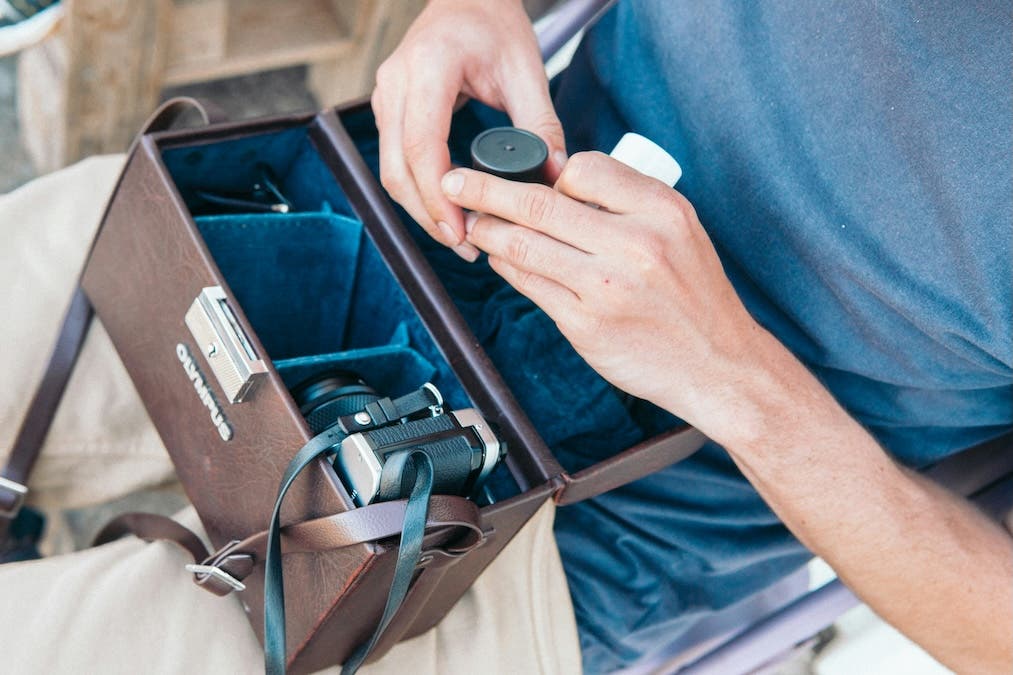
Straps and Handles
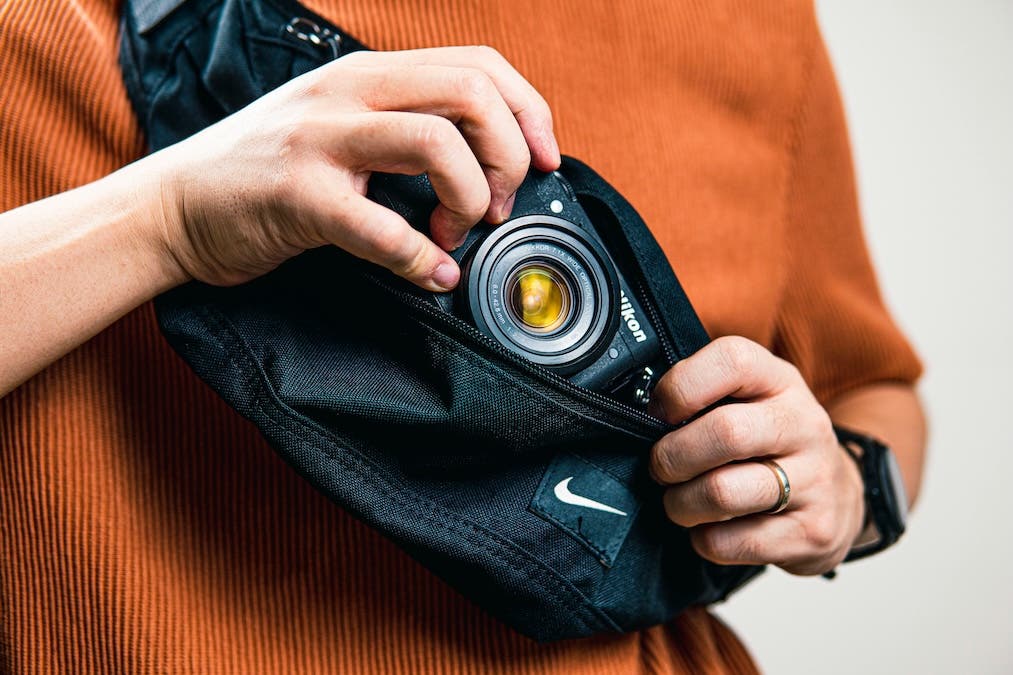
In my experience, it helps to have more than one way of carrying the camera bag. For example, you may prefer to carry a sling over the shoulder or around your waist, have a neck and a wrist strap for your small camera case, or wear a shoulder bag on one shoulder or like a postman’s bag. Check out the quality of straps and handles, too. Uncomfortable straps on a camera backpack you carry on a long hike or bike will ruin your trip (and your back).
Robustness and Resistance
A camera bag is a heavy-duty item. Think in the long term and check the quality of the materials and the build. Things like zippers, buckles, Velcro, adjustable straps, and so on need to work perfectly for a long time. At the same time, you may want a waterproof or at least weather-proofed bag that keeps your gear away from humidity, extreme temperatures, and dust and protects it from hits, abrasion, and scratches.
Case Study: Light Travel
Let’s say you travel for a day or two, carry your gear, and intend to have long walks, hike, bike, or be in large crowds. This scenario fits most of my weekends, but it also fits any travel or street photographer who must always have the camera ready. Usually, you only need one lens. In many cases, you need to be discreet and pass by unobserved.
Here, accessibility and lightweight are key. So, choose a camera bag that allows you to keep the camera-lens combo in one piece and have it at hand all the time. For security, a sling, waist pack, or an over-the-shoulder camera bag is a better choice.
Case Study: Adventure Travel
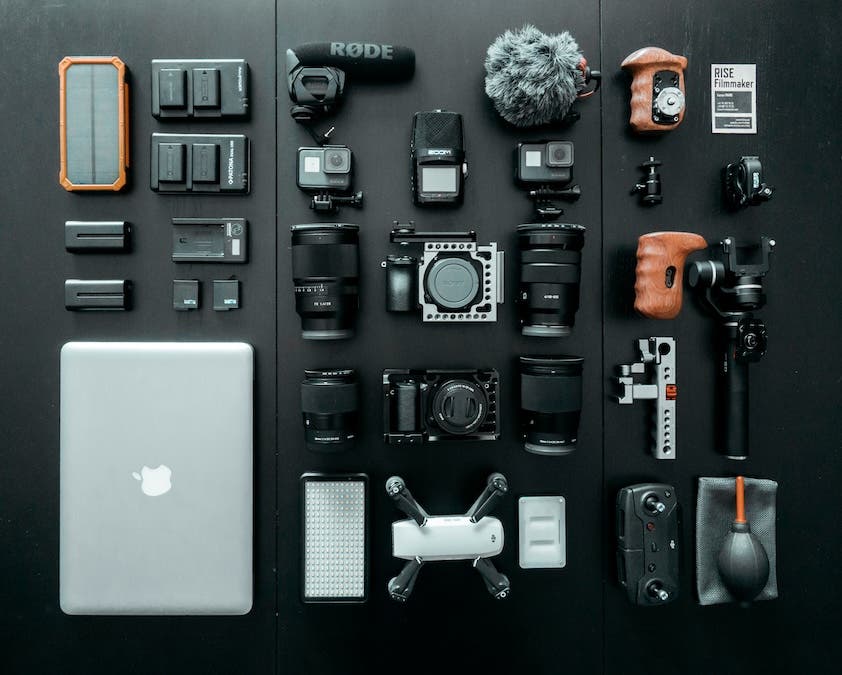
When going on an adventure, gear protection comes first. Consider robust, waterproof backpacks if you have to carry the gear yourself, or a camera bag with lots of inserts to organize your gear if weight is not an issue. Sometimes, adventure photography requires drones, action cameras, multiple batteries and memory cards, a laptop, and many other devices that may take more than one bag. Keep at hand what you need the most and store the rest in well-protected cases.
Case Study: Overseas Travel
If you take your gear on a plane, you may need a carry-on. Rolling camera cases look like regular luggage, but they have inserts and dividers to organize your gear efficiently and ensure they don’t collide during the flight. They have large capacities and can hold all sorts of equipment, such as a laptop or tablet, chargers, batteries, and so on. Most of them are waterproof to keep your gear safe from rain and snow.
Ensure the rolling camera case’s dimensions fit the cabin luggage restrictions because they vary from one company to another.
Case Study: Hiking or Biking
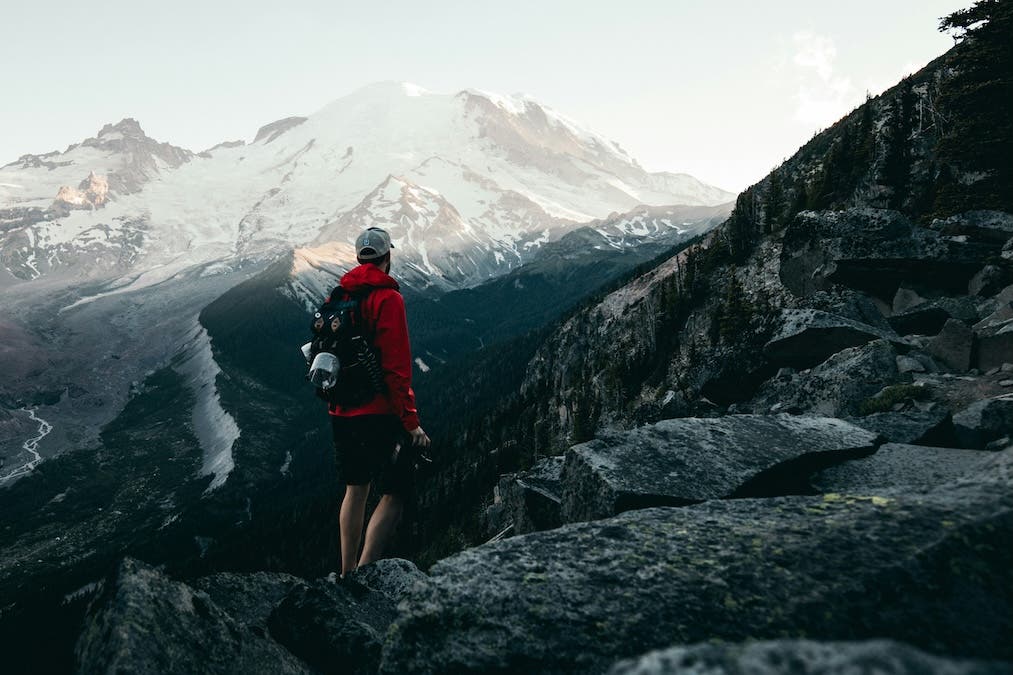
For hiking and biking, I find camera backpacks to be the best choice. They are comfortable and can accommodate my camera, the heavy telephoto lens I use for wildlife photography, a macro lens I may use for macro photography, my tripod with the gimbal head, and other useful things, such as water and food. Backpacks distribute the weight equally, have flexible compartments and pockets to keep everything separated, and provide easy access. Many are waterproof, but if they are not, you can always find rain covers for extra protection.
It’s essential to check how well the backpack sits on your back, the quality of the straps, and the accessories for hiking sticks, a tripod, a helmet, and other things you prefer to have at hand. As you can only carry one backpack, make sure you have where to put a change of clothes, water, food, etc.
Final Thoughts
For me, choosing a travel camera bagdepends mainly on the type of adventure I intend to have. Of course, a close second place goes to the amount of gear I plan to bring. Once you have the destination and the workflow in place, prioritize protection, organization, and comfort. Ensure the camera bag fits your equipment and style and respects the travel restrictions you may encounter. Keep in mind that the camera bag serves you and not the other way around.
The ideal bag should fit you like a glove, provide quick access, and help you in your endeavor, not be a burden. Therefore, when you choose a travel camera bag, my advice is to go for what fits you and your gear, not only your gear.