As the Milano Cortina 2026 Winter Olympics head into the final stretch, the stakes continue to be high. For the athletes, it’s about continuing to tap into their training, strength, endurance, and competitive edge—everything that builds toward a medal ceremony or sometimes, heartbreak.
For the photographers capturing it all, the pressure is just as real. Each day comes with its own challenges, preparation, and pulse-quickening moments. What does a day in the life of an Olympic photographer at these winter games look like? I spoke with two Getty Images photographers, Maddie Meyer and Richard Heathcote, to go beyond their finished images and delve into the rhythm of their days, from before sunrise to well after dark.
A Strong Presence at the 2026 Winter Olympics
Getty Images and its photographers have had a strong presence at these Winter Games, from optimal photo coverage to several creative projects they’re producing throughout, including shooting with vintage Graflex cameras as a nod to the kind of equipment used 70 years ago when Cortina last hosted the Olympics in 1956; an Infrared series captured with modified mirrorless cameras that reveal light “beyond what the human eye can see”; and Winter Heat, where thermal imaging cameras document the extremes athletes endure, visually translating cold air and burning effort into something almost otherworldly. And that’s just the beginning.
Follow along as Meyer and Heathcote discuss remote camera setups, course maps studied in advance, constant checks of weather reports, shot lists, start times, and more. These two seasoned sports shooters aren’t just documenting who wins Gold, but also anticipating when emotions crest, how jubilation erupts, where disappointment lands, and how to frame it all in a split second.
In the Air and Across Snowy White Landscapes: Maddie Meyer’s Olympic Photo Coverage
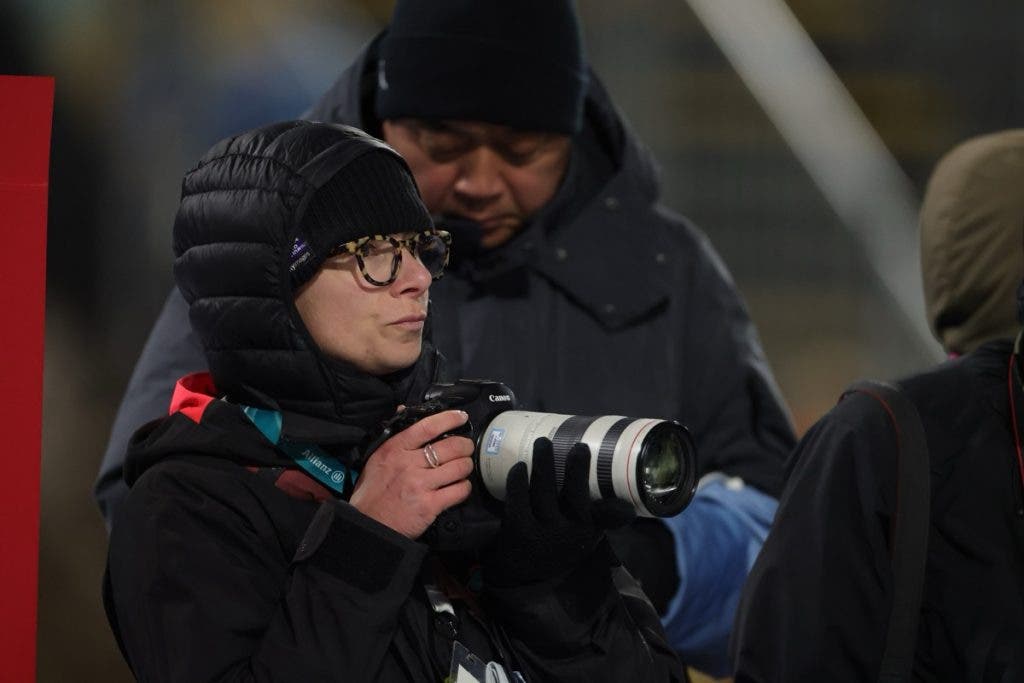
For Maddie Meyer, a chief sports photographer for Getty Images, a typical day at the Winter Olympics starts early and is strategic. “We’re really spread out here during the Games,” she says, referencing the geography of northern Italy. The Milano Cortina Winter Olympics has photographers dispersed across mountain towns and valleys. Meyer has been in the Val di Fiemme section of the Dolomites in Italy, covering ski jumping and cross-country skiing.
Early Mornings and Long Days
Breakfast with her four-person team starts at about 7:30 a.m. at their hotel. By 8 a.m., they are on a bus heading to the cross-country venue. From there, it’s straight into setup mode. Cameras are unpacked. Lenses are mounted. Positions are confirmed with the photo manager. Focal settings are checked, and transmitters are tested, all before the first athletes take to the course.
Before the Games even began, Meyer created a rotation plan for her team. Each race has a different route; each day demands refinement. The team studies maps labeled with official shooting positions, then decides who will start where, and when they’ll move. “One photographer may be tasked with stock coverage, aiming for clean, peak-action images of every athlete,” she explains. “Another may hold down the finish line, watching for collapses, tears, or spontaneous celebration. Others might work remotely or search for something more interpretive. It’s a kind of dance, and coordination is essential. No one wants to duplicate angles or miss a key moment because two photographers ended up being side by side.”
Different Visual Approaches
These two sports, says Meyer, demand entirely different visual approaches. Capturing cross-country skiing, she adds, offers freedom as the course can stretch for 10 kilometers through forest and open snowfields, and photographers can move along it. “I like that it allows me to think beyond the obvious, to search for shape, layering, and light.”
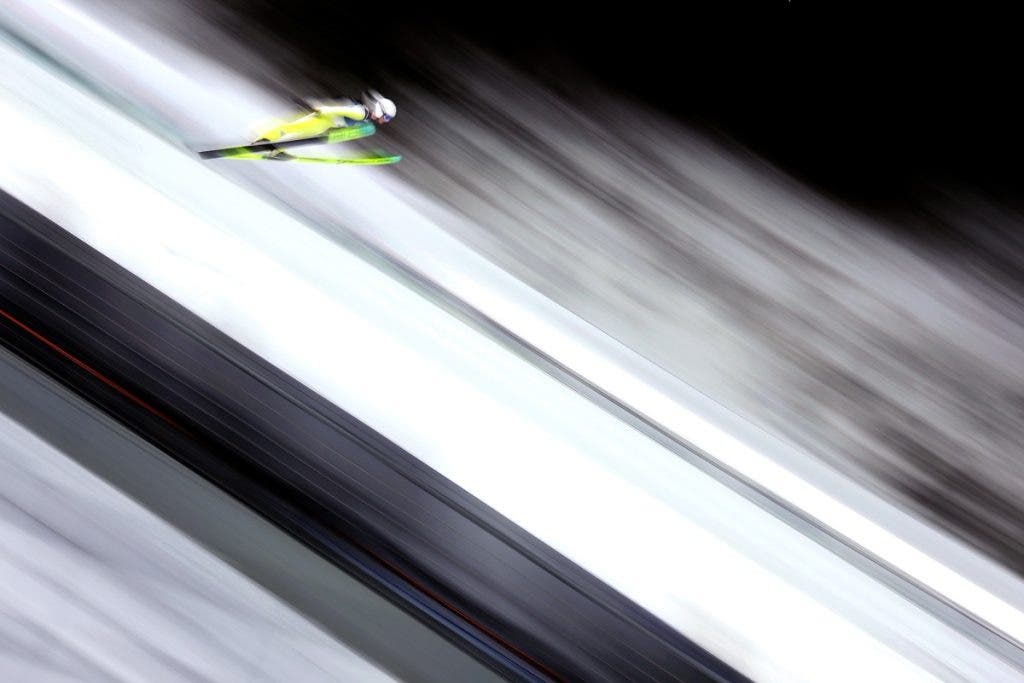
Ski jumping, by contrast, is more contained. “The athletes are confined to the in-run and landing hill,” she explains. Movement is limited, and it uses a different part of my brain. Cross-country skiing takes place on a broad expanse of white; ski jumping requires making the absolute most of fixed vantage points.”
When the race concludes, the work doesn’t stop. Medal ceremonies follow almost immediately. “There’s a shot list to fulfill, of athletes receiving medals, IOC members presenting them, flags raised, anthems sung. This is the emotional core of the day for me.”
Split Second Action and Chasing History
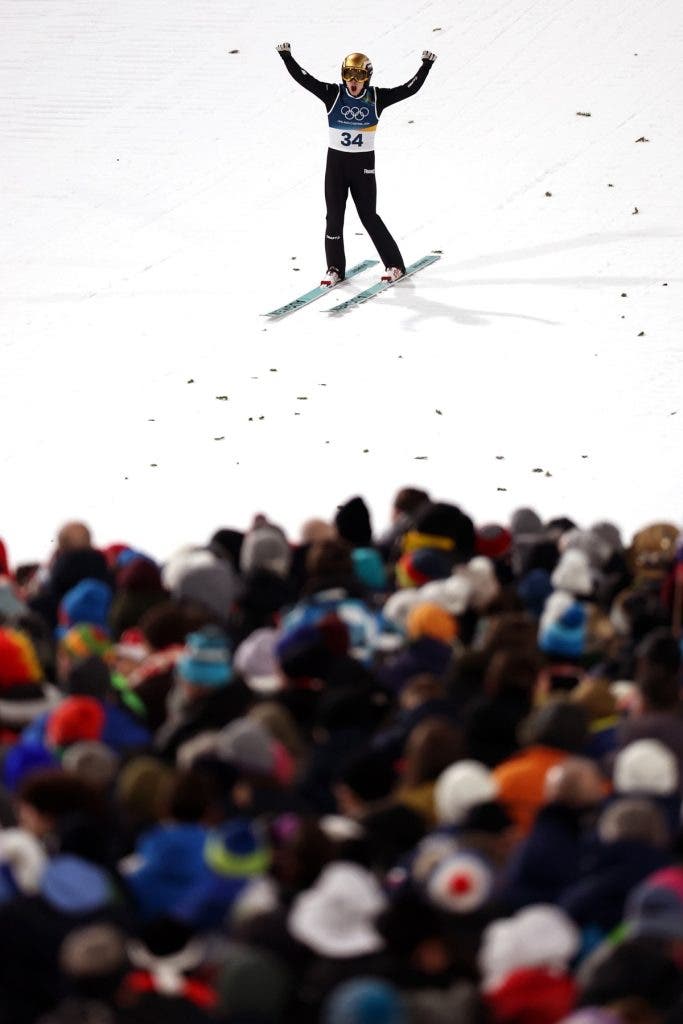
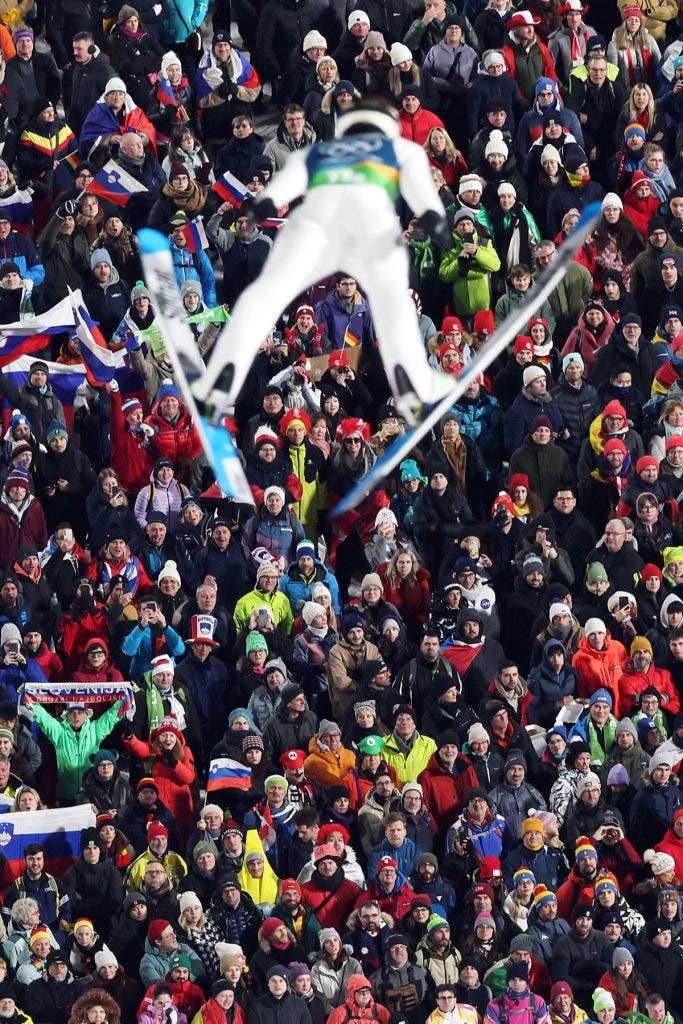
Based in Boston, Meyer regularly covers the Celtics and Bruins, so she knows what to look for in a split second. Here, she looks for faces first. For the action frames, like a ski jumper suspended over a sea of spectators, she thinks in terms of color and shape, asking herself, Which uniform pops against the snow? Which jacket in the crowd creates contrast? But at the finish line, her approach shifts. She begins thinking in narrative terms.
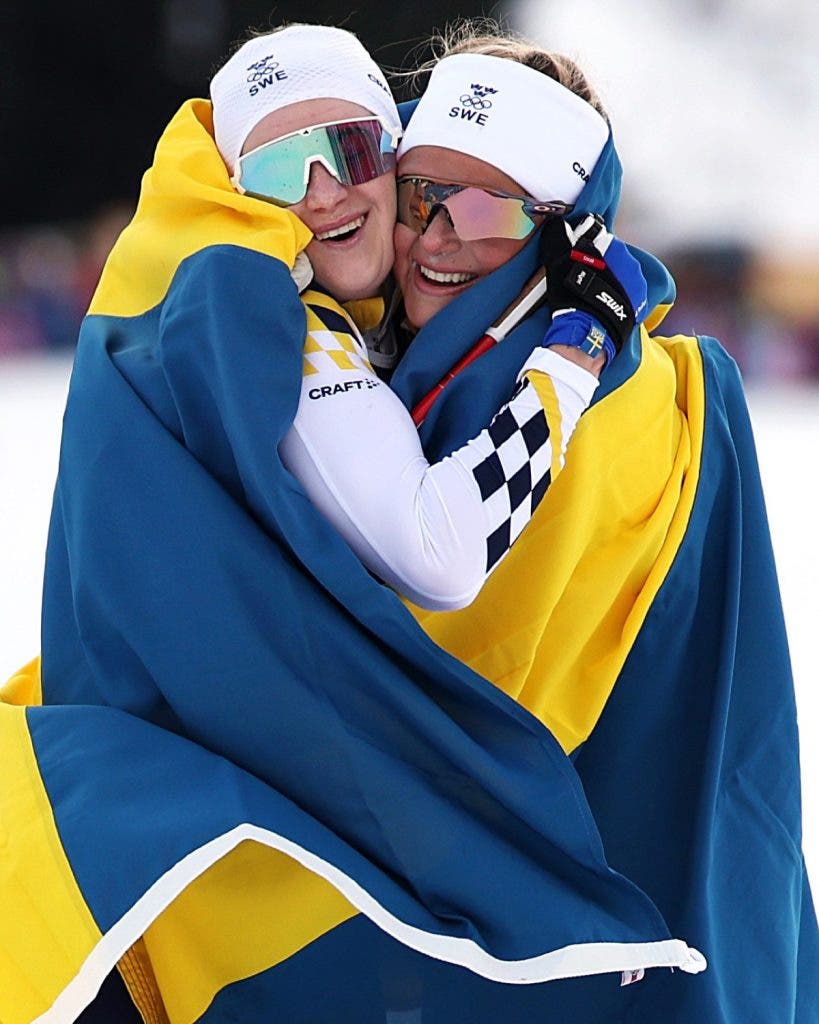
“If an athlete is chasing history, like Norway’s record-breaking cross-country star aiming for multiple gold medals, I will ask myself, ‘How do I show the weight of that? When might a stoic competitor finally break? Can I make an image that reflects not just victory, but legacy?’ I watch for sportsmanship, for the hugs between athletes from different countries, and for the quiet respect built over years of competing on the same circuit. In a global climate that often feels divided, there is real beauty in those exchanges.”
Beyond the Capture
As for editing all those frames, images transmit almost instantly via wireless systems or venue cabling to Getty Images’ editing team in London. There are live WhatsApp threads and photo editors send feedback: a frame looks cool-toned or is slightly overexposed. Meyer says she trusts their calibrated monitors more than her own eyes on a mountainside under mixed artificial light.
Gear is streamlined but substantial. She typically carries two Canon R1 bodies, paired with a 28–70mm, 70–200mm, and a longer telephoto zoom, along with her laptop, cables, transmitters, and layers of cold-weather clothing. Alpine conditions can swing dramatically; sunshine in the afternoon gives way to biting cold after dark. But that’s okay.
“This is all I’ve ever wanted to do,” she sums up. Milano Cortina marks her sixth Olympic Games. “I’ll go to every Olympics they’ll send me to until the end of my days.”
Ice, Speed, and Split Seconds: Richard Heathcote at the Sliding Center
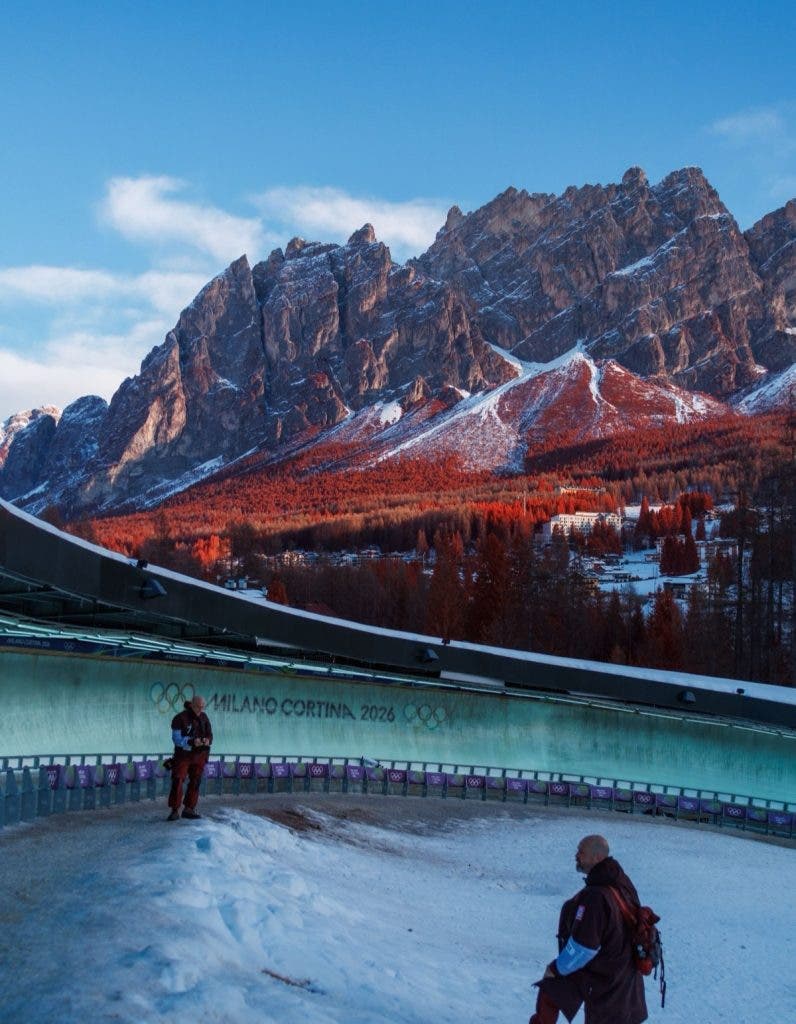
Where Maddie Meyer’s Winter Olympics coverage this year is rooted in ski jumps and white expanses, Richard Heathcote, a chief sports photographer for Getty Images based in London, operates in a far more confined arena: the Cortina sliding center.
Heathcote has been covering bobsleigh, luge, and skeleton, “pretty much everything at the sliding center,” he says, plus some curling. Most days begin around 7 a.m., and breakfast is quick. By 8:30 or 9 a.m., he’s on site, earlier if an 8 a.m. session is scheduled. Training runs and competition are interwoven throughout the day: lighter sessions in the morning, more training midday, and then medal-deciding runs late into the evening. Some finals don’t wrap until 9:30 or even 10 p.m.
“It’s pretty full on,” he says.
What’s the Story Today?
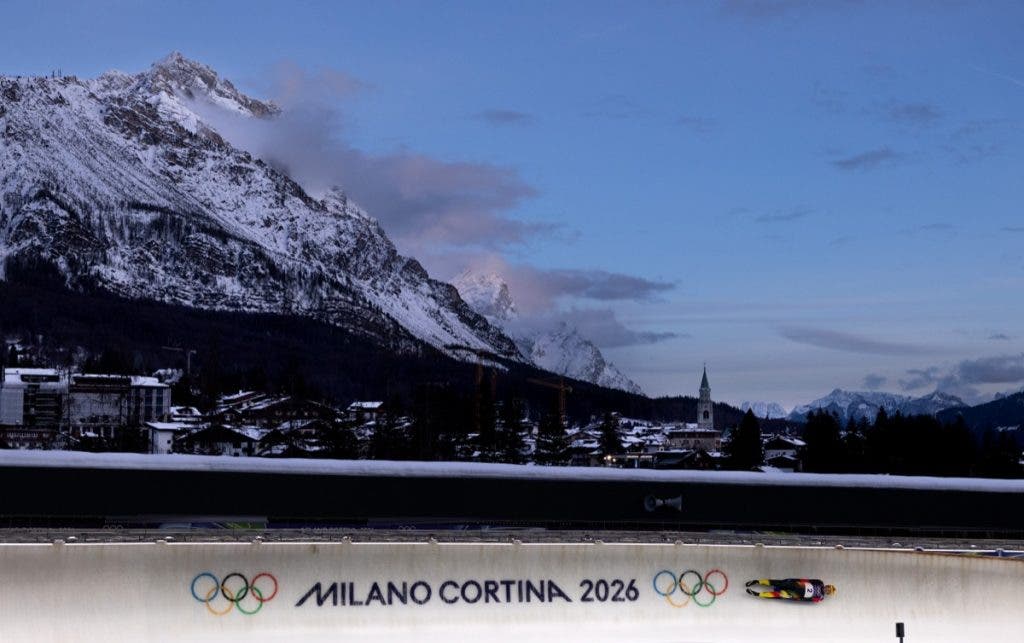
Each morning, he and three other photographers on the team discuss the plan: What’s the story today? Are these the runs where we prioritize classic, clean stock images and scenic frames? Or are we capturing when medals are decided and when someone needs to lock down the finish line for raw reaction?
“We don’t all go and try to do the same picture,” he explains. The goal is a varied collection of stock, scenic, creative, and emotional images so that when a client scrolls through the day’s take, it feels cohesive yet diverse. “There aren’t three versions of the same frame.”
Training Days
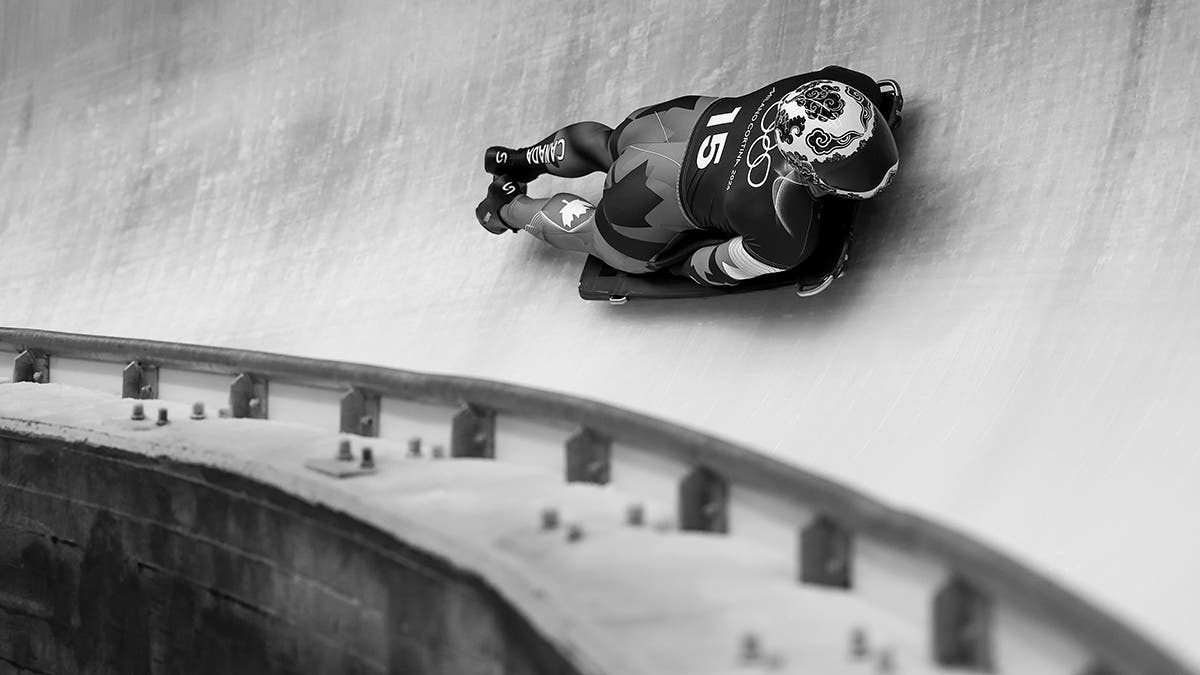
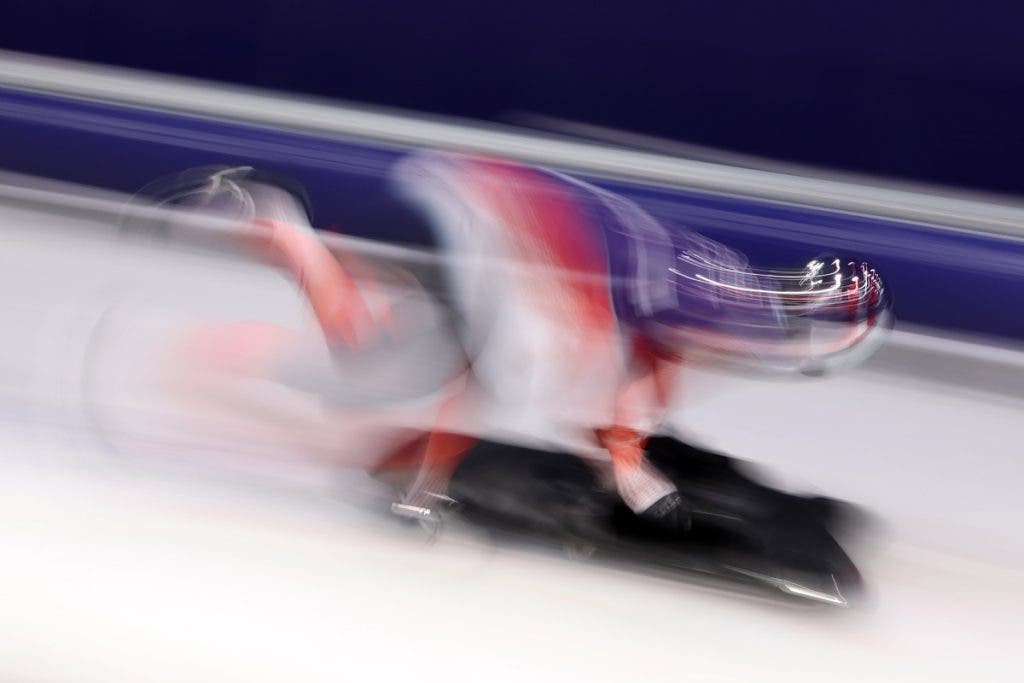
“Training days,” he continues, “offer great opportunities. With no spectators and limited live TV constraints, we gain better access to walkways and tighter angles.” For skeleton runs, where athletes hurtle face down at high speed, Heathcote prefers shooting into their line of sight rather than from behind. Training sessions allow him to get closer, experiment, and refine angles he can’t attempt once the venue fills up.
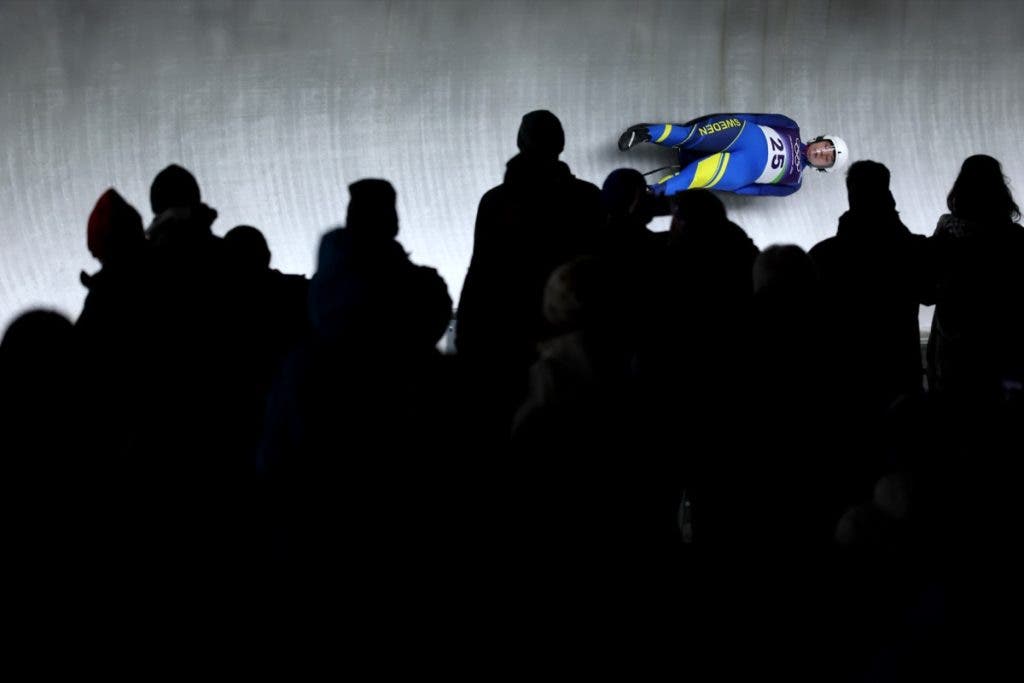
Once the stands fill up, he says, spectators become compositional elements in an image. On clear days, so do the daunting Dolomites in the distance. On busy afternoons with four-person bobsleigh finals, colorful crowds create shape and texture that frame the action.
“We face challenges, sure,” Heathcote admits when asked. “The weather doesn’t always cooperate. Fog wraps around mountain peaks while the strong sun sometimes forces the blinds to come down over portions of the track. I’m constantly checking weather reports and start times, calculating when natural light will align with our photo goals for the day, working out in advance what might be possible, or not.”
Grit, Lines, and Clean Frames
Where Maddie Meyer describes herself as emotion-driven in her photo pursuits, Heathcote says his instinct is precise and immaculate, even if the venue is anything but.
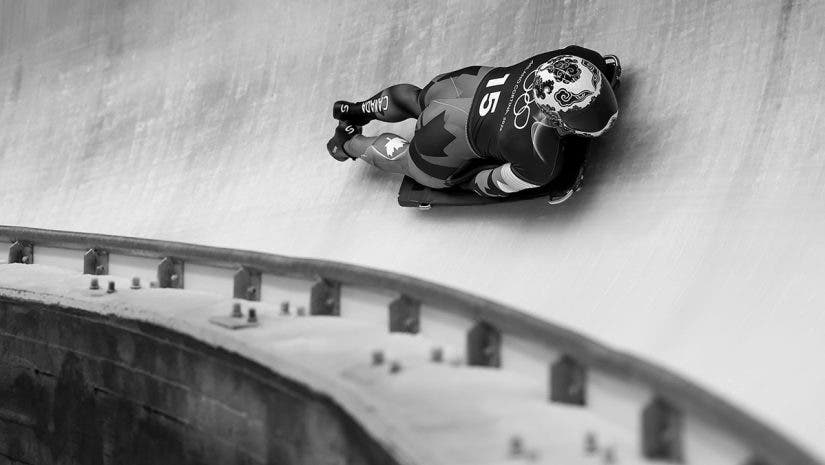
“I like things really clean,” he says. “The problem with that is that the sliding center isn’t pristine. It’s got concrete walls, metalwork, and ice that’s more gray than white, giving the venue a raw, industrial feel. Rather than fight it, I will sometimes lean into it, converting select frames into black and white to emphasize texture and grit. If I convert something,” he says, “it’s got to have that gritty element. You have to adapt to what happens in front of you,” he says. “And then you work out how to make it into a really good picture.”
That adaptability is crucial in sliding sports, he adds, where athletes flash past in seconds. He carries a substantial kit, often a 600mm, a 100–300mm, a 24–105mm, and occasionally a wider lens. Because of distances from start and finish, he’ll sometimes shoot effectively at 900mm with a teleconverter. “There’s no margin for hesitation.”
Storytelling and Instinct at Its Best
Moments happen in a flash, but there are still stories to be told, says Heathcote. In skeleton, for example, because the athletes race face down, their helmets are painted canvases that he can find a narrative in.
This year, one helmet became a story in itself: a Ukrainian athlete competing with a memorial design honoring those who lost their lives in the war. Heathcote and his colleagues recognized its significance during early training runs. They immediately sought angles that revealed every portrait and detail painted on the shell.
“It became a very big story,” he says. “We wanted to capture all sides of it.”
These are the moments where preparation and awareness intersect. “The better prepared you are,” he says, “the more chance you’ve got of capturing the right picture from the right angle at the right moment.”
In the end, that’s what unites Meyer and Heathcote and the other Getty Images photographers working these Winter Olympics, no matter the specific sport they are covering. The venues, lighting, and logistics may differ, but the mission is the same: anticipate, adapt, and be ready when sport becomes a story. Here, history unfolds in fractions of a second. The win takes place when they trust the instinct that’s been honed over years and press the shutter at exactly the right moment.
Featured Image: Josip Brusic of Team Canada participates during Skeleton Men’s Singles training on day three of the Milano Cortina 2026 Winter Olympic games at Cortina Sliding Centre on February 09, 2026, in Cortina d’Ampezzo, Photo by Richard Heathcote/Getty Images.