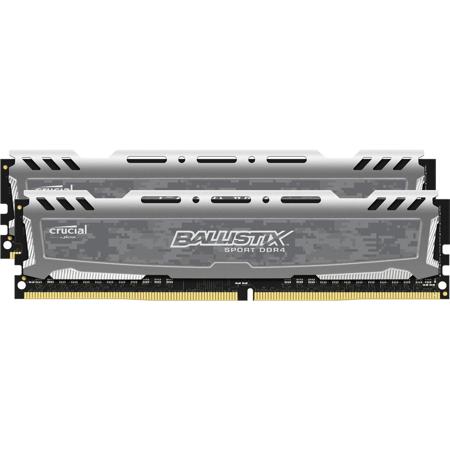
Ballistix Sport 8GB (2x 4GB) 288-Pin UDIMM DDR4 (PC4-19200) Desktop Memory Module Kit, CL=16, Unbuffered, 2400 MT/S Speed, NON-ECC, 1.2V, 512Megx64
SKU: CTBL2K4G4D24
This item is no longer available.
Share:
Overview
Compare
Learn
Specs
Protection
About Ballistix 288-Pin UDIMM
• NON-ECC/Non-parity: Most desktop and laptop computers take NON-ECC or Non-parity memory.
• ECC/Parity: ECC or parity modules look for errors in data and are most often found in servers and other mission-critical applications used by large networks and businesses.
• Unbuffered: Most PCs and workstations use unbuffered memory which is faster than registered memory.
• Registered/Buffered: Registered or buffered modules delay all information transferred to the module by one clock cycle. This type of memory is primarily used in servers.
• Fully buffered: Designed for next-generation servers, features an advanced memory buffer.
• CL: CAS (column address strobe) latency, which is the number of clock cycles it takes before data starts to flow after a command is received. Lower CL is faster. Modules with different CL can be mixed on a system, but the system will only run at the highest (slowest) CL.
• Component configuration: (For example: 64Meg x 64) Indicates the size of the memory chip components on the module.
• Voltage: For example 2.6V. Indicates the power used by the module. The lower the better. C