Share:
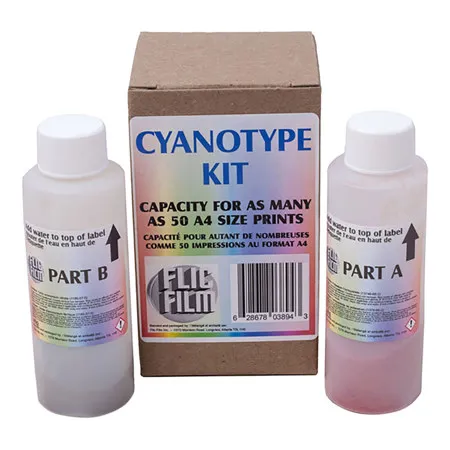
Flic Film 200ml Cyanotype Processing Kit
SKU: FL38943A MFR: FF38943A
$13.52
Key Features
- Create stunning cyanotype prints with this easy-to-use 200ml processing kit.
- Achieve beautiful, archival quality results on watercolor paper or cotton cloth.
- Enjoy a non-toxic, sunlight exposure process for unique photographic creations.
- Get consistent results every time with Flic Film's reliable cyanotype chemicals.
- Explore alternative processes with this complete cyanotype processing set.
- Perfect for both beginners and experienced photographers looking for fine grain.
Calculate Shipping
See Options
1

Need help? Ask our experts.
Overview
Compare
Specs
Protection
Q&A
About Flic Film Cyanotype Processing Kit
It is a versatile Cyanotype Processing Kit from Flic Film that empowers you to craft distinctive imagery across various mediums. The cyanotype process, originally developed by Sir John Herschel in 1842, has stood the test of time with its formula largely unchanged, offering a non-toxic and straightforward method for creating prints. This kit allows you to produce stunning cyanotype prints by simply placing a negative over treated paper and exposing it to sunlight. Additionally, it is perfect for creating photograms images made without a camera by arranging objects directly onto the surface of a light-sensitive material and then exposing it to light. Ideal mediums for cyanotype printing include watercolor paper and cotton cloth, both of which yield excellent results. Furthermore, cyanotypes can be creatively toned to achieve various colors after bleaching. You can use toners such as tea, coffee, wine, or any tannic acid-rich liquid to enhance the visual appeal of your prints.
Flic Film Cyanotype Processing Kit Features
- Alternative Process Chemistry
- Water color paper or cotton cloth are both excellent mediums for cyanotype printing
- Cyanotypes can be toned to different colors after being bleached