This item is no longer available.
Review Summary
2015-01-05T19:00:00
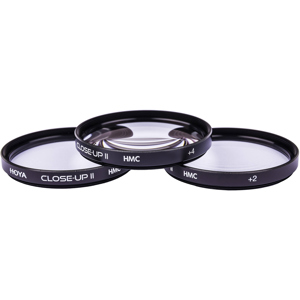
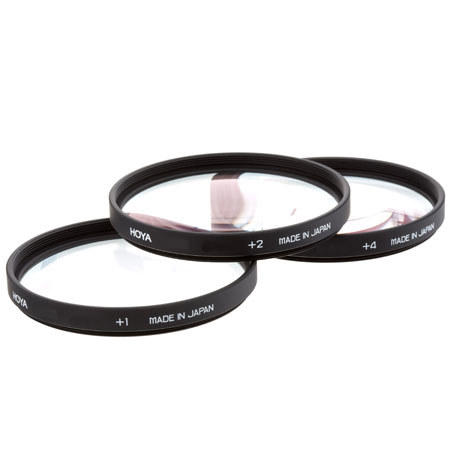
If you just want to take a some macro pix once in a while and don't want to invest in a bunch of expensive equipment, this set is ideal. I used them on my Nikkor 18-200 mm lens with very good results. The +1 and +2 filters are the most useful. These are perfect for taking close ups of flowers, etc. If you want to do some serious macro work, you'd be better off investing in a macro lens or some extension tubes.
Allan
2014-08-18T21:00:00
So far I have used these filters to take pictures of flowers and insects. The filters allow me to get in close and the pictures are sharp. In the old film days I had a Nikon macro lens but didn't want to invest in a similar product for digital. These filters provide an inexpensive alternative for those who want to do a bit of macro photography but don't want to re-finance their houses to do it.
Alexander
Accidents happen where life happens. Protect your favorite Adorama products and purchase a protection plan to stay covered from accidental damage, mechanical or electrical failure, and more.
If we can’t fix it, we’ll replace it at no additional cost.
Protect your product from drops, spills, and more.
Enjoy your gear without fear. We have you covered!
When regular use of your product over time results in mechanical or electrical failure.
We will never charge you a deductible after the purchase of a plan.
Our claims process is simple & easy and our customer service team is happy to help.
Adorama Protect powered by Extend is available for purchase to customers in the United States. Not available for purchase Internationally or in U.S. Territories.
Browse our FAQ


Available in +1, +2, and +4 diopters for close-up photography. Close-up lenses are high-quality optical magnifying lenses which shorten the close-focusing distance of the lens. It allows the lens to go closer to the subject than before and to achieve a larger image scale.
Use lenses individually or in combination for maximum effect
Depth-of-field is shallow so use as small an aperture as possible,