Digital and data cables play a crucial role in transmitting
video and audio information quickly and efficiently. As you shop for digital
cables and data cables, pay attention to cable type, length, and whether the
cable meets SDI (Serial Digital Interface) and/or SMPTE (Society of Motion
Picture and Television Engineers) industry standards for signal quality and
communication.
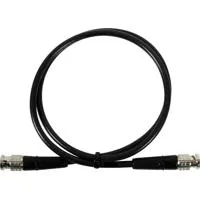
Coaxial Data Cables
Coaxial cables are common in many homes for transmitting
television and internet signals to your TV or router. You'll find them
connecting cable or satellite TV boxes, modems, and some older audio and video
equipment. With their strong shielding, coaxial cables help your signals avoid
interruptions and interference.
MIDI Digital Cables
If you're a musician or sound enthusiast, MIDI (Musical
Instrument Digital Interface) cables are the gold standard. They connect
musical instruments, keyboards, and synthesizers to computers and other
MIDI-compatible devices. These cables provide professional-grade signals for
precise composing, recording, and control.
Optical Toslink Cables
Optical cables transmit digital audio signals from devices
like Blu-ray players, gaming consoles, and high-end audio equipment to your
home theater or sound system. The optical connection ensures crystal-clear
sound without interference or signal degradation.
FireWire Data Cables
FireWire cables are most often found in professional
environments, connecting external hard drives, cameras, and audio interfaces to
computers. They're known for their high-speed data transfer capabilities,
making them ideal for tasks like video editing, audio recording, and other
speed-focused activities.
AES and EBU Cables
AES (Audio Engineering Society) cables and EBU (European
Broadcasting Union) cables are the preferred choice of audio professionals for
high-quality sound transmission. They’re commonly used to connect audio
equipment like mixers, processors, and digital audio converters. These cables
offer precise clocking and low latency, which ensures top-notch audio quality
for demanding applications.
Common Cable Lengths
The ideal cable length depends on your specific needs and
setup. If you're connecting a computer to a monitor or a gaming console to a
TV, a 6-to-10-foot cable is usually sufficient, but if you're linking devices
that are farther apart or require more flexibility, you may need longer cables.
Always measure the distance between your devices to find the right cable
length.
Best Choices in Digital and Data Cables
For the highest quality cables, it’s always wise to invest
in a pro-grade manufacturer. Brands like Canare,
Roland,
Hosa
Technology, Comprehensive,
and Kramer
Electronics have strong reputations in the AV industry thanks to their
standout products.