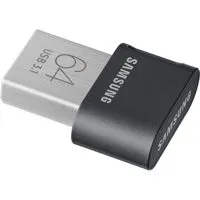
USB flash drives and thumb drives are handy devices to have in today’s tech-driven world. These compact, portable, and affordable storage solutions are small enough to stick in your pocket to carry your files with you if you work with multiple computers. They’re perfect for students who need to take their homework with them, computer technicians who need to bring diagnostic software on service calls, or anyone who needs to do offline file transfers.
The most popular flash drive companies include SanDisk, Lexar, PNY Technologies, Transcend, and Patriot Memory.
Variety of flash drive sizes
USB flash drives and thumb drives come in a variety of different storage capacities. The smallest thumb drives start at 16GB, which is enough capacity to store hundreds of files or dozens of images. For more value and more space, check out our 64GB and 128GB drives.
If you're in the market for more than 128GB of pocketable storage, we have 256GB, 512GB, and 1TB options as well.
Thumb drive transfer speed
There is more to selecting a USB flash drive than its storage capacity. The speed of the interface is also a significant factor to consider. USB 2.0 drives are usually less expensive, but they come with a cost to transfer speed. USB 2.0 drives are best suited for moving a small number of small files at a time.
USB 3.0 and 3.1 drives have much faster data transfer speeds, letting you transfer files to and from the drive quicker. Typically, a USB 3.0/3.1 drive will support up to 150MB/s data transfer.
The most advanced drives feature USB 3.2 support, which gives them speeds of up to 200MB/s. These are the best flash drives for moving media files regularly, but they are only available with 64GB of memory.
USB interface
Most USB flash drives interface with your computer with a standard rectangular USB-A port, but you can get them with different interfaces. SanDisk offers a line of flash drives that include USB 3.0 and Micro USB interfaces, so you can connect them to your computer or an older smartphone.
It's also possible to get flash drives with USB Type-C connections. These are compatible with modern smartphones, laptops, and desktop computers.
Secure devices
Most USB flash drives won't protect your data if the device falls into the wrong hands, but you can find secure flash drives with encrypted storage systems. These devices require a password to access the data inside.
The security on encrypted flash drives is usually software-based, but you can also find drives with hardware-based security. SecureData specializes in building data devices with robust security features, including built-in keypads or fingerprint scanners.