Overview
Compare
Accessories
Specs
Protection

Reviews about this item

Review Summary

2018-09-21T10:10:39

Rated 5 out of 5

MP 10 vs 240

First and foremost this is a Leica. Therefore, I’m not going to contrast MP 10 to other camera brands. You either want the Leica experience or you do not. Having said that, I will contrast that to my previous Leica 240. As an aside, I used film Leicastoremiami prior to the 240. The MP 10 is more and less in all the best ways. The 240 was a great camera, but it was larger than previous Leicas. The 240 provided full HD movie recordings and 3 FPS shooting. The 240 has a complex 6 button and cursor navigation menu on the back that is not entirely intuitive or fast. Now the MP 10. The body is back in shape, very close to the old film cameras. The HD movie feature has been eliminated. Not a problem as I never used it. The navigation was greatly improved. We now have 3 buttons and a touch screen making adjustments easy and intuitive (pinch and squeeze or expand to zoom in and out). ISO now has a dedicated knob on the body (ala film Leica). Continuous shooting is now up to 5 FPS and ISO sensitivity is improved to 50000. Another improvement is the nearly silent shutter (the 240 wasn’t loud but it was noticeable over the earlier film camera). For me these advances were worth the upgrade. If I had the M10, probably not, unless you have some disposable income.

chris i.

Leica M10-P Specifications

  • Camera Type

    Leica M10, compact digital view and range finder system camera

  • Lens Attachment

    Leica M bayonet with additional sensor for 6-bit coding

  • Lens System

    Leica M lenses, Leica R lenses can be used with an adapter (available as an accessory)

  • Shot Format/Picture Sensor

    CMOS chip, active surface approx. 24 x 36mm

  • Resolution

    DNG: 5976 x 3992 pixels (24MP), JPEG: 5952 x 3968 pixels (24MP)

  • Date Format

    DNG (raw data, compressed loss-free), JPEG

  • File Size

    DNG: 20-30 MB, JPEG: Depending on resolution and picture content

  • Buffer Memory

    2GB / 16 pictures in series

  • White Balance

    Automatic, manual, 8 presets, color temperature input

  • Storage Medium

    SD cards up to 2GB/SDHC cards up to 32GB/SDXC cards up to 2TB

  • Menu Language

    German, English, French, Spanish, Italian, Portuguese, Japanese, Traditional Chinese, Simplified Chinese, Russian, Korean

  • Exposure Metering

    Exposure metering through the lens (TTL), with working aperture;

  • Metering Principle/Method

    For metering the light reflected by light blades of the 1st shutter curtain onto a measuring cell: Strong center-weighted; for metering on the sensor: Spot, center-weighted, multi-field metering

  • Metering Range

    At room temperature and normal humidity for ISO 100, at aperture 1.0 EV-1 to EV20 at aperture 32. Flashing of the left triangular LED in the viewfinder indicates values below the metering range

  • Sensitivity Range

    ISO 100 to ISO 50000, adjustable in 1/3 ISO increments from ISO 200, choice of automatic control or manual setting

  • Exposure Modes

    Choice of automatic shutter speed control with manual aperture preselection - aperture priority A, or manual shutter speed and aperture setting

  • Flash Unit Attachment

    Via accessory shoe with central and control contacts

  • Synchronization

    Optionally triggered at the 1st or 2nd Shutter curtain

  • Flash Sync Time

    = 1/180s; slower shutter speeds can be used, if working below sync speed: Automatic changeover to TTL linear flash mode with HSS compatible Leica system flash units

  • Flash Exposure Metering

    Using center-weighted TTL pre-flash metering with Leica flash units (SF40, SF64, SF26), or flash units compatible with the system with SCA3502 M5 adapter

  • Flash Measurement Cell

    2 silicon photo diodes with collection lens on the camera base

  • Flash Exposure Compensation

    +/-3EV in 1/3EV increments

  • Displays in Flash Mode (Viewfinder)

    Using flash symbol LED

  • Viewfinder

    Large, bright line frame viewfinder with automatic parallax compensation

  • Eyepiece

    Calibrated to -0.5 dpt.; corrective lenses from -3 to +3 diopter available

  • Image Field Limiter

    By activating two bright lines each: For 35 and 135mm, or for 28 and 90mm, or for 50 and 75mm; automatic switching when lens is attached.

  • Parallax Compensation

    The horizontal and vertical difference between the viewfinder and the lens is automatically compensated according to the relevant distance setting, i.e. the viewfinder bright-line automatically aligns with the subject detail recorded by the lens.

  • Matching Viewfinder & Actual Image

    At a range setting of 2m, the bright-line frame size corresponds exactly to the sensor size of approx. 23.9 x 35.8mm; at infinity setting, depending on the focal length, approx. 7.3% (28mm) to 18% (135mm) more is recorded by the sensor than indicated by the corresponding bright line frame and slightly less for shorter distance settings than 2m

  • Magnification (For all lenses)

    0.73x

  • Large-base Range Finder

    Split or superimposed image range finder shown as a bright field in the center of the viewfinder image

  • Effective Metering Basis

    50.6mm (mechanical measurement basis 69.31mm x viewfinder magnification 0.73x)

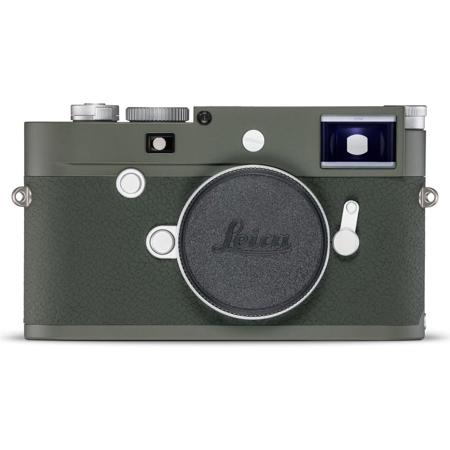
2 Accessories for Leica M10-P Mirrorless Digital Rangefinder Camera, Olive Green "Safari" Edition

  • All Accessories (2)
  • Microphones & Audio (2)

About Leica M10-P

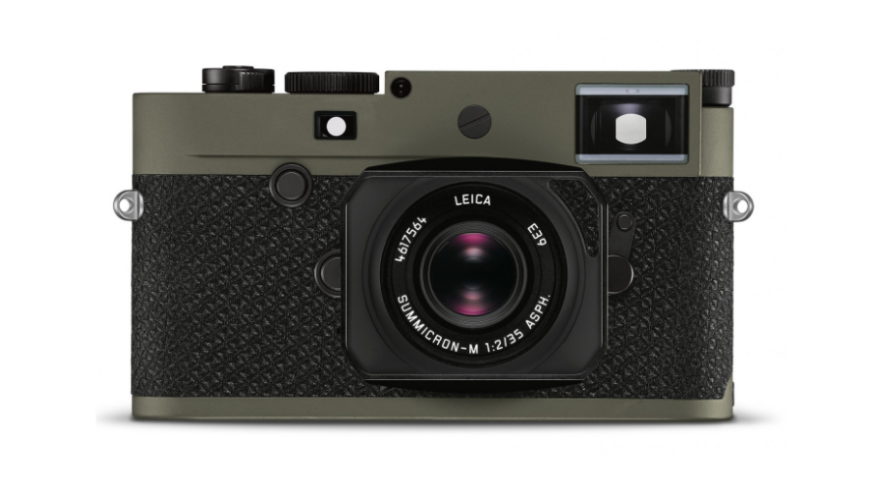
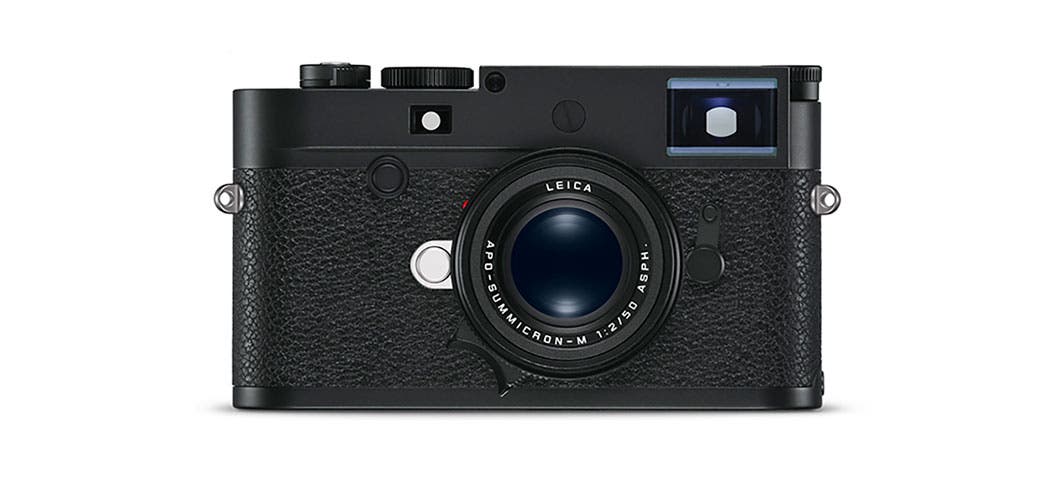
Leica Camera is proud to introduce the Leica M10-P, the newest, most inconspicuous addition to the Leica M series. The new Leica M10-P separates itself from other digital cameras with its almost inaudible mechanical shutter release and omission of the classic red-dot logo to covertly capture candid moments.

Exceptionally discreet, the M10-P embodies the essence of the M philosophy and raises the traditional subtlety of the M series to an unprecedented level. The most notable feature of the Leica M10-P speaks volumes to the core philosophy of the M series, yet it is virtually silent to the ear.

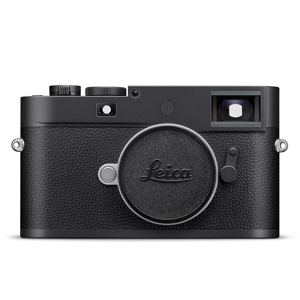
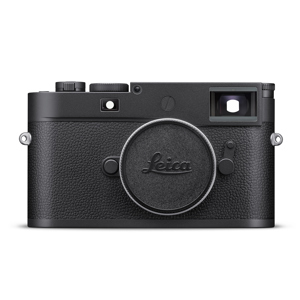
At the heart of this camera is the newly designed shutter, making the M10- P the quietest of all digital and analog M cameras ever made. Moments requiring utmost discretion can be captured unobtrusively with the nearly silent, fast and slim M10-P. The design of the Leica M10-P is classically minimalist, featuring only subtle Leica lettering on its top plate, and omitting the Leica red dot logo or any branding on the front.

With the M10-P, Leica debuts a touch-function for the M-System, enabling faster checking of focus in Live-View and Playback modes and convenient contemporary touchscreen controls such as swiping and pinch-to-zoom.

The M10-P further assists photographers in capturing a perfectly framed and level shot, thanks to its built-in Level Gauge. This time-saving feature helps photographers get their perfect shot, right at the press of the shutter.

All other features, functions, build quality and finishing of the Leica M10-P match the same high standards of its sibling model, the Leica M10. Rounding out that high-level design, the M10-P also comes with a color-matched metal hot shoe cover, giving the top plate a seamless look and sleek style. Compact, pared down and discrete, the M10-P's design perfectly reflects the ethos of M cameras: provide photographers the right tools to unobtrusively capture important moments from the rich tapestry of life.