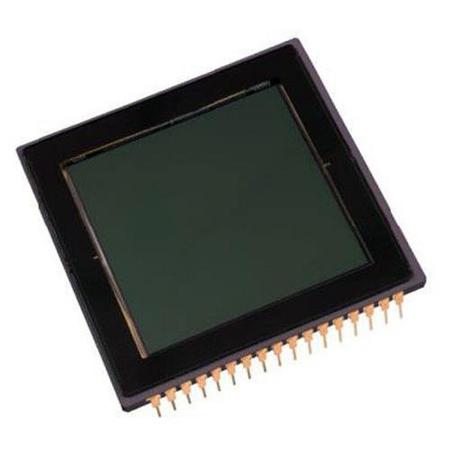
About SBIG STX-16803
The SBIG STX-16803 CCD Camera will have a full frame image buffer for storing image data during download. The STX will be able to image during download process. EXPLORing the possibility of using this buffer for pre-processing pixel defects based on a defect map provided by the CCD manufacturer, at the user's direction.
As CCDs get larger, the tracking CCD is moved farther off-center from the optical axis. This can result in out-of-focus guide stars. In order to compensate for different telescopes and different tracking CCD locations, the built-in guider will have a small, user accessible, focus adjustment for the tracking CCD. Once this is set for a particular camera and scope combination, it will not be necessary to change it.
SBIG STX-16803 Features
USB 2.0 and Ethernet: Both USB 2.0 and Ethernet will be available on each STX camera. The user will not have to choose the interface at the time of purchase
12VDC Operation: In similar fashion to the STL cameras, the STX will internally regulate a 12VDC supply so that the camera can be connected directly to any unregulated 12VDC source such as a car battery
Multiple A/D Channels: Having multiple A/D channels available makes a number of things possible. For instance, the STX camera will be able to download and guide, or guide with two guiders all at the same time
Improved Cooling: The engineers have modeled an optimum cooling design for this camera using a large custom pin grid array heat sink mated directly to the hot side of the 2 stage TE cooler to achieve maximum heat dissipation with a single large fan
Water Circulation Ready: While the design is aimed at sufficient cooling without water assist, it is possible to use water instead of air or in addition to air for optimum cooling
Even-illumination Shutter: Starting with the first ST-7 camera, SBIG has incorporated an even-illumination shutter for taking short exposure flat field frames on all self-guiding cameras
Variable Speed Fan Control: If the user desires air cooling only, the fan speed is controllable through software. Variable speed control allows the user to "tune" to fan to eliminate any resonance with the user's telescope thus suppressing harmonic vibrations
Focusing Mechanism of Tracking CCD: As CCDs get larger, the tracking CCD is moved farther off-center from the optical axis. This can result in out-of-focus guide stars
Opto-isolated Relays for Telescope Control: These isolated relays will not require an external Relay Adapter box or other opto-isolator to work with virtually any telescope mount that accepts autoguider inputs for guiding control
Tracking Relay LED indicators: This handy set of 4 LEDs will tell you at a glance if the camera is issuing corrections to the mount in +X, -X, +Y or -Y directions during an imaging session
Adaptive Optics and Filter Wheels: Due to the sizes of some of the planned CCDs, a new 0 and Filter Wheel will be designed for the STX cameras. Filters for most of these chips will need to be larger than 1.25". Some need to be larger than 2" or 50mm round