
This item is no longer available.
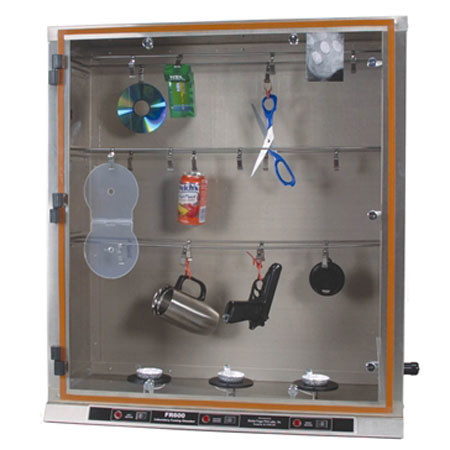
The Sirchie Cyanoacrylate Fuming Chamber (220 V AC Power) is specifically designed to handle large volumes of physical evidence that are of a non-porous nature. The primary purpose of the chamber is for use with most cyanoacrylate fuming methods. The chamber features three heating elements used for accelerating development of latent fingerprints when liquid cyanoacrylate compounds are used.
The chamber is equipped with an inlet and outlet port, one on either side permitting the use of accessories such as the CYANOWAND and connection to the DeFumigator Cyanoacrylate Fume Extractor. The inlet port also allows connection of the PUM100 Portable Humidifier when adding moisture is required. The acrylic chamber door permits an unrestricted view of the contents during fuming procedures. Latent prints developed using cyanoacrylate are the result of the fumes from the compound combining with the moisture content of a latent print.
When the fumes come into contact with this moisture, the process of polymerization takes place. This results in a hard, white residue conforming to the ridges of the latent print. Use of a fuming control card is recommended to aid in the determination of development time.