
This item is no longer available.
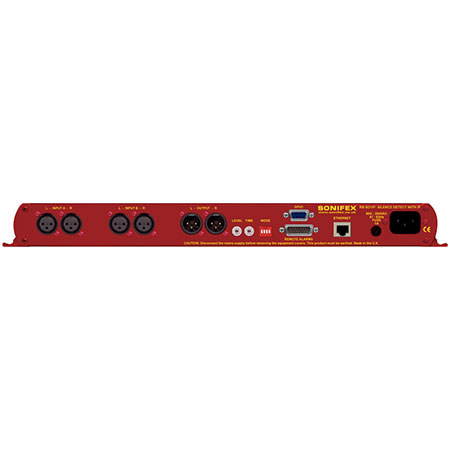
The Sonifex RB-SD1IP Silence detection unit is an upgraded version of the RB-SD1. The unit is a 1U rack mount device used to monitor an unattended stereo studio feed and in the event of the signal going "quiet" after a given period the unit will switch through an alternative stereo audio signal. This signal could be a recorded message (e.g. "Normal service will be resumed", etc), a feed from a flashcard player, audio from a connected USB flash drive or an alternative recorded program. Controls are provided to start external equipment and to provide remote status indication.
The RB-SD1IP offers all of the functionality of the standard RB-SD1 with several extra capabilities. Ethernet connectivity provides the ability to set up and control the unit via a browser based GUI. The network capabilities allow the user to more finely control silence level (-60dBu to 0dBu in 3dBu steps) and silence duration (1 second to 24 hours). You can also remotely lock/unlock the front panel controls on the unit and opt to use either the hardware configured settings or web based settings. In addition to the front panel LEDs the GUI home page offers a real time view of signal levels and alarm statuses. Using the new browser GUI, left and right channels can be treated independently and remote relay triggers can be configured as one of many events including the new GPIO pins. You can also choose to lock/unlock the use of the remote pins to control the unit and firmware updates can also be performed using the web GUI.
SNMP V1 is implemented so that the unit can be controlled by existing network management systems. The addition of 6 extra GPIO pins to the rear panel allows customizable functionality, including the use of the RB-SD1IP network interface to generate SNMP Traps on behalf of other, non-networked, hardware. The RB-SD1IP has been fitted with a USB interface on the front panel and can act as a host in two ways. Firstly the USB port can be used to upgrade the firmware on the unit from a USB flash drive. Secondly, such a drive can hold a pre-recorded message which the unit can play out in the event that both main and auxiliary signals fall silent.