
See Options
Need help? Ask our experts.
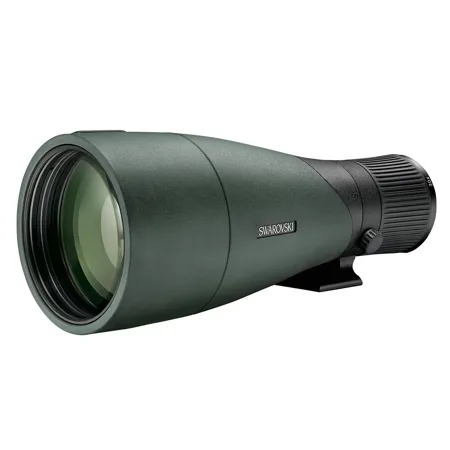
The ATX, STX and BTX objective modules offer you unparalleled modularity and unimagined application possibilities. The 95 mm objective module offers outstanding detail resolution. This device even pushes optical tests to their limits and it is the ultimate benchmark for those who want to see even tiny details in razor-sharp focus.
What to consider when choosing your spotting scope
Objective lens diameter
The objective lens diameter specifies how much light can enter the optics. This makes it a key factor in an instrument's performance, for example, in twilight. The bigger the objective lens diameter, the more light the objective lens can capture. The darker the surroundings, the larger the objective lens diameter needs to be.
Variable magnification
Variable magnification makes it possible to adjust the magnification flexibly within a specific range. In contrast to fixed magnification, it allows you to zoom from the lower value to the higher value. However, as the magnification increases, the field of view, i.e. the image section, becomes smaller.
Field of view
The field of view describes the size of the image section that can be seen through the optics. This is specified either in meters (width) at a distance of 1000 meters (m/1000m), or feet (width) at a distance of 1000 yards (ft/1000 yds), or as an angle (degrees). The higher the magnification, the smaller the field of view. Binoculars have a large field of view, which means you can see a wide area. Spotting scopes have a higher magnification, which makes the field of view much smaller, but you can see more detail.
Weight
The weight specifies how heavy or light the device is (in grams or ounces). Do you intend to do a lot of walking? Lightweight equipment is a priority in this case.
https://www.swarovskioptik.com/
800-426-3089