Picture does not represent the actual item
See what's in the box

Picture does not represent the actual item
See what's in the box
This item is no longer available.
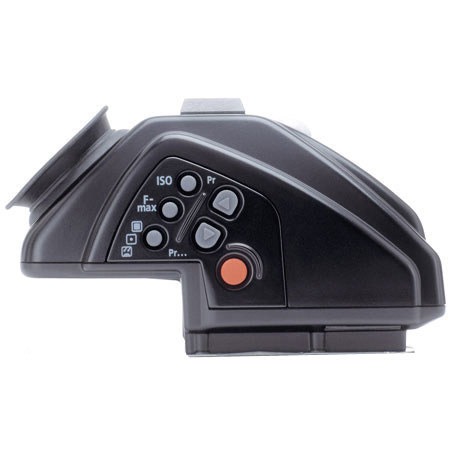
The Hasselblad PME45 is a 45° meter prism viewfinder that provides a convenient viewing angle for both studio and outdoor work. Its built-in exposure meter offers TTL spot metering, center-weighted TTL integral metering, and incident light metering via a dome sensor, a choice of shutter- or aperture priority, and a wide range of pre-set possibilities.
The high eye-point eyepiece makes the viewfinder especially suitable for users with eyeglasses. The eyepiece features a diopter adjustment range of - 2 to + 1 diopters and magnifies the image 2.5X.
The built-in conspicuous Liquid Crystal Display is located beneath the viewfinder image. The basic settings for ISO, maximum lens aperture (Fmax), and metering method are easily accessed by pressing their corresponding buttons. Seven different functions can be chosen, such as type of exposure data, shutter or aperture priority, reference mode, exposure correction factor, and audible warning signal. The reference mode can be used to evaluate the light reflected from different areas in the subject, or to monitor changes in the lighting conditions.


