Picture does not represent the actual item
See what's in the box

Picture does not represent the actual item
See what's in the box
This item is no longer available.
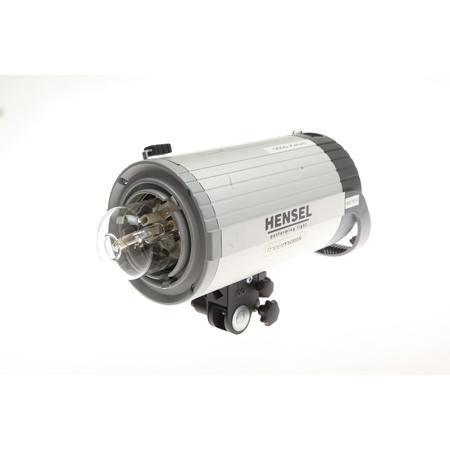
The Hensel Integra 1000 Plus Monolight provides the power and quality core features on most photographers' wish list, whether they shoot commercial, portrait, wedding, or industrial photography. And the 1000W/s Integra Plus is multi-voltage, so you can use it just about anywhere there's electricity; just swap out the 300 W modeling lamp for one of the appropriate voltage.
That's just the basic. Besides adaptability and power, the Integra Plus offers the luxury of control. The six f/stop range, selectable in 1/10 stop increments down to 1/32 power, reads out on the bright LED panel; it's perfect for photographers using digital cameras. Besides an optical slave, there's also a built-in, 4-channel Hensel radio slave receiver, compatible with the Hensel Radio Slave Trigger, which is available separately. This head includes Freemask technology, which is used like chroma keying to composite images. Used with the required, optional Freemask transmitter, the head automatically varies the flash output in sequential exposures to create a mask.