

See Options
Need help? Ask our experts.
Preserve Your Tone
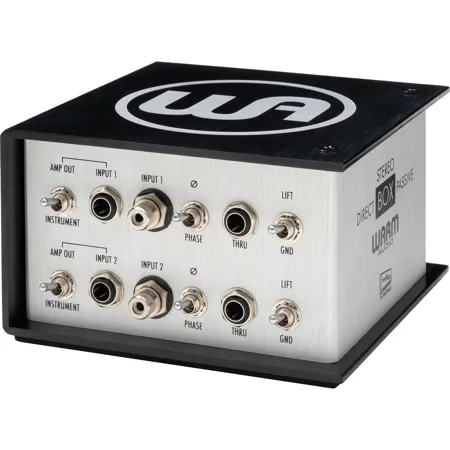
Warm Audio's passive DI boxes are designed and built to deliver premium performance, from the inside-out, in stereo. On the inside, you'll find 100% Class-A circuitry using premium components, but the stars of the show are the custom USA-made CineMag transformers, included in passive models, and on each channel in stereo.
The transformers ensure that any analog color and character from your instrument or signal chain is preserved before hitting any mixers or audio interfaces. On the outside, a selectable -3 to -30dB pad helps dial-in your ideal signal volume and ground/lift switch helps eliminate ground-loop noise.
Pro Direct Sound: Studio & Stage
Warm Audio DI Boxes allow you to run high-impedance signals from guitar, bass, and keyboards in mono or stereo directly into low-impedance mic preamps, mixers, and interfaces, or send signal over extended cable runs without losing volume, tone, or high-frequency detail. Warm Audio's road-worthy DI Boxes are the professional solution for this common mismatch, ensuring you won't diminish the tone of your instrument or performance.
Applications
Electric Guitar
Record stereo electric guitars direct to audio interfaces with passive DIs.
Electric Bass
Send clear, balanced signal from stereo bass guitars even while plugged into a bass amp. Use passive DIs for basses containing battery packs.
Electric Keys & Synths
Take unbalanced stereo keyboard outputs and convert to clear, balanced signals for recording or FOH.
Acoustic Guitar
Use passive DIs for active electric-acoustic guitars (with batteries).
Note:
Most guitar amps require a reactive load (a speaker) to be connected to the amplifier to prevent overheating. The best practice is to connect a 1/4" cable to the 'THRU' input directly to a properly rated speaker cabinet. This ensures the amp is loaded properly, preventing serious damage to your amplifier.