
See Options
Need help? Ask our experts.
Camera Sensor
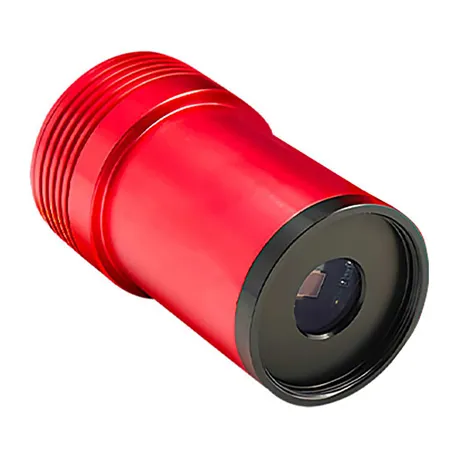
The ASI120MM Mini camera integrates the AR0130CS 1/3" sensor (4.8mm x 3.6mm). It is a new model in the "mini"-series of cameras from ZWO. This camera has 1280 x 960 pixels with a pixel size of 3.75 microm x 3.75 microm. It provides 12-bit ADC and the QE peak is almost 80%.
Astrophotography Performance
The ASI120 mini-camera offers you very good performance for planetary imaging as well as for guiding. Low read noise, high dynamic range, AR protective window and much more are just some of the key characteristics that set it apart from the competition.
• Sensor: AR0130CS
• 1/3": 4.8x3.6mm
• Resolution: 1280x960
• ADC: 12bit
• Read noise: 4.0e
• FPS 35
• QE 80%
• USB 2.0
ASI120 mini camera have very beautiful outlooks, small size, light weight, this is not a big deal. We should consider much more.
ASI120 mini-camera all have an appealing design, small size, light weight and much more. And while we are very pleased with the looks of our products, of course what matters the most is how well they perform in their intended use.
How to choose a good guide camera?
Many people might mention the size, ability to fit with different types of equipment (guide scopes, OAG etc.), stability and ease-of-use. We agree. That is why our cameras in the "mini"-series all fulfill these, what we think are, basic characteristics of a good guide camera.
But what are truly the most important traits. Let's face it, when you set up your equipment for a night of imaging, you just want things to work and to see that smooth graph on your guiding software before you start your imaging sequence. In order to do that, there are some things to consider (apart from the points mentioned above): Sensitivity, Precise guiding, Big FOV.
High Sensitivity
Sensitivity is the first thing we considered. This is of course a crucial ability when looking for a star to guide on. So, from the beginning, we were set on using monochrome sensors to design our guide cameras. Because monochrome sensors have much higher sensitivity than their color counterpart. Luckily the ASI120MM Mini have very high QE peak value - about 80%, which can detect more stars in view and shorten the exposure time in guiding. Each of the cameras have their own strength and depending on what you value in a guide camera, one might be better for you than the others.
Entry Level
ASI120MM Mini is designed for newcomers, it is more affordable than ASI290MM Mini and ASI174MM Mini. You can easily get the well-sampled stars with the help of ASI120MM Mini. It's light, compact and robust. If you are still wondering about which one you should choose as your first guide camera, the ASI120MM Mini is a very good choice.
Smiling Face
If you squint your eyes, the back of the ASI mini-camera looks like a smiling face (albeit you have to squint quite hard). On the back you will find a type-C USB port, which is widely used in mobile phones. The ST4-port is used for auto-guiding on mounts. So if you are having one of those observing nights when Murphy's law is by your side, at least you'll have an excellent guide camera (that smiles at you).
Focus like a eyepiece
ASI mini camera can focus at the same position as an eyepiece. This means that you can focus with an eyepiece, and then directly insert the ASI mini camera into 1.25" holder - focus done!
Work with OAG
The Mini-camera series are well suited for OAG use: They have a much bigger focus range than normal ASI cameras. No more worrying about your guide camera and main camera not being able to find focus at the same time.