+13
more
more

See Options
Need help? Ask our experts.
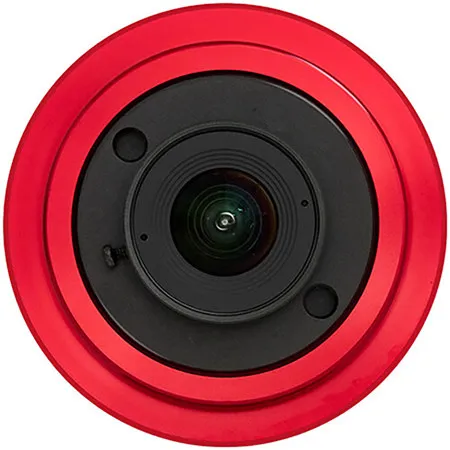
The ASI662MM is equipped with the Sony-IMX662 rolling shutter CMOS. Boasting a 1/2.8" frame size combined with a 2.9microns pixel size, it features 2.07 million pixels (1920 x1080), and possesses both high sensitivity and low read noise characteristics. In high-speed mode, it can output 107.6 frames per second, providing reliable support for planetary observation.
Large Full Well Capacity, Not Easy to Overexpose
The ASI662 adopts Sony IMX662 sensor with the latest technology. Compared to the previous generation of sensors, it has very low readout noise and an extreme large full well capacity. This helps effectively avoid overexposure issues and also allow longer exposures. In low light conditions, the camera performs excellent, capturing very clear images of celestial objects.
256MB DDR3 & USB 3.0
The camera is equipped with a USB 3.0 transmission interface and a built-in 256MB DDR3 cache to ensure stable and secure data transmission.
No Amp Glow
ASI662 exhibits zero amp glow, no matter how long the exposure and how high the gain value. Since it is implemented directly at the hardware level, it does not require software control.
Performance Characteristics
Camera Curve
Readout noise includes pixel noise, circuit noise, and ADC quantization noise. The lower the readout noise, the better. The readout noise of ASI662 is very low compared to CCD camera. The built-in HCG mode can effectively reduce the readout noise at high gain and allow the camera to maintain the same high dynamic range as it does at low gain.
When the gain is 200, the HCG mode is automatically turned on and the dynamic range to 12bit.
Quantum Efficiency
The QE curve and readout noise are very important parameters to measure the camera's performance. Higher QE and lower readout noise are necessary to improve the image signal-to-noise ratio.