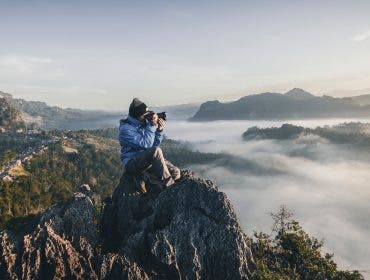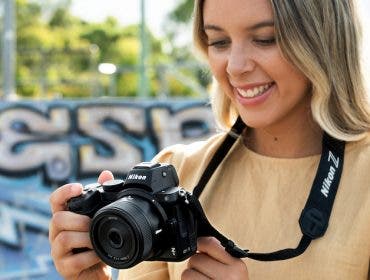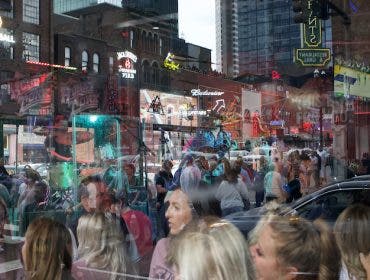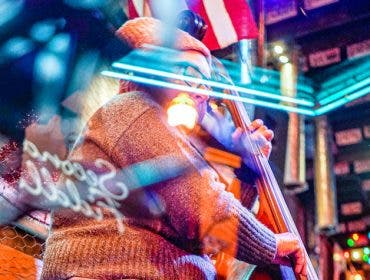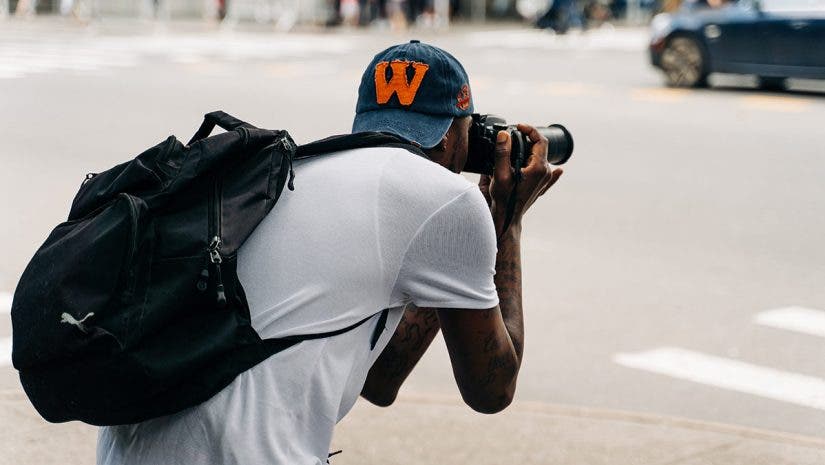
Street photography has quickly become a trend in pop culture and social media. Just look at your daily Facebook and Instagram feeds. While it is traditionally known as a photography style that captures candid moments of humanity and emotion, photographers have challenged this definition. They’ve captured street images that are more carefully planned out and feature human subjects in a variety of public places.
If you’re interested in breaking into this photography niche or improving your street photography skills, you may want to know: what’s the best street photography camera?
In this article, we’ll touch on all of the most commonly used cameras for street shooting. We’ll give you the pros and cons of each to help you decide which one is best for your needs.
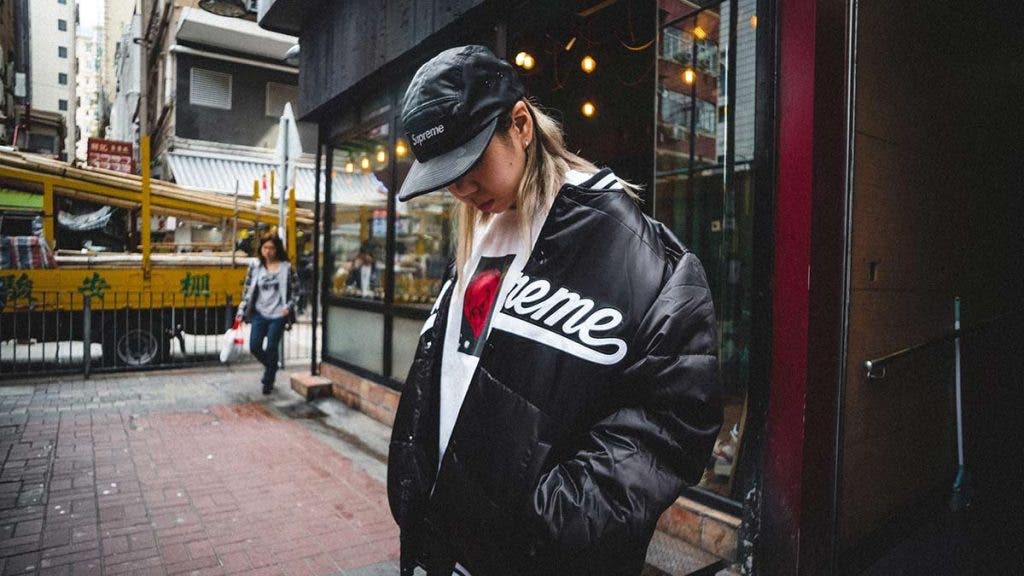
What is Street Photography?
Street photography is the photographic genre that focuses on everything that happens in the public space. Street photographers usually capture snapshots of everyday life, including portraits, environmental shots, markets, architecture, and details. However, as sometimes streets host events (e.g., carnivals, festivals, riots), street photography may also include images that relate to photojournalism and documentary.
Features to Look for in a Street Photography Camera
Size and weight
It is important to have a small and lightweight camera because you will be carrying it around all day long. Furthermore, you won’t have time to take the camera out of the bag each time you want to take a photo. Therefore, the camera should be at hand at all times.
In addition, the best street photography camera should be easy to use and silent. To capture the moment, you will probably have to go unnoticed.
High ISO sensitivity
Street photographers work in unpredictable conditions. They don’t plan their photo sessions based on weather conditions and use mostly natural light. Therefore, the camera should perform well in low lighting conditions and offer a wide dynamic range. High ISO sensitivity guarantees high-quality images, no noise, and the freedom to take photographs from dawn to dusk.
In-built image stabilization
Photographing street life means dealing with motion. And while you can’t control the dynamics of the street, you can control camera shake. So the best camera for street photography should provide image stabilization and help you take sharp photos with a handheld camera.
Fast burst settings
Because everything happens so fast on the street, using burst mode will be the routine. You need a fast camera, able to take many shots in a single burst. The best street photography camera also provides fast autofocus and takes high-quality pictures in Auto mode. You won’t always be able to set up the camera.
Long battery life
Street photography requires a lot of time and patience. Thus, you need a reliable camera that won’t let you down in any condition, and long battery life is a must. Even if you have a spare battery, you don’t always have time to change batteries in the wake of events.
Weather-resistant sealing
The best street photography camera is a functional camera. It doesn’t matter how high-tech it is if it breaks when wet. So a solid, dust, water, and freeze resistant camera body is a good investment. You should prepare for all weather conditions, splashes, crowds, and possible accidents.
Top Cameras for Street Photography
Many might argue that the best camera for street photography would be the smallest one. But seasoned photographers will tell you to use whatever works for you. After all, we all have our own preferences when it comes to a camera’s functionality. Here are a few important things to consider when choosing between some of the most popular types of digital cameras.
Best DSLR Cameras for Street Photography: Nikon D750, Canon EOS 6D Mark II, or Canon 5D Mark IV
The DSLR takes the cake when it comes to image quality. It has a big image sensor that produces the largest images. Plus it has tons of manual camera settings for more control over the camera’s behavior and image quality. The Nikon D780, with its deep grip and tilt-out LCD, and the drool-worthy Canon 5D Mark IV are premium DSLR options for street photography and many other imaging applications.
Canon EOS 6D Mark II
A lightweight and fast Canon camera, 6D Mark II provides autofocus and face recognition, expanded ISO settings for challenging low-light situations, and a 3’’ vary-angle touch screen. In addition, it features a 26.2 Megapixel full-frame CMOS sensor that produces high-resolution images. Moreover, you can shoot from a distance or share your photos instantly as the camera provides built-in WiFi, Bluetooth, NFC, and GPS.
Canon EOS 5D Mark IV
5D Mark IV features a 30.4 Megapixel full-frame sensor and focuses on image quality and versatility. It has a 61-point AF system, continuous shooting up to 7.0 fps, a 100–32000 ISO range, and an improved noise-processing algorithm. The camera uses Canon’s Intelligent Tracking and Recognition system that provides automatic detecting and tracking and ensures your subject is in focus.
Nikon D780
Silent and reliable in low-light conditions, D780 features a 24.5 MP full-frame CMOS sensor, 51-point phase-detection AF, a broad ISO 100-51200 range, and a 180K-pixel Advanced Scene Recognition System. It accommodates two memory cards and a tilting touchscreen LCD. D780 can capture 7 frames per second and has a fast 1/8000 second shutter speed for freezing the movement of the street.
DSLR Camera Pros:
- Features & Settings – The biggest advantage in using DSLRs is having a wide variety of camera features and settings at your disposal. You will surely encounter different lighting situations, objects, and people out in public areas, so being able to adjust the ISO, shutter speed, aperture, white balance, and the like would be very helpful.
- High Speed Shooting – DSLRs will also allow you to capture four frames (or more!) per second, which is great for when you want to shoot subjects in motion, like kids in the park or pedestrians crossing the street.
- Interchangeable Lens Feature – For many street photographers, this is probably the most important aspect of a DSLR camera. Imagine going for a photo walk, or even catching festivals and parades on the street when you travel. Having a camera that can alternate between a wide and telephoto lens provides significant ease in capturing your desired images without moving around too much.
DSLR Camera Cons:
- Expensive – Known to be the most valuable type of professional digital camera, a high-end DSLR could easily be worth more than a thousand dollars, so it may not always be the safestand most practical option for street photography.
- Complex Features – Due to its fully customizable features and manual settings, beginners will have to spend a little more time learning how to operate it before they can start shooting.
- Heavy / Bulky – The biggest disadvantages of using DSLRs for street photography would have to be its weight and size. The last thing you want to concern yourself with when you’re traveling and trying to frame a good photo in public is how heavy the camera feels in your hands.
Best Film Camera for Street Photography: Leica M6 or Mamiya 7
Highly popular camera models like the Mamiya 7 II and the classic Leica M6 — or the Leica M-A — are still some of the best film cameras for street photography for their mix of analog and automatic manual camera settings, quiet operation, premium lens choices, and portability. If you have the budget for it, check out other Leica film cameras, as they typically produce some of the best cameras for street photography.
Film Camera Pros:
- Tangible Output – Film cameras encourage you to process your photos to make them tangible, and therefore feel more real and meaningful.
- Trains the Eye and Mind – Because film cameras operate with film instead of memory cards, which means a more limited number of shots, these cameras help discipline the photographer to think their shots through before they actually shoot. It works well with street photography, which is really about looking for a story rather than taking a photo spontaneously.
- Aesthetics – Film blends light and color beautifully in a way that digital cameras can’t—yet. It’s also known to produce a visually pleasing grainy texture and add a vintage touch to photos. These are features we keep on trying to mimic with imaging filters.
Film Camera Cons:
- No Preview – Film cameras may also be difficult to use for the generation that has grown up with a viewing system in their camera, because using film doesn’t allow you to instantly preview or delete your photos.
- Limited Shots – With this kind of camera, there’s not much space for trial and error. Unless you have an unlimited supply of film, it isn’t practical to take too many shots of the same thing.
- Time-Consuming Prints – This kind of camera obviously lacks the instant gratification that their digital counterparts can offer in two other ways: developing film photos usually take a while, and you can’t upload the photo for social media sharing without scanning it.
Best Mirrorless Camera for Street Photography: Sony Alpha 7C III or Fujifilm X-Pro3
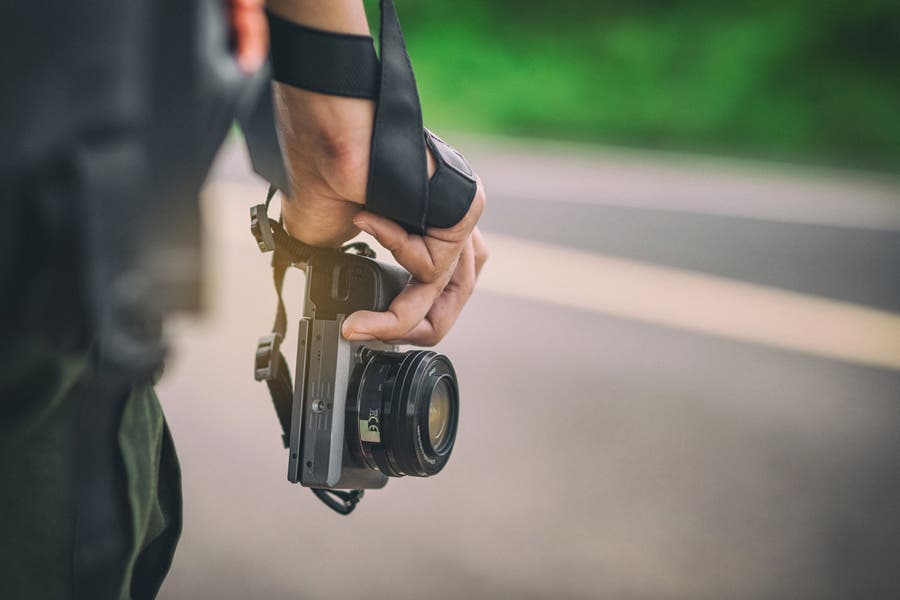
A mirrorless camera is designed to function like DSLRs, but without the internal mirrors. That’s where it gets its name and more compact size. This also means they’re typically the cheaper (but not always) and more portable professional digital cameras. This makes them one of the best cameras for street photographers who want a combination of professional features and maximum portability.
A lot of amateur photographers prefer mirrorless cameras for their good compromise of quality and ease of use. The powerful Sony Alpha 7C, the feature-packed Fujifilm X-Pro3, and Canon EOS RP are ideal mirrorless cameras for street photography for their portable, lightweight build and high image quality.
Fujifilm X-Pro3
X-Pro3 is a mirrorless camera designed for street photographers and photojournalists. It features a 26.1MP APS-C X-Trans BSI CMOS 4 sensor, a phase-detection autofocus system, a hybrid viewfinder, and a hidden LCD touchscreen. X-Pro 3 is easy to use and versatile. It has a sensitivity range of ISO 160-12800 and works well in low-lighting conditions.
Fujifilm X-T4
Fuji designed the X-T4 with a broad audience in mind. It features the state-of-the-art 26.1MP X-Trans CMOS 4 sensor and offers a sensitivity range of ISO 160-12800. But unlike other Fuji models, X-T4 targets videographers, as well as bloggers and vloggers. The camera includes five-axis In-Body Image Stabilization, AF tracking, and enhanced battery life than previous models.
Canon EOS RP
The Canon EOS RP is the lightest and most travel-friendly camera model from Canon. It is a full-frame mirrorless camera with a 26.2MP CMOS sensor, autofocus, 100- 40000 ISO sensitivity range, video capabilities, and a vary-angle LCD touchscreen. It has plenty of special scene modes to help you take pictures fast and adapt to the environment. Check out our roundup of the best lenses for the Canon EOS RP to learn about the best glass for the camera.
Sony Alpha 7C
The Sony Alpha 7C is a full-frame mirrorless camera that encapsulates the quality of full-frame cameras in a compact and lightweight body. It features a 24.2MP CMOS sensor, 15-stop wide dynamic range, continuous shooting at up to 10 fps with AF/AE, autofocus, and video capabilities. The Alpha 7C weighs only 509 grams with battery and memory card included.
Nikon Z 6II
The Nikon Z 6II provides everything you need for street photography: high-speed shooting, autofocus, performance in low-light conditions, wireless connectivity, 4K video capabilities, and dual card slots. The full-frame mirrorless camera features a 24.5MP CMOS sensor, RAW support, and eye detection.
Olympus OM-D E-M5 Mark III
Olympus aims to deliver the ultimate portable system that provides all the creative freedom you need. The E-M5 Mark III is lightweight, compact, and weather-resistant. It has a 20MP Live MOS sensor that produces high-quality images with natural tones and minimum noise. The camera also features autofocus and tracking, 30fps sequential shooting, and image stabilization.
Mirrorless Camera Pros:
- Compact with Multiple Lenses – Think of mirrorless cameras as smaller and lighter DSLRs. Their main advantage is that they are compact and yet allow the use of different lenses, while giving you the range and quality that point-and-shoot cameras cannot. This also makes them more practical to bring on long photowalks.
- Advanced Settings – This camera allows you to tweak your aperture, shutter speed, ISO, white balance, and other advanced settings, similar to that of a DSLR.
- Social Media Friendly – A lot of mirrorless cameras today have touch screens and Wi-Fi connectivity, which makes it easier to share your work instantaneously on social media. For most photographers, this makes street photography much more fun, interactive, and rewarding.
Mirrorless Camera Cons:
- Slower AF – The downsizing sure comes at a cost. Unlike DSLRs, earlier mirrorless cameras use contrast detection instead of phase detection to focus on subjects, which slows down its autofocus speed. To get around this, you’ll need a mirrorless camera that at least offers both.
- Limited Lens Options – Since DLSRs have been around longer, mirrorless cameras have to wait before having as much lens options to choose from—but they’re definitely catching up.
- Battery Life – The battery life of mirrorless cameras doesn’t last very long, primarily because the camera uses an electronic viewfinder (rather than the optical one found in DSLRs). However, this shouldn’t really matter as long you carry a spare.
Best Point-and-Shoot Camera: Fujifilm X100V
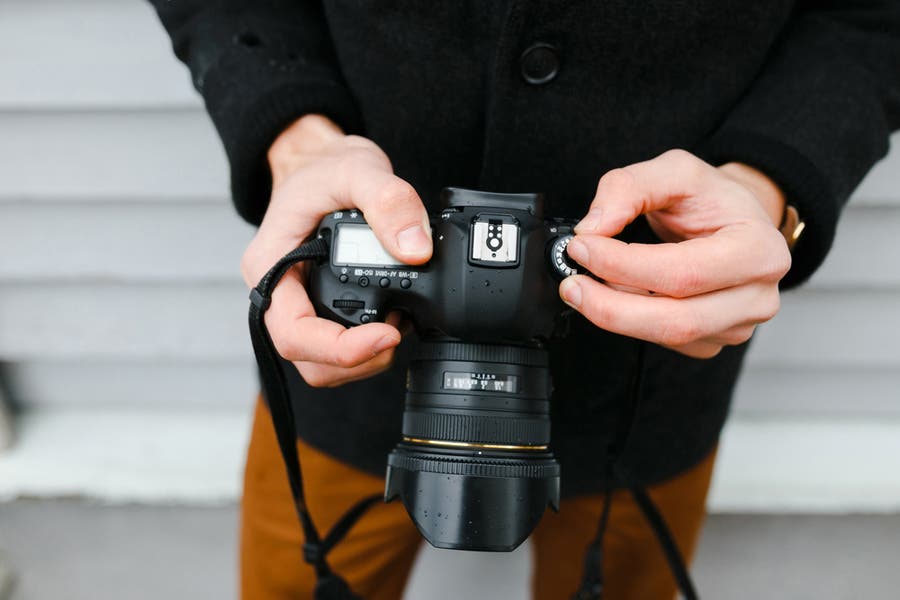
Compact digital cameras (also known as point-and-shoot or pocket cameras) are designed to be simple and user-friendly. All you need to do is point, shoot, then let the camera do the rest. Aside from being very handy, it has automatic functions and a built-in flash. You won’t have to worry about complicated settings. The Fujifilm X100V and Panasonic Lumix LX100 II are some of the most popular and reliable point-and-shoot cameras for many imaging applications, including street photography. The Leica Q2 Compact Digital Camera, while also a point and shoot unit, is a high-end staple and a pro favorite.
Fujifilm X100V
X100V is another good option for street photography. The 26.1MP CMOS sensor provides high-quality images even in low lighting conditions. The camera has an ISO 160-12800 sensitivity range. It checks all the other features you need for street photos: fast and precise autofocus, an advanced hybrid viewfinder, a tilting LCD touchscreen, and video capabilities.
Panasonic Lumix LX100 II
If you want all the high-end camera features in a small package, LX100 II may be the right camera for you. It has a 17MP 4/3″ MOS sensor, optical image stabilization, and RAW support. At the same time, LX100 II has an ISO 200-25600 sensitivity range and a wide maximum aperture (f/1.7) to help you take great photos in low lighting conditions.
Canon PowerShot G5 X Mark II
G5 X Mark II is a reliable point-and-shoot camera with a 20.1-Megapixel 1.0-inch Stacked CMOS sensor. It has 5x optical zoom for close-ups, image stabilization, touch and drag autofocus, continuous shooting up to 30fps in RAW Burst Mode, and a maximum aperture of f/1.8. And it weighs only 340g.
Ricoh GR III
Portable, discrete, and perfect for snapshots. The GR III is a compact camera with a 24.2MP APS-C sensor, a maximum ISO of 102400, noise reduction, hybrid autofocus (phase-matching and contrast detection), and shake reduction. For perfecting your photos, the camera includes image adjustment tools. And for sharing them instantly, it features WiFi and Bluetooth capabilities.
Sony Cyber-shot DSC-RX100 VII
RX100 VII is a compact camera with a 20.1MP CMOS sensor and a built-in ZEISS Vario-Sonnar T 24-200mm F/2.8-4.5 zoom lens. It is versatile and easy to use in any condition. The fast hybrid autofocus of RX100 VII captures action moments with the highest precision. The camera includes AI-based real-time tracking, image stabilization, and continuous shooting at up to 20fps.
Leica Q2
The Leica Q2 is a high-end compact camera, and one of the best Leica cameras for beginners. It features a 47.3MP full-frame sensor and a built-in Summilux 28 mm f/1.7 lens. The autofocus is extremely fast, and the burst shooting won’t disappoint you either. The camera provides high-quality images but also a comfortable photo experience. It is weather-resistant, has a long battery life, and follows an intuitive design concept.
Point-and-Shoot Camera Pros:
- Small and Light – Some point-and-shoot cameras are even smaller and lighter than smartphones, making them easier to bring and store in your pocket. It attracts the least attention out of all the other cameras. It also helps you move around as freely as you wish, which is exactly what you would want in street photography.
- Silent Operation – This camera is quite suited for taking candids because its zoom and shutter are usually quite silent.
- Programmed Settings – What makes this type of camera well-loved by beginners is that it normally has basic, pre-programmed settings for portraits, sports/action shots, macros, night photography, and several others, which you can quickly access with a switch or dial.
Point-and-Shoot Camera Cons:
- Fixed Lens – In street photography, you can’t really manipulate the elements surrounding you as you do in a studio or other controlled environments, so it’s advisable to use a variety of lenses that allow you to at least zoom in and capture scenes from different angles. Unfortunately, point-and-shoots come with fixed lenses.
- Lack of Camera Functions – This camera also has limited functions, such as little control over aperture and shutter speed compared to other cameras. It also often does not shoot well in low light conditions. This makes shooting moving objects, attempting night photography, or achieving a narrower depth of field more difficult.
- Average Quality Images – While point-and-shoot cameras produce higher resolution images than smartphone cameras, the quality is usually still lacking. Of course, there are some models, like the Ricoh GR III compact camera, that can give you close to DSLR-quality images that allow for larger prints.
Top Smartphone Camera for Street Photos
Smartphones seem to be giving other digital cameras a run for their money. Every time a new phone is released, it usually comes with an upgraded built-in camera, among many other features. For instance, leading smartphone brands Apple and Samsung recently released their iPhone 13 and Samsung Galaxy S22+ phones. They feature high-resolution cameras with impressive built-in lenses.
Pros:
- Discreet – When you do street photography, you want everything to look and feel as organic as possible, without anyone looking at you as if you’re out on a mission. This makes smartphones highly suitable for street photography. Your subjects won’t be intimidated by your presence because seeing a person using a smartphone isn’t as distracting as seeing someone with a DSLR.
- Convenient – This is the lightest and easiest camera to carry around for photo walks or any other casual outings. It won’t really feel like you’re bringing a camera, since it’s already built into your personal smartphone.
- Modern Specs – The recent smartphone cameras are sharp enough that even pro photographers use them for their Instagram grids and display photos. Some professionals even use smartphones exclusively for their work.
- Editing On The Fly – Your phone is probably the device you’re most familiar with, so understanding the functions of the camera and touching up your images using your go-to photo editing app won’t take much time at all—no exporting needed.
Cons:
- Lower Image Quality – Smartphones simply don’t produce the kind of quality that other digital cameras do, especially when it comes to capturing moving objects and shooting in low light areas—both of which you’ll have to deal with in street photography.
- Limited Settings – There’s no way to manipulate settings (such as shutter speed and aperture) because they aren’t readily adjustable in most smartphones, unless you use a third-party application that allows it.
- Shorter Battery Life – You can easily run out of battery as you use your camera on top of other applications.
Can I Use My Mobile Phone for Street Photography?
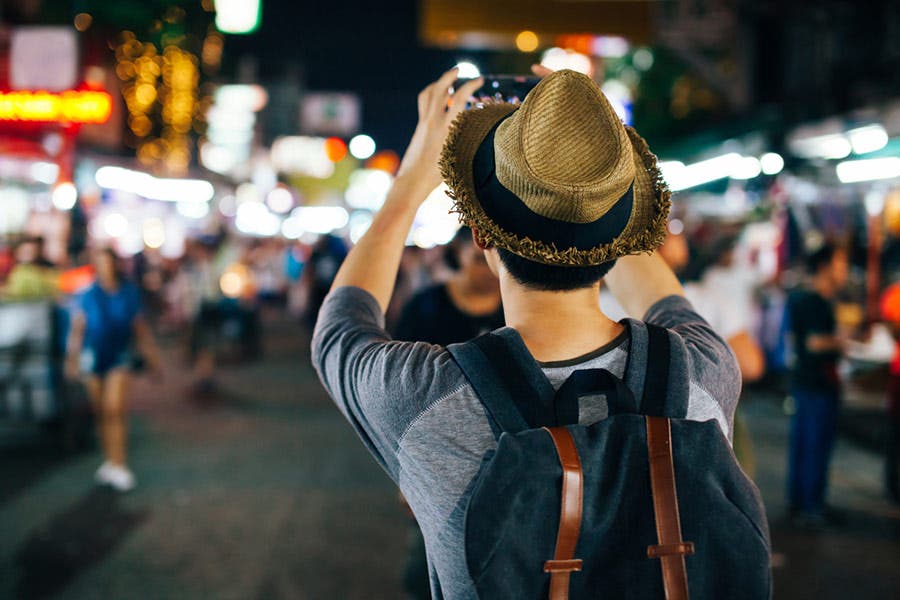
Once you understand what street photography is, you know it is an unassuming type of photography. But, of course, you still have to produce high-quality images. However, storytelling and being in the right moment at the right time prevail over technical skills. So, yes, a mobile phone may be the best camera for street photography, if it fits your photographic style and approach.
How to Find the Best Camera for Street Photos
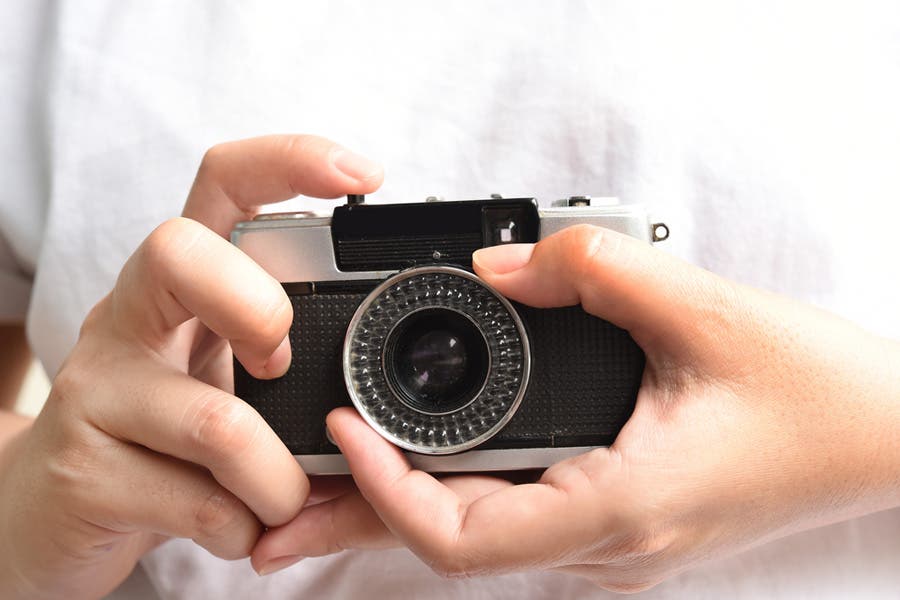
First, you’ve decided on what type of camera you want to use for street photography. Then, it’s time to narrow down the options even more. There are many brands and models within each camera type. But when choosing one specifically for street shooting, it’s best to choose one that has the following characteristics:
Small, Lightweight, and Portable
Unlike other photography niches such as portraiture or architecture photography, street shooting requires the photographer to be on the move constantly. Due to this, it’s best to avoid cumbersome cameras that’ll slow you down and tire you out.
Inconspicuous
As previously mentioned, street photography is all about capturing humanity in its organic state. But remember: people, once they know that a camera is present, may start to behave differently or more consciously. To avoid this, a street photographer should choose a workhorse that is mostly inconspicuous. Avoid cameras with shiny silver bodies or colorful housings.
Extremely Silent
For the same reasons, you’re also going to want a camera that can remain silent throughout operation. The click of a shutter is sure to give you away when trying to stealthily shoot photos of your subjects. Opt for a camera with a quiet shutter.
Lightning-Fast Autofocus
Candid photos are hard to capture. And you can miss out on a lot of amazing shots if your camera is too slow to focus. Fast (and accurate) autofocus is always extremely useful when shooting moving subjects.
Fast Shutter Speeds
When you’re shooting street scenes and subjects, everything always happens fast. For this reason, street photographers normally use fast shutter speeds to enable them to capture the action.
Durable and Weather-Sealed
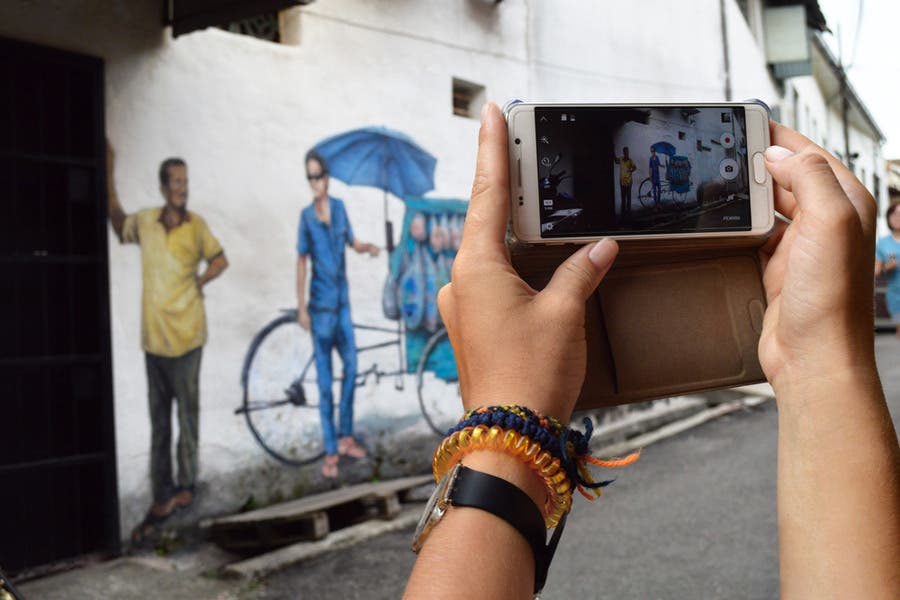
Obviously, street photography entails being outside and dealing with varying weather conditions. This may not be too important for some people as you can easily buy accessories to help you protect your camera from rain and other elements, but if you can, choose a camera that is durable on its own and has some sort of weatherproofing properties.
Built-In Image Stabilization
Again, not too important if you plan on using a monopod or tripod. Camera stabilizing tools are sure to make you stand out from the crowd. It helps to have a camera (or lens) with built-in image stabilization to reduce camera shake while shooting handheld.
What is the Best Camera Setting for Street Photography?
The best camera settings for street photography are the ones that let you avoid making adjustments during your shoot. If you’re busy thinking about tweaking settings, you may miss a fleeting moment that you could have captured.
Many photographers like to shoot in either aperture or shutter speed priority. Shooting that way adds peace of mind, since the camera will compensate by adjusting other settings to help get perfect exposure every time.
Decide which is more important to you, the look of motion (either freezing or blurring) or control over depth of field. To be certain you’ll freeze motion, work in shutter priority and set your shutter speed to 1/500 or faster. For blurring motion, try 1/60. If depth of field is your most important factor, work in aperture priority and go wide for shallow DOF or narrow for greater DOF.
What are the Best Lenses for the Streets?
The best lens for street photography is small and unobtrusive. If you’re walking around with a giant Canon 70-200mm, people will spot you, and their behavior will likely change. Ideally, you and your camera will blend into the background, so the people around you will go about their normal activities.
A fast lens capable of wider apertures like f/1.4 or f/1.8 is helpful if you intend to shoot at darker times of day or indoors. Many street photographers prefer to use prime lenses over zoom lenses. You just point your lens and take a photo. Here are some great options for street photography:
- Sigma 35mm f/1.4 DG HSM ART Lens
- Sigma 24mm f/1.4 DG HSM ART Lens
- Sony FE 50mm F/1.8 Lens
- Canon EF 50mm f/1.4 USM Lens
- Nikon NIKKOR Z 50mm f/1.8 S Lens
Bottomline: Which Camera is Best
Each camera has its pros and cons. Choosing the best street photography camera for you is a lot easier once you realize your priorities and needs.
If you’re an aspiring photographer with hopes of building your skills and becoming a professional, consider investing in a mirrorless camera. These cameras often offer manual camera settings and can deliver professional quality images in a more handy package. If you’re a beginner who simply likes taking snapshots, then a point-and-shoot or a smartphone with a good-quality camera may be the more favorable and affordable option.
On the other hand, if you’re experimental or adventurous, a film camera can give you the unique results you want. And if you’re willing to go all out to produce the best quality images, a DSLR may be for you.
It’s always a case to case basis with a layer of factors to consider. So long as you’re comfortable with your camera, then you’re ready to face the fun challenge of street photography.