The ground is still covered in thick dew, except under the pine trees where I’m sitting, hidden by a small camouflage net. My back is starting to ache after leaning against a tree for about an hour, hoping for an awesome display of golden light as the sun rises. However, it’s still pretty dark under the canopy. I check the ISO on my camera to ensure I’ll get a usable shot if a roe deer walks past the big oak tree on the deer track about 20 meters away. A thin layer of clouds keeps the sunlight from reaching the path. The ISO is still at 6400. However, I’m hoping for some sunrays to peak through. It may not seem like it, but so many of us can find amazing images within a 5-mile radius of our homes.
5-Mile Mini Adventures to Map the Wildlife Activity
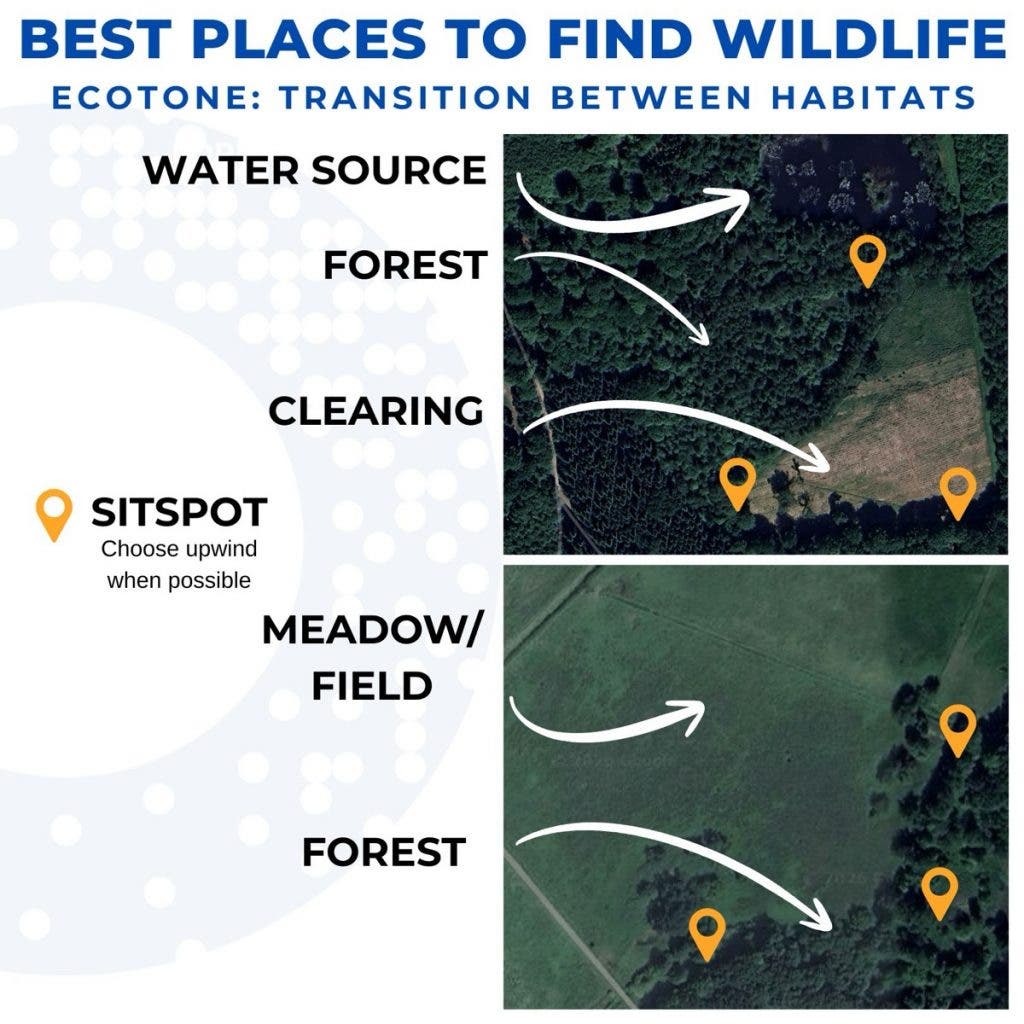
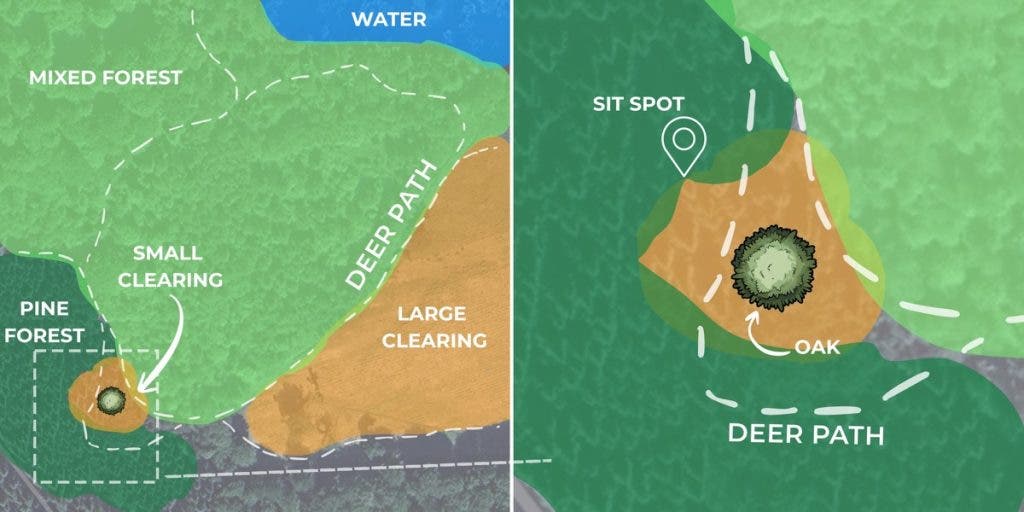
I found this spot through a mix of planning and curiosity. This is an approach I always recommend. A few years ago, I was sitting on my couch, using Google Maps on my phone to look for good places to see wildlife. I searched for spots where different types of vegetation meet, like the edge of a field and a forest, or a big clearing. These are the places where animals find both food and shelter. If there’s also a water source within 500 meters, it definitely deserves a check. It’s the best spot for deer and other mammals to save energy. On this occasion, I chose a forest clearing to explore further.
However, when I went to explore my planned destination, I noticed another clearing that caught my eye. It was surrounded by pine trees and had a big oak tree in the middle. A couple of deer were just walking past it. I dropped a pin on my phone’s map, marking a small waterhole and a change in vegetation—a mini-ecotone. This spot was about half a kilometer from the place I had picked out on Google Maps at home, but it turned out to be much better. Seeing things in person always beats planning on a map. I later discovered that the large clearing was fenced to keep deer away from new saplings, so the animals were using different paths than I was expecting.
Finding Your Favorite Sit Spot
Since then, I’ve visited this spot many times, finding fresh deer tracks and other signs of wildlife. I’ve watched the seasons change here. One summer morning, after the deer had moved to another part of the forest, I used the oak tree and the surrounding woods as the main focus for a forest photo, with soft backlight and pine trees in the background.
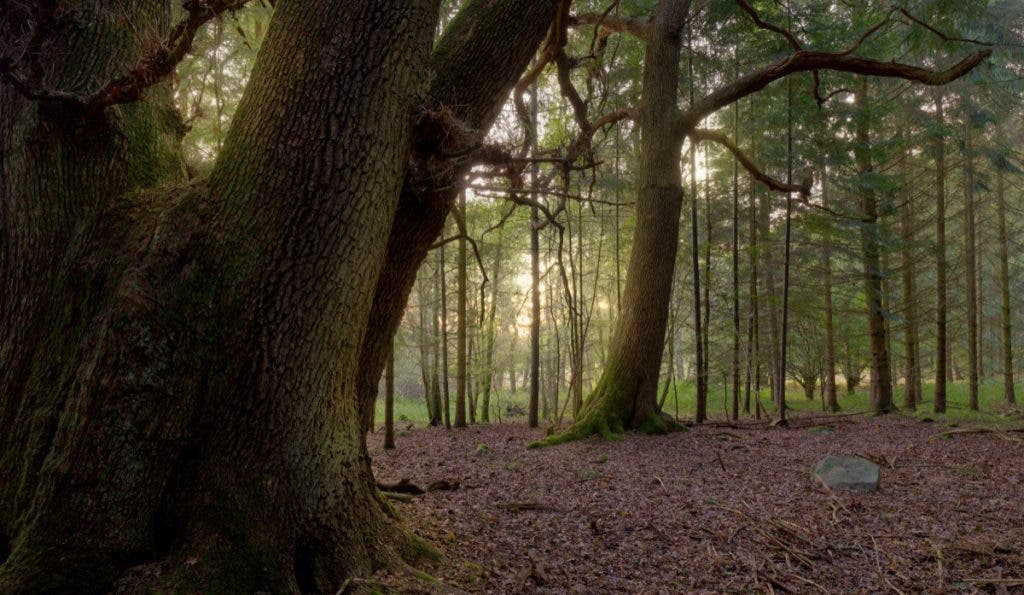
On my first frosty morning here, I sat against a tree as a deer unknowingly approached within 5 meters before noticing me. The light was terrible, but it was still an extraordinary experience.

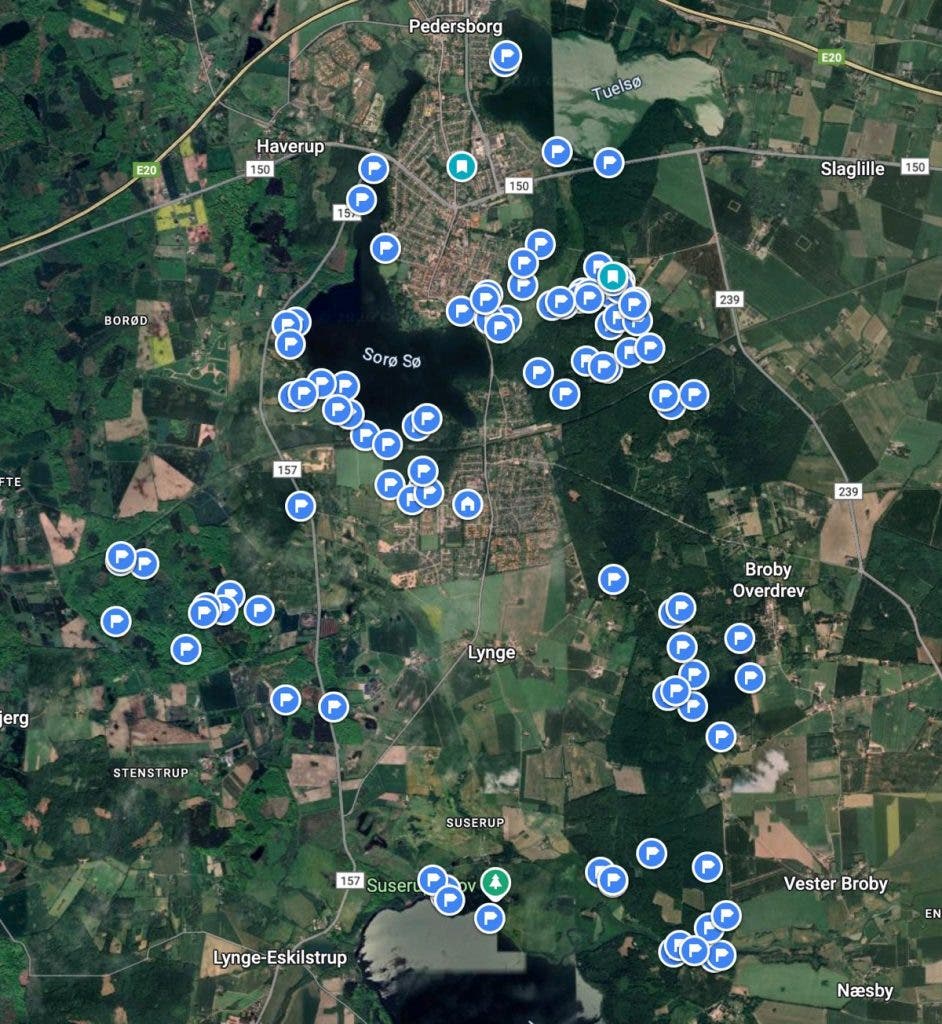
Just two miles from home, I’ve found a favorite sit spot. It’s one of many I’ve discovered all within a 5-mile radius of my home using the same approach: Researching from my couch and dropping pins on the map whenever I see a woodpecker hole, a possible fox den, animal sightings, or fresh deer tracks.
Each pin could spark a mini-adventure, helping you uncover more animal tracks and get a clearer picture of how the animals move through the area.
How to Become a Local 5-Mile Nature Expert
This kind of research takes time, but it’s worth it. For example, woodpeckers often use the same tree each year, but create new holes. When spring comes, I just visit to see which trees have woodpecker activity from last year. All of this is carefully mapped on the private Google map.
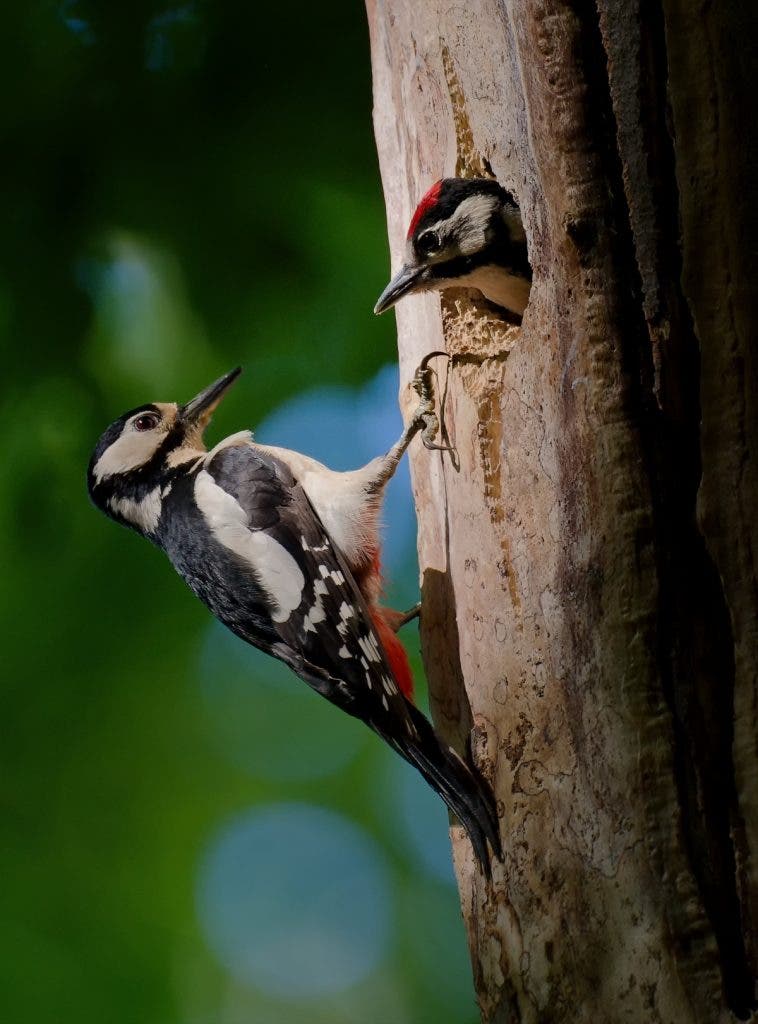
Taking an organized approach is more effective than relying on chance.
Checklist: How to Find Possible Sit Spots From Home:
- Choose a map app with a satellite view.
- Select a 5-mile area near home.
- Scan for transitions between two types of vegetation (ecotones), like field and forest edges.
- Look for nearby water sources within 500 meters.
- Mark possible spots on your map to visit.
Checklist: For Exploring in The Field
- Pin locations on your map anytime you see animal signs.
- Walk on paths and look for signs of wildlife activity or tracks on the side.
- Draw a map or note track directions in your notebook if possible.
- Find suitable sit spots and test the composition options.
- Use apps like PhotoPills to check the direction of light before choosing a spot.
- Sit 20-30 meters off active animal trails.
- Explore slowly when you’re off the main tracks to avoid disturbing wildlife.
- Take a break, wait, and observe what happens.
- Use roads and paths for biking or walking to get deeper into the forest, not just cars
- When spotting animals, staying still mostly beats sneaking closer.
If you combine all this knowledge with notes in your yearly wildlife calendar, you’ll have a better chance of being in the right place at the right time and coming home with great photos.
Big City Wildlife Mapping
The good news is that you can become a 5-mile-radius wildlife expert even in a big city. The things you see and the pins you drop will more likely be concentrated around a few hotspots, like parks and other open areas, which means easy access. You might get interrupted by people, but don’t worry too much about it. As long as you know which tree is a favorite amongst squirrels, you can get beautiful shots and improve your chances by being at the right spot, at the right time.
For example, there’s a suburb near the water in Copenhagen that I believe is the best place to see great crested grebes within 100 kilometers. There are usually 10-15 pairs nesting within a few hundred meters, and not a lot of reeds covering the view. When I lived there, I wanted to see wildlife outside the city, not realizing there were such great opportunities close by. Now that I’ve moved away from Copenhagen, I plan to return to the city to photograph grebes performing their courtship dance.
Don’t rule out city wildlife.
Owls, squirrels, foxes, and other animals adapt to city life, but your best chance of finding them is to start mapping where they go, instead of just hoping to bump into them.
Build Your Wildlife Photography Skills Locally
You might dream of taking photos in the Serengeti, but it’s within five miles of home that you should practice your skills, try out different lighting, play with camera settings and composition, and capture amazing shots of local animals. If you haven’t done that before the big trip, you’ll come home from the Serengeti with fewer good photos.
About 80 to 90 percent of my wildlife photos are taken within these five miles, because it’s easy to get there when the light is just right. You can fit it into family life by getting up a few hours earlier on weekends. This is where you really learn field craft and build your wildlife photography skills.
Be Prepared for the Unexpected
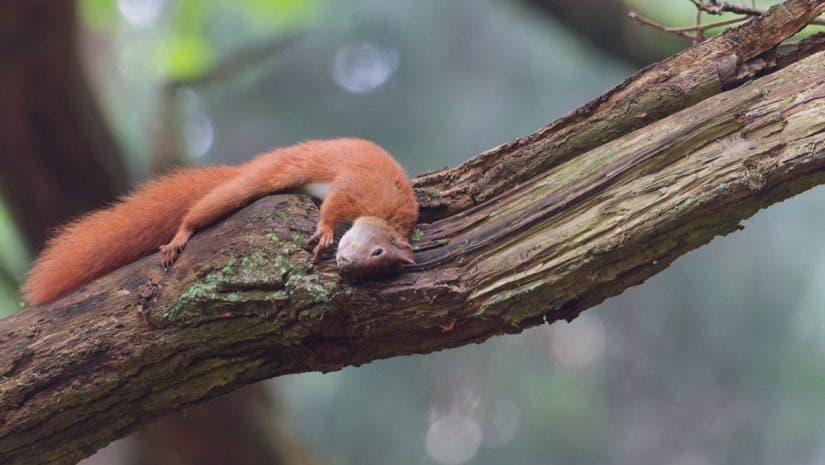
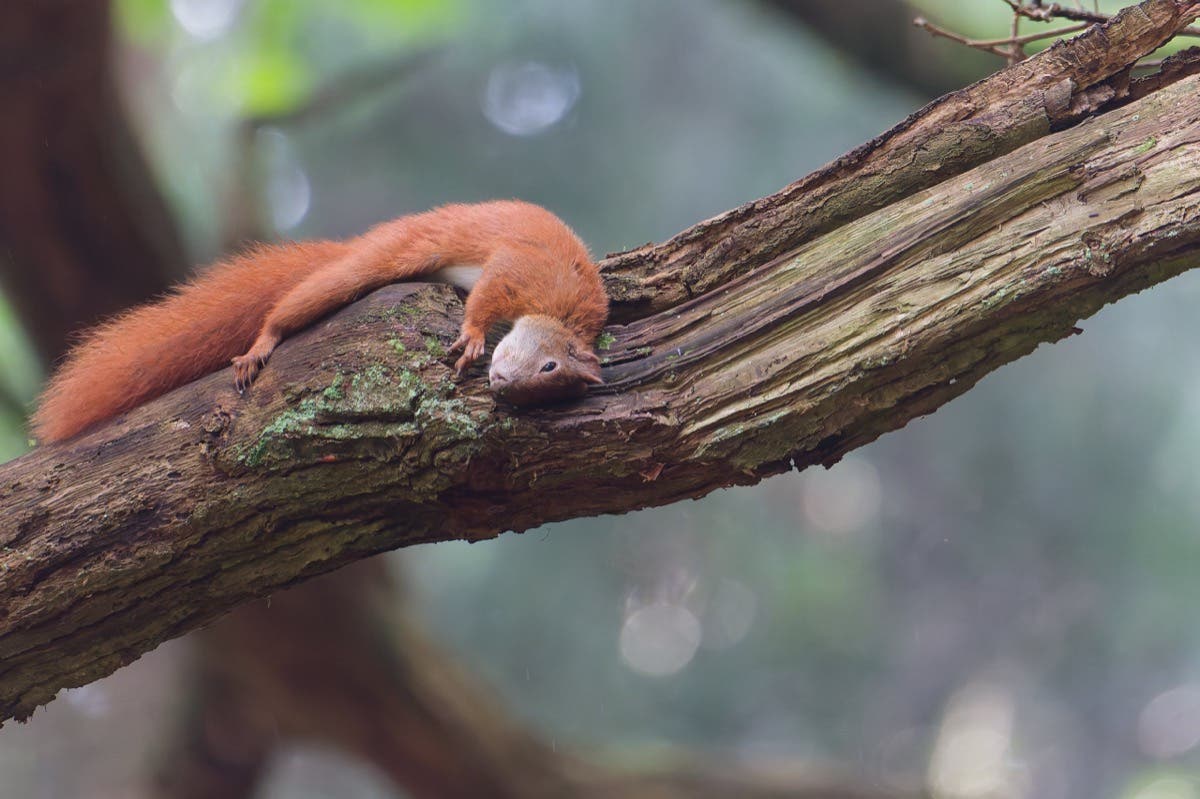
As the morning comes to an end, I consider packing up and leaving with nothing. Suddenly, I hear the faint sound of claws on tree bark above me. I look up but can’t see where it’s coming from. I wait and listen. To my left, some branches in the treetops start moving. I keep scanning, and when my eyes reach the old oak tree, I spot two squirrels chasing each other around the trunk. Maybe I won’t go home empty-handed after all. I move a bit closer to the oak and lean against a nearby pine tree.

The light in the thick forest is too dim for the high-speed chase around the tree trunks. At f/5.6 with a 1/500s shutter speed, the display still shows ISO 6400. Raising the shutter speed to capture fast action would blow the ISO out of a usable range. I wait and hope for a few more minutes for them to relax a bit. Sure enough, the high-speed action is replaced with a moment of rest. One of the squirrels decides to imitate a treehugger, revealing a moment of calm and what appears to be pure joy. I quickly lower the shutter speed to 1/250, and the ISO drops to a reasonable ISO 3200.
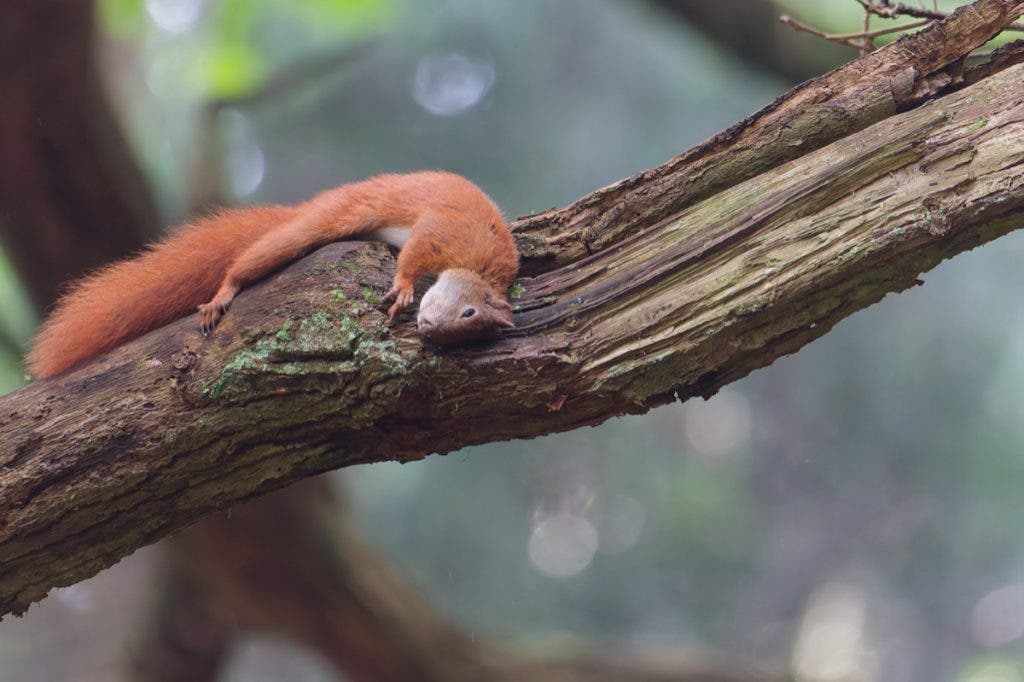
I came here hoping to photograph deer, but instead I found playful squirrels. We never really know what we’ll find; we can plan, but the rest is up to the animals.
Further Reading: 5 Hacks to Get Amazing Photos with a Budget Wildlife Lens