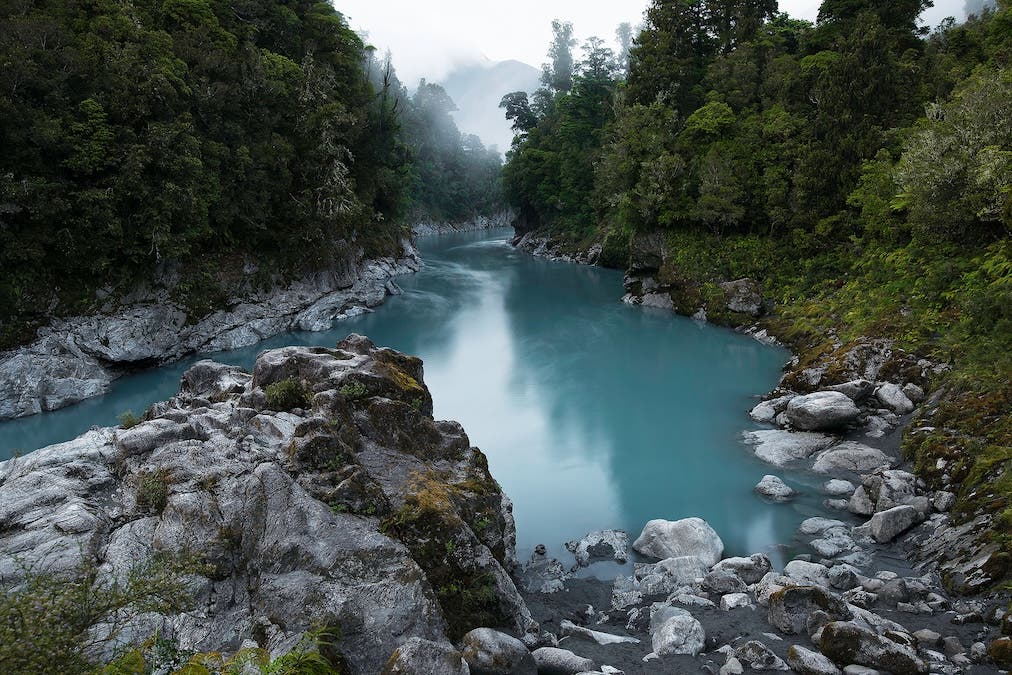
I quietly close the camper van door, careful not to disturb my sleeping family. Today’s hike, with my camera bag and tripod, is thankfully a short one. My goal is to capture the blue colors of the Hokitika River. As I step onto the dew-moistened gravel path, I’m still haunted by yesterday’s mistake. It was choosing a shutter speed longer than it needed to be. I turned the powerful fall into a featureless, blown-out white blur. I can’t get those lost shots back now that we’ve moved on. However, as the chorus of morning birds greets me, I’m determined not to let the same technical slip-up ruin the gorge.
Only 1 minute after I left the Campervan, I felt the first bite from a blood-hungry sandfly. I reach for my mosquito hat, which I had hoped I could do without. I hate not having a clear view when I photograph. But not as much as I hate having sandflies crawling in my ears and eyes. We enter the blue hour as I reach the bottom of the gorge. The sediment-filled river, gray under yesterday’s harsh sun, is now deep blue, taking on a bit of color from the sky. However, a shutter-speed mistake could mean I fail to capture the atmosphere completely and travel home across the globe with a shot where the water looks like flat, gray cement.
I set up the tripod, mounted the camera, and framed the first shot.
The paradox of time: Why more exposure can mean less detail
This outing represented one of my final opportunities to capture landscape photographs of flowing water during a ten-week tour of New Zealand’s South Island. Throughout the journey, I focused on photographing mountains, rivers, lakes, and the region’s renowned, visually striking waterfalls.
We were taking it slow to see the beauty and take everything in, and enjoy the details.
It is the opposite with photography: the longer time you let the camera capture details, the less clear everything becomes, at least when something is moving.
Water as a storytelling tool
As photographers, we need to decide on two things for all bodies of water: how we want the water to look and how to achieve that look.
There are three distinct looks you could go for: Silky smooth, cotton candy, or freezing the water.
Some would argue that freezing the moment is the only way to capture a shot, as we do with ordinary smartphone photos, and that we shouldn’t prolong the shutter speed.
How do we see things in real life?
Before we go into the shutter speed, let’s look at how we see things in real life. When we look at a waterfall, for instance, we see the water rushing down the river, over the edge, splashing into the pool below.
We don’t actually see it as a moment from Disney’s Frozen where Elsa freezes water mid-air, even though this look does lend itself to revealing the moment’s power.
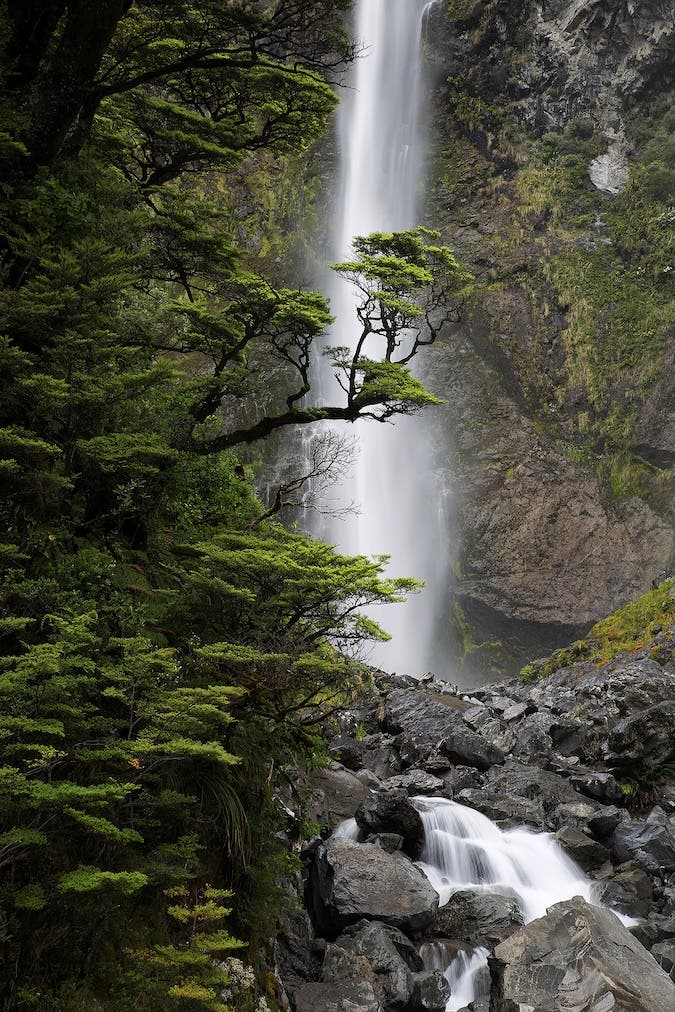
So most often we need to let the water move a bit through the scene to capture the movement, while still keeping some of the texture, so we get the look, feel, and atmosphere of being there.
At the opposite end of the spectrum, extending the shutter speed for several seconds using neutral density filters creates the ‘silky smooth’ effect. The longer the exposure, the more surreal and abstract the result becomes.
When it comes to water, look at shutter speed as a texture dial. And texture is a storytelling tool.
- The “Silky” look = Serenity, abstraction, and the passage of time (surrealism).
- The “Textured/Cotton Candy” look = Power, rhythm, flow, and the physical reality of the location (journalism/adventure).
- The “Frozen” look = Violence, energy, and a “stop-motion” appreciation of nature’s chaos.
The common mistake of going for Cotton Candy but ending up with Silky Smooth.
Many landscape photographers have experimented with 10-stop filters, seeking creative long exposure effects—often with stunning results, particularly when photographing moving clouds. However, overuse of filters can lead to clichéd images, and it’s important to remember that you can capture the compelling movement without them. I captured most of the images in this article without filters.
It is a common mistake when trying to achieve a sense of movement: you use a shutter speed that is too long and end up with silky smoothness instead of the cotton candy look, where you can still see the water splashing and the streaks of air trapped as white stripes through the water. You get to a point where the movement of the water is so washed out (pun intended) that you can’t get the feeling of water moving through the scene.
Choose the Shutter Speed deliberately
Sometimes you want the long, silky smooth water; at other times, it becomes cliché, and you can tell a better story by showing the raw power of crashing waves or a gushing waterfall. Most often, you find the correct shutter speed somewhere in between. So let’s deep dive into the look and shutter speed.
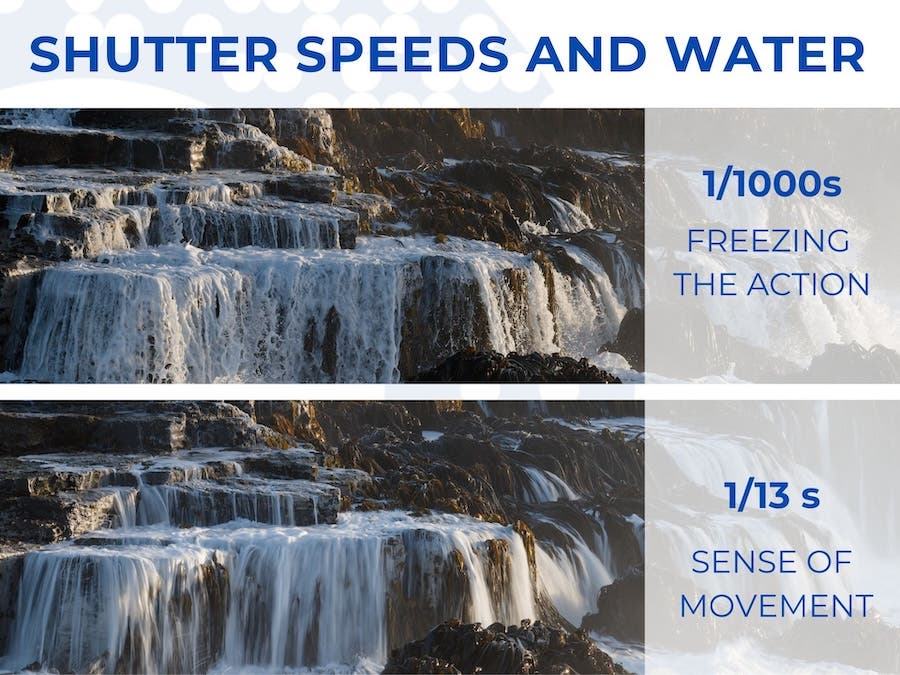
On a beach in Dunedin, when everybody except a few surfers was sane enough to stay indoors, I experimented with capturing water flowing off the sea stacks 15 meters from the shore, which were constantly being beaten up by the new roll of waves coming in. I was timing when to take photos, and when to cover the camera (and myself) from an overdose of saltwater.
The Nikon Z8 camera was on a tripod, but I had to keep both hands on it to avoid it being knocked over by a sudden gust of wind. However, with the unpredictability of the waves and which sea stack has the nicest display of water running down the sides, I dropped the usual 2 sec. delay I use for most shots.
Don’t forget the Focal Length
The sea stack, being 15 meters out into the water with (powerful) waves in between, meant that I used a 200 mm lens for these. And that affects the look and shutter speed significantly.
A shutter speed of 1/4s looks very different at 16mm than it does at 200mm. At 200mm, 1/4s might be a complete blur, as there is a lot of water moving through the narrower angle of view. However, at 16mm, where the viewing angle is larger, it might still look relatively frozen.
So remember that the longer the lens, the faster the shutter speed you need to freeze the motion.
The ‘Sweet Spot’: Finding the rhythm of the falls
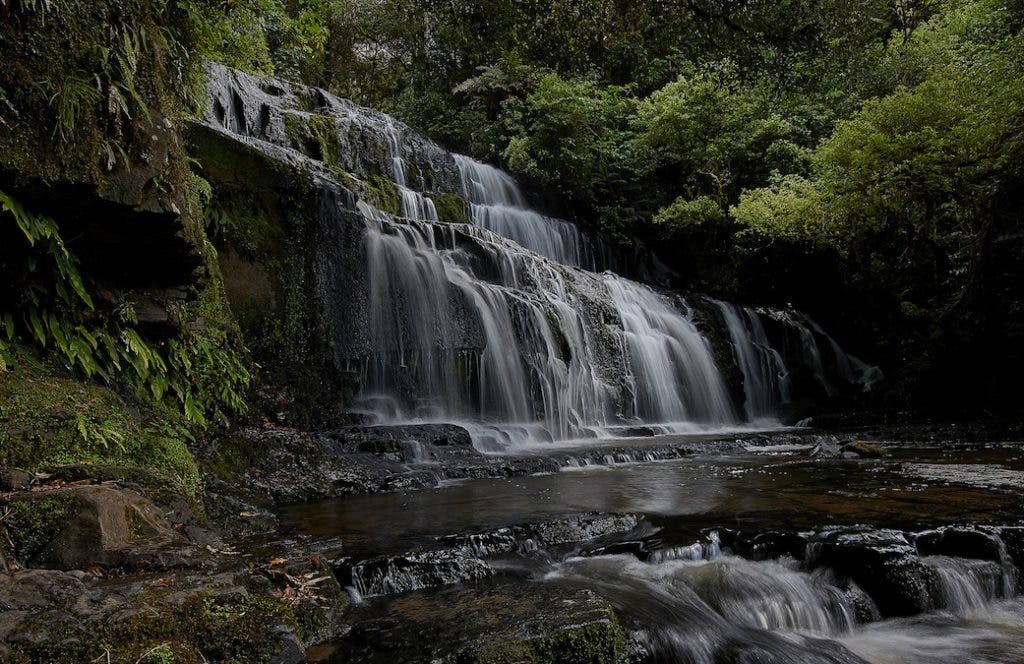
Driving through the Catlins, we stopped at Purakaunui Falls. We spent a couple of hours just photographing this beautiful spot. But unfortunately, tourist buses were arriving in a steady stream. However, most only stay for 5 minutes to see the waterfall, then hurry back to the bus for their next stop.
The temperate rainforest almost entirely covers the waterfall—no need to time this with sunrise or sunset. As long as you are under a thick canopy, you will have soft light, yet enough to let you leave the filters behind.
Most are surprised at how little you need to change the shutter speed to get a good balance between detail and enough blur to make it look a little soft, so you get that sense of the water moving.
Different Shutter Speed photo examples
So let’s look at three of the shots with different shutter speeds I took here:
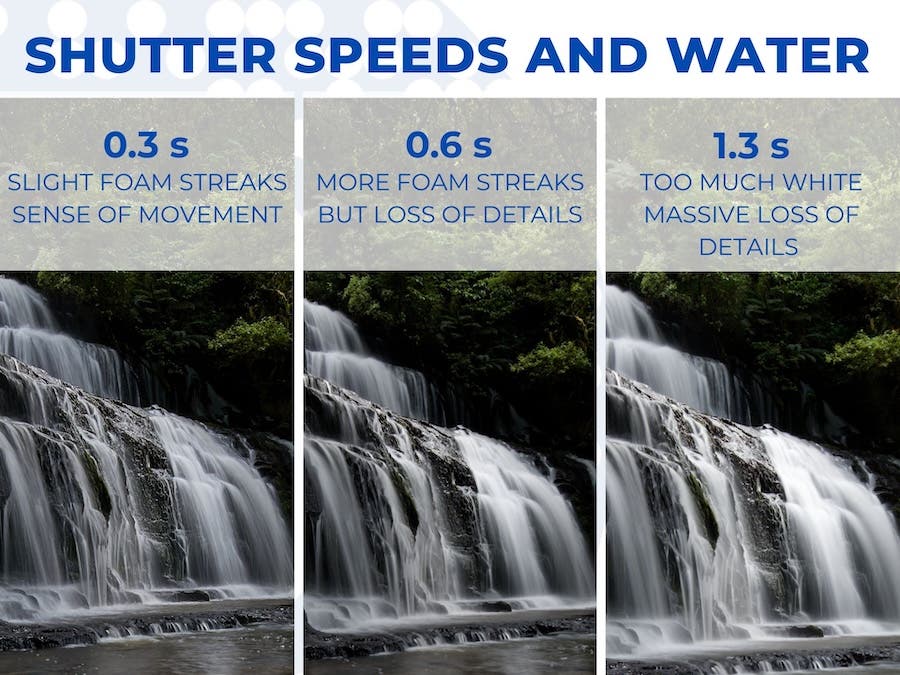
If you are a newbie in waterfall photography, you might be tempted to drop the shutter speed as low as possible to get that sense of movement. But the silky smooth waterfall to the right comes with a few serious downsides, if you ask me.
Silky-smooth water (as you see in the image to the right) also means you leave out the features that give you a sense of how fast the water is moving. As you extend the exposure to several seconds, you increase the risk of overexposing the water. Even though, in this image, I managed to stop it just before overexposing.
However, there is another downside that is often neglected when talking about waterfall photography. It is that water doesn’t flow evenly, so whenever air is trapped in small bubbles, it creates small reflections. But not all bubbles flow in straight lines, following one after the other. They are all over the place. Add a long shutter speed, and the air bubbles are visible across the entire width of the waterfall, making it a large white wall of foam. It might be well-exposed, but it still appears “silky” white and textureless.
The middle image is better, but in one section of the waterfall, the detail is still lost. Compare that with the left image, where you can see the water flowing, without a loss of detail across the frame. The water looks more active, with a sense of movement, while still having a touch of cotton-candy softness.
Recommended Shutter Speed starting point
Every waterfall presents unique variables—width, flow speed, distance from the subject, and focal length all play a role. As a starting point, I recommend a shutter speed of 1/3 second for most waterfall images, then adjusting as needed. If the water appears too static, slow the shutter further; if detail is lost or highlights are blown out, increase the speed. The goal is always to balance detail with a convincing sense of movement.
Pro Tip
If you bracket the shots, you can blend two exposures with different shutter speeds to get a low-noise shot of the surroundings and avoid the silky-smooth look in the water. It’s a safety feature that, if you’re unsure what shutter speed to use. You can choose the best later or blend shots. However, you should still be in the right interval, or all your bracketed shots will have too long an exposure.
Movement in calm waters
Waterfalls are in a category of their own. However, the world is also full of beautiful lakes, and New Zealand is certainly no different.
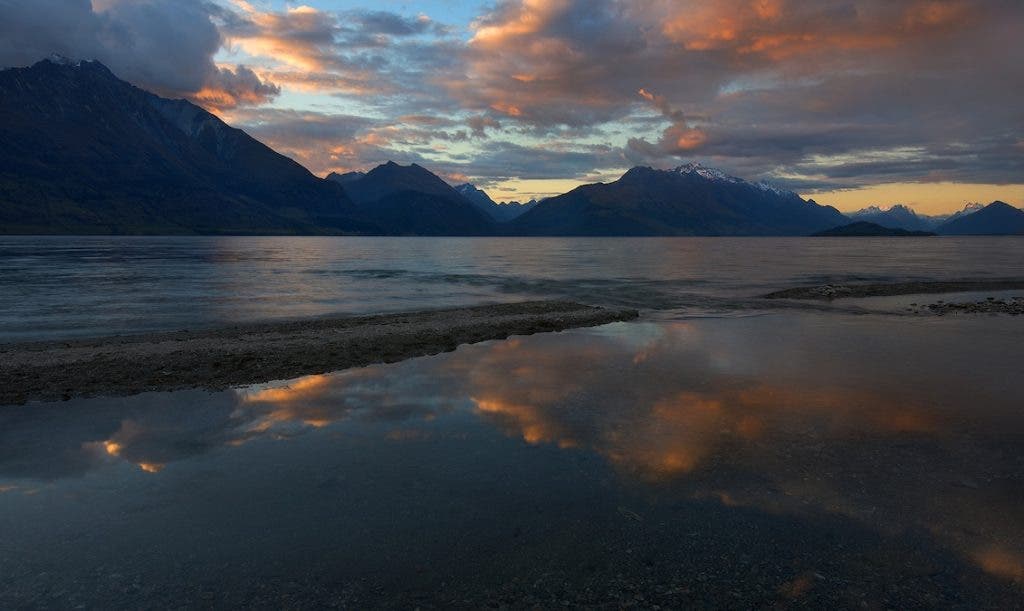
Near Queenstown, at the 25-mile stone on the road to Glenorchy, we stopped to freedom camp at the shore of Lake Wakatipu.
The shoreline here is a graveyard of sun-bleached driftwood, framed by the jagged mountain range of Walter Peak. It’s a place that demands a decision: do you blur the world into a dream? Or do you document the crisp reality of the wind on the water?”
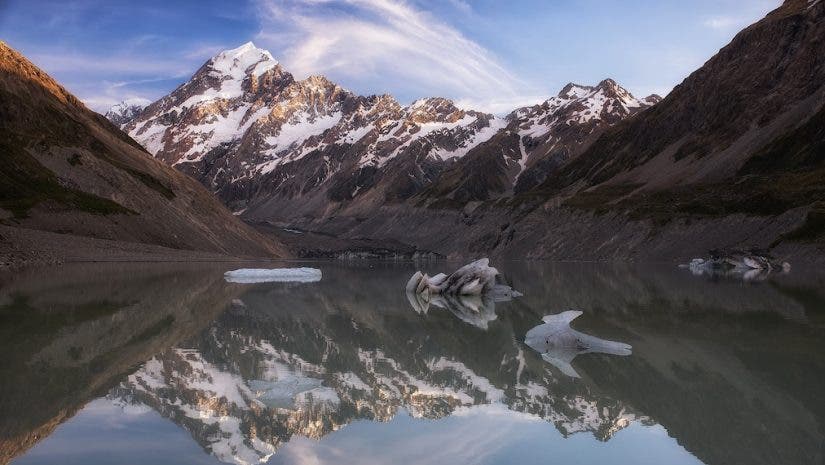
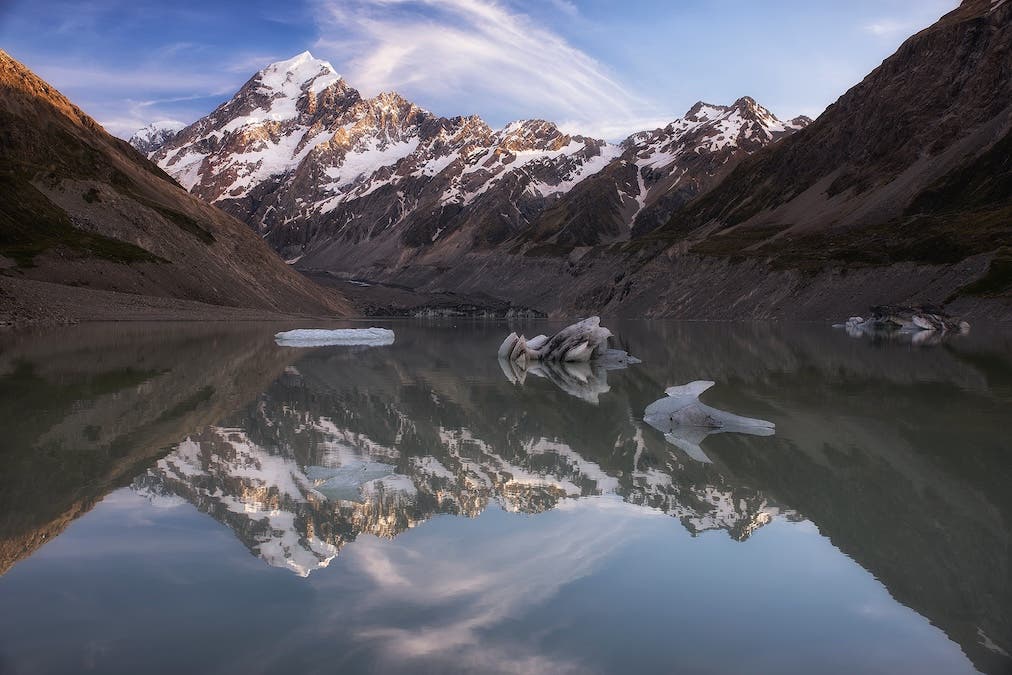
Again, you have to decide on how you want the water to look in your lake photos. I prefer to capture reflections whenever possible to tell a story about the majestic nature, rather than a long exposure that leans into the surreal look.
Even though a lake can look calm and still, a longer shutter speed will give you a blurred reflection. This is due to ripples caused by a slight, seemingly insignificant breeze.
Slow flow
Back at Hokitika Gorge, just me and what feels like 5,000 sandflies, I look at the shot I captured of the river’s slow flow through the gorge. It feels a bit flat, even though the water looks as I intended, taking colors from the sky above. The weather constantly shifts as we move through the blue hour. As I look up from the camera, a small patch of mist is rolling in in the background. It adds a bit of extra depth to the shot. It is not only the water texture that creates the shot. But if you don’t get it right, it can ruin a shot where all the other elements come together.