
Framing is one of those things that sounds similar to composition. And it is, kind of. But they’re not quite the same thing. And once you start to understand what framing actually means, it changes the way you see photography.
Framing can mean two different things. The first is what you choose to include in your image and, maybe more importantly, what you choose to leave out. The second is using elements within your scene to create a literal frame around your subject. Like a frame within a frame. Both are worth understanding, and both can completely transform an image.
What you leave out matters as much as what you keep in
This one doesn’t always feel obvious when you’re starting out. However, what you choose to exclude from a frame can be almost more important than what you include. It’s one of the genuinely difficult decisions you make as a photographer: Is this element important? Does it add something, or is it just noise? Should it be in the corner, along the bottom, or cut out entirely?
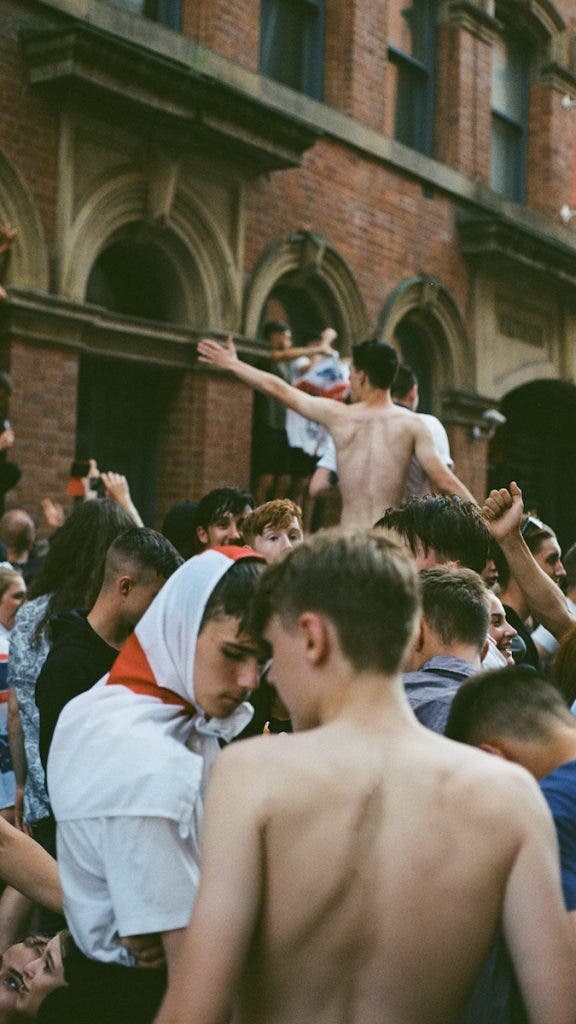
Take a simple example. Say you’ve got someone on the left side of the frame, clearly shouting or reacting to something. As the photographer, you might be close enough to include whatever they’re reacting to. However, you could also choose to leave it out. And that decision changes the whole feeling of the image. Without the other subject, there’s ambiguity. The viewer doesn’t quite know where the energy is directed or what’s causing the reaction. It becomes a bit of a mystery, and that can be way more compelling than spelling everything out.
This also comes up a lot with cleanliness. When people first get into street photography, a lot of their early shots are really messy. Too much going on, too many competing elements. That’s often a framing issue more than anything else, the instinct to include everything in the scene rather than cutting in tighter and being more selective about what actually needs to be there.
Less is more, a lot of the time. A person walking down a busy street might be far more striking if they’re the only person visible in the frame. Add a bunch of other people around them, and suddenly it’s hard to tell who the main subject even is. The image loses its focus.
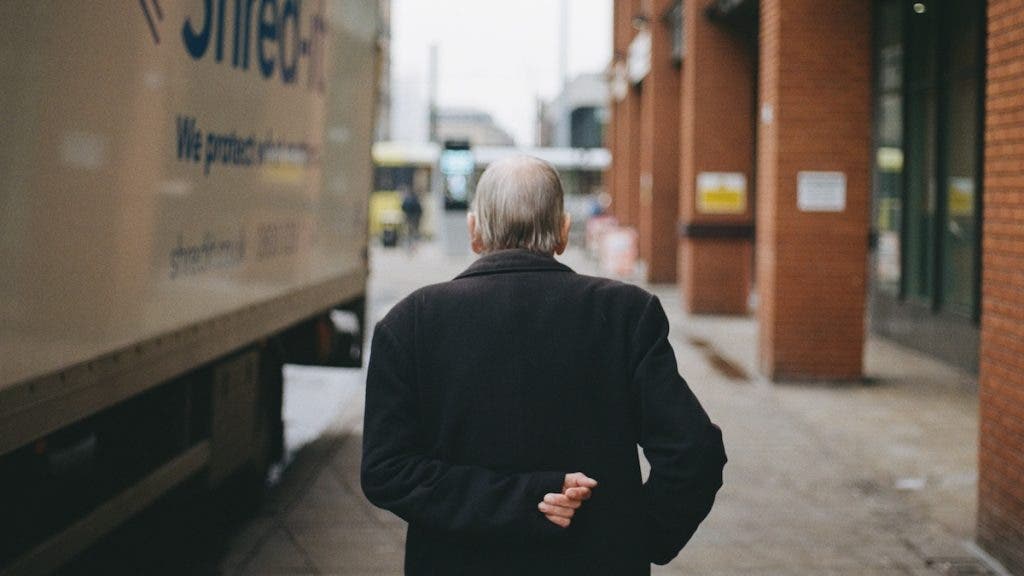
A slightly longer lens (50mm and above) helps with this a lot. You can get tighter without having to physically close the distance, and it naturally cuts out some noise. It’s particularly useful when you’re shooting in harsh light, and you want to focus in on details, geometric shapes, or blocks of color rather than trying to make a messy wide shot work.
You don’t have to show the whole subject
Another framing decision that people don’t think about enough is whether your subject needs to be fully in frame at all. Showing only part of a subject, a hand, a leg, a pair of hooves on a fence, can make for a far more interesting image than showing the whole thing.
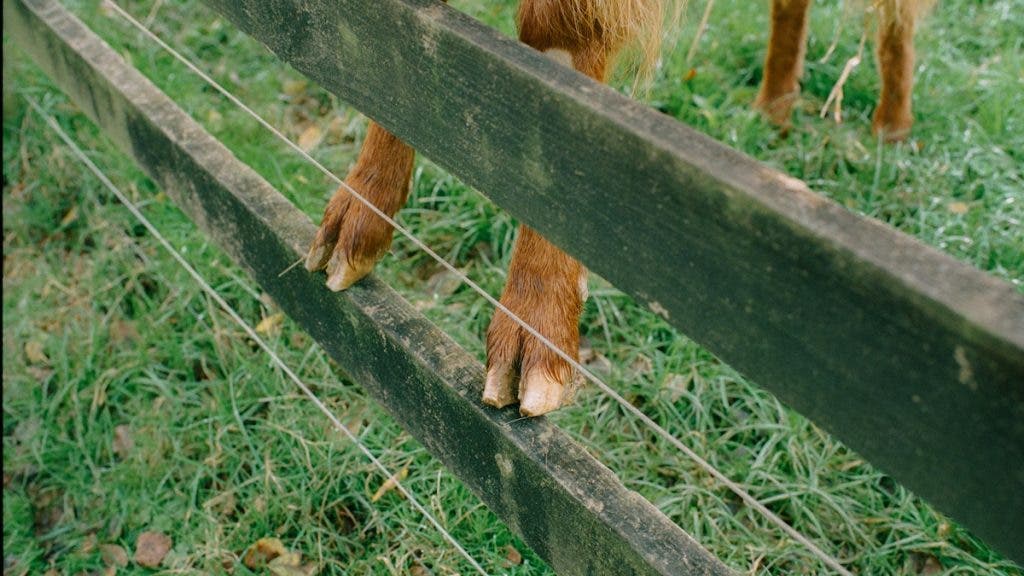
There’s something about an incomplete subject that draws the viewer in. It leaves something to the imagination. If you can only see part of something, you start to wonder about the rest. What does this person look like? What’s actually going on here? And that curiosity, that little bit of ambiguity, can make the difference between a photo people glance at and one they actually stop to look at.
It’s especially effective when you’ve got two subjects and one of them is only partially visible. The viewer has no idea what that partially-visible subject actually looks like beyond what you’ve chosen to show them, and that incomplete picture creates a kind of tension.
Showing everything can sometimes feel a bit flat; there’s nothing left for the viewer to fill in. A hint or a clue is often more powerful than the full reveal. It’s almost like the difference between a good short story and one that over-explains itself.
The more you become aware of this, the more you’ll naturally find yourself looking through the viewfinder and thinking, ” Do I actually want the whole person in this shot? Do I want the whole car? Or is there something more interesting in just showing a part of it?”
Frame within a frame
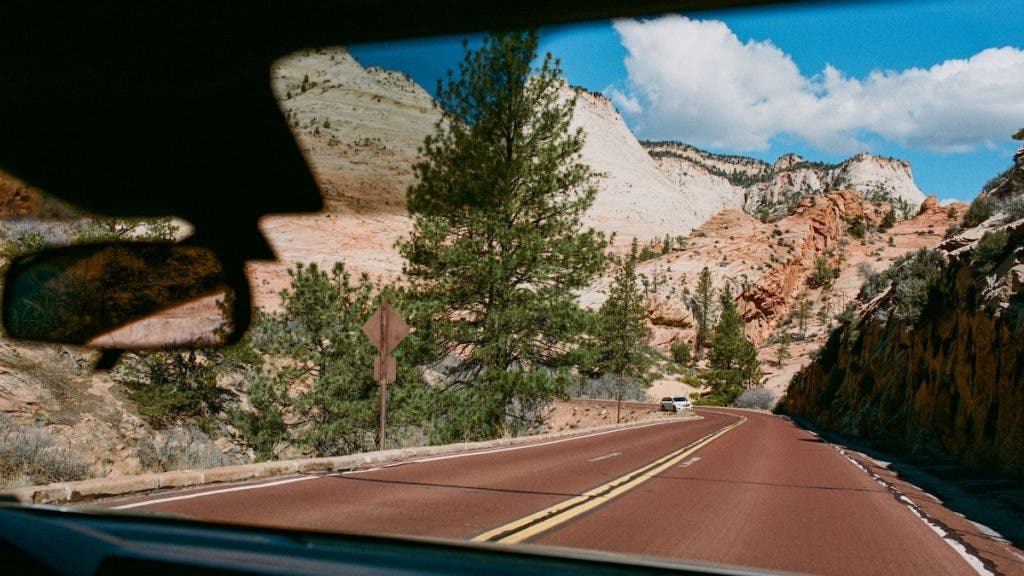
Then there’s the other kind of framing, using elements in the scene to physically frame your subject within the image. This is something I use all the time, and once you start looking for it, you’ll see opportunities everywhere.
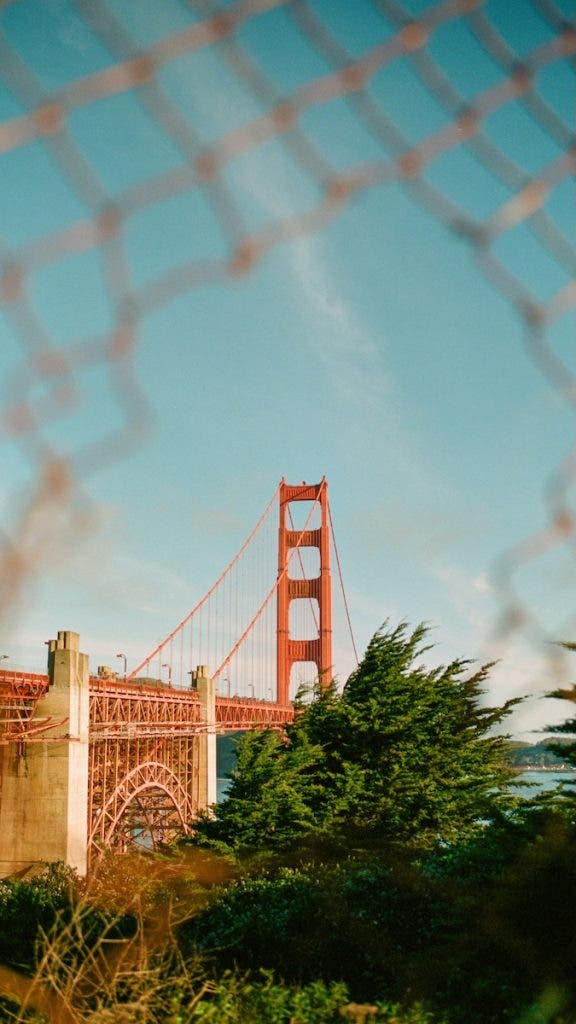
It doesn’t have to be a literal rectangular frame. It could be the opening of a tunnel, a break in a chain-link fence, a broken window, an archway, the position of someone’s arm, or two people on either side of your shot. All of these create a kind of natural border that draws the eye toward whatever is inside them, and that’s a really powerful compositional tool.
Something that works particularly well is having the framing elements slightly out of focus. It’s not a rule, just a personal preference, but when the frame itself is soft, and the subject inside it is sharp, it creates a real sense of depth and separation. It just feels more immersive.
If you want to see this done at its absolute best, look up Saul Leiter. His photography uses framing and reflections and shadows in this really unconventional, beautiful way, all shot on a long lens, and it’s some of the most stunning work I’ve ever seen. He takes these basic ideas and pushes them somewhere genuinely extraordinary.
Keep it in your back pocket
Frame-within-a-frame isn’t something you need to force into every shot. But it’s a really useful thing to have in your mind, especially when you’re in a new location, and you’re not quite sure what to shoot or how to approach something. Start looking for frames, and you’ll suddenly see them everywhere: gravestones, car windows, doorways, the gap between two buildings.
And those kinds of shots are almost always more interesting than a straight-up landscape or vista. There’s something going on, something to look at, a reason for the eye to travel through the image. That’s what good framing does.
Whether you’re deciding what to cut out of your shot or actively hunting for something to frame your subject with, it’s one of those things that separates the photographers who are just pointing and shooting from the ones who are actually thinking.