


+3
more
more

See Options
Need help? Ask our experts.
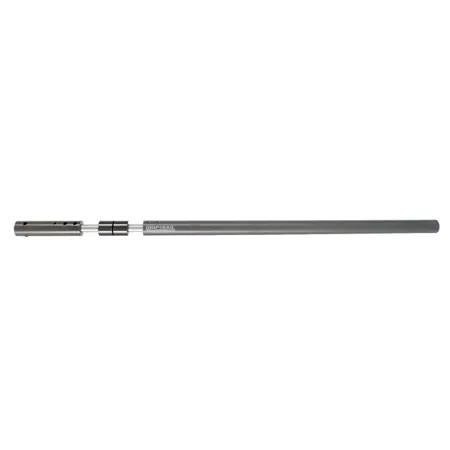
The World's First Telescoping Grid Pipe - The Right Size Every Time
Matthews Studio Equipment introduces Grip Rail, the world's first telescoping grid pipe system designed for on the fly adjustments for multiple applications and industries. For the imaging world, Grip Rail is useful for rigging cameras, lights, backdrops, building rag frames, can be used as a candle stick and so much more. Grip Rail is a no-cutting, worthy alternative to imprecise and bulky pipe organs and other rail systems.
Each Grip Rail comes standard with a clamp reducer giving you the ability to mount clamps from end to end. Both the Grip Rail and the Clamp Reducer work with grid clamps, Matthellinis, and standard pipe rail fittings and comes standard with a 360 Degree rotating Junior Receiver that offers three points of contact for secure mounting.
Tighten or loosen the telescoping aluminum rod with the included grub screws or replace with a T-Handle to go completely tool-less. Grip Rail(s) can be seamlessly joined with the double ended junior pin, or use the double ended junior pin to convert the female junior receiver to male.
