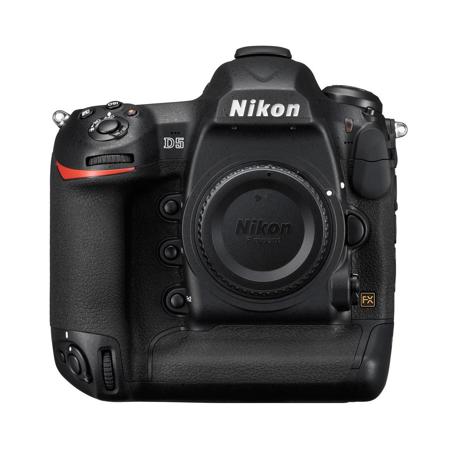
Picture does not represent the actual item

Picture does not represent the actual item
Review Summary
2019-12-18T07:08:31
My second D5! I can’t wait for the D6 and the 120 to 300 f2.8 lens to come out!
MICHAEL S.
2019-11-07T08:28:53
With the exception of the D1, owned every professional D series & by far, simply the BEST professional grade DSLR available for shooting sports, live action or in between. I don’t care very much for video, I shoot stills.shoot video, Solidly built, very intuitive, nearly an extension of your hand. I may seem biased but I don’t see any reason why you’d want to use anything else. Really.
JOHN L.
2017-06-29T04:52:20
When it comes to the versatility that my day to day photography requires, this body answers every need I have. I never know if I'll be doing video, stills, portraits or fast moving horses. Or, if the lighting will be interior candlelight, or mid-day sun. So I needed a one-stop all-purpose camera body that doesn't produce a GIANT pixel-pregnant image. The D5 is, for me, the perfect combination of pixels to low light performance. The battery lasts all day long without changing, the dual card slot (I went with double CF) has the capacity to allow me to shoot from 10 am to 10 pm without worrying about running out of storage space. I use two 128 gig SanDisk Extreme Pro cards that handle video and stills without choking. This feels great in hand and though I wasn't happy about the buttons being moved around (ISO in particular) I can go seemlessly between this D5 and my D4S bodies without missing a beat, or the shot! Very very happy with this Nikon and it's a rugged piece of image processing equipment that I plan to use for many years to come! I also use the time-lapse feature more than I thougth I would and it's perfect right out of the camera with no additional post production necessary. I definitely recommend it to pros that put high demands on their camera bodies and who don't need enormous images. 20 x 30 is the largest we print and I've never had a request for more. One client did make a full size billboard with one of my images and that looked great, so we're good with this FX sensor at this pixel count. A++ Five Stars, no regrets.
FREDERICK D.
2017-05-15T11:52:00
I'm very happy with the Nikon D5, so far, as the focus is seriously fast and the low light capability is better than any other camera I've owned. It was able to lock focus on a moving subject that was a fair distance away, in less than optimal lighting conditions. However, low light is low light. Don't expect noise free images just because the camera can shoot higher ISO. Just sayin! I shot under fluorescent lights and had to adjust the WB manually, as the Auto Fluorescent feature was off every other picture while shooting in continuous mode, but once set, it held fine. It was very easy to go back and forth between different settings with all the feature buttons available on the top and front of the camera. It doesn't seem like I have to go into the menu as much. The one feature I do LOVE is the image voice record feature!!! Just saved me from carrying a notepad to take notes. I'm still figuring out all the bells and whistles this camera has and can only imagine I'll be just as impressed later.
Controlz
2016-11-29T04:30:02
Very good for sports when needing to track fast moving subjects especially in low light situations but not great for landscape, grandkids or as a travel camera..
WILLARD G.
2016-11-24T07:52:36
Never thought Nikon could improve on the D4s but they have with the D5.
CHARLES L.
2016-08-17T21:16:35
Very good deal and item!!!
Vitalii B.
2016-08-17T12:39:08
Big decision to purchase this camera. I have had a series of Nikon cameras starting with my Nikkormat back in the late 70's. Since I converted to digital I have purchased a D200, 300, 700, and a used D3. The D3 actually sold me on the D5. Bigger and beefier and just fits my hands. I am 6'2" so the weight and size is not an issue. Love the speed as I also shoot some high school sports. The week I got it I covered an event at my church where flash was not allowed. The images came out great, even an event in virtual darkness. Focusing is quick and accurate. I have only had my D5 a couple of weeks, but so far, I am very happy with my purchase.
KENNETH D.
2016-07-11T13:54:41
This camera is a major step backwards for Nikon in sensor technology. The one thing Nikon had on Canon was dynamic range. It’s why a lot of us pros stick with Nikon. I can tell you that in real-world use, the low dynamic range at low ISO’s (even ISO 640) is a total game-changer and is NOT an acceptable camera for working pros in 2016. It would not be fair for me to deliver photos to my clients from this camera in this day and age. After shooting one event for a client that was shot in the evening, outdoors, at ISO 100 to 640, and seeing how I am unable to bring any detail out of shadows without adding a ton of noise, I realized the camera was as useless to me as a rock. The next two assignments, photographing Mario Andretti and my state’s governor, I chose to shoot with my D4s, while the D5 stayed at home on my kitchen counter. What a shame. I did shoot part of an Indy race with it, but after testing more images in Lightroom and seeing the unacceptable noise in shadows at low ISO’s I had to send the camera back. I will continue to shoot with my D4s, D3, and D700, all of which I tested against the D5 and have much better dynamic range. I should mention that a lot of the discussion regarding the low dynamic range of this camera centers around increasing exposure on images that are 3 to 5 stops underexposed. This is not what I’m talking about. I am working with files that are properly exposed or slightly underexposed and trying to bring out shadow detail. And by the way, this camera is not just for photojournalists. Pros will use this camera to shoot sports, wildlife, commercial work, editorial work, portraits, events, weddings, lifestyle, etc. Why would anyone think these photographers would not want to have the dynamic range abilities like what’s available in the D4s? I hope more photographers bring this issue to light and Nikon makes an adjustment with the D5s or we have a serious problem on our hands if this is how Nikon intends to move forward with their sensors. The D5 is a major disappointment!!!
JEFF K.
2016-05-18T08:44:35
I'm very happy with Nikon D5 in categories as list: 1- Fast focus even very dim light in the dark. 2- ISO is clean above 50,000. 3- Dynamic range also great. 4- Battery last 10 hours with wedding in church,receptions and party.Missing focus pictures are very few because myself to blame than camera.
KHUONG C.
2016-04-13T05:35:45
The new D 5 seems to have at least a 1 1/2 stops improvement in ISO performance over the D4 and the added pixels are very noticeable when cropping images. The moving of the ISO button is a nice improvement and the touch screen makes image review faster
GLENN C.
2016-04-11T06:25:36
The new dedicated AF sensor with a new digital sensor processor provides high speed processing and better capture of moving subjects that I observed at my granddaughter's soccer match. You now have 99 cross type points. It also has a feature a3, "blocked shot" which delays the camera from re-focusing when an object comes in front of your subject. This allowed me to stay focused on the goalie in a soccer match even though other players came in front of the goalie. The high ISO capability (102400) of the D5 results in the ability to take images at an ISO of 6400 with hardly any noise, which is a useful feature when you are taking images in a church which does not allow flash or tripods. It also has an additional new auto WB setting of normal which is in addition to the two other settings available on the D4s. The larger sensor 20.9MP versus 16.2MP on my old D4 gives me greater capability to crop an image and still have sufficient pixels for high resolution enlargements. I have also enjoyed the ability to program the four function buttons (see f1) to different settings depending upon what I am shooting. In my judgement the D5 has significant improvements over my old D4 that supports my decision to purchase it.
George K.
2016-04-08T08:32:26
Nikons D5 is Nikons best effort ever. Not much different from the D4 as far as layout goes. The results are what counts and the sensor is 1st rate as far as color repo and sharpness is concerned. But sure is a "Heavy Weight"
WILLIAM B.
Single-lens reflex digital camera
Nikon F bayonet mount
Picture Angle: Nikon FX format
Effective Pixels (Megapixels): 20.8 million
Sensor Size: 35.9 mm x 23.9 mm
Image Sensor Format: FX
Image Sensor Type: CMOS
Total Pixels: 21.33 million
Dust-reduction system: Image sensor cleaning / Image Dust Off reference data (optional Capture NX-D software required)
Dust-Off Reference Photo: yes
FX-format: (L) 5,568 x 3,712 / (M) 4,176 x 2,784 / (S) 2,784 x 1,856
1:2 format (30 x 20): (L) 4,640 x 3,088 / (M) 3,472 x 2,312 / (S) 2,320 x 1,544
5:4 format (30 x 24): (L) 4,640 x 3,712 / (M) 3,472 x 2,784 / (S) 2,320 x 1,856
DX-format:(L) 3,648 x 2,432 / (M) 2,736 x 1,824 / (S) 1,824 x 1,216
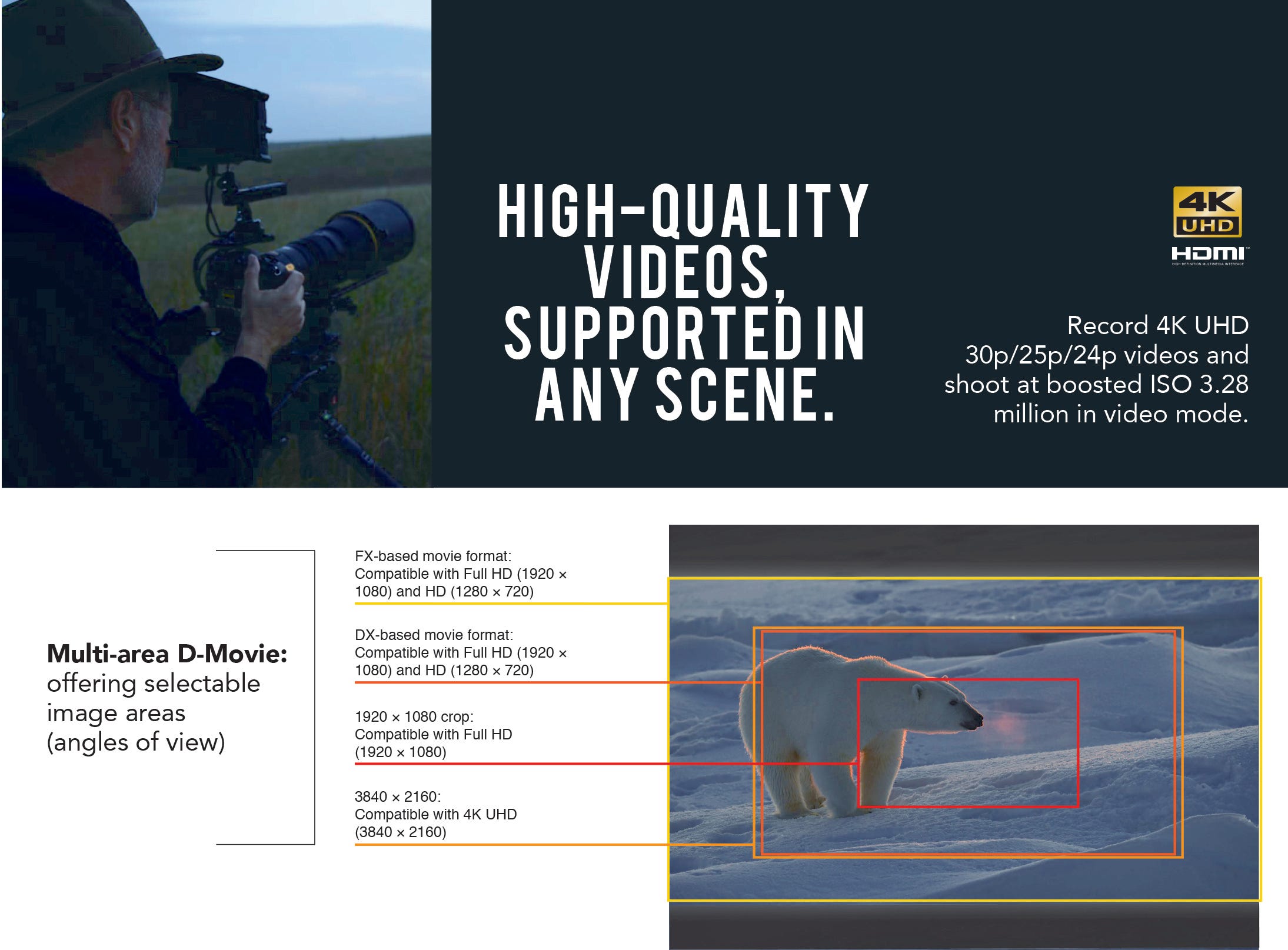
Photographs taken during movie recording at a frame size of 3840 x 2160: 3840 x 2160
FX-format photographs taken during movie recording at a frame size of 1920 x 1080 or 1280 x 720: (L) 5568 x 3128 / (M) 4176 x 2344 / (S) 2784 x 1560
DX-format photographs during movie recording at a frame size of 1920 x 1080 or 1280 x 720: (L) 3648 x 2048 / (M) 2736 x 1536 / (S) 1824 x 1024
Photographs taken during movie recording at a frame size of 1920 x 1080 crop: 1920 x 1080
JPEG: JPEG-Baseline Compliant with fine (approx 1:4), Normal (approx 1:8) or Basic (approx 1:16) Compression
NEF (RAW) + JPEG: Single Photograph Recorded in both NEF (RAW) and JPEG Formats
NEF (RAW): 12 or 14 bit, lossless compressed, compressed, or uncompressed; large, medium, and small available (medium and small images are recorded at a bit depth of 12 bits using lossless compression) TIFF (RGB)
2 CompactFlash (CF) type cards
Compliant with DCF (Design Rule for Camera File System) 2.0 EXIF 2.3 (Exchangeable Image File Format for Digital Still Cameras) PictBridge
Eye-level Pentaprism Single-Lens Reflex Viewfinder
FX (36x24): 100% Horizontal and 100% Vertical (Approx.)
1.2x (30x20): 97% Horizontal and 97% Vertical (Approx.)
DX (24x16): 97% Horizontal and 97% Vertical (Approx.)
5:4 (30x24): 97% horizontal and 100% vertical (Approx.)
0.72x (50 mm f/1.4 lens at infinity, -1.0 m-1) (Approx.)
17mm
-3 to +1m
Type B BriteView Clear Matte Mark IX screen with AF area brackets (framing grid can be displayed)
Quick-return type
Yes
Instant-return type
Electronically Controlled
Pressing Pv button stops lens aperture down to value selected by user (A and M modes) or by camera (other modes)
AF-S or AF lenses fully compatible
Metering with AI lenses (exposure modes A and M only)
IX NIKKOR lenses, lenses for the F3AF, and non-AI lenses cannot be used.
AF NIKKOR lenses, including type G, E, and D lenses (some restrictions apply to PC lenses) and DX lenses (using DX 24 x 16 1.5x image area), AI-P NIKKOR lenses, and non-CPU AI lenses (A and M modes only).
Electronic rangefinder can be used with lenses that have a maximum aperture of f/5.6 or faster (the electronic rangefinder supports 15 focus points with lenses that have a maximum aperture of f/8 or faster, of which 9 points are available for selection).
Electronically controlled vertical-travel focal-plane mechanical shutter
Electronic front-curtain shutter available in mirror up release mode
1/8000 to 30 sec. in steps of 1/3, 1/2, or 1 EV, Bulb, Time, X250
1/8000 sec.
30 sec.
Up to 1/250 sec.
Synchronizes with shutter at 1/250s or slower
Yes
Continuous low-speed [CL] mode
Continuous high-speed [CH] mode
Mirror-up [Mup] mode
Quiet Shutter Release
Self-timer Mode
Single-frame [S] mode
CH: Up to 10-12 frames per second
CL: Up to 10 frames per second
Quiet Continuous
12 frames per second
14 frames per second with mirror up
2, 5, 10, 20 sec.; 1 to 9 exposures at intervals of 0.5, 1, 2, or 3 sec.
Timer duration electronically controlled
TTL exposure metering using approximately 180K (180,000) pixels RGB sensor
Weight of 75% given to 12 mm circle in center of frame. Diameter of circle can be changed to 8, 15, or 20 mm, or weighting can be based on average of entire frame (non-CPU lenses use 12-mm circle)
3D Color Matrix Metering III (type G, E, and D lenses); Color Matrix Metering III (other CPU lenses); Color Matrix Metering available with non-CPU lenses if user provides lens data
Meters 4 mm circle (about 1.5% of frame) centered on selected focus point Highlight-weighted: Available with type G, E, and D lenses; equivalent to center-weighted when non-CPU lens is used
-3 +/- 20 EV (Matrix or center-weighted metering)
0 to 20 EV (Highlight-weighted metering)
Combined CPU and AI (collapsible meter coupling lever)
Aperture-Priority (A)
Manual (M)
Programmed auto with flexible program (P)
Shutter-Priority Auto (S)
+/-5 EV in increments of 1/3, 1/2 or 1 EV
+/-5 EV in increments of 1/3, 1/2 or 1 EV
Luminosity locked at detected value with AE-L/AF-L button
Flat
Landscape
Monochrome
Neutral
Portrait
Standard
User-customizable Settings
Vivid
ISO 100 - 102,400
Can also be set to approx. 0.3, 0.5, 0.7, or 1 EV (ISO 50 equivalent) below ISO 100 or to approx. 0.3, 0.5, 0.7, 1, 2, 3, 4, or 5 EV (ISO 3,280,000 equivalent) above ISO 102,400; auto ISO sensitivity control available
100
102,400
Lo-1 (ISO 50 equivalent)
Hi-5 (ISO 3,280,000 equivalent)
Lo-1 (ISO 50 equivalent)
Hi-1 (ISO 204,800 equivalent)
Hi-2 (ISO 409,600 equivalent)
Hi-3 (ISO 819,200 equivalent)
Hi-4 (ISO 1,638,400 equivalent)
Hi-5 (ISO 3,280,000 equivalent)
Yes
Low
Normal
High
Off
Auto
Extra High 2
Extra High 1
High
Normal
Low
Off
2 frames using selected value for one frame
3-5 frames using preset values for all frames
Yes
Number of AF points: 25, 72 and 153 (3D-tracking)
Yes
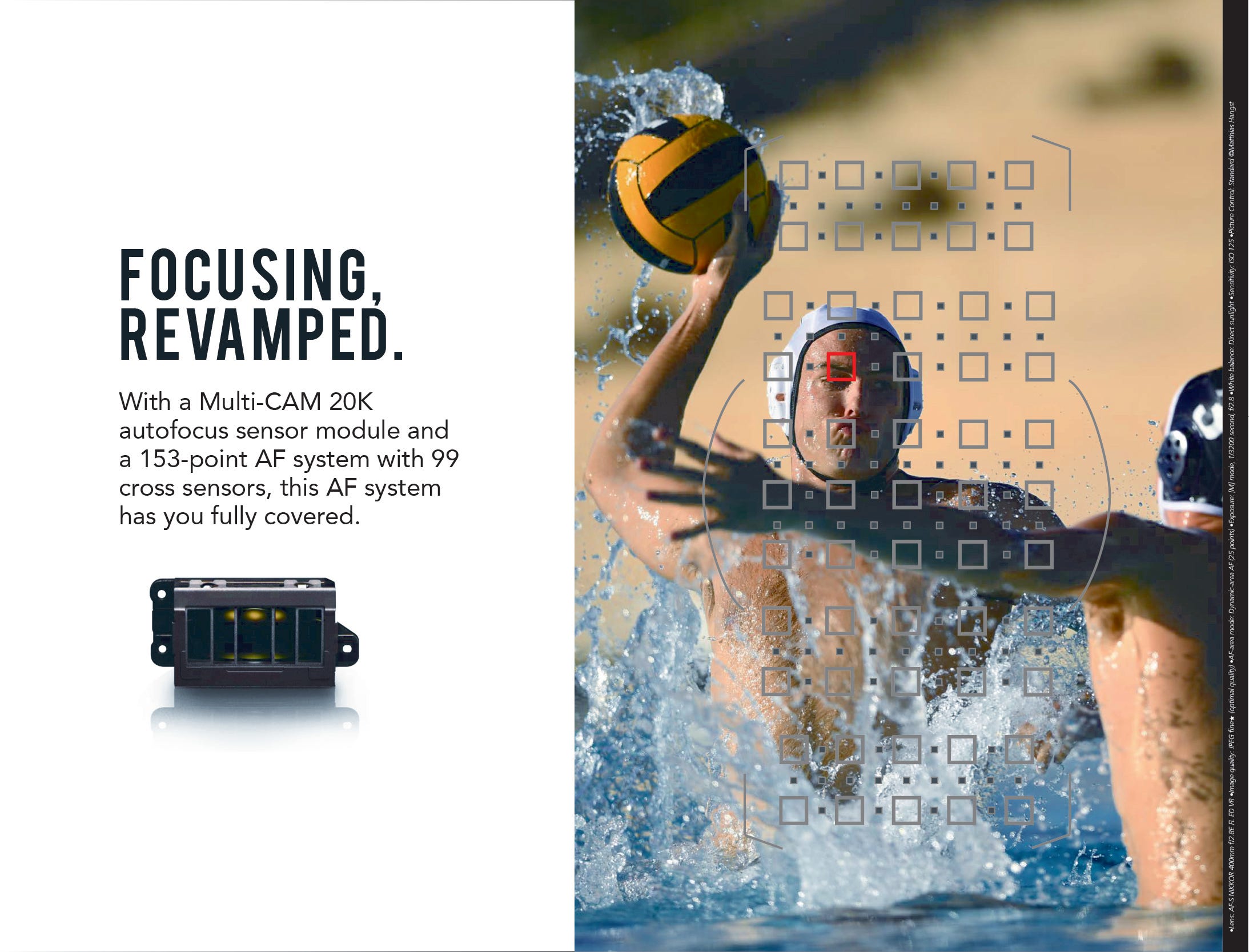
Nikon Advanced Multi-CAM 20K autofocus sensor module with TTL phase detection and fine-tuning, and 153 focus points (including 99 cross-type sensors and 15 sensors that support f/8), of which 55 (35 cross-type sensors and 9 f/8 sensors) are available for selection
-4 to +20 EV (ISO 100, 68½F/20½C)
Autofocus (AF): Single-servo AF (AF-S); Continuous-servo AF (AF-C); auto AF-S/AF-C selection (AF-A); predictive focus tracking activated automatically according to subject status
Manual focus (MF): Electronic rangefinder can be used
25, 72, or 153 point Dynamic-area AF
Auto-area AF
Single-point AF
3D-tracking
Group-area AF
Focus can be locked by pressing shutter-release button halfway (single-servo AF) or by pressing the center of the sub-selector
Continuous-servo (AF-C)
Face-Priority AF available in Live View only and D-Movie only
Full-time Servo (AF-A) available in Live View only and D-Movie only
Manual (M) with electronic rangefinder
Normal area
Single-servo AF (AF-S)
Wide area
153
-4 to +20 EV (ISO 100, 20½C/68½F)
Yes
2 to 9 frames in steps of 1/3, 1/2, 2/3, or 1 EV
1/250
Up to 1/8000
TTL: i-TTL flash control using RGB sensor with approximately 180K (180,000) pixels; i-TTL balanced fill-flash for digital SLR is used with matrix, center- weighted, and highlight-weighted metering, standard i-TTL fill-flash for digital SLR with spot metering
Auto FP High-Speed Sync supported
Front-curtain sync (normal)
Rear-curtain sync
Red-Eye reduction
Red-Eye reduction with slow sync
Slow rear-curtain sync
Slow sync
-3 to +1 EV in increments of 1/3, 1/2 or 1 EV
Lights when optional flash unit such as SB-5000, SB-910, SB-900, SB-700, SB-400, SB-300 or SB-R200 is fully charged
Yes
CLS Supported
Yes
Auto (3 types)
Choose color temperature (2500K 10000K)
Cloudy
Direct Sunlight
Flash
Fluorescent (7 types)
Incandescent
Preset manual (up to 6 values can be stored, spot white balance measurement available during live view)
Shade
2 to 9 exposures in increments of 1, 2 or 3 EV
Photography Live View Mode with available Silent Mode
Movie Live View Mode
Autofocus (AF): Single-servo AF (AF-S); full-time-servo AF (AF-F) Manual focus (MF)
Face-priority AF
Wide-area AF
Normal-area AF
Subject-tracking AF
Contrast-detect AF anywhere in frame (camera selects focus point automatically when face-priority AF or subject-tracking AF is selected)
TTL exposure metering using main image sensor
3 minutes at high quality only for 4K UHD 3840 x 2160/24/25/30p recording
10 minutes at highest quality or 20 minutes at normal quality setting for 1920 x 1080/50/60p recording
20 minutes at highest quality for all recording options except 4K UHD, 1920 x 1080/50/60p and 640 x 424/25/30p
29 minutes 59 seconds at normal quality for all recording options except 4K UHD, and 1920 x 1080/50/60p
MOV
H.264/MPEG-4 Advanced Video Coding
Linear PCM
4K/UHD 3840x2160 / 30 fps
4K/UHD 3840x2160 / 25 fps
4K/UHD 3840x2160 / 24 fps
Full HD 1920x1080 / 60 fps
Full HD 1920x1080 / 50 fps
Full HD 1920x1080 / 30 fps
Full HD 1920x1080 / 25 fps
Full HD 1920x1080 / 24 fps
Full HD 1920x1080 crop / 60 fps
Full HD 1920x1080 crop / 50 fps
Full HD 1920x1080 crop / 30 fps
Full HD 1920x1080 crop / 25 fps
Full HD 1,920x1,080 crop / 24 fps
HD 1280x720 / 60 fps
HD 1280x720 / 50 fps
Actual frame rates for 60p, 50p, 30p, 25p, and 24p are 59.94, 50, 29.97, 25, and 23.976 fps respectively
High quality available at all frame sizes, normal quality available at all sizes except 3,840 x 2,160
Built-in microphone, stereo
External stereo microphone (optional)
Microphone sensitivity can be adjusted
Monitor Size: 3.2" diagonal
Monitor Resolution: 2,359,000 Dots
Monitor Type: Wide Viewing Angle Touch TFT-LCD (Touch for playback only)
Monitor Angle of View: 170 -degree wide-viewing angle
Monitor Adjustments: Brightness, 5 levels
Virtual Horizon Camera Indicator: visible in LiveView Modes / visible in Viewfinder
Auto Image Rotation
Full-frame and thumbnail (4, 9, or 72 images)
GPS data display
Highlights
Histogram Display
Image Comment
IPTC information embedding and display
Movie Playback
Movie Slideshow
Photo Information
Playback with Zoom
Slideshow
Voice Memo
Color Balance
D-Lighting
Distortion Control
Edit Movie
Filter Effects
Image Overlay
Monochrome
NEF (RAW) Processing
Perspective Control
Red-Eye Correction
Resize
Side-by-Side Comparison
Straighten
Trim
Yes
10-pin RemoteTerminal
HDMI output: Type C mini-pin HDMI connector
Headphone Connector
Stereo Microphone Input 3.5mm
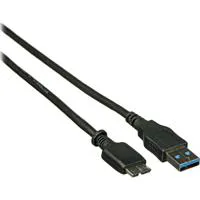
SuperSpeed USB (USB 3.0 Micro-B connector); connection to built-in USB port is recommended
Ethernet: 1000 Base-T (Gigabit) Wired LAN
WT-5A (optionally available)
WT-6A (optionally available)
GP-1A GPS unit (optionally available)
Yes
64
Yes with customization
Yes
Arabic
Bengali
Brazilian Portuguese
Bulgarian
Chinese (Simplified and Traditional)
Czech
Danish
Dutch
English
Finnish
French
German
Greek
Hindi
Hungarian
Indonesian
Italian
Japanese
Korean
Marathi
Norwegian
Persian
Polish
Portuguese
Romanian
Russian
Serbian
Spanish
Swedish
Tamil
Telugu
Thai
Turkish
Ukrainian
Vietnamese
Daylight Savings Time Settings
The camera clock is powered by a separate, non-rechargeable CR1616 lithium battery with a life of about two years.
World Time Setting
EN-EL18a Lithium-ion Battery
3,780 shots (CIPA) Movies: Approx. 110 minutes of HD footage
EH-6b AC Adapter (optionally available)
Requires EP-6 Power Supply Connector (optionally available)
MH-26a Quick Charger
1/4"
6.3 x 6.3 x 3.7" (160 x 158.5 x 92mm)
3.1 lbs (1.4kg)
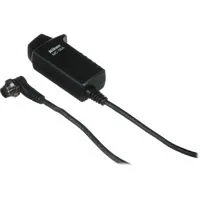
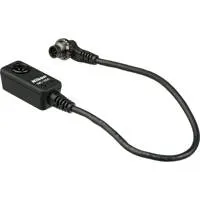
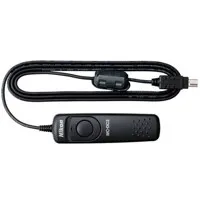
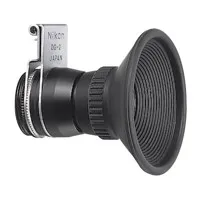

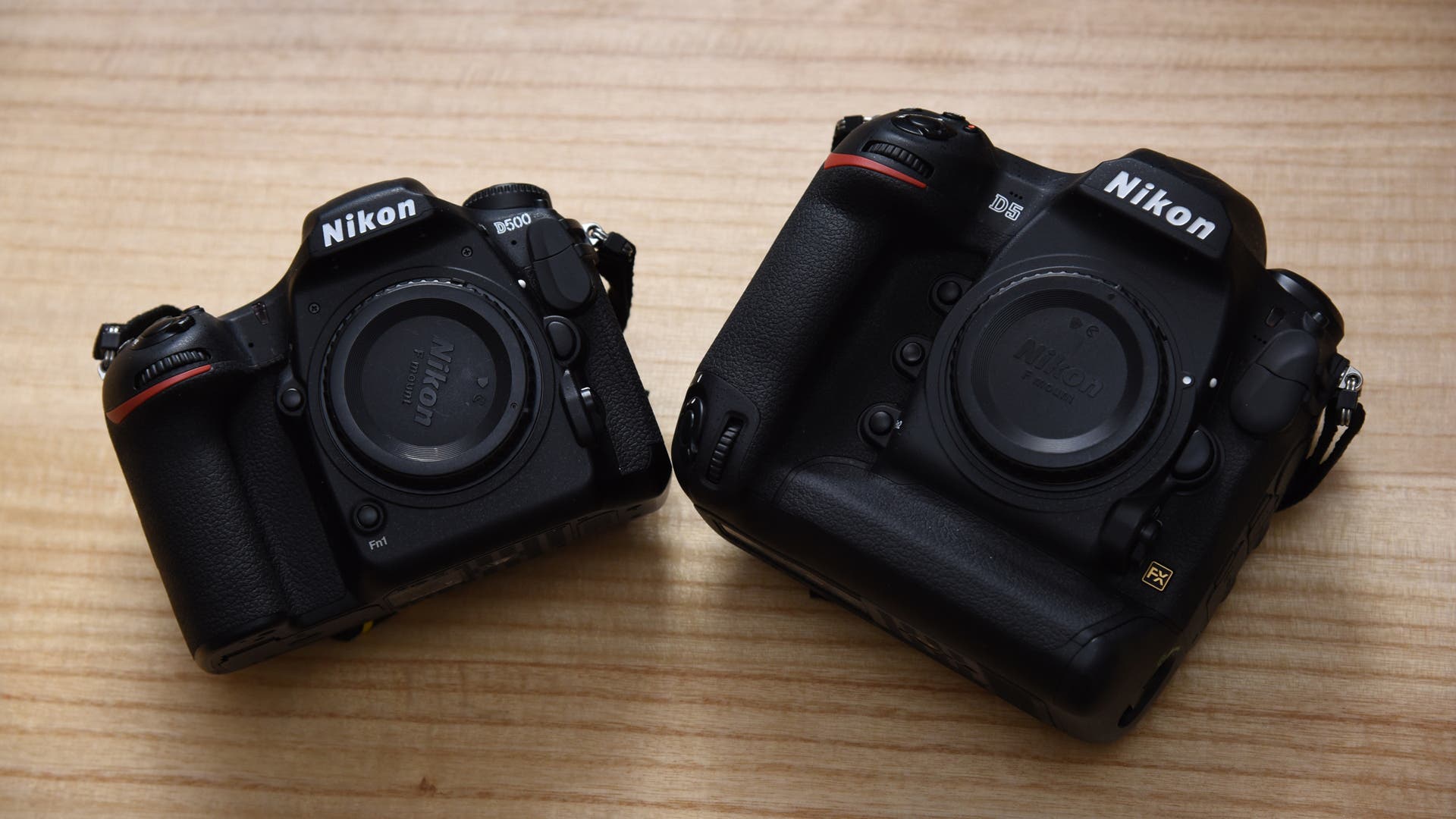
Having used Nikon cameras for the past 14 years, both cameras seemed very familiar from the first touch, however, I did have some questions. How could the D5 improve on the spectacular D4s? How much has the D500 improved over the aging D300S it’s meant to replace? And, finally, how does the performance compare between the D5 and Nikon D500?
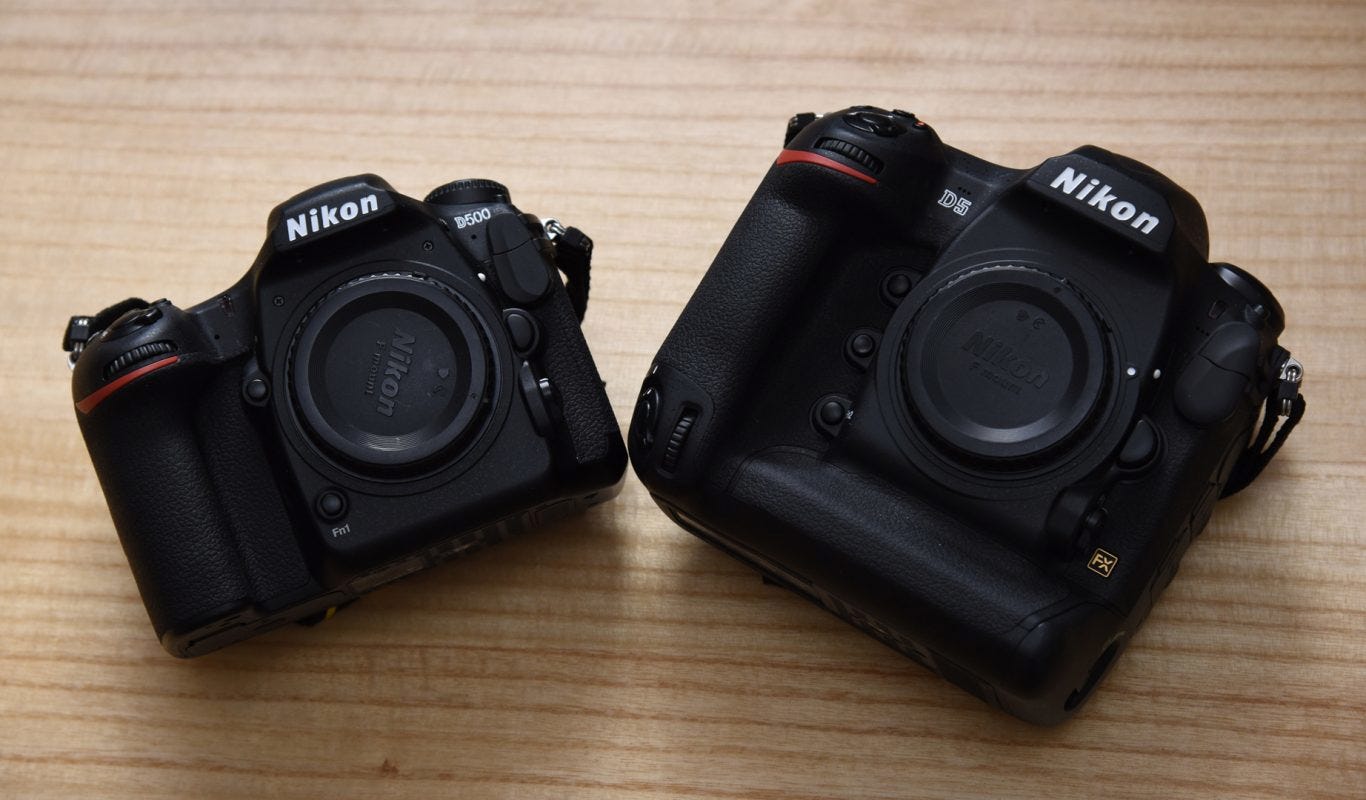
Replacing the D4s at the top of the Nikon lineup, the Nikon D5 is an FX-format DSLR that sets several new benchmarks in speed, sensitivity, image quality, and even in movie recording. The eye-popping top native ISO sensitivity of ISO 102,400 and expandable Hi-5 setting, ISO 3,280,000 (yes, 3.28 million!) is claimed to capture details and colors beyond the limits of the human eye.
Key Features
Nikon has revamped its AF system, utilizing a Multi-CAM 20K autofocus sensor module. With 153 focus points (99 cross-type), Nikon has packed the entire image area with focus sensitivity goodness that can practically see in the dark. They’ve goosed the system with a dedicated AF engine that works with the 180K-pixel RGB sensor, and claim very reliable AF performance in a variety of shooting scenarios.
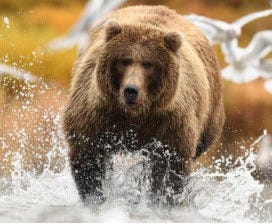

High-Speed shooting tops out at 12fps with both AF and AE tracking on. A new mirror drive mechanism keeps the viewfinder image stable during continuous shooting even at high speed. If you’re using a 2933x QXD 2.0 memory card, you can capture up to 200 12-bit lossless compressed RAW images in a single continuous shooting burst.
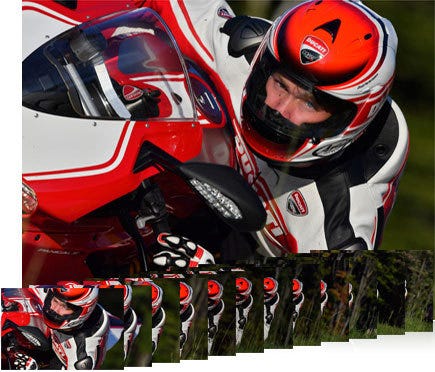
We’ll say it again: The new FX CMOS sensor, combined with the new EXPEED 5 image processing engine, will deliver the highest non-boosted top ISO in Nikon history. Until now, you could only reach ISO 102,400 if you boosted the sensitivity, but in this case, it’s native. Nikon says the broad dynamic range is greater than ever and if you do want to go beyond human vision, you can boost to H5 for the aforementioned, mind-boggling, astrophotography-friendly ISO 3,280,000.

Connects 2x as fast as the D4s with both wired networks via the built-in Ethernet connector, or wireless networks via the optional Nikon Wireless Transmitter WT-8. .

The D5 will come in two flavors, based on which memory card format you prefer: QXD or Compact Flash. Either way, the camera will have two card slots.

Shoot at up to 4K resolution in 30, 25 or 24p. You can shoot at boosted ISO 3.28 million in video mode.
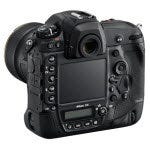
The D5 has a super-high-resolution touchscreen LCD monitor that specs out at 3.2 inches, with 2.359k dot resolution.