
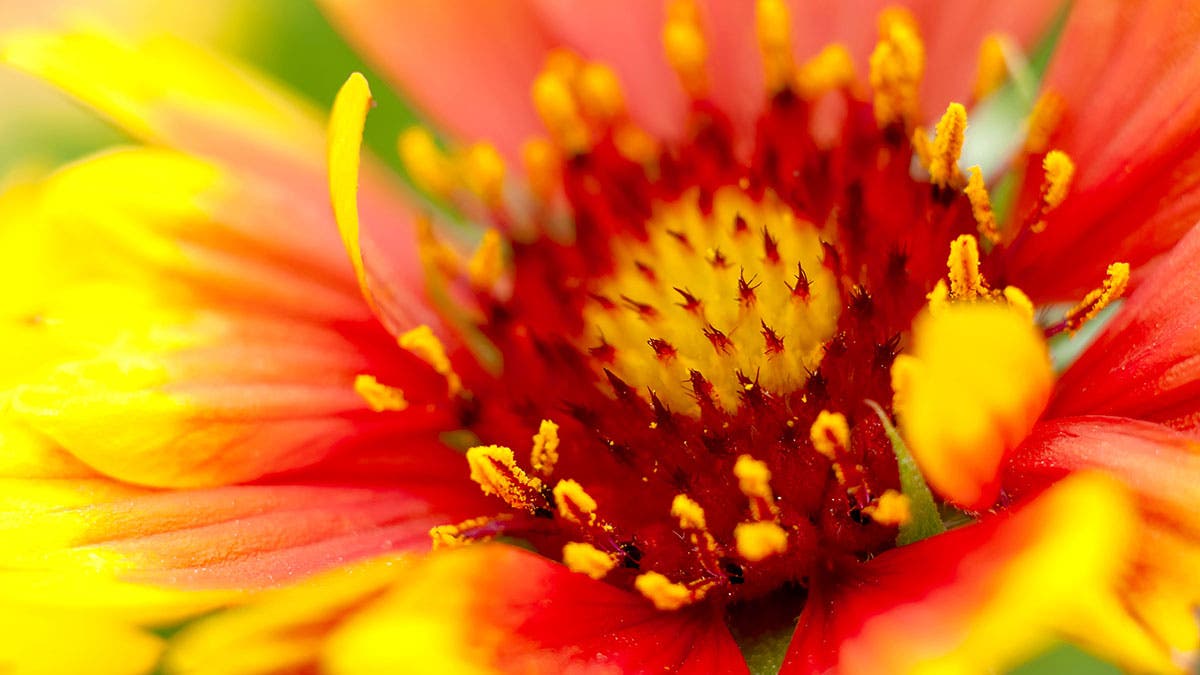
Which Focal Length Macro Lens Is Best For You?

Back to Macro Photography page
Average of 26 ratings: 3.3 stars
 

26 comments Read comments Rate this article

The long and the short of macro lenses

By Sandy Ramirez

May 10, 2011

Do you need a 180mm macro lens or will a 60mm do? What's the difference when both can deliver 1:1 magnification?


We’ve all seen them. That amazing close up of some insect in National Geographic, or a close-up of some mascara-covered eye for Estee Lauder, or a shot of a Voigtlander 12/5.6 Heliar for Adorama…..huh? Welcome to the world of Macro Photography. The above  sentence encompasses the range of what macro photography is: the art of photographing things up close.

Please note I said up close, not very small. While the classic macro shot may be of an aphid on a flower stamen, the everyday truth is far more mundane. Product shots of shampoo bottles, cameras and jewelry are far more common in the professional environment. Knowing this, why are there such things as Macro lenses, and why are there different focal length macro lenses?

There's close, and then there's Macro

Most zooms today are capable of close focus of some sort. An example would be the Canon 24-105/4 L IS, with a close focus of .45m (1.5ft). Does this make it a true macro lens? In short the answer is “No.” A macro lens is simply a lens that is designed to provide optimal performance at its closest focus. When a lens designer sits down at a drafting board and begins to create a lens, all the math for that lens presumes it is set at infinity focus. In the case of a macro lens, the reverse is true. Macro lenses are designed to provide the maximum resolution and sharpness and least distortion the closer you focus. They are specialist lenses designed for a very specific function.

Another hallmark of a macro lens is magnification. The vast majority of macro lenses designed for 35mm photography are capable of “1:1” magnification. So what does that mean? All Macro lenses have a magnification factor usually represented as “X:Y”, where X= the number of millimeters on the actual sensor (or film) the image detail occupies and Y=the number of millimeters of actual detail being shot. A 1:1, therefore, is what is called life-size: A 1mm detail takes up 1mm of space on the film or sensor. Now while that doesn’t sound like much, it is actually quite a difficult thing to achieve from the engineering standpoint.

It also means that no matter which macro lens you use, the final image size on a sensor will be identical, whether you use a Canon 60/2.8, Nikon 60mm f/2.8G AF-S Micro, or Sony 50mm f/2.8 shorter forcal length lenses, or longer lenses such as the Canon 180/3.5 L, Nikon 200mm f/4D ED-IF AF Micro, or Sigma 150mm f/2.8 EX DG APO macro, at their closest focus you will only ever achieve 1:1 magnification. To achieve larger than life size, say 5:1, you need to use extension tubes or bellows.

What the Focal Length is Going On Here?

So, why invest in a 180/3.5 lens if it will only achieve the same level of magnification at closest focus as a 60/2.8? The simple answer is distance from the subject. When shooting  a diamond ring, for example, it is far easier to do creative lighting when you are two feet from the subject (as you would be with a 180/3.5) versus the nine inches you would have with a 60/2.8 at the same 1:1 magnification.


To achieve higher magnifications one must use extension tubes such as the Pro Optic Auto Extension Tube Set, or a bellows system such as the Novoflex Automatic 6" Macro Bellows. In addition a macro focusing rail such as the Adorama Budget Macro Focusing Rail is very useful. Another option for Canon shooter is the 65/2.8 MP-E, a very specialized lens that starts at 1:1 and climbs up to an amazing 5:1 (5 times life size) at its closest focus.

But all this is academic without some examples, so let’s start off with what many folks would consider a “macro” shot:


Here is a tulip. Now let us take a  closer look...


This is a 1:1 life size macro shot. At 1:1 we see a lot more detail than in the previous shot. What happens when you use extension tubes, bellows, or in this case a Canon MP-E 65/2.8?


Wow! This is a 5:1 shot (5x Life Size) of one of the anthers of the tulip showing the individual grains of pollen. At this level of magnification, a tripod, focusing rail, and of course a cable release are a must along with a macro light like the Canon MR-14EX used here.

All of the above shots demonstrate the value of a shorter focal length macro. You can easily transport it, and its size makes it easily handy in tight spaces. The MP-E also has the benefit of having for the equivalent of built in extension tubes. This allows quick adaptation in the field when doing this type of technical/scientific macro work. Here is an example of the levels of magnification that this lens is capable of:


Canon MP-E 65/2.8 Macro Lens Magnification Examples

The only issue here with the shorter lengths is distance to subject. For the 5x sample the front of the lens was mere millimeters from the subject. When shooting in a commercial environment, this would be unacceptable. That close to a subject, one could not use creative lighting that would present the subject in an appealing manner. In those situations a longer focal length buys one distance from the subject. Distance to allow flexibility in lighting

Here is a commercial shot, one of many I do for Adorama:


This is a shot of the Adorama Soft Release, at near 1:1 shot with a Canon EF 100/2.8 macro lens. Unlike the shots with the MP-E which were all lit by ringlight, here we have more subtle lighting, with shadows that give depth and a bit of life to the image. The additional distance from the subject allows for this. Below: a shot of the lighting setup I used to shoot the above.

The Adorama Macro Product Studio. 5 Dynalight heads, three softboxes, and three 2000w/s Powerpacks

Hopefully this gives you all a better understanding of what a macro lens truly is, and of course the various situations where one would use a specific macro lens, and when. Please feel free to ask questions below and I’ll answer them as quickly as possible.


About The Author

A freelance photographer and writer for Adorama

moreRelated Workshops

SHARE THIS ARTICLE

Forward this article to a friend
To use this functionality you should have JS enabled
Bookmark this page

Reader Rating and Comments

26 readers rated this article. Average rating: 3.3 stars
 
  • View
  • 26 comments
1 of 1 people found this comment helpful
 
Very helpful

I'm novice and was looking for a while to understand what was the difference in macro lenses. It was exactly what I was looking for! Thank you!

by Gdaiva in Alaska on February 15, 2012

2 of 2 people found this comment helpful
 
@PhotoDAD in Oakland

The Tamron gets 1:1 at just under 1 foot, so it sounds like you are ok. To be honest for critical focus when I do macro work, I preset the magnification on the lens and use a focusing rail. As far as extension tubes, I highly recommend a focusing rail. The rule of thumb you are using is accurate btw, why shorter lengths are more useful for very high magnification, however any extension tube will give you an increase in magnification over 1:1. The formula Magnification=(Extension/Focal Length of lens) should work to determine final additional magnification. For instance a 25mm extension tube with the 90 SP will give you an additional .28 magnification (1.28:1), while with a 50mm lens this would improve to an additional .5 (1.5:1) Again it's the final use that is important.

by The Author in NYC on May 24, 2011

1 of 1 people found this comment helpful
 
To Rick In Boston

Much like anything else at the same aperture and magnification, the 50 will have greater dof than the 150 would, though at the distances and magnifications we are discussing, it would be very difficult to notice, especially if say you were doing document copy work where the subject is kept strictly parallel to the film plane.

by The Author in NYC on May 24, 2011

0 of 1 people found this comment helpful
 
Good introduction

This is a good introduction to macro lenses. I have a couple of more in-depth questions. I bought a Tamron 90mm 1:1 macro lens. I find I have to get extremely close to the subject to get much magnification, so it seems the 90mm is no better than a cheaper 60mm or 30mm would be. Am I doing something wrong? Second, I find extension tubes do very little with this lens. My understanding is that you need extension tubes the same length as the lens to double the magnification, which would make extension tubes less usefull for longer lenses. Is this correct? If so, what would work better? I'm using a Pentax K20D body. Thanks.

by PhotoDAD in Oakland, CA on May 21, 2011

2 of 3 people found this comment helpful
 
Depth of field on Macro

What's the effect on depth of field shooting with, say, 50mm bs 150mm macro lens, for the same 1:1 magnification ratio?

by Rick in Boston, MA on May 21, 2011

0 of 0 people found this comment helpful
 
Replies part 3

@Bill in Tucson - That is a good question, and really depends on what you are shooting and how. I shoot all my macro work off a tripod, with a cable release, etc. In my situation, IS would not really be needed. However if I did a lot of handheld shooting, then IS/VR/IBIS would become far more important. You really have to determine this based on your shooting style.

by The Author in NYC on May 20, 2011

1 of 1 people found this comment helpful
 
Replies Part 2

@Dugit57 - Thank you for agreeing with me (that was the gist of this article). Document photography is a very specialized sub-field of macro photography. I remember working on an old Agfa document camera that used 11x14 negatives and a 450mm El Nikkor lens (roughly a 50mm in 35 equivalent). Highly specialist photography there. @Hugh and Downer. The material you mention would be a separate article to be honest, and outside of the scope of this introduction. Field work is very different than commercial work, as it is from forensic and document work. Not all subsets of macro work can be covered in one article folks. @kiwidamien - Yes and no. 1:1 is just that - 1:1. Depending on the subset of the macro discipline we are discussing the images will be the same at 1:1. Of course a discussion of field distortion, et all would have to be included and also why a bellows system is superior for DOF control. Scheimpflug discussions anyone?.

by The Author in NYC on May 20, 2011

1 of 1 people found this comment helpful
 
Now some direct replies....Part 1

@Martha - I feel the question was answered quite well. It all really depends what you shoot for Macro work. I do a lot of product photography. At the apertures I work at and distances, the real difference for me is distance and field distortion. A 50mm lens at the magnification levels I work at would show definite field distortion compared to the flatter field of the 100mm I prefer to use. I would use the 180mm if I could, but space is a bit limited in my product studio. @whaleshark - Again this is based on the end user's shooting method. I never shoot macro work off a tripod, without a cable release, a focusing rail, or without locking up the mirror. In my style of shooting IS just really isn't needed. If you are shooting handheld, then a shorter length is helpful there as well as IS, however there is field distortion with shorter focal lengths.

by The Author in NYC on May 20, 2011

0 of 1 people found this comment helpful
 
To those with complaints...

To all those with complaints here is my reply; This is pretty much an introductory article into the various reasons to use the various focal lengths, not a comprehensive cradle to grave exposition on Macro Photography. For instance I didn't discuss the effect of using extenders (effectively increasing aperture without actually increasing DOF), nor did I discuss why a bellows is more useful due to the availability of movements, nor why in some situations a reversing ring would be more useful, et al. For the novice (who this article was aimed at, not you old pros) this is probably about as much as one could take in a single sitting. Why I prefer to answer the questions you folks are mentioning as followup questions. Instead of complaining, perhaps you should share your additional knowledge to help the community here. If I were to write an exhaustive comprehensive article on this, it would end up being 450 pages long, and you same folks would complain it's too long lol!

by The Author in NYC on May 20, 2011

1 of 1 people found this comment helpful
 
Some of the story

I think this is a very helpful article for a novice macro enthusiast. I learn more each time I shoot macro or micro and I find that I still do not know it all.

by The Seed Geek in Waterman, IL on May 19, 2011

Items per page
Showing 10 of 26 results
Page:

Was this article helpful?

Rate this article

Your rating:

Post a comment

*required fields

Was this article helpful?

Rate this article

Your rating:

Post a comment

*required fields
Bookmark this page