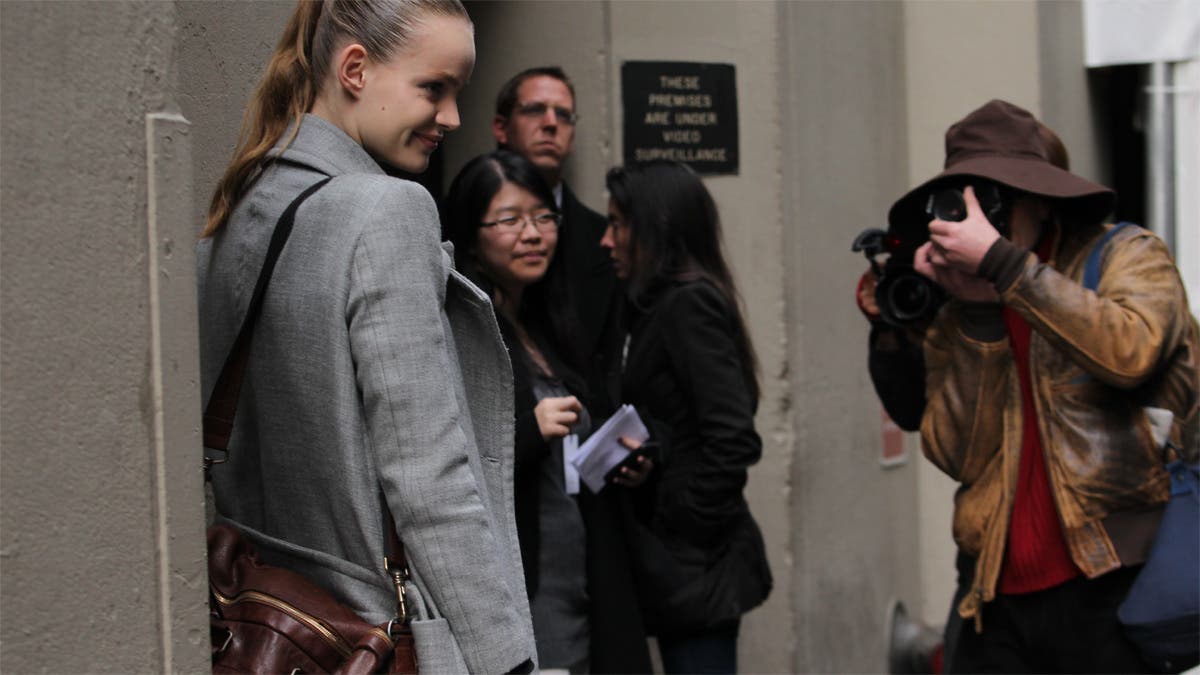
When asked how he was capable of getting such amazing images on a consistent basis, Arthur “Weegee” Fellig replied, “Simple. f/8 and be there.” Since that time, this simple statement has become the mantra of Documentary Photography, held as scripture, writ in stone.
“f/8 and be there” is a philosophy that’s dear to every documentary photographer’s heart, be they Street Photographers, Photo Journalist, or Travel Photographers. Of course, this leads to another question…What on Earth was Weegee talking about?
“f/8 and Be There” is a very simple statement that addresses two very important aspects of documentary photography. The first is technical, and the second is a bit more philosophical. Let’s start with the technical aspect.
f/8
Most documentary photography is done on 35 mm-based systems using a 35mm lens. It’s a classic focal length for this sort of work, so classic that Fuji, in its excellent X100, chose this angle of view for that camera. Leica’s entire reputation as a company is almost entirely based on its 35mm Summicron for the Leica M rangefinder.
Why has this focal length become so important to this type of photography? The 35mm field of view gives one enough space on the frame to include the local environs, helping storytelling without too much field distortion with its moderately wide angle. The other thing (and here is where the f8 part comes in), with its greater depth of field compared to a 50mm lens, one can preset the focus using a technique called zone focusing, allowing one to quickly shoot without focusing, assured that the image will be reasonably sharp. This is very important when shooting in a rapidly changing environment, such as a street fair or a battlefield.
From left to right: Nikon, Canon, and Voigtlander’s 35mm f/1.4 lenses.
Zone focusing takes advantage of what is called the hyperfocal point. Basically, all lenses of a given focal length and aperture, when focused to a specific point, will have a zone of focus in which items in that zone will appear in sharp focus. As an example a 35mm lens set at f/8 and focused to about 17 feet will have everything between 9 feet to infinity in reasonably sharp focus.
On the other hand, a 50mm lens set to the same values would have everything from 11 feet to 34 feet in focus, while a 21mm lens would have everything from 4.5 feet out to infinity in focus. To help determine what the zone of focus is at a given aperture, most prime lenses on the market today have a depth-of-field scale. This is that list of numbers that seem to repeat on the lens symmetrically, as shown in the examples below.

35mm lens set to the hyperfocal at f/8. The red area shows the range of focus at f/8.

35mm lens at f/8 set of a zone of focus of just over 4 feet to about 10 feet.
The use of this technique is how a large number of the most famous photographs of the 20th Century were taken in the years before autofocus. Even with autofocus, the lag can make you lose the “moment.” zone focusing is a manual focus technique that eliminates AF lag, allowing for near-instant response. Simply point, compose, and shoot. Here is also a technique that requires the use of prime lenses.
While useful, Zoom lenses are a nightmare to use with this technique. While it can be done, the math—and needed charts—are complex. To make matters worse, no modern Zoom has a DOF scale on it. This means you need to zoom with your feet, and using a semi-wide optic like, say, a Nikon 35mm f/1.8 G means you need to get close to your subject matter, which brings us to Weegee’s 2nd point…
Be There
What Weegee means here is: Shoot, what’s interesting…and he meant really interesting. Let’s talk a little of what is interesting to shoot or at least my personal philosophy here on this subject. When I travel, the last thing I want to shoot is somewhere every tourist would go and shoot. Sure, the snap of a loved one in front of the Eiffel Tower is always cute, but when I shoot, I want the pictures to tell me the story of my trip. I want a slice of that culture and how I reacted to it in my album.

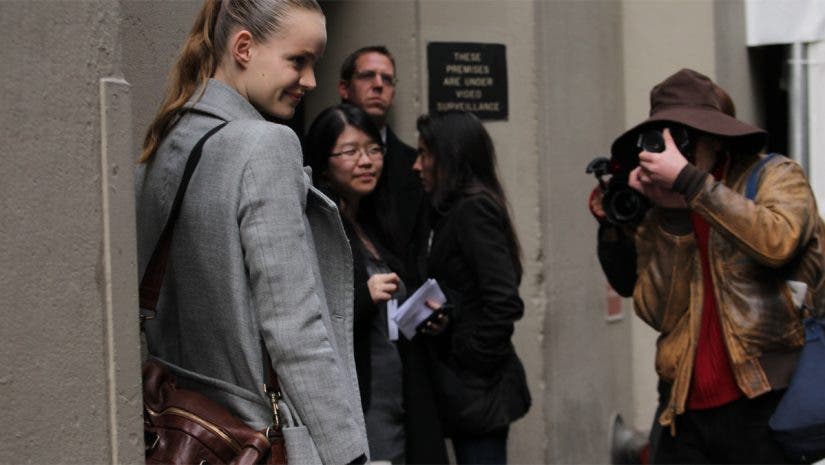
To get that, I try to stay away from the tourist areas and go to those places where the rest of the locals go. I try to really capture what life in London, Warsaw, Rome, or Paris is like. I try to avoid staged shots, smiling salesmen, and the like. I want to capture the everyday people doing the everyday things that define their lives and culture. Here a little research ahead of time of the city you are to visit is helpful, and preselecting walking routes through said cities and memorizing them is useful. You have to be a silent observer.
You have to melt into the background so you can capture those special moments without interrupting them or, with your presence, prevent them from happening. It takes a little patience and practice. Just remember to take your time, observe for a bit, and become part of the environment’s background noise. When it seems the environment is comfortable with you, begin shooting. If you take your time, you’ll be able to casually snap away at very close ranges without anyone even realizing you are there. All this is, of course, helped by using a small, high-quality camera.

Smaller cameras tend not to be noticed as easily and usually aren’t very “threatening” to those near you. Sure, the Canon 1DS Mark III or Nikon D3X are excellent cameras, but their large size makes them stand out like a sore thumb. Smaller cameras also tend to be a bit quieter, especially mirrorless systems such as the Sony NEX-5, Panasonic GF2, and the Olympus E-P2, and rangefinders like the unique and pricey Leica M9. These types of cameras let you shoot quickly and without being observed too often, allowing you to capture the environment around you in a more natural state of being.
So go out there and shoot. Take advantage of hyperfocal distance, practice blending in, and be a casual observer. Now you can put Weegee’s “f/8 and be there” into practice!