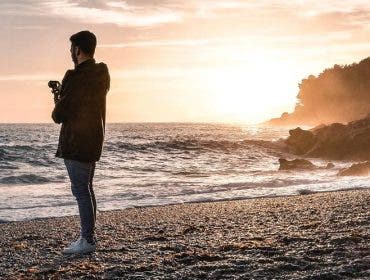
Perspective is powerful. It refers to how we see and view the world, but also how we create images and scenes using different dimensions and depth. These last few months, we have learned to view the world through a unique and different perspective, which has forced many of us to create in a new way.
As we learn, grow, and continue to create during this time, here are six ways to create powerful ways you can use perspective in your photographs, which can expand your creativity and allow for you to create no matter what, even if creating might look different than it normally does.

1. Look up, or down
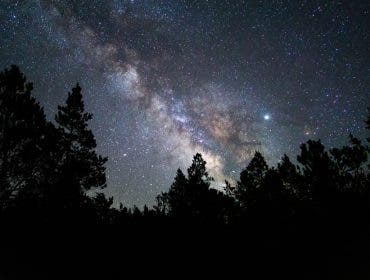
A really unique way to create perspective is by simply focusing your camera up or down. Our natural instinct as humans and photographers is to look forward and in front of our camera, but taking images from above or below can really add a powerful perspective that people are drawn to.
Whether it’s shooting up at a cityscape or landscape, or down on a city grid, river, or canyon, give this type of perspective a try. Doing so can create abstract, beautiful images that help diversify your portfolio.

2. Use leading lines
Leading lines — one of the key photo composition techniques — are great, and if used correctly, can be one of the most commanding perspectives in photography. The proper way to approach this type of photography and create this perspective is by crouching lower — sometimes near ground level — and allowing the leading lines you are focusing on to guide the viewer to your subject in the foreground.
So for example, a great leading line would be something like a road, wooden dock, trail, or bridge, which draws people in and quite literally leads them to the subject of the image.
Leading lines are incredibly beautiful when utilized and photographed correctly. They provide a perspective that is engaging and should be consistently utilized when shooting photography.

3. Look through to your subject
Another powerful perspective to learn is using an object to look through to your subject. Like leading lines, this type of perspective is engaging because you’re essentially creating a natural frame for your subject, which draws the attention of the viewer even further.
You can use a window, tree branches, or even your own camera or phone screen, to draw people to your image subject. Just be sure the frame itself doesn’t distract or take too much away from the subject, thus diminishing the effect of this perspective.

4. Get close
It’s common for macro photography to be the first type of photography we learn when we are younger. We get our camera close to a caterpillar crawling in the yard or bouquet of flowers in our house and try to capture the unique perspective of those subjects up close. But once we expand on our photography, we tend to move away from macro photography.
However, macro photography, which allows you to get close and fill your frame with the smallest details, offers a perspective of photography that is truly beautiful, and should never be abandoned.
Whether you are capturing the details of a plant or flower, or the rich colors of a human iris, macro photography can open a photographer’s world up to dimensions we wish our human eyes could explore on their own. It’s a fantastic perspective to try shooting again, and can further expand your photography skill set.

5. Capture scale
Being able to capture scale in photography is incredibly important, and one of the most powerful types of perspectives you can create. It utilizes the power of dimension, and if done correctly, can show the size or expansiveness of your subject.
One of the best ways to capture scale is through compression and using a longer lens, like a 70-200mm or 100-300mm. Lens compression occurs when you combine standing far away from your subject and using a telephoto lens, which makes objects in the background appear closer or larger than they look, when using a wider lens. It also increases the depth of field, which allows for your background to be as focused as your foreground and subject.
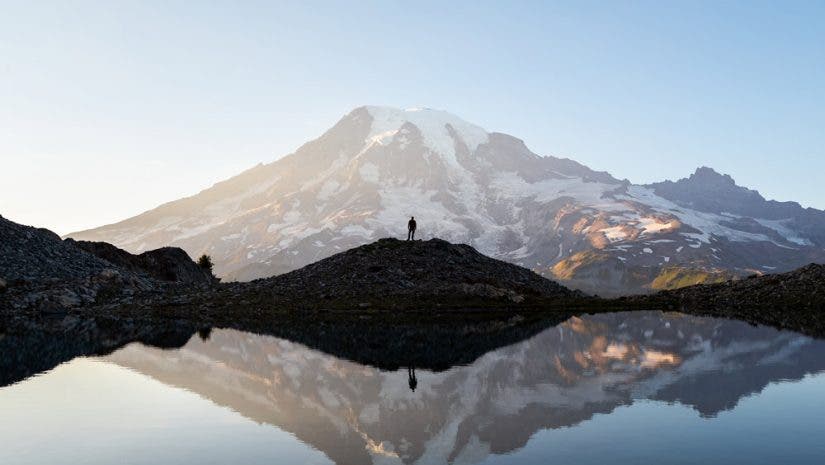
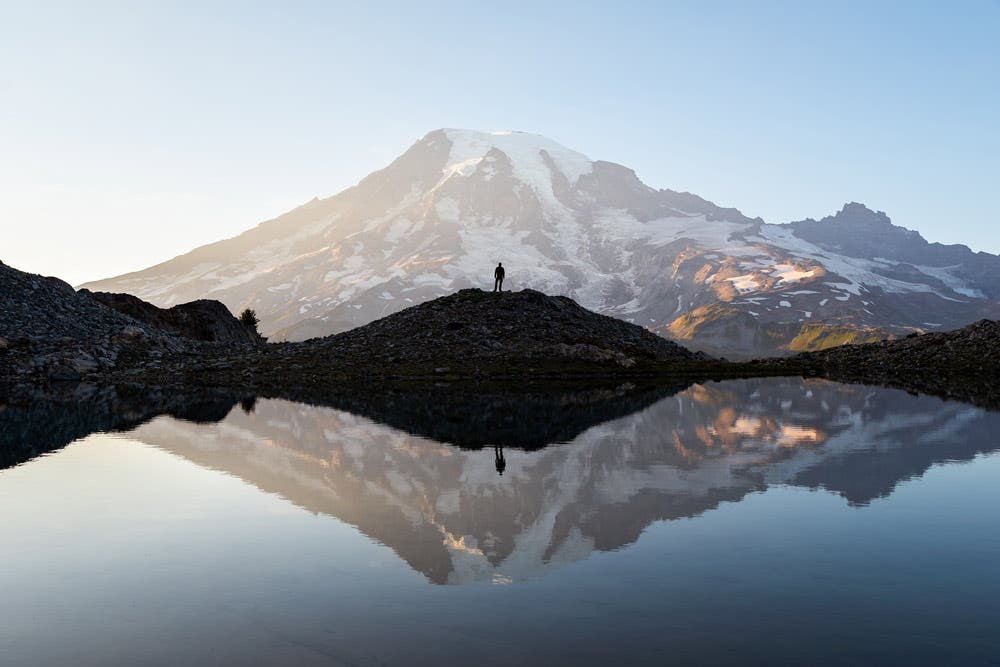
One of the most powerful ways to create scale is by capturing humans in a massive, beautiful landscape. It can show the actual size difference between a human versus a mountain, waterfall, or canyon.
Scale, when captured well, can be one of the most inspiring types of perspectives in photography. It’s a little more technical to learn, but once practiced, can be one of the most rewarding ways to photograph.

6. Utilize Reflections
Last, but certainly not least, is perspective found in reflection, and creating a mirror image of your subject.
You can do this through two ways: by using a mirror to capture and reflect your subject behind you, or by capturing the mirrored image of your subject by using still water — whether it’s a puddle, pond, river, or lake — glass, or a mirror.
Reflections, no matter how they are captured, can create a beautiful perspective and add dimension to your subject, whether it’s a person, building, or piece of a landscape.