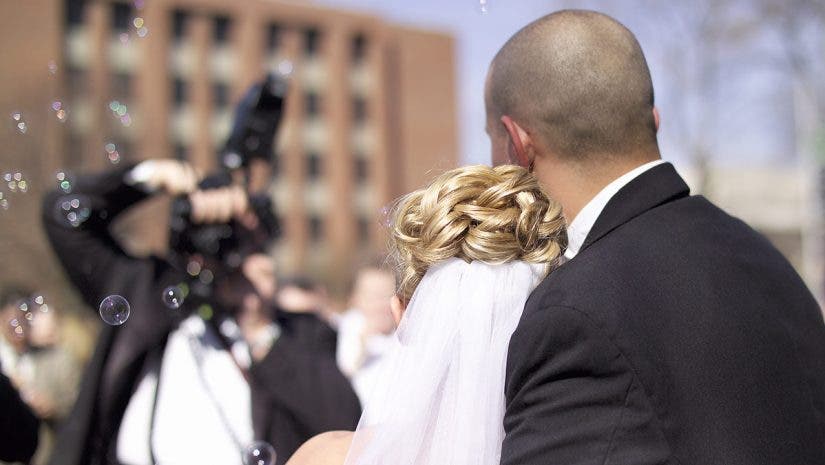
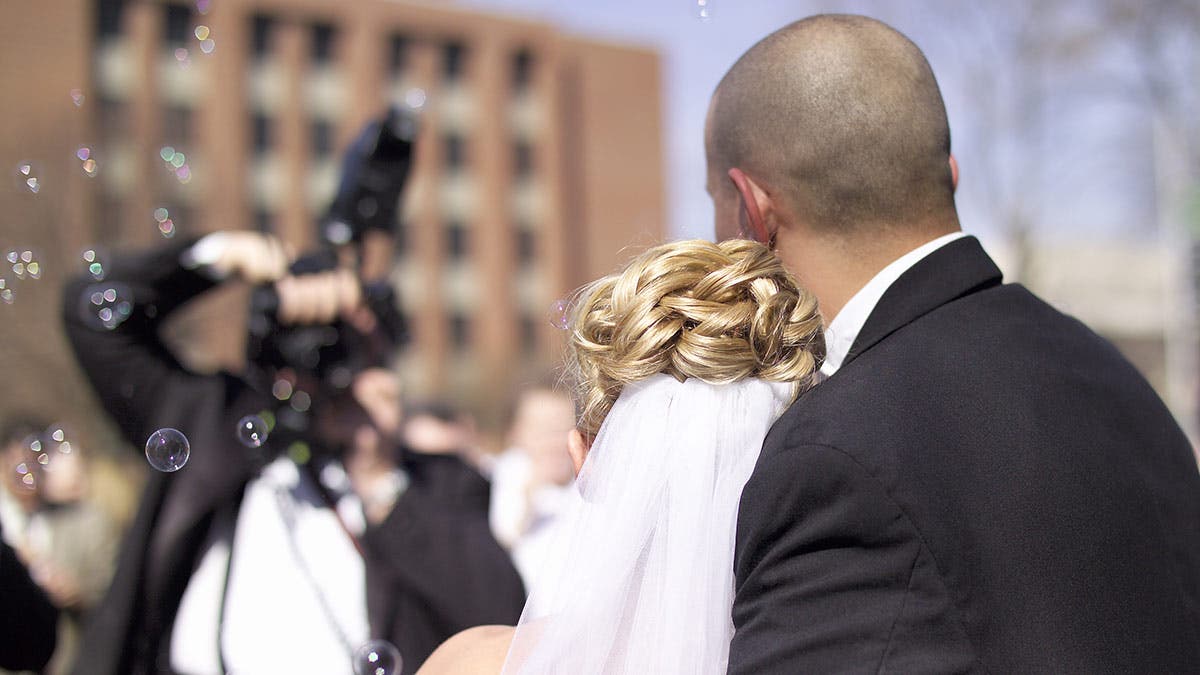
Being a wedding photographer requires tremendous skill, talent, and patience. But to be able to produce beautiful images that perfectly capture every emotion, every happy moment, and every glorious detail of the bride and groom’s most special day, there is one thing that every wedding photographer needs: the best camera for the job. Wedding photography is a demanding job that requires a high-performance DSLR camera designed and built to not only meet but exceed the photographer’s needs in terms of speed (to capture those important fleeting moments that can never be repeated) and image quality.
With that said, full-frame DSLR cameras such as the Canon EOS 5D Mark III or the Nikon D800 are the best and most logical option for wedding photography. Due to their large sensors, full-frame cameras produce the sharpest, most detailed images, which is absolutely crucial in wedding photography, where perfection is of the utmost importance.
Things to consider when choosing a DSLR camera for wedding photography:
Price: Expect to pay around $2,500-$3,500 for a new primary camera, but be prepared to double that if you want to go for the flagship model.
Dynamic Range: When photographing a bride and groom, you need to capture everything from the fine detail of her white dress to the subtle shadows of his black tux. The camera with the widest dynamic range, and the highlight and shadow sliders in post processing of RAW images, are your best friends.
Overall Image Quality: This is of course most important when marketing your keepsake large prints. You will want the lowest noise at the highest ISO option available, so this makes full-frame DSLRs pretty much a requirement.
(Note: Image quality scores quoted in this article are based on independent tests performed by DxOMark Labs, and are used with their permission.)
User interface: This is less of an important feature because with experience you can get used to any layout, and at this level, you can customize your camera to fit your preferences. That said, moving up to the latest version of the camera and brand you already have reduces the learning curve, and many photographers find that to be a big benefit.
Durability: You want a well-made camera with a well-constructed body and a shutter that is rated for hundreds of thousands of clicks, because you’ll be taking a lot of pictures.
System: Canon and Nikon have the most extensive lens, flash, and accessory systems geared for professionals. Sony is catching up. Pentax doesn’t have a full-frame DSLR yet but it does have a new version of its 645-format digital camera for under $10,000; image quality is extraordinary and while the lenses for this camera are excellent, the system is more limited.
I’ve also included a lower-cost back-up body for the Canon and Nikon systems, because if there’s one thing every professional photographer should have, it’s a good, reliable back-up camera.
Best pro-level DSLR cameras for wedding photography:
- Canon EOS 5D Mark III
- Canon EOS 1 Dx
- Canon EOS 6D (backup camera)
- Nikon D800
- Nikon D4s
- Nikon D610 (backup camera)
- Sony Alpha A99
Canon System

Canon EOS 5D Mark III
Adorama price: $2,499.00
At less than half the price of the 1Dx, the 22MP Canon 5D Mark III’s image quality test results lagged behind its pricier sibling by just a hair. However, the camera’s layout, compact size, and lower price make it the best choice for wedding photographers. Improved autofocus, boosted ISO to 102,400, and clean ISO through 2000 are all great results, and the generous buffer size, shutter life cycle claimed at 150,000 clicks, and rugged build make it the Canon DSLR you’re most likely to use for wedding photography work.
Canon EOS 1 Dx
Adorama price: Not available
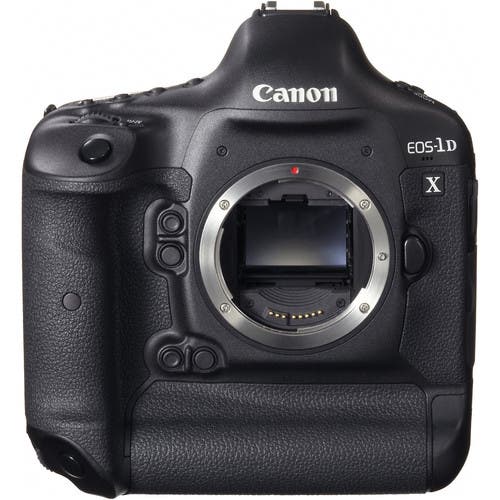
This full-frame camera has the best overall image quality for Canon with clean, noise-free images going well into the ISO 2000 range. The Canon EOS 1 Dx is a beast in low light, and is built to handle anything, whether indoors or outdoors. Apart from wedding photography, it’s great for studio and location portraits, as well as candids using existing light. Don’t be put off by its 18MP lower resolution sensor—you can still get amazing blow-ups, plus faster processing time (12fps continuous shooting) with this camera.
Other pluses include improved AF performance and a maximum ISO 51,200 that can be pushed to 204,800. Sensor performance is also a significant improvement over its predecessors.
Back-Up Body
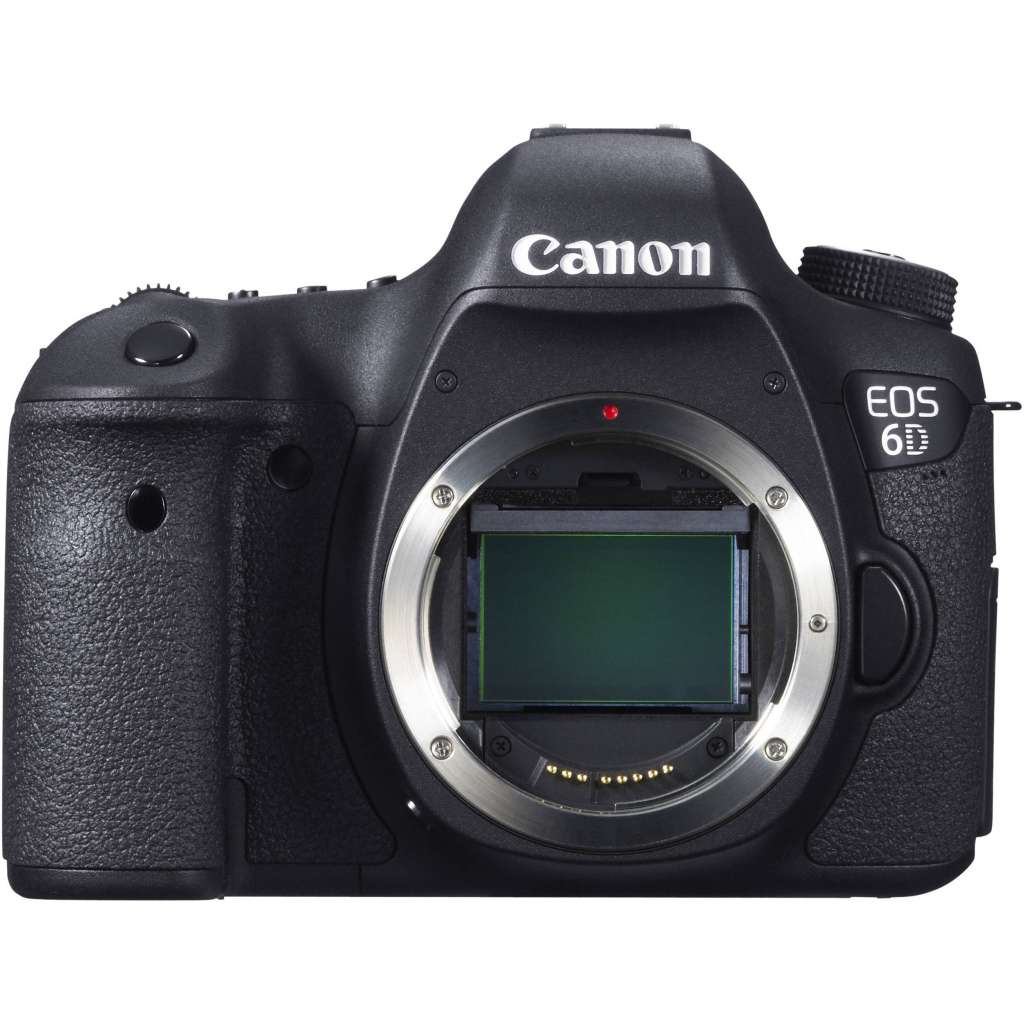
Canon EOS 6D
Adorama price: $1,499.00
Best dynamic range of any professional Canon DSLR with over 12 stops, outstanding color depth (23.8 bits), and high quality construction—although it is not as durable as its pricier siblings. But then again, this means that the camera is significantly lighter, which will definitely make a difference when you’re shooting a wedding. Its low-light high ISO performance is closer to the EOS 1 Dx than the 5D Mark III. Shutter is tested to last through 100,000 cycles, the camera is dust- and weather-resistant, and it is the only full-frame Canon DSLR with built-in Wi-Fi.
Nikon System
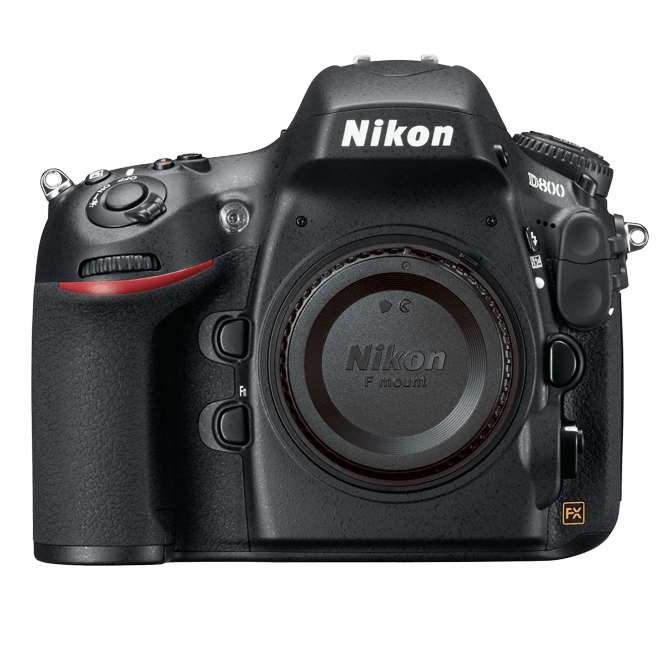
Nikon D800
Adorama price: Not available
The highest-scoring full-frame DSLR based on overall image quality, the Nikon D800 offers the best combination of image quality, portability, price, and performance. Wedding photographers will definitely get their money’s worth with this camera. It has a color depth of 25.3 bits, dynamic range of 14.4 stops, and 14 bit A/D conversion, which means is should be able to capture pleasing and accurate color and full details of light and dark clothing.
(By the way, the D800E is out of contention because its lack of a low-pass filter means you run the danger of moire patterns when photographing fabric—not a good plan when you’re trying to capture the details of the bride’s dress).
At 36.3MP, images by the D800 are very enlargeable and the 91,000-pixel 3D Color Matrix Metering III system is virtually foolproof. The camera is solidly built, sealed against dust and splashes, and the shutter is tested to exceed 200,000 cycles.
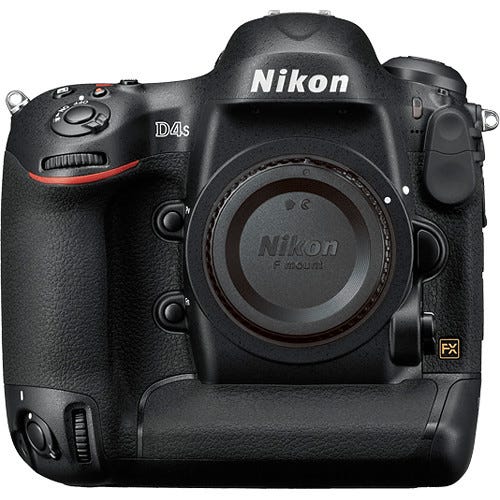
Nikon D4s
Adorama price: Not available
Nikon’s flagship camera, the 16MP D4s, is a beast in low light. It is natively able to produce clean, noise-free images through ISO 3000, while maintaining a color depth of 24.4 bits and a dynamic range of 13.3 stops. ISO can be pushed to 204,800.
Nikon says ISO 12,800 is the “standard” speed, making it a good camera in low existing light when flash is prohibited during ceremonies. Unlike the D800, the camera has built-in LAN features although Wi-Fi is accomplished through an additional transmitter. Controls are laid out identically for horizontals and verticals. AF speed is said to be screamingly fast, backed up by an 11fps burst rate and 15 cross-type sensors in the central area. The camera is rugged as all get-go, and let’s be honest—if you need to impress your client, this is the camera to use. Is it worth paying twice as much as the D800? If you also shoot sports, then the answer is yes. If you only shoot events, you may want to get the D800 and save the difference for a pro lens.
Back-Up Body
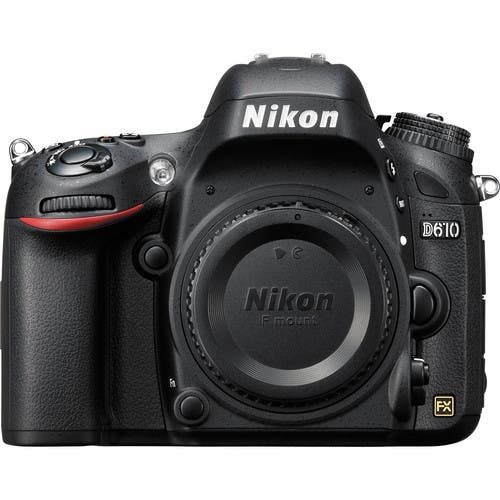
Nikon D610
Adorama price: $1,496.95
For price and performance, the Nikon D610 is a winner. It is in a statistical dead heat with the D800 for DxOMark sensor scores, with a 94 overall score, 25.1 bit color depth, and 14.4 dynamic range. The camera’s low-light high-ISO score of 2925 is almost identical to that of the D4s. The camera has a 24.3MP sensor and a native ISO range of 100-6400, expandable to 25,600. 39 AF sensors, including 9 cross-type sensors and 6fps burst rate, are more than sufficient for most situations. It’s the least expensive way to get started in full-frame Nikon photography.
Sony System

Sony Alpha A99
Adorama price: Not available
Sony’s flagship camera, the Sony Alpha A99, is the second full-frame DSLR model produced by the electronics giant, and is proof that they’ve gotten serious about creating a pro-level camera. Unlike its competitors, it is not purely a DSLR but rather uses a high-resolution EVF viewfinder which offers the advantage of never having to move the camera from your face to confirm you got the shot. While the selection of lenses and flashes is more limited than its competition, Sony has teamed up with Zeiss to produce some of the best optics available, and several independent-label flash systems are compatible. The 24MP sensor has the highest DxOMark image quality rating for any full-frame DSLR. Its 25-bit color depth and 14-stop native dynamic range are the best in their respective categories.