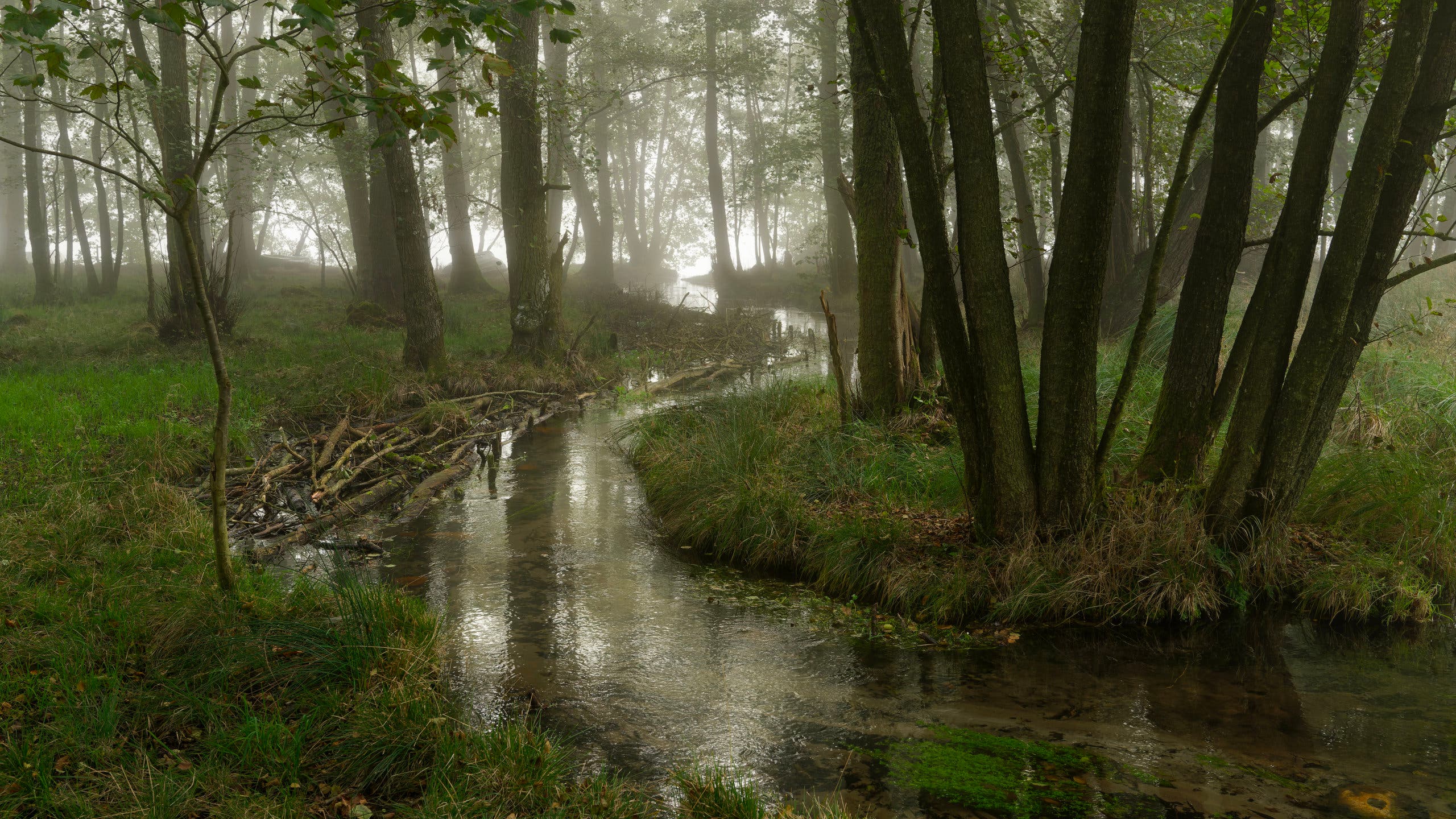
To be clear from the beginning, I love the mood of mist and fog in fall photography. I love that everything becomes dreamy and dramatic, hidden and almost mystical. So, I’m not the one to sit at home during the foggy season, which in Denmark is the fall. However, getting the pictures right is another story.
Yes, you have amazing scenery in front of you. However, capturing it accurately, coming up with interesting compositions, and getting all the technicalities right is challenging to say the least. As one who often got home with unsatisfactory fall photography, learning that the process of taking good photos of fog and mist starts way before leaving the house was a breakthrough.
Read along to find out how to come home with stunning photos of fog and mist while still enjoying their moody appearance.
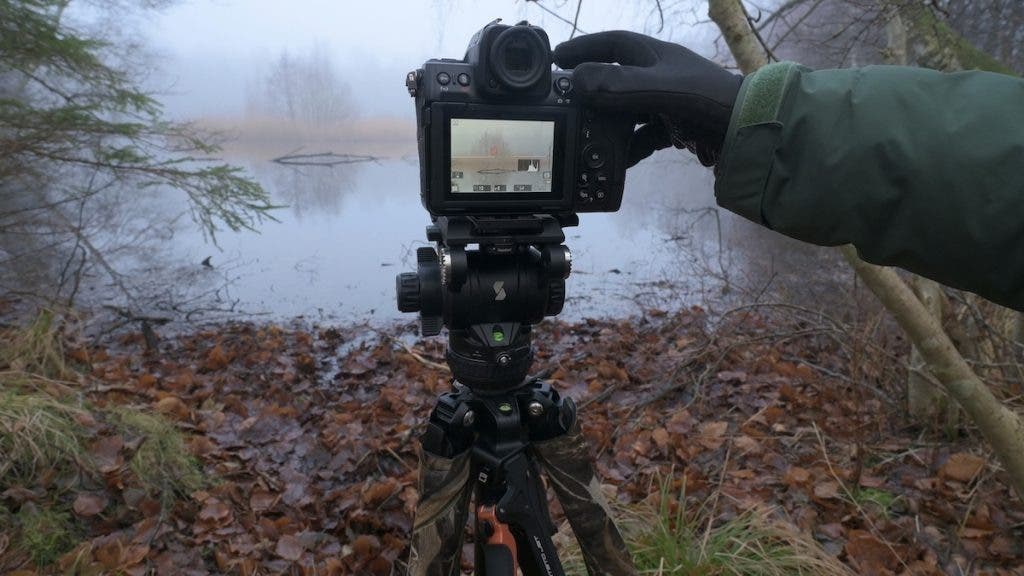
Knowing What a Location Can Offer
You can hardly show up in an unknown location and hope to get good photos of fog and mist. You may get lucky, of course. However, on 99.9% of occasions, you need to know the location beforehand to make sure you get the shots.
When I seek locations to take photos of fog and mist, I usually consider the depth of the scenery first. That means I first take a scouting trip. I look for places that have something happening in the foreground, middle ground, and background, with maybe a few hundred meters between the layers. If the background is farther away than that, it will probably be completely hidden by fog. Not by low-hanging mist, though. That’s why I like to know what I’m dealing with in the meteorological department, too.
What Are Fog and Mist Really?
Fog is a sort of mass of suspended little water droplets or ice crystals, if it’s very cold, that limits visibility to less than 1km. It forms above the ground level (but way below the clouds) when the air cools to the ‘dew point’ and condenses into water droplets. Situations when fog appears include quick cooling of the ground overnight (which is why you often get fog in the morning), the movement of moisture-charged warm air over a cool surface (which is why you often get fog above the sea), and extreme low temperatures (the ice crystal case).
Mist is pretty much the same thing as fog, the difference being that it limits visibility to a lesser degree than fog (i.e., over 1 km) and tends to stay even closer to the ground than fog. If you prefer a less technical definition, mist is a less dense fog that dissipates fast. When you see your breath on a cold day, you see a small amount of mist that you yourself produced. Of course, nature produces larger, longer-lasting amounts of mist than you do.
Note: Don’t confound fog and mist with haze. Haze is produced by dry particles suspended in the air. It limits the visibility, too, but it’s made of dust, sand, or other dry particles, not water droplets. Hence, it has a different effect on photography.
As a result, when I choose a location for a foggy season photo session, I also consider the characteristics that improve my chances of getting fog and mist. You have to be near a large body of water, small valleys, on the right time of day, know the weather forecast, and so on.
Knowing What Compositions Work Best
When working with fog and mist, not all compositions are equally flattering. Because much of the view is usually hidden, the image may seem flat, dull, and unappealing. As there is not much happening, the viewer will glance at the photo and move on. Unless you find something to catch their attention.
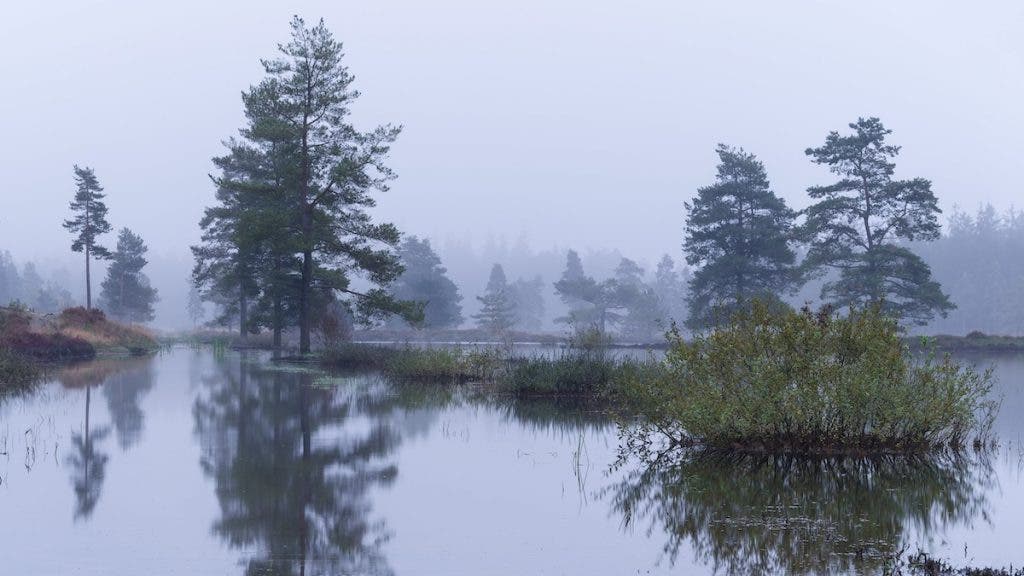
My go-to type of composition is a three-layered scenery. Fog and mist naturally create a sense of depth and separation between elements, so why not take advantage of that? All you need are the elements. Look for scenes with multiple layers, such as trees in the foreground, a misty middle ground, and a distant, faded background. This layering adds a three-dimensional feel to your photos and keeps the viewer engaged for longer. As I said before, you need rather short distances between foreground, middle ground, and background. Otherwise, you’ll miss the background layer.
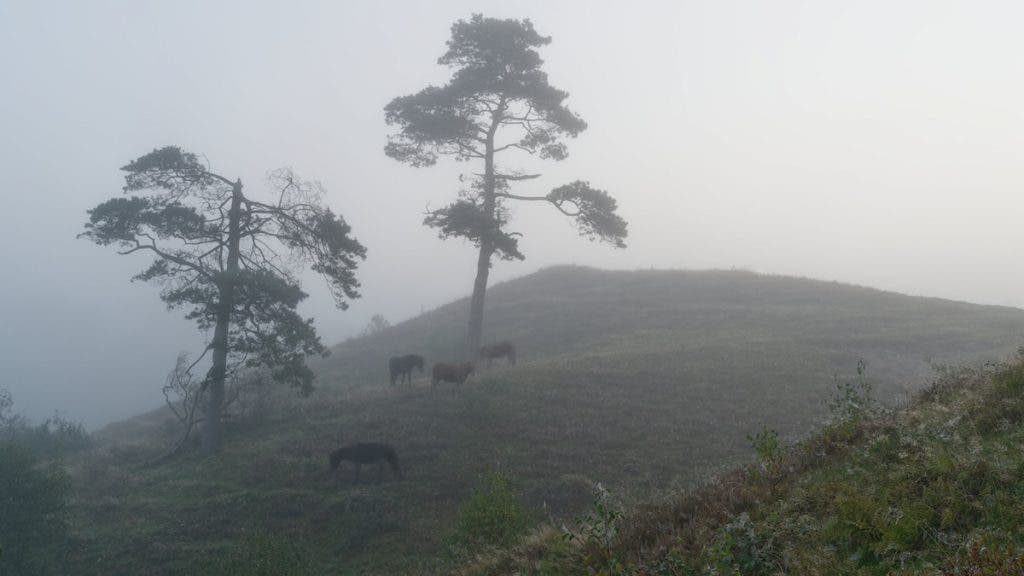
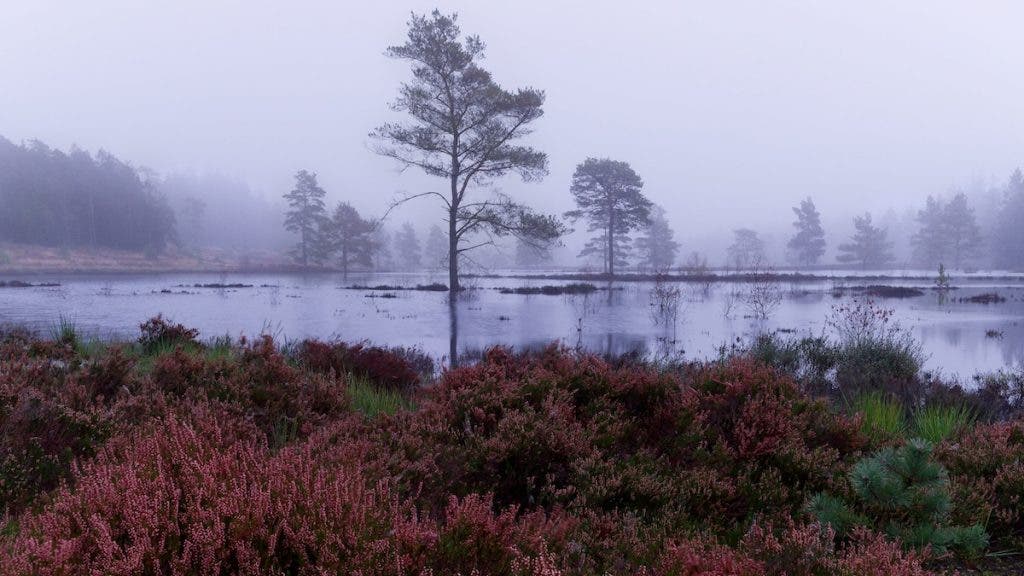
I also like composing with silhouettes, especially with fog. This is because the high density of fog can create a perfect backdrop for this. A lone tree on a ridge, a person walking in the distance, or a boat on a lake can all become powerful, minimalist subjects with a rich, mysterious story. A silhouette is a hook.
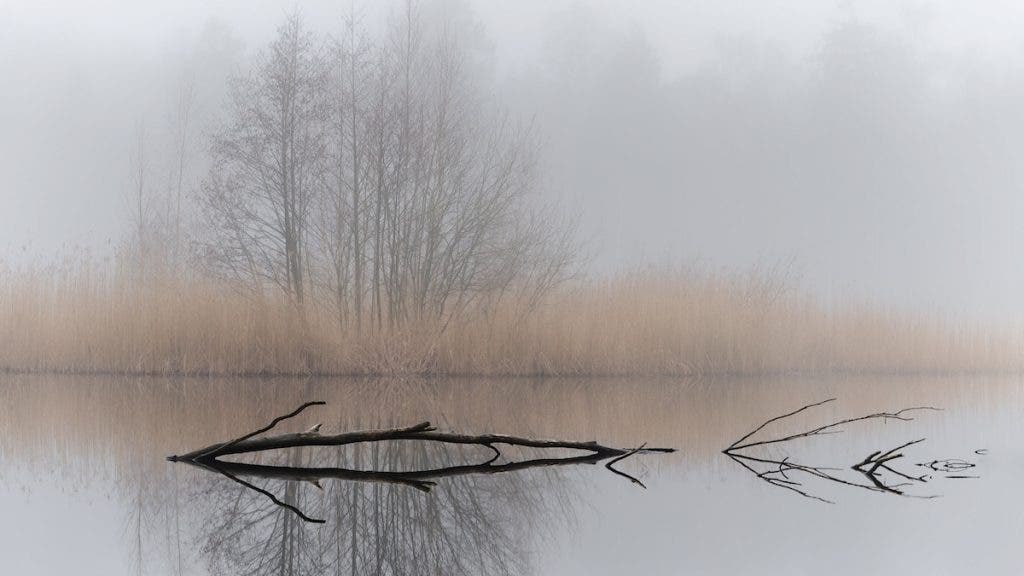
That’s not to say you can’t go completely minimalist and abstract and fill the frame with fog. Although a strong focal point captures the viewer’s attention, your photos may convey intense feelings without one. In its absence, textures and colors take the scene, creating a more lyrical composition.
Knowing Your Camera
Photographing fog and mist challenges your exposure skills. Your camera’s light meter may easily be fooled by all the white or gray in the scenery. Thus, it makes poor decisions. You’ll often need to overexpose by a stop or two to ensure the fog looks bright and airy, not dull and bleak. It’s one of the cases where you will need the histogram. Because you can’t rely on the camera’s light meter or your eyes, the histogram becomes the only accurate tool for checking exposure.
I advise you to stop, breathe, and take in the view. Then, decide what type of story you want to tell because the mood of your pictures strongly influences camera settings. A long exposure makes the fog look opaque, but also brighter. A wide aperture may brighten the scene, but it creates a narrow depth of field, which adds to the scene’s already blurred appearance.
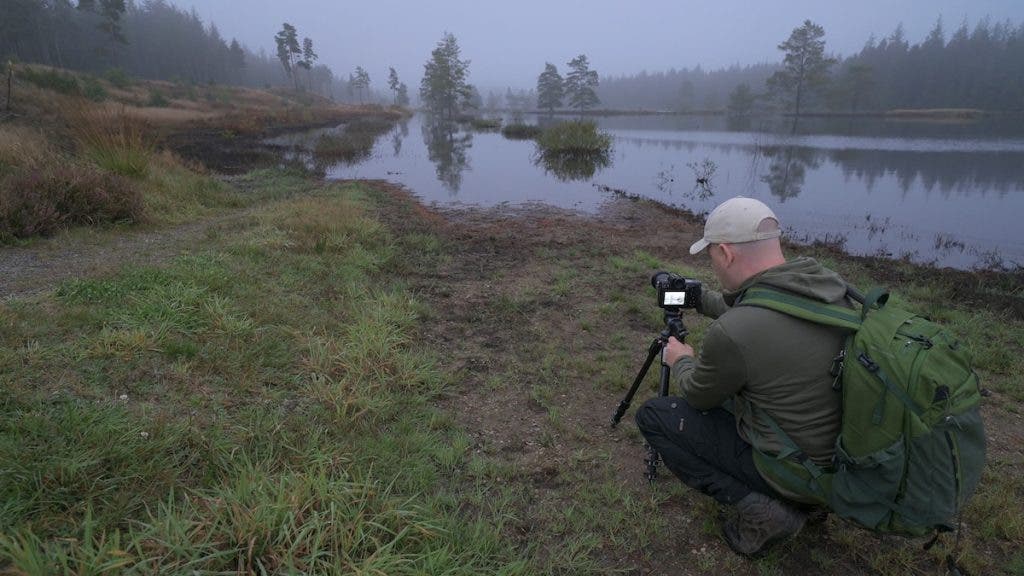
Take the time to understand the harmony between the scenery and your camera because this knowledge will change the way you approach fog and mist photography. For instance, I prefer not to use too long a focal length, as everything becomes hazy and washed out in dense fog. With such a lens, you need to be close to the subject for it to be fairly visible in the fog. I find a wide-angle lens a much better choice for my style.
Knowing How to Approach Storytelling
We can’t talk about exposure and composition without touching on storytelling. Photos of fog and mist are essentially stories. You can try an aesthetic approach and focus solely on how the image looks. However, you will miss about 90% of that image’s potential (my estimation). Storytelling is key here.
So, don’t shoot only the vast landscape. Look for small details enhanced by fog that act like characters in a theater play. For example, I like spotting water droplets on spiderwebs, a single leaf with mist swirling around it, or a patch of moss on a rock. These details are very intimate and compelling. They evoke powerful emotions and create a multisensorial experience. The viewer can feel the cold, the humidity, or the softness of the moss, hear the rustling of leaves, and smell the mountain or sea air.
Ultimately, you’re not just photographing a meteorological phenomenon. You’re photographing the feeling it evokes, which may be mystery, tranquility, or a sense of solitude. See what emotions the fog brings up in you and then think about how you can use composition and subject matter to convey that mood.
The best way to go home with good photos of fog and mist is to be intentional about it and expose your own feelings. If you, like me, are happy when surrounded by fog, don’t try to create sad stories just to impress your audience. Look for fall’s amazing yellow and gold tones brightened by fog and share your joy and excitement. If you prefer dramatic contrast and shapes in fall photography, give up color altogether and create outstanding black and white compositions. Fog looks impressive in black and white, by the way. Fall has plenty of stories to tell, and those unique moments when it is embellished by fog or mist make them very special.
Final Thoughts
Fog acts as a giant natural diffuser, softening harsh light and eliminating strong shadows. This is a dream for photographers, as it allows you to shoot almost any time of day without worrying about harsh midday sun. It also makes fall’s stories even more intense, emotional, and nostalgic. It may take a bit of practice before learning how to choose a location and how to set up your gear to get beautiful photographs or fog and mist, but it’s worth it, nevertheless. In my view, it helps to approach fall photography in a very personal matter, forget about dos and don’ts, and start a conversation with the amazing nature around you. Each step reveals a unique story.