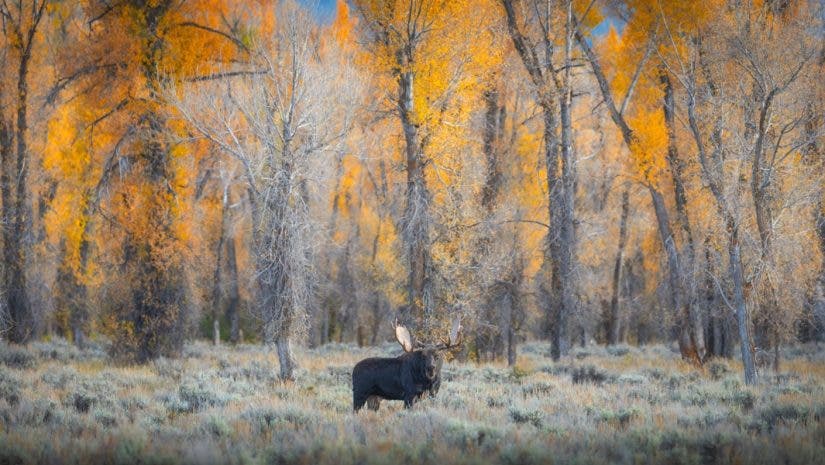
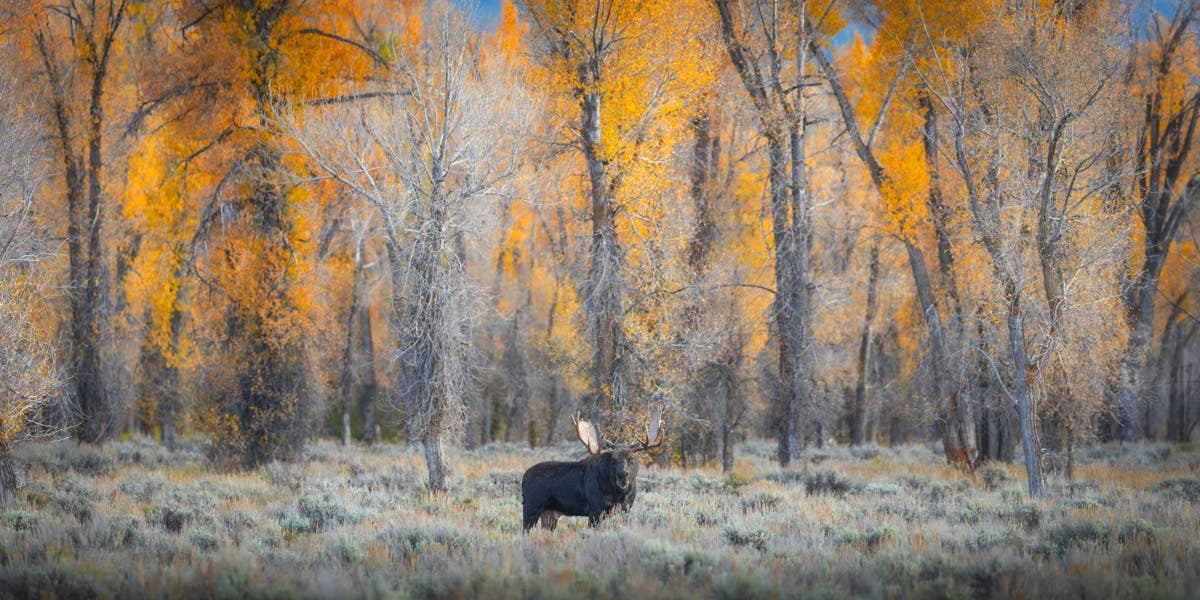
It’s not every day that you get to experience peak fall color in Grand Teton National Park, surrounded by massive bull elk in rut, moose finding their mates, and even the occasional owl hiding in the trees. I’ve been lucky enough to experience Wyoming’s changing seasons for the past four years. This year’s trip was special. I had the chance to photograph new and familiar subjects during an outstanding year of fall color. This is my photo essay on 2026’s fall photography trip to Wyoming.
An Unsuspected Start
Like any other trip, this one started with a long drive. Grand Teton lies about nine hours from my home in Southern Utah. Therefore, I left early to maximize my time and try to shoot the first night. After a long day’s drive, I hit all the usual spots, looking for the typical suspects. Moose and elk are everywhere in this area and are usually easy to spot.
This isn’t your typical forest, as the cottonwoods here meet sagebrush meadows and are typically very sparse. You can see a long way. I drove my usual loop a couple of times and started to worry my first night could be a total bust. Light was fading fast, so I decided to try one more area that I’d had luck at in the past. Unlike many other spots you can check from the roadside, this one required a bit of hiking into the woods to look for wildlife. This area was known for moose, so I hoped I’d see some activity in the woods.
The First Encounter
I stepped out of my truck, gathered my equipment in my Pelican Aegis 25L Backpack, and headed into the woods. It wasn’t long before I walked around a corner and a massive bird swooped down from the tree and flew right over my head. Of course, my camera wasn’t ready, and I was shocked. It was clearly a bird, and it was clearly grey, which meant one thing: an owl.
As someone who isn’t typically a “birder,” I don’t often shoot birds. But, you don’t pass up the opportunity to photograph an owl when you find it. Unfortunately for me, the light was getting low. I’d need to penetrate further into the woods to find this bird, and I didn’t want to bother it again. Instead, I decided to call it a night and come back early the next morning.
Capturing the Owl
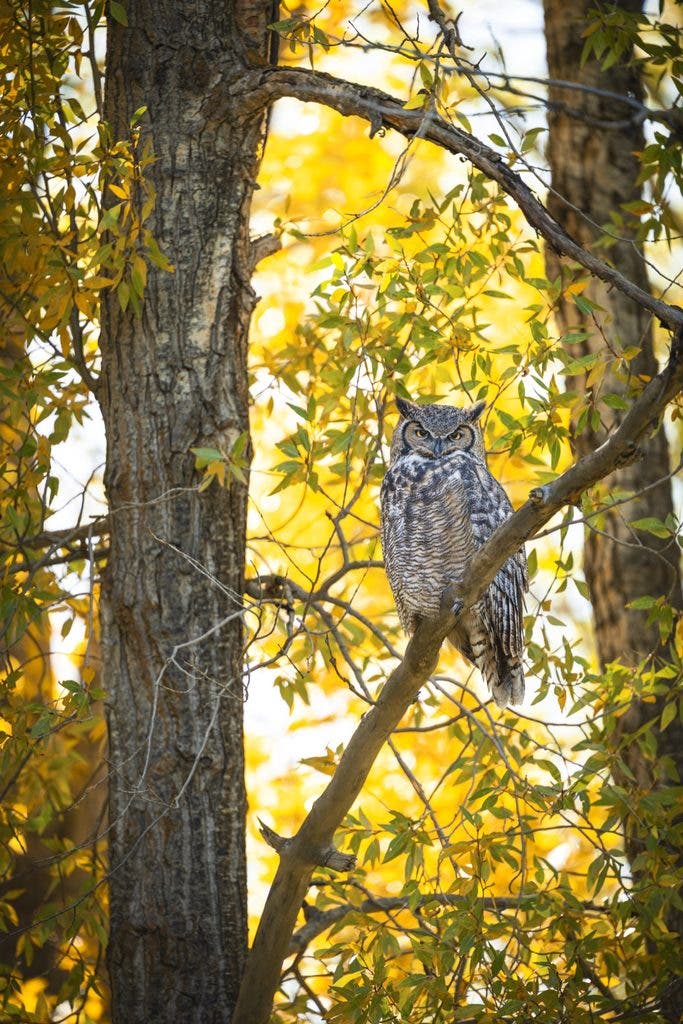
Owls are oftentimes territorial, and this area was ideal for a hunting owl. Lots of open area, huge fields for catching rodents, and tall trees for hiding made it the perfect owl habitat. That is why I wasn’t surprised to find the bird so close to where I found it the day before. This time I was ready. I originally assumed the owl would be a Great Grey Owl, one of the most prized animals to photograph in Wyoming. It turned out to be a Great Horned Owl, which is far more common and seen in many locations across the USA.
While I had photographed a Great Grey before, this was the first Great Horned Owl I had ever seen in the wild. And while they are more common, they are typically far more skittish, making them harder to photograph. I set up my camera from a distance, made sure I wasn’t disturbing the perched owl, and started shooting. Of course, if you’re new to setting up your camera for wildlife, you must nail the right settings. I talk all about picking the best wildlife settings in this article.
The fall colors were perfect. Over the next few hours, the bird switched between hunting and landing in different trees. This gave me plenty of composition opportunities. I grabbed as many shots as I could, then returned to my truck when it was clear the owl had decided to rest for the day.
Familiar Faces
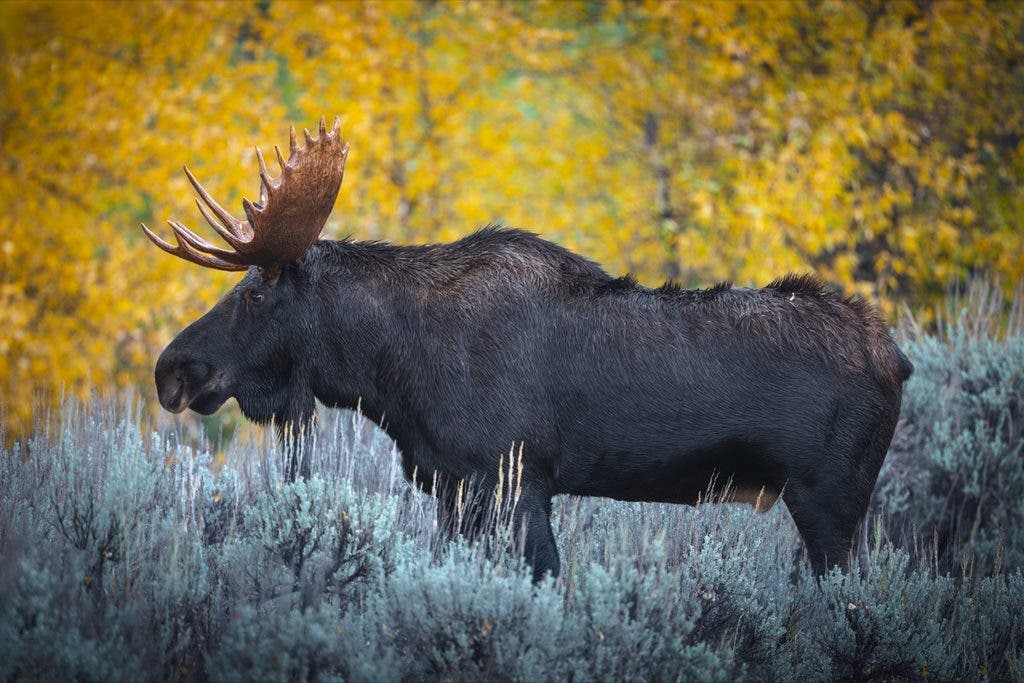
Later that day, I headed out in search of moose. With the fall colors peaking during this week, it was the perfect time to find moose around the rivers where the fall colors were really showing off. One of the coolest parts of visiting this area every year is seeing the same wildlife each year. Many of the moose I photographed on my first trip to Grand Teton are still alive today. I was lucky enough to see them again.
Around the Moose area of the park, bull moose chase females, which increases activity and often makes for great photographs. The first night, we found four different bulls all in separate areas. None really led to the shot I was after. Our second encounter was worth the stop, so we jumped out and watched as a familiar bull moved through the bushes. It was raining out, and everything was wet, which you could really see in his fur. We didn’t spend much time here because it got dark quickly. I got a shot I was happy with and figured it was time to find the larger bulls the next day.
The Money Shot
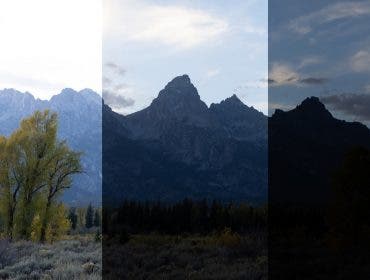
The next morning, we headed out early to catch a quick sunrise before looking for moose. We got decent light and colors, and I did an exposure bracket to capture the bright highlights and dark shadows. Unlike the previous day, which had cloud cover that created a nice softbox for shooting all day, today would be sunny, meaning the light would be pretty harsh by 9 am. We were lucky to spot a moose and his female a couple hundred yards off the road, and she was moving quickly. Typically, the bull follows the female. We watched her movements closely and decided where we wanted to be to capture the perfect image.
At one point, both animals paused briefly in a field about 200 yards from our position. We ran around and got some nice fall color behind them. It was short-lived because they weren’t facing us and moved quickly.
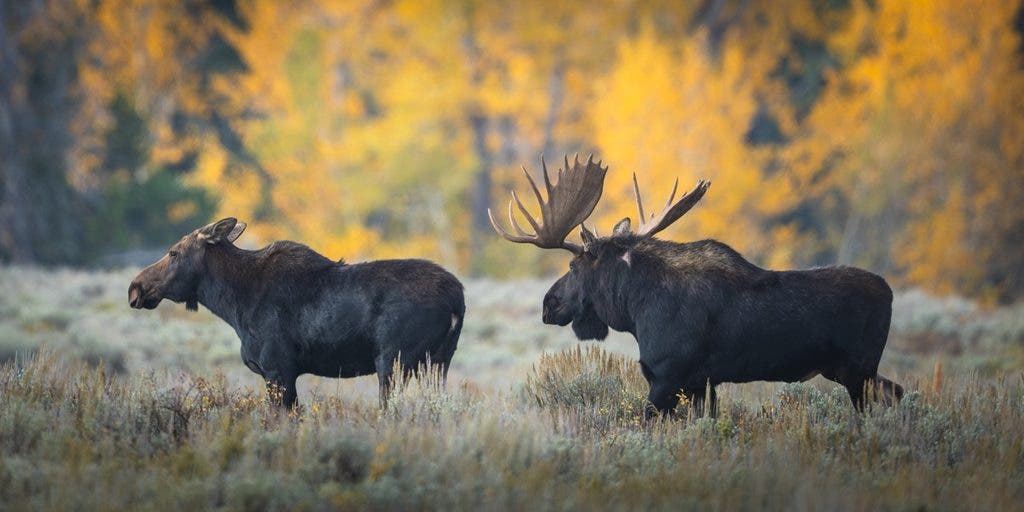
Just after I shot this photo, she was on the move, and this time, she wanted to cross the road. By then, a huge traffic jam had formed, but she seemed unconcerned, and both animals crossed the road with ease. I knew I wanted to be on the other side of where we were standing. This was in order to get a front or side profile of the animals, and I knew they weren’t going to turn around. We quickly jumped in the truck, drove down the road, and turned onto a gravel road about a mile from where the animals were.
Risk Leads to Reward
Over my time shooting wildlife, I’ve learned that great risk often comes with great reward. Driving away from the animals to get further away in hopes that I’d be in the right spot later is a huge risk. I could walk away without a single image. But I knew it was the only way to get the shot I wanted.
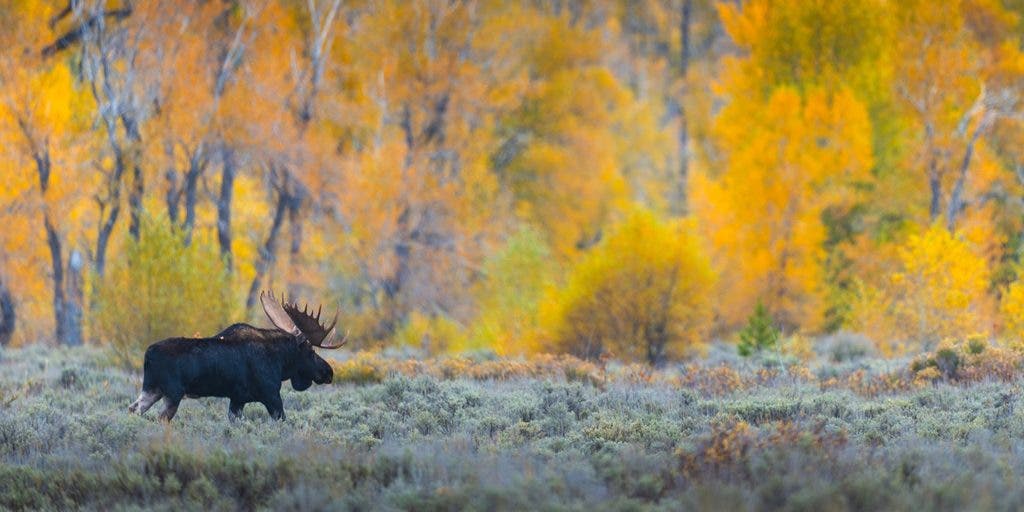
We walked through the meadows, quickly trying to get into position. After a few minutes, we stopped and waited at a spot we thought we could see the moose from. Finally, after what felt like an hour, the female moose popped out from behind a tree about 200 yards away! She was walking in the perfect direction. While I wasn’t too keen on photographing her, I knew the large bull would be hot on her heels, so I prepared my camera. As expected, he popped out quickly behind her and gave me a pose. He had just thrashed the trees, so a branch was stuck in his antlers, which made for a fun image. Shortly after, he continued running through the meadows with the striking cottonwoods behind him.
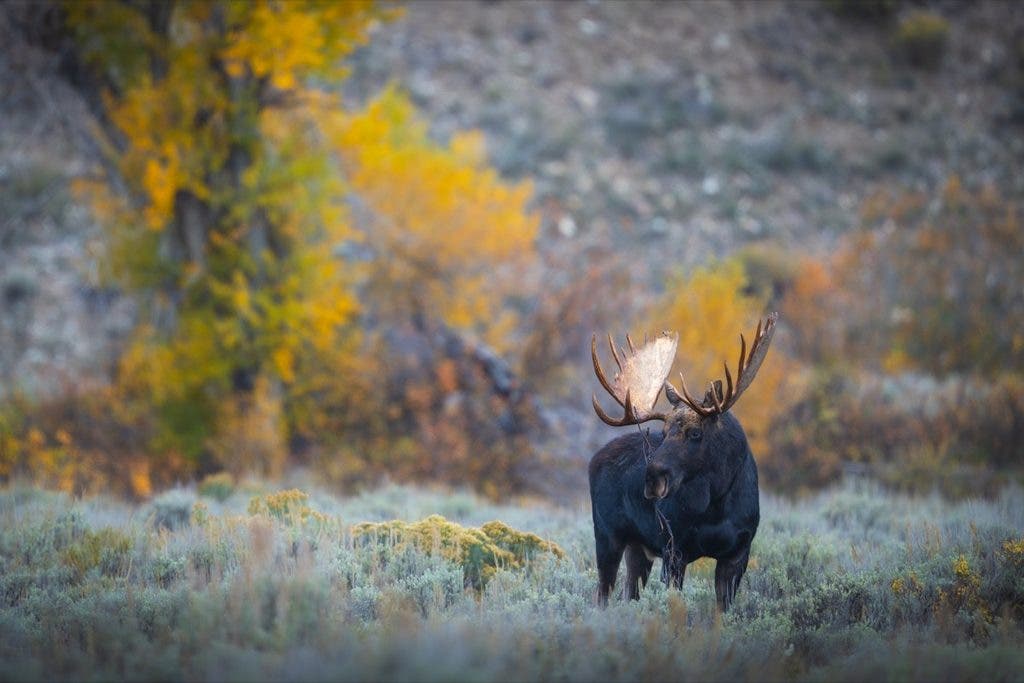
Many people go for close-up shots of these animals. However, the landscape photographer in me loves the environmental shot, which is why I went for a shot like this. That morning, I created one of my favorite moose images yet, shown here.
A Quick Jaunt to Yellowstone
No wildlife trip to the Tetons is complete without a visit to Yellowstone, so the next day we decided to head there for just one night of photography. Moose are much harder to find in Yellowstone, but there are thousands of elk that are easy to spot, so we spent the night targeting elk.
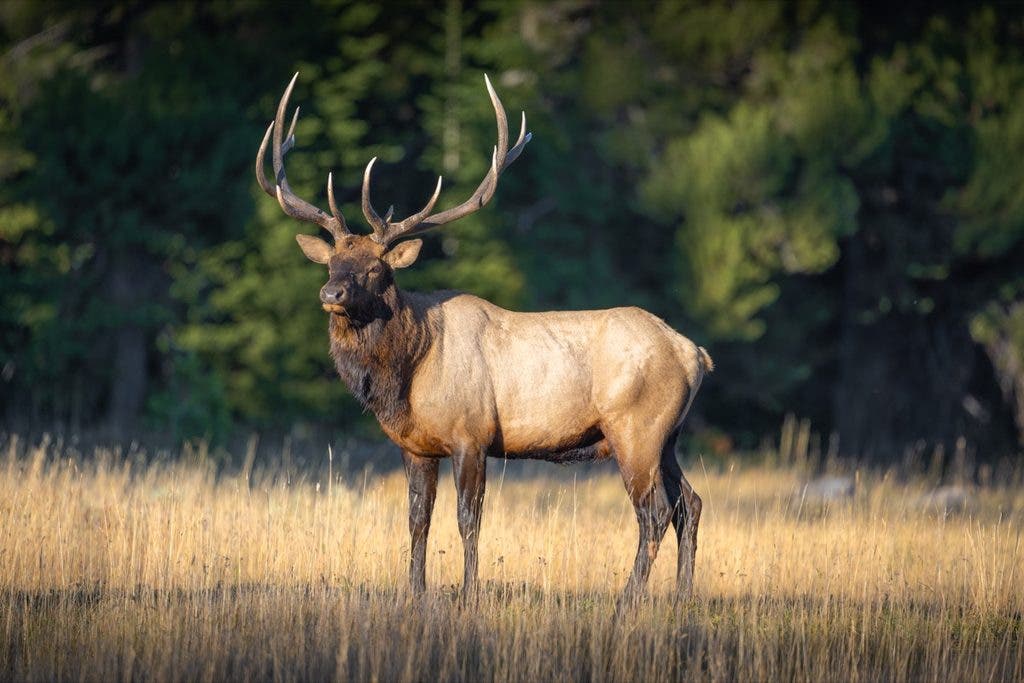
I’d photographed many impressive 6-point bull elk in Yellowstone in previous years, and I was after more of the same this year. Unfortunately, Yellowstone doesn’t have much fall color compared to the Tetons. I was hoping to find elk in action since it was the middle of their mating season, called the rut.
It wasn’t long before we spotted a massive herd of cows, which is always accompanied by a large bull this time of year. Before long, a huge 7-point bull strutted out of the trees and let out a bugle that could be heard for miles. He spent some time herding the cows, then decided it was time to eat as he grazed in the field. It seemed like perfect timing as the last bit of sun poked over the trees and struck him. This created a spotlight effect and gave me a photo I was really happy with of this stunning bull.
The Best of the Rest
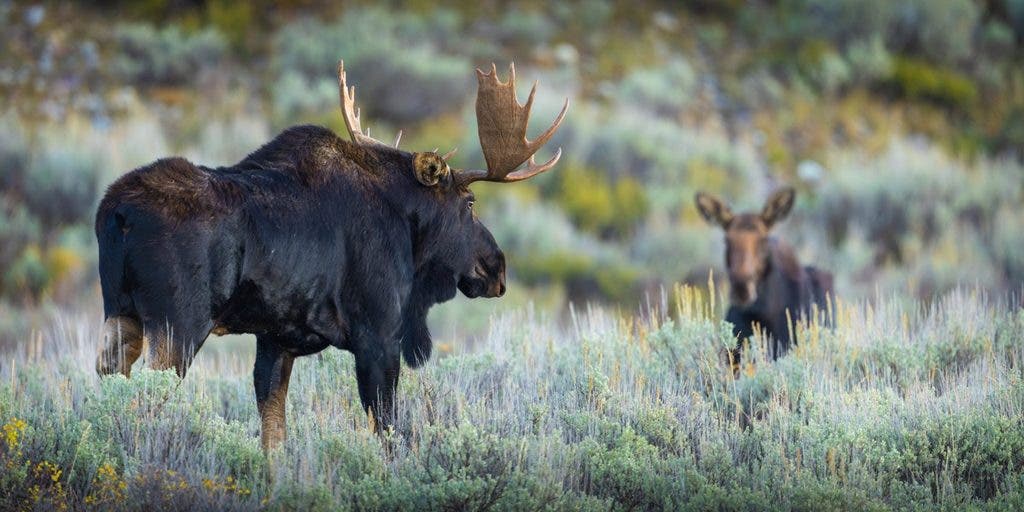
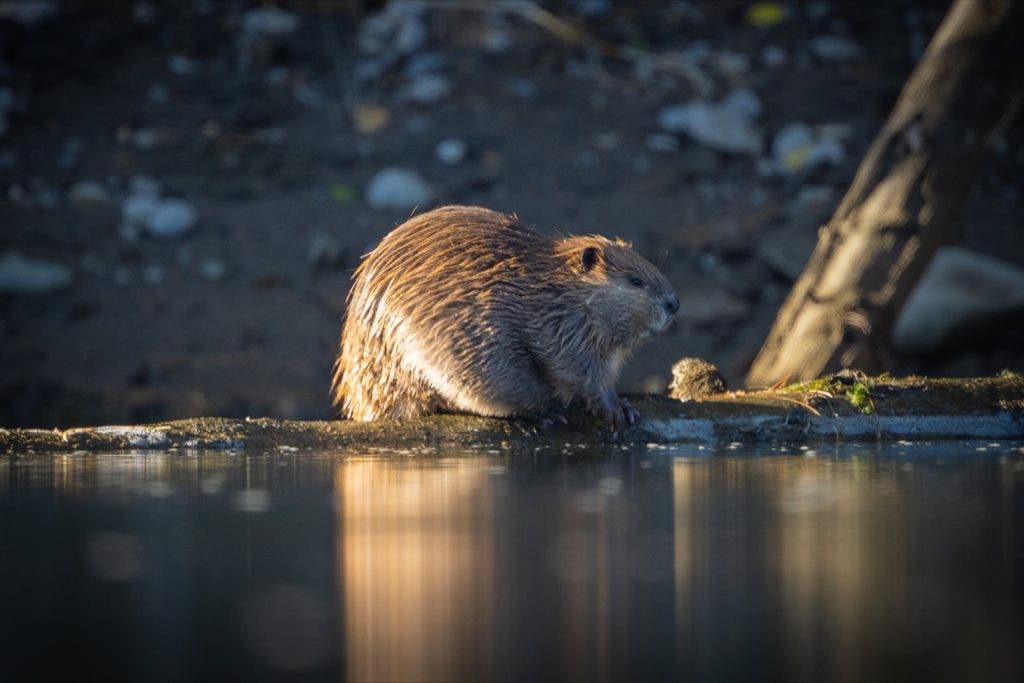
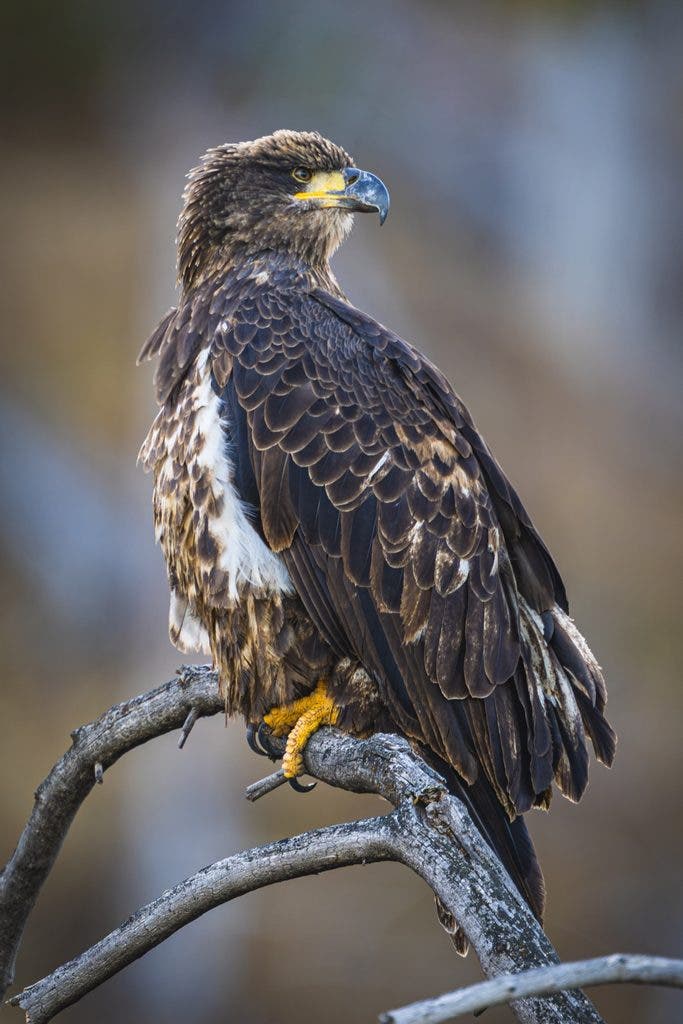
Of course, Wyoming is full of wildlife of many different species, and I also captured a few “micro” encounters that I enjoyed. I’ll leave those here for you to check out, but they include a juvenile bald eagle, a beaver, and some additional moose. For anyone thinking about heading to Wyoming during the fall, I’d highly recommend it. Bring your camera, your batteries, and be ready to capture some of the best wildlife images of your life!
Want more great fall and wildlife photography tips? Check out these articles as well: