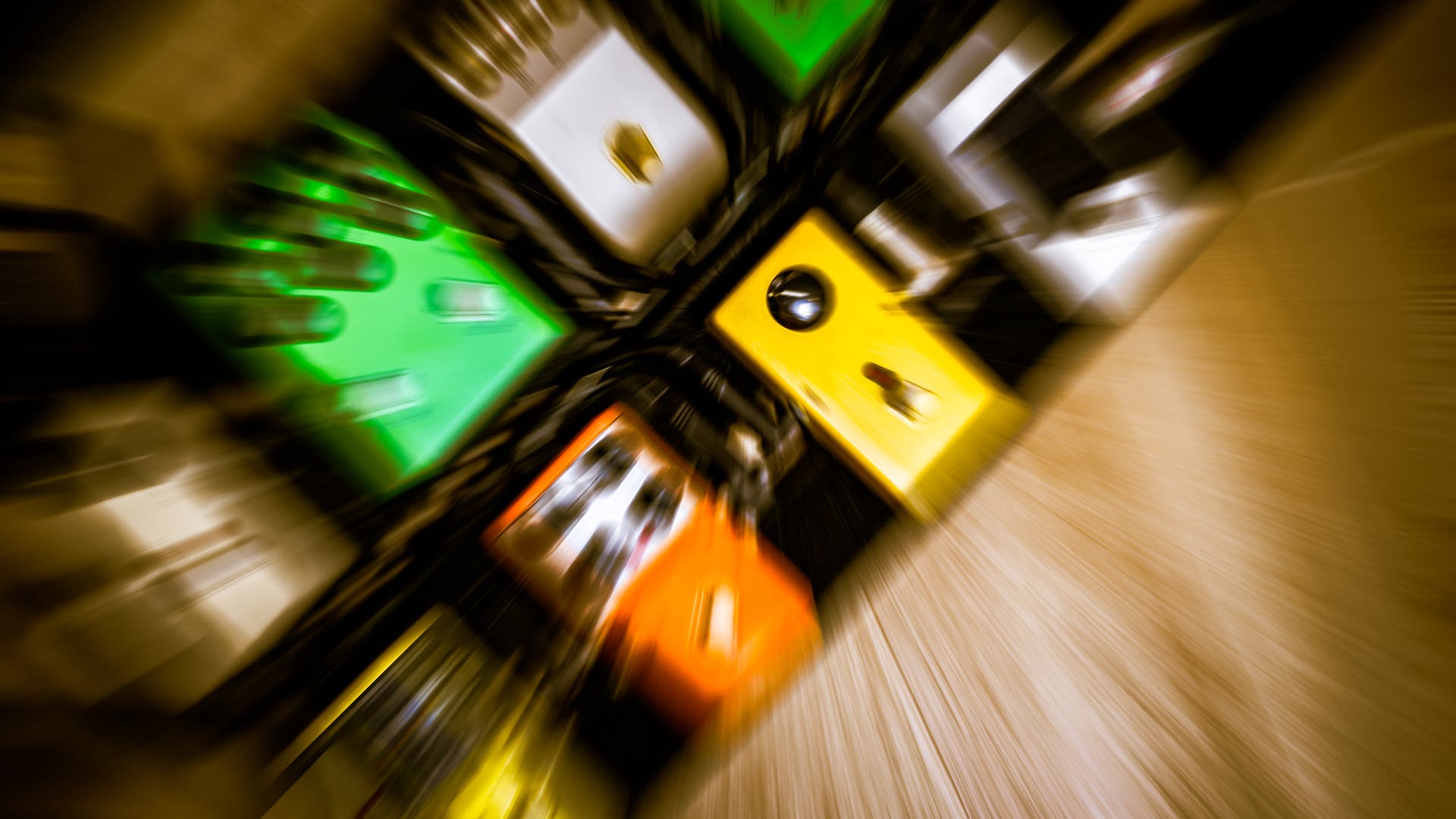
Part of a regular Adorama Learning Center series, Sara Landeau’s ‘InSound’ explores the best in audio gear, how-to’s and interviews with other musicians. Read previous installments here.
I won’t pretend to know everything there is to know about guitar pedals, mainly because there are thousands on the market and they’re all very different. It starts with boutique effects units coated with stylish illustrations, whack names, and even more whack original sounds. You could spend weeks stomping and experimenting with these pedals in the right music shop. Then there are the workhorse pedals like Behringers, Fenders, or Boss, which I’ll always recommend to the younger girls and students just starting out. Boss pedals can put up with a lot of abuse. I’ve seen a hot chocolate splash down on one, marshmallows and all, and survive without a hiccup. To me, they are the faithful Shure 58 mics of the pedal world.
https://www.instagram.com/p/BGcoXIKoatF/?taken-by=saralandeau
Pedals that are durable and somewhere between the workhorse and the pretty boutique models are the ones I’ve been experimenting with the most lately. I’ll talk about a few of those today, along with what I used on the latest The Julie Ruin record. Currently, I’m working on how to duplicate what was done on the record and enhance it for live shows. It starts with some complicated pre-tour rehearsals and a lot of listening back. Kenny Mellman, The Julie Ruin keyboardist, twisted synths and arpeggiated the hell out of some tones on the record. Which of us is doing what on that one-and-a-half minute solo?! And most importantly, how do we build upon that without missing any low and mid range for the live show?
https://www.instagram.com/p/BGHoXjpoalF/?taken-by=saralandeau
For a modern guitarist, my pedal board is extremely modest. Honestly, I fear the multiple variables that could go wrong live, so I live safe and try to be smart up there. This is why I bring back-ups for every pedal I use. I know a guitarist who made the flimsy but tasty Dan Electro “Grilled Cheese” distortion pedal not only last but work like a beast for years, night after night. Mine broke quickly. It now lives in my pedal graveyard (they really do look like graves when they’re lined up right) ready to be resurrected or let go. My graveyard is a friendly reminder that this is all a process to learn and live by. And to try hard not to buy a pedal because I like the name (or because I am hungry).
Some guitar experts stress the importance of order in your pedal board. I agree. Others encourage experimentation: “there is NO wrong order, go crazy!” That’s great and ultimately true, but unless you want a pedal graveyard of your own, or, less tragically, unwanted hum, static, or “mosquito issues,” as my students call it, you’ll want to take a little time out to look closer and be organized. A noise gate pedal will attenuate the hiss sounds that come from vintage equipment, if all else fails.
Now, the tuning pedal goes first. Go ahead and skip this paragraph if you think this is presumed. But from experience as a music theory teacher, it NEVER hurts to go back and review the basics ad nauseam. If all thirty five pedals in your chain break, at least you’rein tune. You could give the most heartfelt performance of your career but if you’re not in tune, people will cringe. I’m called the “tuning police” by my students for a reason. Says the guitar legend Doc Watson, “We tune because we care.”
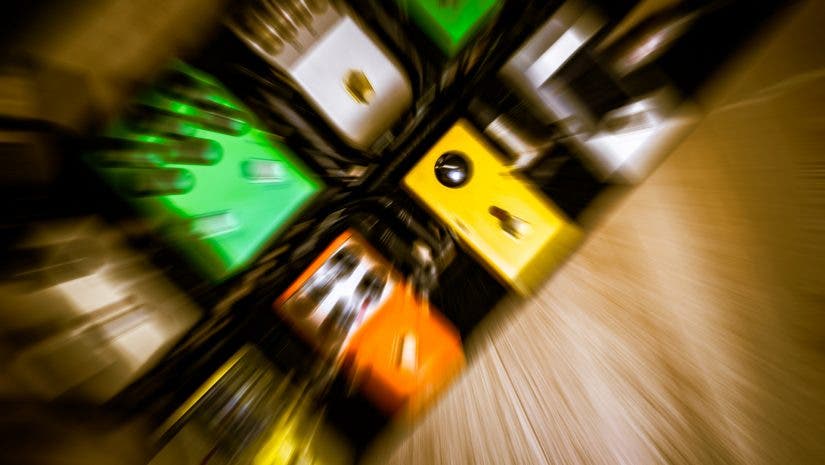
So let’s put together the rest of the pedal board: first comes the tuner, then the dynamic pedals such as compressors, limiters, and sustainers. Next, I go for overdrives, fuzz, and distortion pedals. These usually come after the dynamic pedals because they change the harmonic content of whatever comes before them. Then any pitch shifting pedals or modulators such as chorus, flangers, or octave pedals with time-based effects. Last are the tremolos, delays, and my favorite: echo pedals. If there is a loop pedal, I add that on separately and at the end. Everything is linked to a power supply and carried in a softGator carry bag. I use the reverb straight from my Fender Twin Reverb Amp for a natural effect.
My goal on this album is to be cinematic. I am also surfy, twangy, garage-y, and distorted. I love noise in a pop song, tons of it, like explosives thrown down a cathedral staircase, auto-reversed, and then mixed by Brian Eno. It’s a tall order I’ve given myself here. I also love good melodies, scales, and interesting inversion chords. Some of my favorite pedals used on the album are the hand-made overdrives I’ve inherited, some custom fuzzboxes, a spring reverb, an analog echo, and a Line 6 Delay for feedback and sustain. But everything does not belong in every song so I try to be efficient and selective. How does my guitar part effect everything else in the instrumentation? What is the song asking for? Only the necessary parts that serve it and make the whole song feel, well, whole.
The style or genre you’re going for usually has some rules to go by though, such as common sounds (low-fi or polished?) and trademark effects (dirty or clean?) Researching what your favorite players use is key, and that’s what finally helped me achieve the sounds I was aiming for. The amp and the type of guitar make a huge difference as well, so make sure to look closely at those. Do they use a tube amp? Are those humbucker pickups or lipsticks on that guitar? This all can be overwhelming for a beginner, or even a seasoned guitarist, so go slow and be choosy. Creating your own sound takes time. Go for what you really love and don’t be afraid to evolve and try new styles. No two guitarists are the same and there’s always room for a new signature sound to be heard.